The humble garden border holds the secret to a truly captivating outdoor space. More than just a tidy edge for your lawn, a well-designed border acts as a living canvas, painting your garden with colour, texture, and life throughout the seasons. For many UK gardeners, the challenge lies in translating a vision into a thriving reality. The process of selecting the right plants and arranging them harmoniously can feel like a complex puzzle of heights, soil types, and flowering times.
This guide is designed to simplify that process and provide clear, actionable inspiration. We've curated a collection of eight distinct and achievable border planting ideas, each one tailored to different styles, garden sizes, and conditions commonly found across the British Isles. You won’t find generic advice here; instead, we offer specific schemes with detailed plant lists and practical layout sketches to guide your creation.
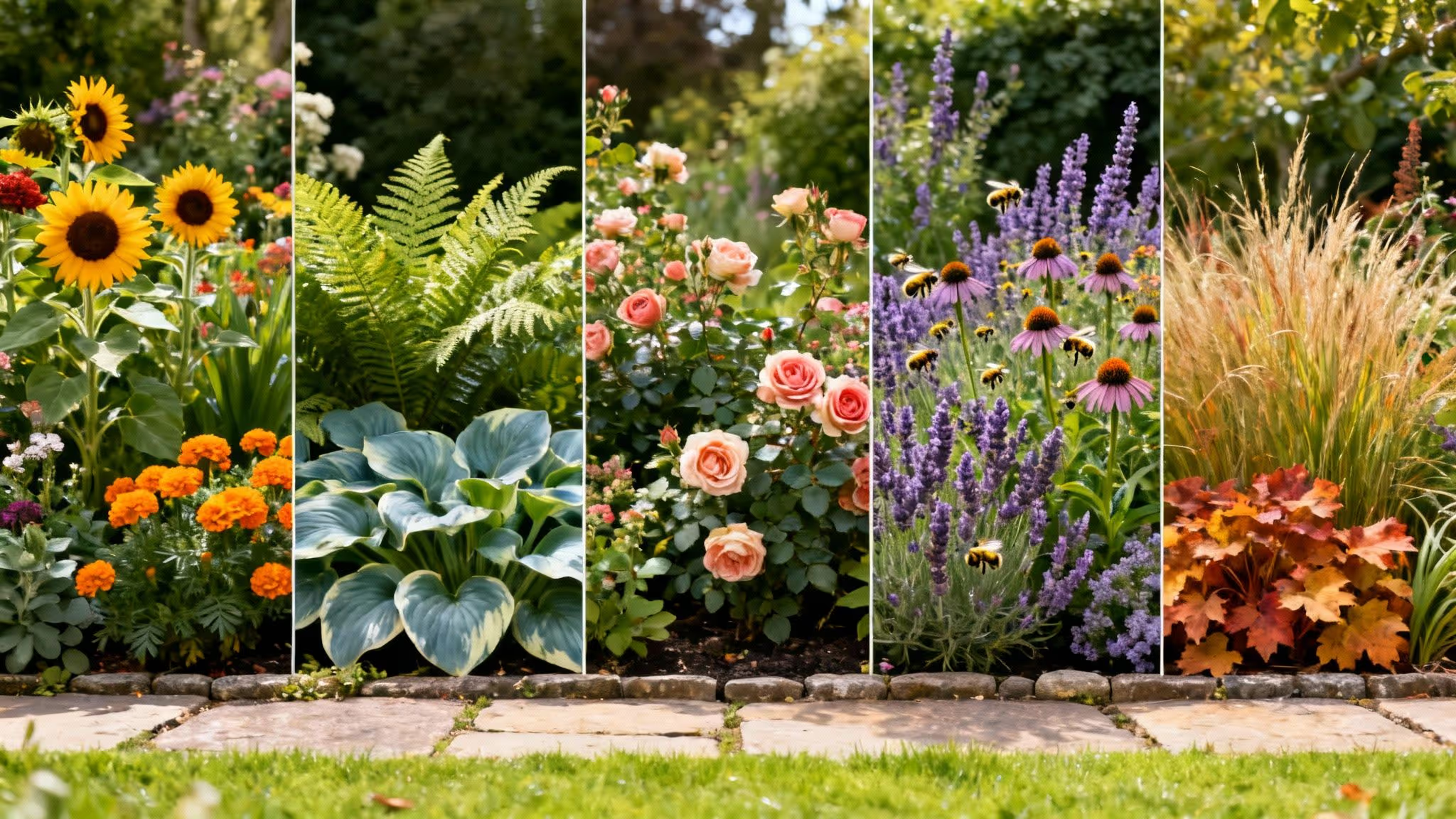
Whether you dream of the romantic, overflowing charm of a cottage garden border, the sleek sophistication of a contemporary design, or a buzzing haven for pollinators, this roundup provides the blueprint. We will explore everything from sun-drenched herbaceous displays to tranquil shaded woodland schemes, offering the practical knowledge you need to get started. By breaking down each concept into manageable steps, you'll gain the confidence to create a stunning, professional-looking border that elevates your entire garden. Let's dig in and explore the possibilities that will transform the edges of your outdoor space.
1. Mixed Herbaceous Borders
The mixed herbaceous border is a quintessential element of classic British garden design. This approach artfully combines perennials, flowering shrubs, and ornamental grasses to create a layered, dynamic display that offers visual interest throughout the seasons. Far from being a simple line of flowers, it's a carefully orchestrated composition where plants are chosen for their complementary heights, textures, and bloom times, ensuring a continuous wave of colour from the first days of spring until the last frosts of autumn. This style is one of the most versatile border planting ideas, adaptable to both grand country estates and compact urban gardens.
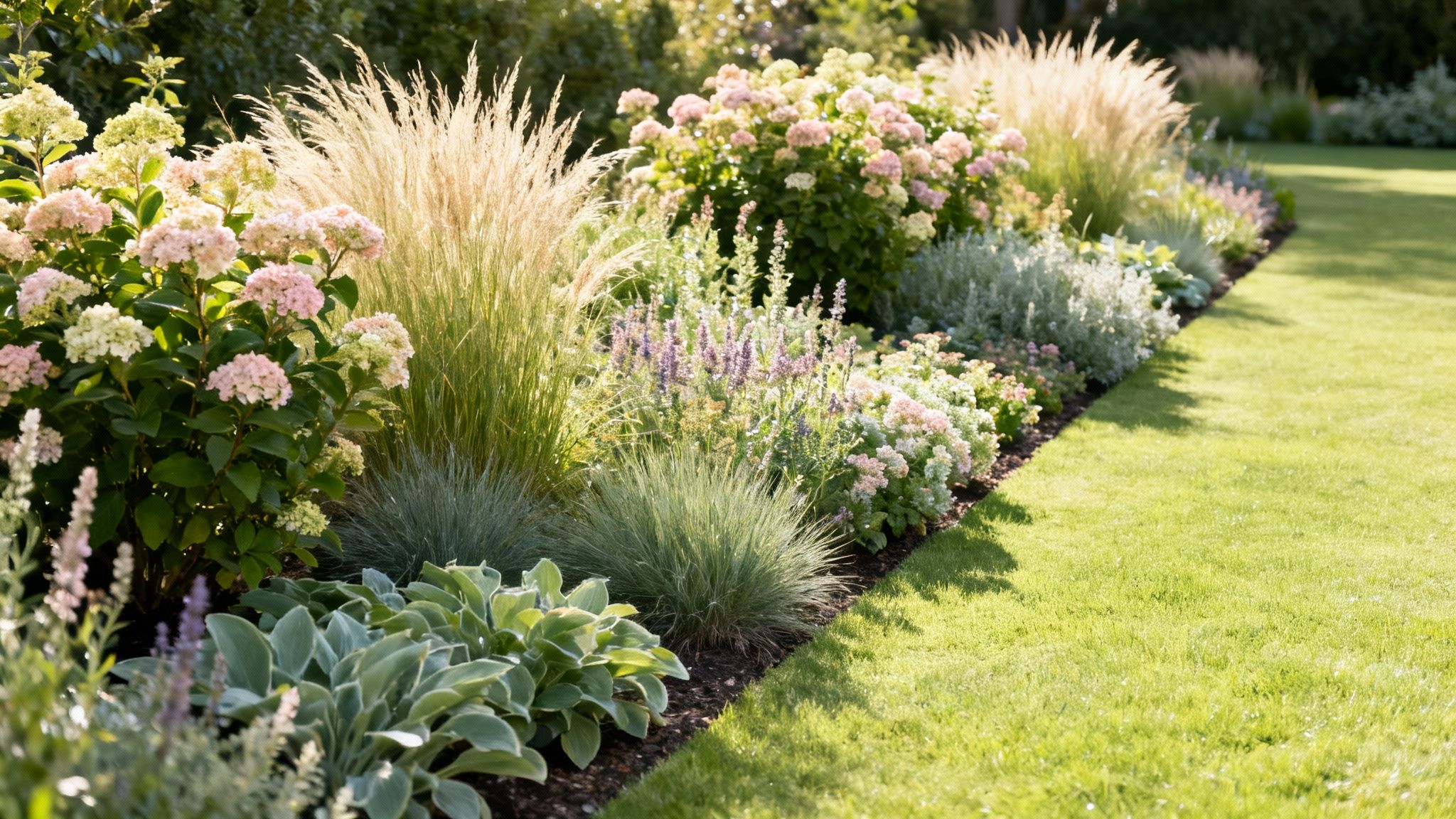
Popularised by horticultural legends like Christopher Lloyd at Great Dixter and championed by the RHS, the mixed border is celebrated for its ability to provide both seasonal spectacle and year-round structure. The inclusion of evergreen shrubs and the skeletal forms of grasses ensures the border doesn't disappear over winter.
How to Create a Successful Mixed Border
To achieve a professional-looking result, thoughtful planning is crucial. The goal is to create a sense of depth and rhythm, preventing the border from looking flat or chaotic.
- Plan on Paper First: Before you buy a single plant, sketch your border. Note the mature height and spread of each species to ensure taller plants are placed at the back and shorter ones at the front.
- Plant in Drifts: For a naturalistic and impactful look, plant in groups of three, five, or seven. This creates bold "drifts" of colour and texture rather than a spotty, disjointed effect.
- Focus on Foliage: Flowers are fleeting, but foliage provides interest for months. Mix leaf colours and textures, combining silver-leafed plants like Stachys byzantina (Lamb's Ear) with deep burgundy foliage from a Heuchera or the lime-green leaves of Alchemilla mollis.
- Incorporate Structure: Ornamental grasses such as Stipa tenuissima or Calamagrostis add movement, sound, and crucial winter structure, catching frost beautifully.
- Annual Maintenance: Apply a thick layer of mulch in early spring to suppress weeds and conserve soil moisture. Regular deadheading of spent flowers will encourage many perennials to produce a second flush of blooms, extending the season of interest.
2. Cottage Garden Borders
The cottage garden border is a celebration of romantic, informal charm, evoking a sense of abundance and tradition. This style artfully combines a dense mix of perennials, annuals, herbs, and even vegetables, creating a tapestry of colour, texture, and fragrance. It moves away from rigid formality, embracing a seemingly effortless, yet carefully curated, profusion of plants that spill over paths and jostle for position. This approach is one of the most beloved border planting ideas, perfect for creating a characterful and productive space with a timeless appeal.
Popularised by iconic gardeners like Vita Sackville-West at Sissinghurst Castle Garden, the cottage border embodies a quintessentially British aesthetic. It prioritises beauty, scent, and utility, often incorporating plants that are as useful in the kitchen as they are beautiful in the garden. This style excels at making any garden feel like a long-established, personal sanctuary.
How to Create a Successful Cottage Border
Achieving the classic cottage look requires a relaxed approach to planting, focusing on a succession of blooms and a rich, layered effect. The key is to make it look unplanned, even though it requires thoughtful selection.
- Embrace Dense Planting: Forget about leaving neat gaps between plants. A cottage garden aesthetic is all about abundance. Plant closely to allow perennials, annuals, and self-seeders to intermingle and create a full, lush look that also helps suppress weeds.
- Mix Edibles and Ornamentals: Integrate herbs like rosemary, lavender, and chives alongside flowers. The silvery foliage of an artichoke or the delicate flowers of a climbing bean on a hazel obelisk can add both structural interest and a productive element.
- Prioritise Scent and Self-Seeders: Position fragrant plants like roses, sweet peas, and stocks near paths or seating areas where their scent can be enjoyed. Allow plants like aquilegia, foxgloves, and honesty to self-seed, creating happy accidents and a natural, evolving design year after year.
- Use Traditional Supports: Incorporate rustic, natural supports like hazel or willow obelisks for climbers such as sweet peas and clematis. These structures add vertical height and enhance the informal, traditional feel of the border.
- Soften the Edges: Use low-growing, mounding plants like Alchemilla mollis (Lady's Mantle), catmint (Nepeta), or hardy geraniums along the border's edge. This allows them to spill gently onto pathways, blurring the lines and contributing to the soft, romantic look. For more inspiration, explore our detailed guide to cottage garden designs.
3. Contemporary Minimalist Borders
A contemporary minimalist border swaps floral profusion for architectural form, clean lines, and a restrained, sophisticated plant palette. This modern approach focuses on the individual beauty of plants, using them as living sculptures within a structured design. Emphasis is placed on foliage, texture, and form over a riot of colour, creating a calm, cohesive, and often low-maintenance space. This is one of the most impactful border planting ideas for complementing modern architecture and creating a serene, uncluttered outdoor sanctuary.
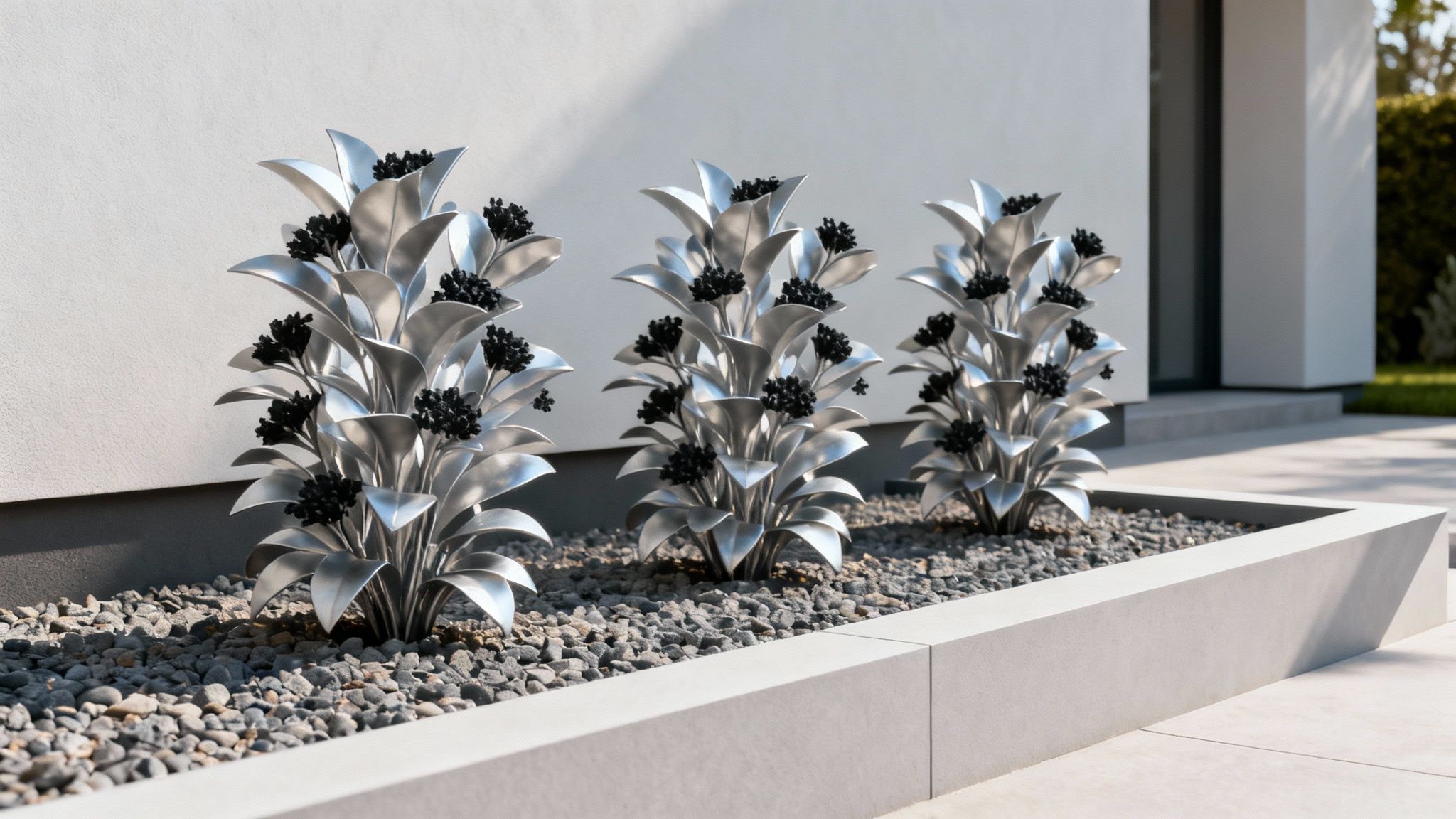
Inspired by the work of landscape designers like Tom Stuart-Smith and Piet Oudolf, as well as principles from Japanese garden philosophy, this style celebrates space and simplicity. It relies on a limited number of high-impact plants, repeated in organised blocks or drifts, to achieve a powerful visual rhythm. Hard landscaping elements like gravel, slate, or corten steel often play a key role, framing the planting and enhancing the minimalist aesthetic.
How to Create a Successful Minimalist Border
Achieving a minimalist look requires discipline and a strong design vision. The principle "less is more" is paramount, where every plant is chosen for its specific contribution to the overall scheme.
- Restrict Your Palette: Choose a very limited colour scheme. This could be monochromatic (all-white flowers with green foliage), or a simple duo of complementary colours, such as deep purples and lime greens. The focus should be on foliage colours like silver, burgundy, or near-black.
- Emphasise Repetition: Create a strong sense of rhythm and unity by repeating the same plant or small group of plants throughout the border. Planting in geometric blocks or structured drifts is more effective here than the scattered groups of a cottage garden.
- Play with Form and Texture: Select plants for their architectural qualities. Contrast the spiky, upright form of Phormium (New Zealand Flax) with the soft, cloud-like texture of grasses like Hakonechloa macra. Combine bold, broad leaves from a Fatsia japonica with delicate, feathery ferns.
- Prioritise Year-Round Structure: As the plant selection is so curated, evergreens are vital for providing a permanent framework. Clipped box balls, yew hedging, or architectural grasses ensure the border retains its form and interest even in the depths of winter.
- Integrate Hard Landscaping: Use gravel as a mulch, install crisp metal edging, or place a striking boulder to act as a focal point. These non-plant elements are crucial for reinforcing the clean, contemporary feel and reducing maintenance.
4. Seaside & Mediterranean Borders
Evoking sun-drenched coastlines and holidays abroad, seaside and Mediterranean borders are designed for resilience in challenging conditions. This style is perfect for exposed coastal locations and hot, sunny, inland sites, combining salt- and wind-tolerant species with drought-resistant plants. These schemes favour silvery, grey, and blue-toned foliage, sharp drainage, and architectural shapes, creating a low-water, high-impact aesthetic. It's a fantastic border planting ideas solution for gardens battling salt spray, strong winds, or sun-baked, dry soil.
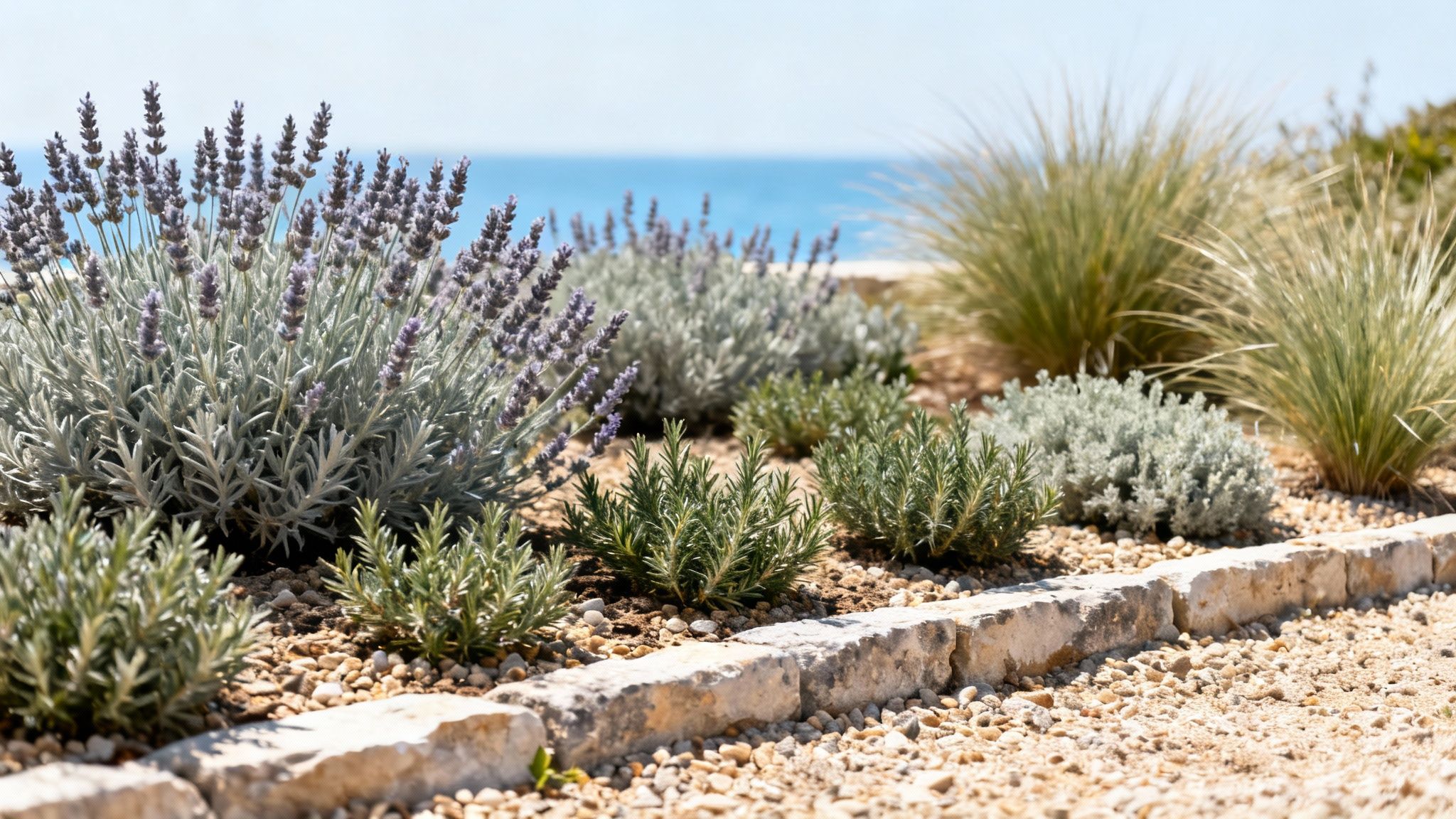
Pioneered by visionaries like Beth Chatto in her famous Essex gravel garden, this approach has become synonymous with stylish, sustainable gardening. From the Cornish coast, famed for its agapanthus and eryngiums, to contemporary urban gardens, this planting style provides year-round structure and texture with minimal fuss. Many of the plants chosen are naturally adapted to dry conditions, making it an excellent choice for a water-wise garden. Discover a wider selection in our guide to drought-tolerant plants for UK gardens.
How to Create a Successful Seaside or Mediterranean Border
Success hinges on replicating the natural conditions these plants thrive in, with a focus on drainage and plant selection.
- Prioritise Drainage: Before planting, test your soil's drainage. If it's heavy clay, amend it with a generous amount of horticultural grit. For a true Mediterranean feel, consider creating raised beds or mounds to ensure roots never sit in waterlogged soil.
- Embrace Silver Foliage: Silver and grey-leafed plants like Artemisia, Santolina, and Senecio are the backbone of this style. Their foliage is adapted to reflect harsh sun, and it provides a beautiful, shimmering contrast to other plants.
- Use Gravel as a Mulch: A thick layer of gravel not only suppresses weeds and conserves moisture but also reflects heat up to the plants, aiding ripening and deterring rot around the plant collars.
- Incorporate Windproof Structure: Use tough, architectural plants that can withstand wind. New Zealand flax (Phormium), sea holly (Eryngium), and ornamental grasses like Stipa tenuissima and Festuca glauca add movement without being flattened by gales.
- Plant for Authentic Character: Introduce classic Mediterranean herbs such as rosemary and lavender, alongside coastal stalwarts like sea thrift (Armeria maritima), to create an authentic sense of place. Choose compact, rounded shapes that are naturally wind-resistant over tall, vulnerable specimens.
5. Wildlife and Pollinator Borders
Creating a border with wildlife in mind transforms your garden into a vibrant ecosystem, supporting the bees, butterflies, birds, and beneficial insects crucial to a healthy environment. This approach involves deliberately selecting plants that provide food, shelter, and breeding sites throughout the year. It’s a rewarding style that combines ecological responsibility with stunning aesthetics, resulting in a garden that is literally buzzing with life. Far more than just a beautiful display, these are some of the most impactful border planting ideas for a sustainable garden.
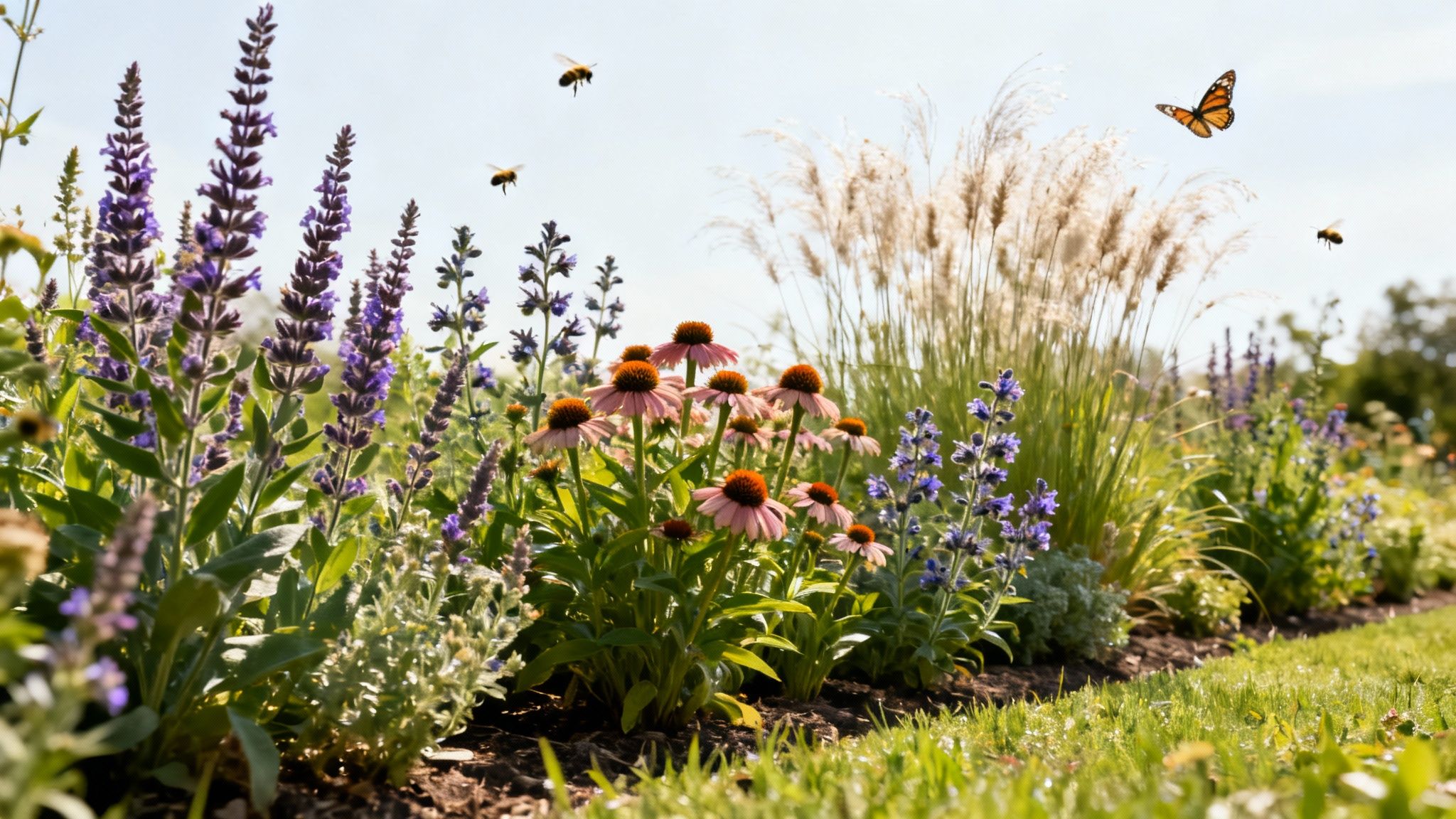
Popularised by major organisations like the RHS with their "Plants for Pollinators" initiative and championed by conservation charities such as the Bumblebee Conservation Trust, this gardening style has gained significant momentum. It reflects a growing awareness of biodiversity loss and provides gardeners with a direct, positive way to contribute. The result is a dynamic, ever-changing border that offers endless opportunities for observation and connection with nature.
How to Create a Successful Wildlife Border
A successful wildlife border is a layered habitat, providing resources from early spring to late winter. The key is to think beyond just summer flowers and consider the entire life cycle of the creatures you wish to attract.
- Choose Nectar-Rich Flowers: Opt for single, open-faced flowers over complex double-flowered cultivars, as they provide easy access to pollen and nectar. Good choices include echinacea, lavender, salvias, and cosmos.
- Plant for Year-Round Food: Ensure a continuous food supply by planting early-flowering bulbs like crocuses for emerging queen bees, summer-blooming perennials, and late-season bloomers like asters and sedums.
- Incorporate Native Species: Integrate UK native wildflowers such as cornflowers, poppies, and teasels. Native plants are perfectly adapted to support our local insect populations, providing essential food sources.
- Provide Shelter and Water: Leave seed heads on plants like echinacea and rudbeckia over winter to feed birds. A small log pile at the back of the border offers a fantastic habitat for insects. A shallow dish of water with pebbles provides a safe drinking spot for bees.
- Plant in Drifts: Grouping the same type of plant together creates a larger, more visible target for pollinators, helping them to forage more efficiently and saving them precious energy.
6. Shaded Woodland and Understorey Borders
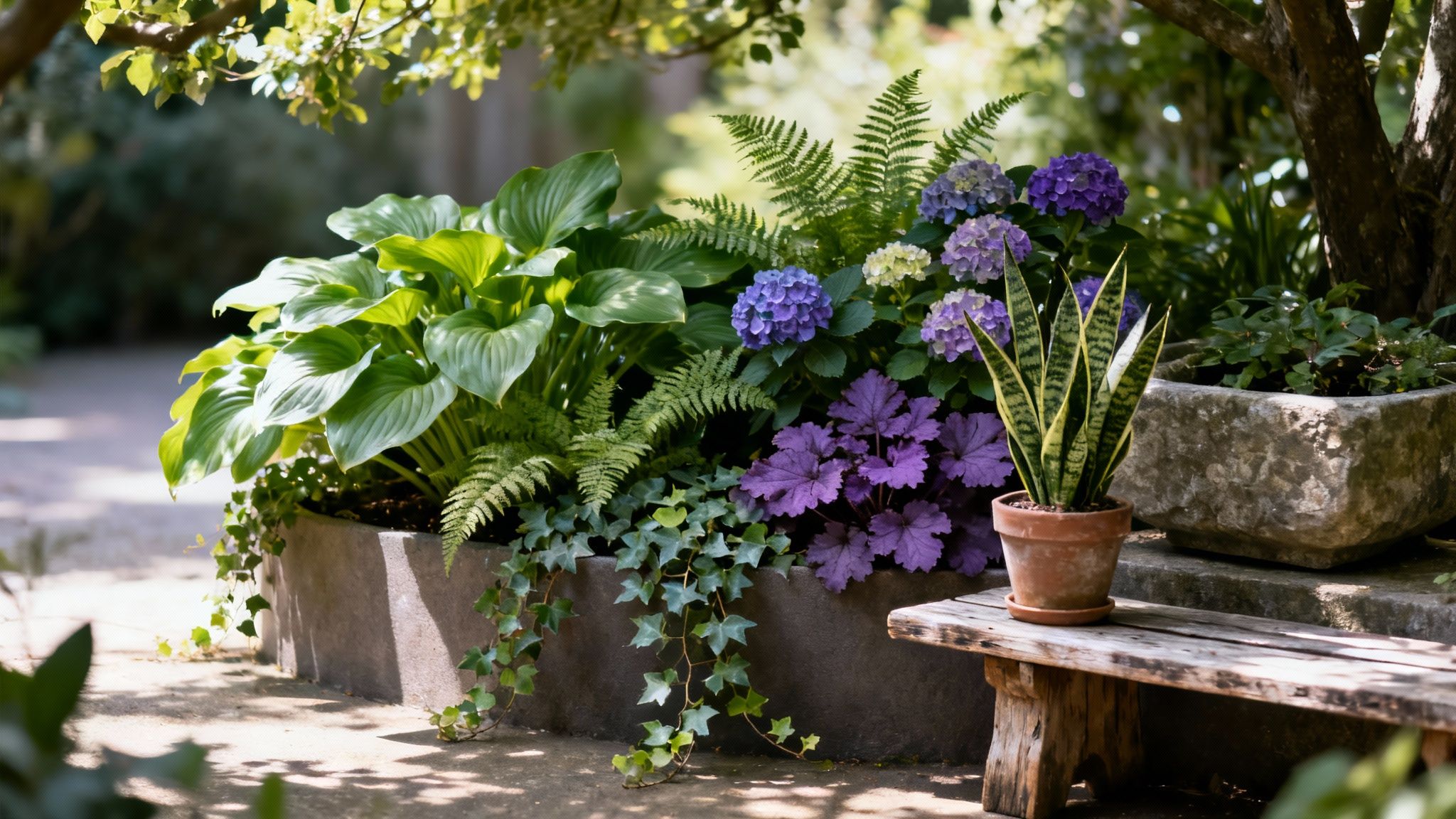
A shaded area in a garden is often seen as a challenge, but with the right approach, it can be transformed into a tranquil, sophisticated space brimming with texture and subtle beauty. Shaded woodland and understorey borders mimic the layered planting found on a forest floor, focusing on plants that thrive away from direct sunlight. This style champions foliage over flowers, creating a serene tapestry of greens, silvers, and burgundies that offers year-round interest. This is one of the most rewarding border planting ideas for transforming difficult, overlooked corners of a garden.
Inspired by the UK's rich heritage of woodland gardens, from the grand estates of Scotland to the intimate Victorian town gardens of London, this approach uses shade-tolerant champions like hostas, ferns, and hellebores. The focus is on creating a low-light oasis that feels established and calm, providing a cool retreat during the warmer months and a structured, evergreen framework through winter.
How to Create a Successful Shaded Border
Success in the shade relies on improving the soil and selecting plants that are naturally adapted to lower light levels. The goal is to build layers of interest from the ground up.
- Enrich the Soil: Shade is often accompanied by dry soil, especially under mature trees. Generously amend the area with leaf mould and well-rotted garden compost to improve its structure and ability to retain moisture. For a detailed guide on suitable plants for these tricky spots, you can explore our advice on plants for dry shade.
- Focus on Foliage and Form: In the absence of abundant flowers, leaf shape, colour, and texture become paramount. Combine the bold, ribbed leaves of hostas, the delicate fronds of architectural ferns like Polystichum setiferum, and the glossy leaves of Epimedium for a rich, layered effect.
- Lighten Up Dark Corners: Use plants with variegated or white-to-pale-yellow foliage and flowers to illuminate shady spots. Plants like Brunnera macrophylla 'Jack Frost' with its silver leaves, or the white flowers of Tiarella cordifolia (Foamflower), can make a dark border feel brighter.
- Plant in Drifts: As with a sunny border, plant shade-lovers in groups of three, five, or more. A large drift of hellebores or a swathe of snowdrops provides far more impact than single, dotted specimens.
- Mulch Annually: Apply a thick layer of organic mulch each autumn or spring. This helps to suppress weeds, conserve vital soil moisture, and gradually improve the soil's fertility as it breaks down, mimicking a natural woodland floor.
7. Seasonal Succession Borders
A seasonal succession border is the ultimate expression of horticultural planning, designed to deliver a continuous and evolving display of interest throughout the entire year. This sophisticated approach involves layering plants with different peak seasons, ensuring that as one plant's display fades, another is just beginning to emerge. The goal is to create a dynamic garden narrative, with rotating highlights from the first snowdrops of late winter to the fiery autumn foliage of shrubs and the frosted seed heads of winter grasses. This is one of the most rewarding border planting ideas for gardeners who crave a garden that is alive and engaging in every season.
Pioneered in many National Trust properties and frequently showcased in award-winning RHS Chelsea Flower Show gardens, seasonal succession planting prevents the "boom and bust" cycle where a border looks spectacular for a few weeks but dull for the rest of the year. It provides a framework of interest that moves and changes, offering new vignettes to appreciate month after month.
How to Create a Successful Seasonal Succession Border
Achieving a year-round display requires careful orchestration and a deep understanding of your chosen plants' life cycles. The key is to think in terms of layers and timelines.
- Map Your Seasons: Plan on paper, creating separate lists for each season. Start with a structural backbone of evergreens and shrubs, then layer in perennials, and finally, add bulbs and annuals to fill the gaps.
- Layer with Bulbs: In autumn, plant spring-flowering bulbs like tulips, alliums, and daffodils amongst the dormant crowns of summer perennials. As the perennials grow, their foliage will neatly hide the fading bulb leaves.
- Embrace the Shoulder Seasons: Focus on plants that shine in early spring and late autumn. Hellebores and pulmonaria offer crucial early nectar, while asters, sedums, and Japanese anemones provide a final burst of colour before winter.
- Don't Forget Foliage and Form: Select shrubs with striking autumn colour, such as Acer palmatum or Euonymus alatus, and ornamental grasses like Miscanthus or Pennisetum that provide movement, texture, and magnificent winter structure when left uncut. Planning your planting times is essential for this approach to work; you can explore a detailed guide in our UK planting calendar.
- Annual Review: Each year, take note of any gaps in your display. Was there a dull period in late May? Or did the border lack interest in August? Use this knowledge to add or move plants to perfect your four-season masterpiece.
8. Raised Bed and Container Border Systems
Moving beyond traditional in-ground planting, raised beds and containers offer a modern, flexible approach to creating stunning garden borders. This system uses elevated structures, from sleek Corten steel planters to classic timber raised beds, to define spaces, overcome challenging soil conditions, and bring the garden to a more accessible height. It's a highly versatile and increasingly popular set of border planting ideas, especially favoured in urban gardens, on patios, and for creating accessible designs for gardeners with mobility restrictions.
This modular approach allows for complete control over the growing medium, making it possible to cultivate acid-loving plants next to alkaline-loving ones without issue. As seen in many RHS Chelsea Flower Show designs and contemporary urban schemes, grouping containers and using raised beds of varying heights can create architectural interest and a strong sense of modern style.
How to Create a Successful Raised Bed or Container Border
Success with this method hinges on selecting the right containers and plants, and ensuring their specific needs are met. This allows for a curated, high-impact display that can be easily changed with the seasons.
- Choose Quality Materials: Invest in well-made containers and beds. Corten steel, hardwood, and high-quality composite materials offer longevity and a premium finish that enhances the planting.
- Prioritise Drainage: This is non-negotiable. Ensure every container and raised bed has ample drainage holes to prevent waterlogging and root rot, which are common issues in contained planting.
- Use the Right Compost: Fill your containers with a high-quality, peat-free potting mix rather than garden soil. For long-term raised beds, a mix of topsoil, compost, and horticultural grit provides a better structure.
- Group for Impact: A cluster of pots in varying sizes creates a more powerful statement than single containers dotted about. This creates a lush, unified border effect.
- Select Suitable Plants: Choose plants with compact root systems or those that thrive in pots. Compact shrubs, ornamental grasses, trailing plants like Erigeron karvinskianus, and seasonal bedding are all excellent choices. For more in-depth guidance, you can explore our detailed guide to container gardening for beginners.
- Consider Irrigation: Containers dry out much faster than garden soil. Installing a simple drip irrigation system or using self-watering planters can save time and ensure plants receive consistent moisture.
8 Border Planting Styles Comparison
Bringing Your Border Vision to Life
You've journeyed through a landscape of possibilities, from the romantic chaos of a cottage garden to the sleek lines of a contemporary design. We've explored eight distinct approaches to garden borders, each offering a unique character and a blueprint for transforming your outdoor space. The fundamental takeaway is this: a successful garden border is not just a collection of plants, but a thoughtfully curated ecosystem that reflects your personal style and works in harmony with its environment.
Whether you were drawn to the wildlife-attracting power of a pollinator border or the practical elegance of raised beds, the core principles remain the same. Understanding your site’s specific conditions, embracing a clear design vision, and selecting the right plants for the right place are the pillars of success. These border planting ideas are not rigid prescriptions but creative launchpads.
From Inspiration to Implementation: Your Next Steps
The most beautiful gardens are born from action. Armed with the detailed plant lists, layout sketches, and maintenance tips from this guide, you are now equipped to move from dreaming to doing. Here’s a clear path forward:
- Finalise Your Vision: Revisit the border style that resonated most with you. Is it the year-round structure of a seasonal succession border or the low-maintenance appeal of a Mediterranean scheme? Pinpoint the look and feel you want to achieve.
- Conduct a Site Audit: Take one final, critical look at your chosen area. Confirm your soil type, measure the daily hours of sunlight, and assess exposure to wind and rain. This step is non-negotiable for ensuring your plants thrive.
- Create Your Plant Shortlist: Using our suggestions as a starting point, create a definitive shopping list. Cross-reference your plant choices with your site audit results. Remember to think in layers: tall plants at the back, medium in the middle, and low-growing specimens at the front.
- Source with Confidence: Plan your nursery visits or online orders. As a Spruce Collective member, look out for exclusive discounts with our horticultural partners to get the best value on top-quality plants. Pay attention to the best times for planting, typically in autumn or spring for most perennials.
The Evolving Beauty of a Garden Border
Mastering the art of border design is a deeply rewarding endeavour. It’s a skill that elevates your home's kerb appeal, creates a personal sanctuary, and connects you more deeply with the natural world. A well-designed border isn't static; it's a living, breathing composition that changes with the light, the weather, and the seasons. It provides a constant source of beauty and interest, from the first snowdrops of late winter to the fiery seed heads of autumn.
Key Insight: Your garden border is a long-term project. Don’t be discouraged if it doesn't look perfect in its first year. The most captivating borders are those that are allowed to mature, evolve, and be gently edited over time.
Think of your border as a canvas. You've now been given the paint, the brushes, and the techniques. You have the foundational knowledge to create structure with shrubs, add drama with grasses, weave in colour with perennials, and provide seasonal surprises with bulbs. The journey of creating a garden is one of patience, observation, and joyful experimentation.
We encourage you to embrace this process. Take these border planting ideas, adapt them, combine them, and make them entirely your own. Your garden is an extension of your home and your personality, and with a bit of planning and passion, you can cultivate a border that brings you and your local wildlife immense joy for many years to come. Now, it’s time to get your hands dirty and bring that vision to life.