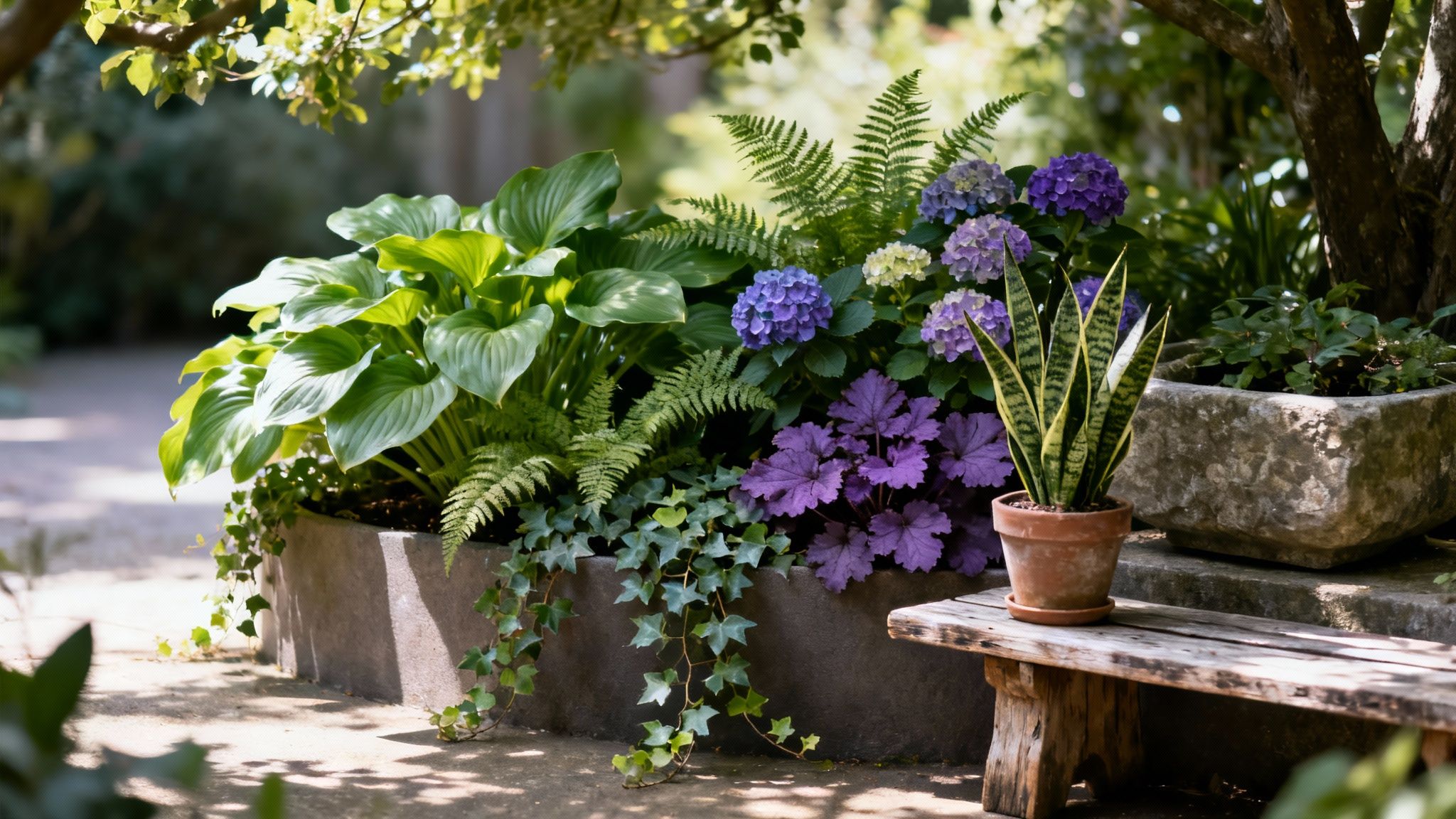
A shaded garden isn't a limitation; it's an opportunity to create a tranquil, lush sanctuary filled with unique textures and subtle colours. Many UK gardeners believe that vibrant gardens are reserved for sun-drenched plots, but the truth is that some of the most elegant and architectural plants thrive away from direct sunlight. These less-exposed spaces invite a different kind of beauty, one of serene greens, delicate blooms, and captivating foliage that can transform a challenging area into a peaceful retreat.
This comprehensive guide is designed to help you master the art of shade gardening. We will explore an expertly curated collection of exceptional plants that grow in shade, proving that your garden's darkest spots can become its most enchanting features. Forget generic advice; this is a practical resource for creating a stylish, design-led outdoor space.
You will discover specific varieties perfectly suited for the UK climate, organised into clear categories for easy planning:
- Lush Perennials: Discover plants that return year after year with stunning foliage and flowers.
- Architectural Shrubs: Find structural plants that provide year-round interest.
- Evergreen Groundcovers: Learn how to carpet the ground with resilient, attractive foliage.
- Versatile Climbers: Identify vines that can scale shady walls and fences.
- Surprising Bulbs: Uncover spring and summer bulbs that illuminate dim corners.
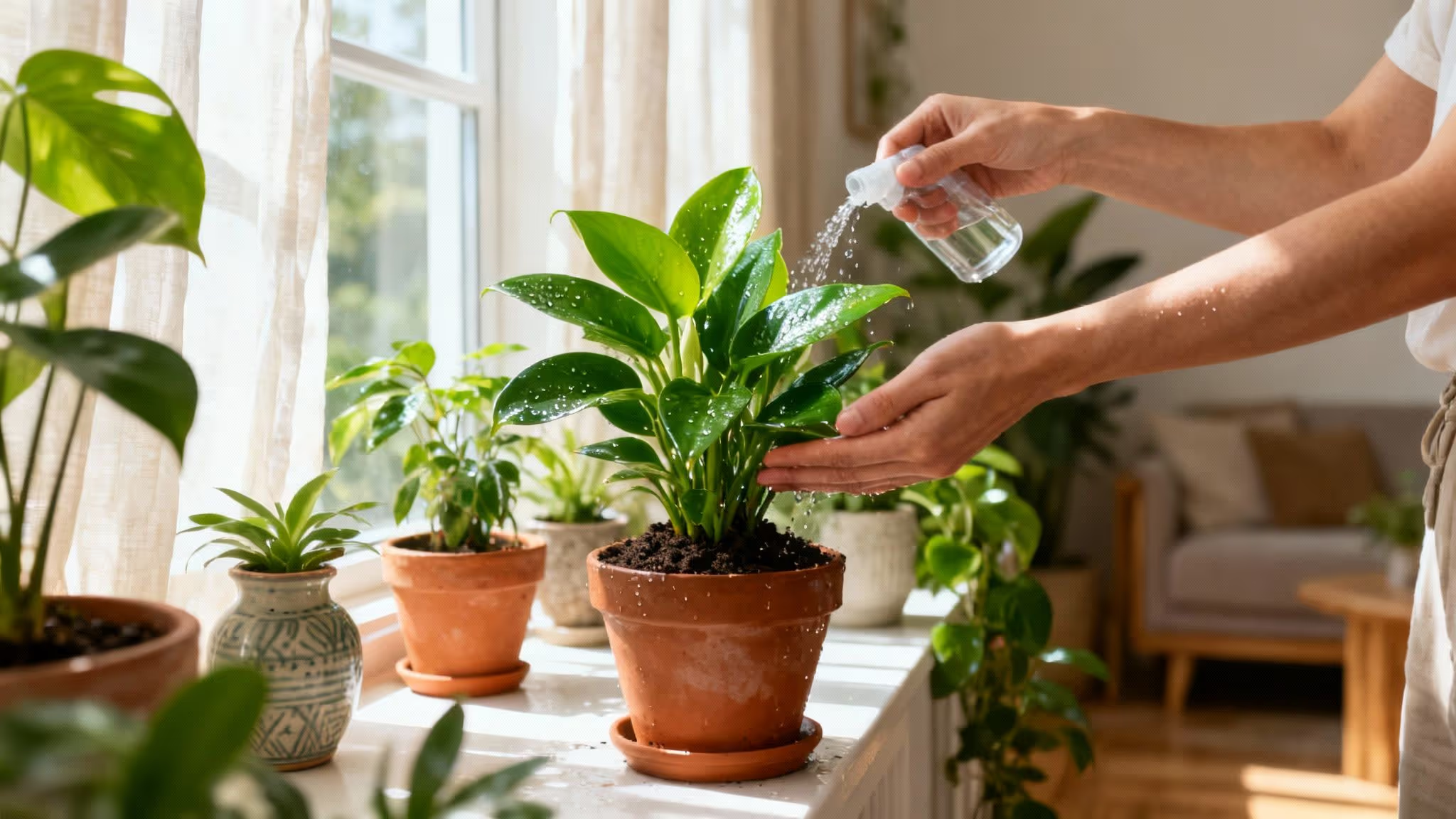
- Thriving Houseplants: Bring the beauty of shade-lovers indoors with our top indoor picks.
Whether you're dealing with the dappled light under a mature tree, a north-facing border, or a perpetually dim patio, these selections will empower you to bring life, colour, and sophisticated style to every corner of your garden and home.
1. Hostas (Hosta spp.)
Hostas are the undisputed royalty of the shade garden, celebrated for their magnificent foliage that forms lush, architectural mounds. These hardy perennials are cornerstone plants that grow in shade, offering a rich tapestry of colour and texture where flowers often struggle. Originating from the woodland floors of East Asia, they are perfectly adapted to the dappled light found under tree canopies and along north-facing walls, making them a reliable choice for UK gardens.
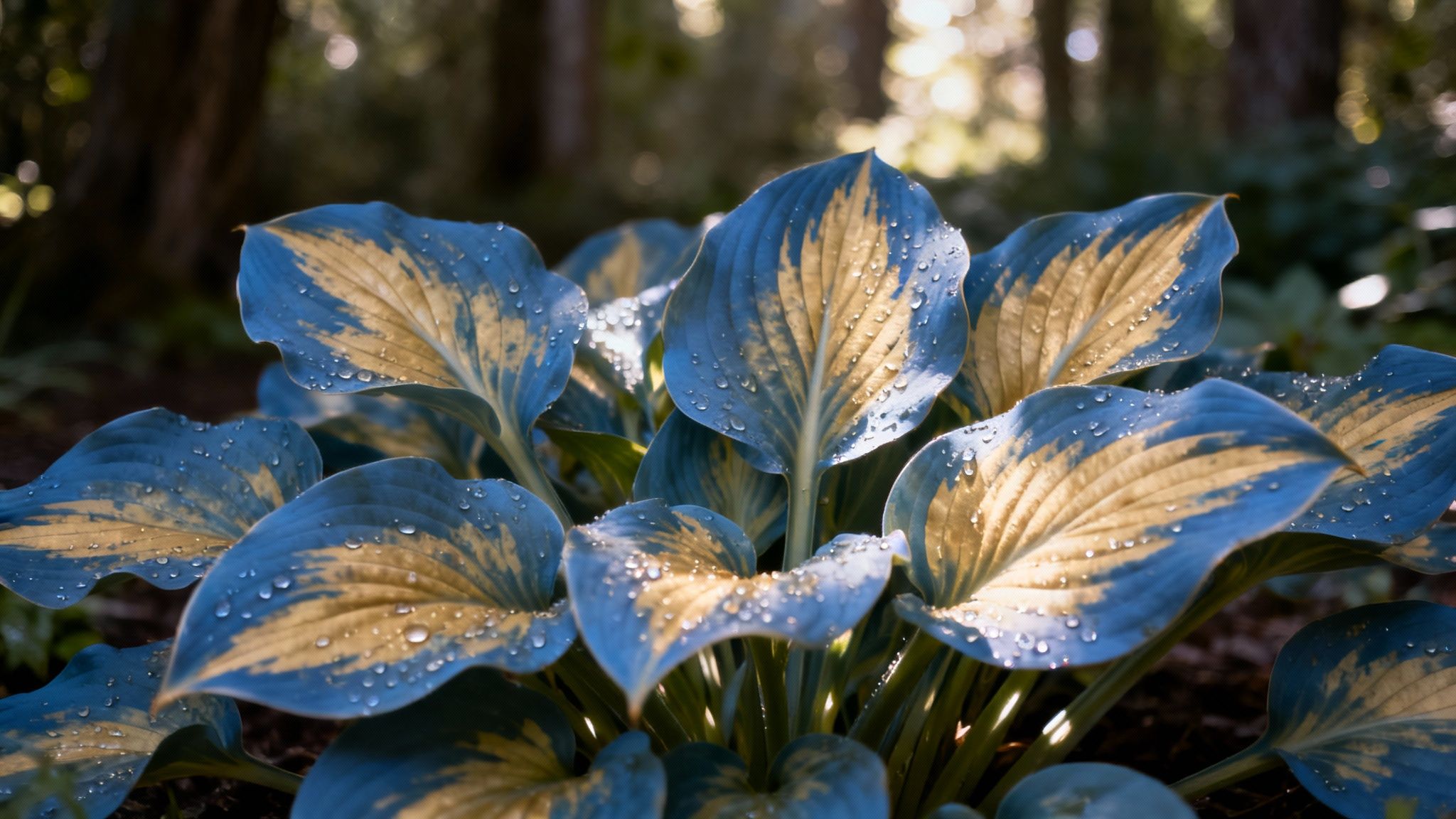
From the giant, blue-grey leaves of 'Blue Angel' to the chartreuse-gold of 'Sum and Substance', there is a Hosta for every design. Their primary appeal lies in their leaves, which can be puckered, smooth, heart-shaped, or lance-like, and feature variegation in stripes, splashes, or subtle edging. This diversity allows them to serve as both a focal point and a calming green backdrop.
Siting and Care in UK Gardens
Hostas thrive in moist, well-drained soil rich in organic matter. While they are renowned for shade tolerance, many variegated cultivars, especially those with yellow or white markings, develop their best colour with a touch of gentle morning sun. Avoid harsh afternoon sun, which can scorch the leaves.
- Planting: The best times to plant are spring and autumn, when the soil is warm and moist, allowing roots to establish before summer heat or winter cold.
- Watering: Keep the soil consistently moist, particularly during dry spells in their first year.
- Pest Control: Slugs and snails are the main adversaries. Apply organic slug pellets, wool-based deterrents, or copper tape around pots in early spring as the new shoots emerge.
- Division: To maintain vigour and create new plants, divide established clumps every four to five years in early spring or autumn.
Design and Styling Ideas
Hostas are incredibly versatile. Use them to create a layered, woodland effect under mature trees, pairing their bold leaves with the delicate fronds of ferns like Dryopteris affinis. They also make superb edging plants along shaded pathways or as the "filler" in mixed containers on a shady patio. For those seeking more guidance on foliage-focused displays, explore some of the best plants for low light to find perfect companions.
2. Ferns (Dryopteris, Polystichum, and Asplenium spp.)
Ferns are ancient plants that bring an unparalleled sense of elegance and texture to the darker corners of a garden. With their intricate, feathery fronds unfurling in delicate patterns, they are quintessential plants that grow in shade, evoking the lush, damp atmosphere of a natural woodland. Perfectly suited to the UK climate, varieties from the hardy, evergreen Polystichum to the classic shuttlecock fern (Dryopteris) thrive in low light, offering architectural form where other plants may fail.

Their primary appeal is their sophisticated foliage, which ranges from the glossy, dark green leaves of the Hart's Tongue Fern (Asplenium scolopendrium) to the finely dissected, almost lace-like fronds of the Lady Fern (Athyrium filix-femina). This diversity in form and texture allows them to create a cool, tranquil mood, acting as a soft counterpoint to bolder shade-lovers like Hostas and Hellebores. They are low-maintenance and reliably return each year, growing more impressive with age.
Siting and Care in UK Gardens
Most ferns prefer a sheltered spot in dappled or deep shade with consistently moist, but not waterlogged, soil. They flourish in soil that is rich in organic matter, mimicking the humus-rich floor of a forest. While some, like Dryopteris, are robust, others are more delicate and appreciate protection from strong winds which can damage their fronds.
- Planting: Plant in spring or autumn. Improve the soil by digging in plenty of leaf mould or well-rotted compost to aid water retention.
- Watering: Water regularly after planting and during prolonged dry periods, ensuring the soil around the roots does not dry out.
- Maintenance: No deadheading is needed. Simply remove any dead or damaged fronds in early spring to make way for new growth. A thick mulch of bark or leaf mould in autumn protects the crown and conserves moisture.
- Division: Overcrowded clumps can be divided in spring to rejuvenate the plant and propagate new ones.
Design and Styling Ideas
Ferns are exceptionally versatile for creating a naturalistic, layered planting scheme. Use them en masse under trees to form a verdant understory or plant them alongside shaded streams and ponds for a serene effect. Their fine texture provides a beautiful contrast to broad-leaved plants in mixed borders and containers. For more inspiration on combining different forms, these garden border plant ideas offer excellent starting points for pairing textures and shapes. Evergreen varieties like Polystichum setiferum are invaluable for providing year-round structure and interest.
3. Hellebores (Helleborus spp.)
Hellebores, often known as the Christmas or Lenten Rose, are cherished for their ability to bring exquisite colour and structure to the garden during the coldest, darkest months. These hardy, evergreen perennials are essential plants that grow in shade, producing elegant, cup-shaped flowers from late winter into spring when little else is in bloom. Native to the woodlands of Europe and Asia, their natural habitat makes them perfectly suited for planting beneath deciduous trees or in shaded borders throughout the UK.
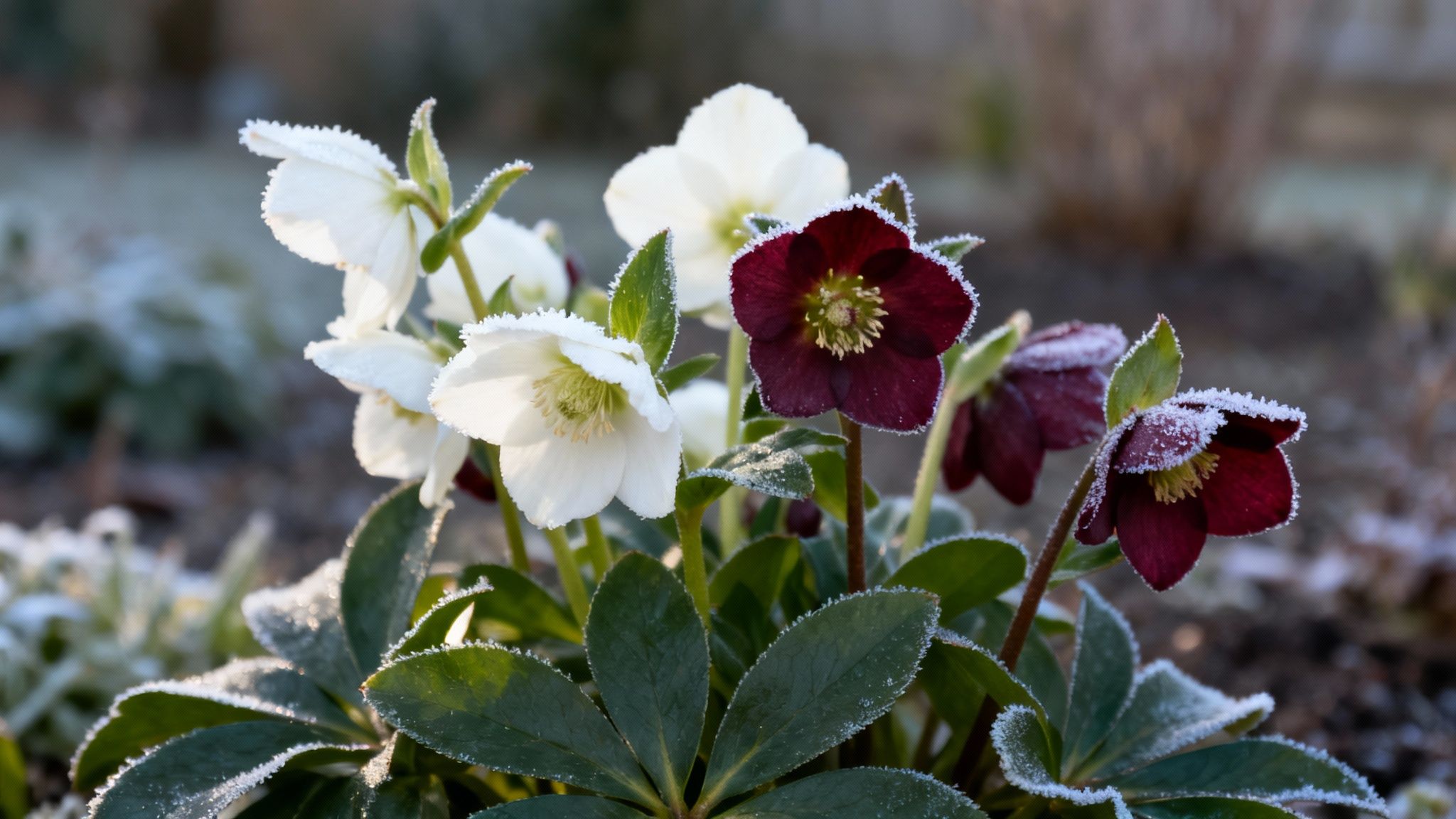
From the pure white blooms of Helleborus niger to the deep, moody purples of award-winning cultivars like 'Harvington Double Ellen Purple', their colour palette is both subtle and dramatic. Their leathery, palmate leaves provide year-round interest, forming handsome clumps that serve as a robust green backdrop for later-flowering plants. This early flowering provides a vital nectar source for emerging pollinators.
Siting and Care in UK Gardens
Hellebores prefer a sheltered spot in fertile, well-drained soil that is rich in organic matter. They are particularly happy in neutral to alkaline conditions, often found at the base of trees and shrubs where they are protected from harsh winter winds and summer sun. Once established, they are surprisingly tough and require minimal maintenance.
- Planting: Plant new hellebores in autumn or spring. Incorporate plenty of well-rotted leaf mould or garden compost into the planting hole to improve soil structure.
- Maintenance: In late winter, just before the flowers emerge, remove the old, tatty leaves to better display the blooms and prevent the spread of hellebore leaf spot.
- Feeding: Apply a mulch of leaf mould or a balanced granular fertiliser around the plant in spring after flowering has finished.
- Watering: While they are fairly drought-tolerant once settled, they perform best with consistent moisture, especially in drier shaded areas.
Design and Styling Ideas
Hellebores are ideal for creating sophisticated winter focal points. Plant them in groups under deciduous trees where their early flowers can be appreciated, pairing them with snowdrops, cyclamen, and winter aconites for a classic woodland scheme. They also perform beautifully in containers, combined with winter-flowering ivy and small shrubs for a long-lasting display on a shaded patio. For more ideas on tackling challenging spots, explore our guide to the best plants for dry shade to find resilient companions.
4. Ivy (Hedera spp.)
Ivy is a famously resilient and versatile evergreen, earning its place as one of the ultimate plants that grow in shade due to its ability to thrive in the deepest, darkest corners of a garden where little else will survive. This vigorous climber and groundcover offers year-round structure and texture, providing an invaluable green backdrop. Native to woodlands across Europe, Western Asia, and North Africa, its adaptability makes it a classic and reliable choice for challenging sites in UK gardens.
From the classic English Ivy (Hedera helix) to varieties with variegated, ruffled, or bird's-foot shaped leaves, the diversity within the species is surprising. Variegated cultivars like 'Goldheart' or 'Glacier' are particularly useful for introducing light and visual interest into gloomy areas. Its primary value lies in its ability to clothe unsightly walls, create living screens, or form a dense, weed-suppressing carpet.
Siting and Care in UK Gardens
Ivy is remarkably unfussy, tolerating a wide range of soil conditions, but it performs best in moist, well-drained, alkaline soil. While it excels in deep shade, many variegated forms will display more vibrant colours with some exposure to bright, indirect light. It can be planted at any time of year, provided the ground is not frozen or waterlogged.
- Planting: Plant in autumn or spring. Dig in plenty of well-rotted compost to give young plants a strong start, especially in poor soil.
- Training: For wall coverage, train young shoots along horizontal wires to establish an even framework. For ground cover, simply plant and let it spread.
- Pruning: Clip annually in spring or late summer to control its spread and keep it tidy, preventing growth from reaching windows, gutters, or roofs.
- Rejuvenation: Overgrown or congested ivy can be cut back hard in early spring every three to five years to encourage fresh, dense new growth from the base.
Design and Styling Ideas
Ivy is a superb problem-solver. Use it to create a classic, verdant covering for a north-facing wall, providing an evergreen backdrop for other shade-loving shrubs. As a groundcover, it is unparalleled for knitting together the space beneath mature trees where even grass struggles. For a more formal look, it can be trained over topiary frames or used to create living arches. If you need a robust solution for a challenging patch of ground, you can explore other options in our guide to the best ground cover plants for further inspiration.
5. Astilbe (Astilbe spp.)
Astilbe brings a soft, feathery elegance to the shadier parts of the garden, with its magnificent plume-like flowers rising above delicate, fern-like foliage. These hardy herbaceous perennials are essential plants that grow in shade, especially in areas with damp soil where they thrive. Hailing from the woodlands and ravines of Asia and North America, their natural habitat makes them perfectly suited for bog gardens, streamsides, or moist borders under a high canopy in UK gardens.
The airy flowers appear from late spring to late summer in a beautiful colour palette of white, pink, lilac, and deep crimson. Varieties range from the deep red of 'Fanal' to the creamy white of 'Bridal Veil', offering a gentle pop of colour that brightens gloomy corners. Beyond the flowers, their finely dissected, glossy green or bronze-tinged leaves provide textural interest throughout the growing season, contrasting beautifully with bolder foliage.
Siting and Care in UK Gardens
Astilbes are at their best in moisture-retentive, humus-rich soil in partial to full shade. While they tolerate deep shade, flowering will be more prolific with some dappled sunlight. Their one non-negotiable requirement is consistent moisture; they will not tolerate drying out, especially during hot summer periods.
- Planting: Plant bare roots or container-grown plants in spring or autumn. Amend the soil generously with well-rotted compost or leaf mould to improve moisture retention.
- Watering: Water regularly and deeply to ensure the soil never dries out. A thick layer of mulch will help conserve moisture and keep roots cool.
- Maintenance: Deadhead spent flowers if you wish, though some find the dried seed heads attractive for autumn and winter interest.
- Division: Divide congested clumps every three to four years in early spring to rejuvenate the plant and maintain flowering vigour.
Design and Styling Ideas
Astilbes excel in woodland and Japanese-inspired garden designs, where their fine texture and graceful form create a sense of calm. Plant them in drifts along a shaded stream or pond edge for a stunning, naturalistic display. Their airy structure provides a perfect foil for the bold, architectural leaves of Hostas and the leathery fronds of ferns like Dryopteris. They also perform wonderfully in containers, provided they are kept well-watered; learn more about creating a lush garden with potted plants to bring this look to your patio.
6. Coral Bells/Heuchera (Heuchera spp. and Heucherella hybrids)
Coral Bells, or Heucheras, are semi-evergreen perennials prized for their incredible foliage, offering a kaleidoscope of colour to the shadiest corners of your garden. These hardy, mound-forming plants that grow in shade provide year-round interest with leaves in shades of deep burgundy, vibrant lime, rich copper, and frosty silver. Beyond their impressive leaves, they produce delicate wands of tiny, bell-shaped flowers in summer, which are highly attractive to bees and other pollinators.
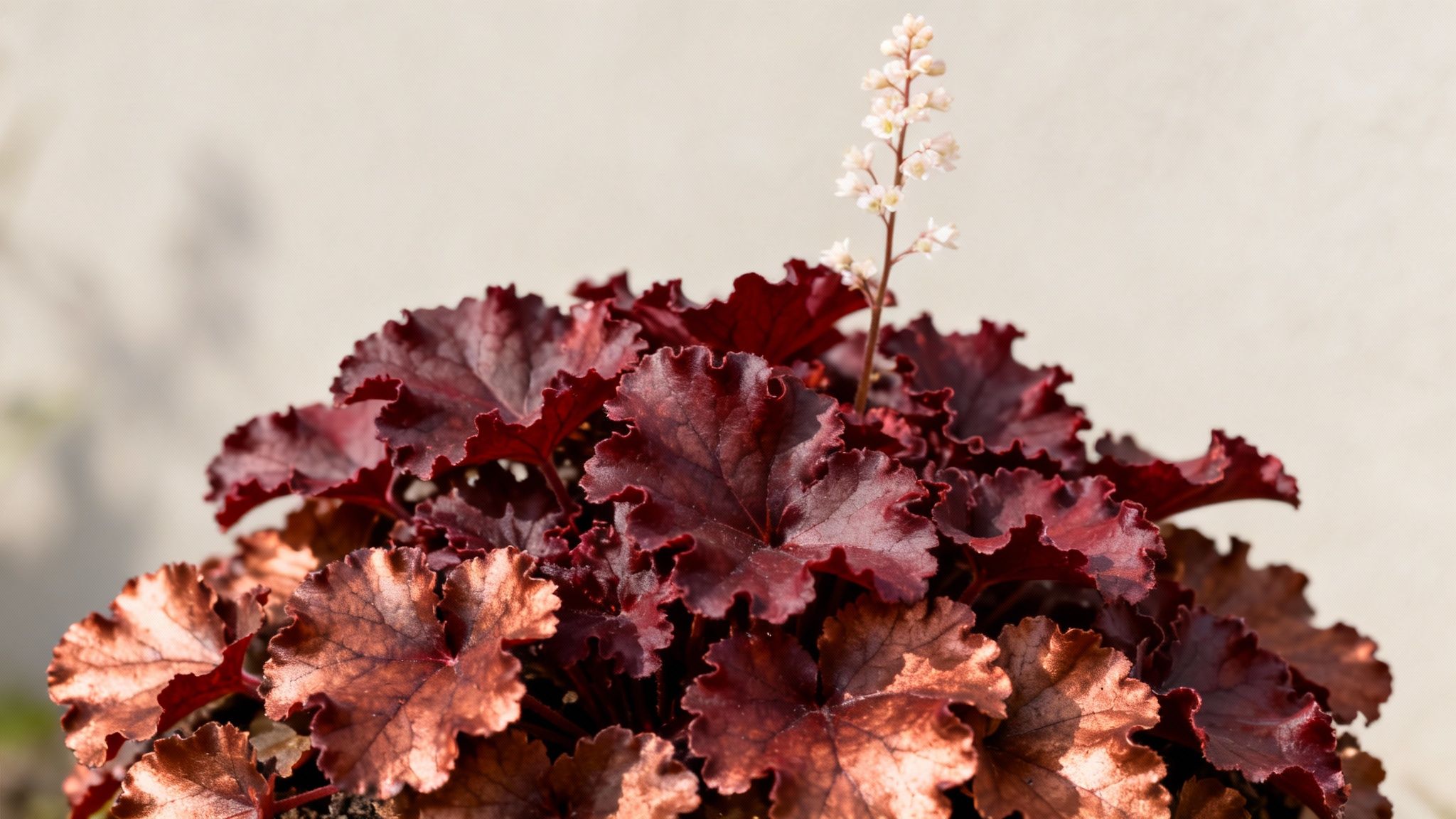
Native to North American woodlands, Heucheras are naturally adapted to life under a tree canopy. Modern hybrids have expanded the colour palette dramatically, with varieties like the almost-black 'Obsidian' or the citrus-toned 'Lime Marmalade'. This makes them an invaluable tool for adding bold, unexpected colour accents where flowering plants might fail to thrive.
Siting and Care in UK Gardens
Heucheras prefer partial shade and well-drained, humus-rich soil. While they are shade-tolerant, the darker-leaved varieties can often handle more direct sun, whereas lighter-coloured cultivars may scorch in harsh afternoon light. They are generally low-maintenance but benefit from a little attention to keep them looking their best.
- Planting: Plant in spring or autumn. Ensure the crown is not buried too deep, as this can lead to rot.
- Watering: Water regularly during their first year and in prolonged dry spells, but avoid waterlogged conditions, especially in winter.
- Maintenance: Deadhead spent flower spikes to encourage a tidier appearance and potentially more blooms. Tidy up any tatty-looking older leaves in spring to make way for new growth.
- Division: Congested clumps can be lifted and divided every three to four years in early spring to rejuvenate the plant and create new ones.
Design and Styling Ideas
The vibrant foliage of Coral Bells makes them perfect for the front of a shaded border or for creating striking contrasts in mixed container displays. Pair deep purple varieties like 'Plum Royale' with the silvery fronds of a Japanese painted fern (Athyrium niponicum) for a stunning textural and colour combination. They also work wonderfully as an underplanting for shrubs or along a shaded walkway, where their colourful mounds can be fully appreciated. For a modern look, plant a single variety in a minimalist pot on a shady patio.
7. Brunnera (Brunnera macrophylla)
Brunnera, often called Siberian Bugloss, is the epitome of elegance in a shade garden, prized for its delicate sprays of true blue, forget-me-not-like flowers in spring. These hardy perennials are fantastic plants that grow in shade, forming attractive, weed-suppressing clumps of heart-shaped leaves that remain a feature long after the flowers have faded. Their ability to light up darker areas, especially the variegated cultivars, makes them a sophisticated choice for any UK garden seeking both floral beauty and season-long foliage interest.
Cultivars like 'Jack Frost', with its intricate silver-dusted leaves, or 'Looking Glass', which is almost entirely silver, offer incredible visual appeal. This striking foliage acts like a natural spotlight under deciduous trees or in gloomy corners. The contrast between the ethereal blue flowers and the bold, often variegated, leaves provides a dynamic display from April through to May.
Siting and Care in UK Gardens
Brunnera performs best in consistently moist, well-drained soil with plenty of organic material, mimicking its native woodland habitat. It thrives in partial to full shade; while it can tolerate some morning sun, the leaves of variegated types can scorch in harsh direct sunlight, particularly in the south of the UK.
- Planting: Plant in autumn or early spring to allow the root system to establish.
- Watering: Ensure the soil does not dry out, especially during its first year and in prolonged dry periods during summer.
- Maintenance: Deadhead after flowering to tidy the plant and prevent self-seeding. If the foliage looks tired by mid-summer, you can cut it back to encourage a fresh flush of new leaves.
- Pest Control: Generally trouble-free, but slugs and snails may occasionally graze on the young foliage.
Design and Styling Ideas
Brunnera is perfect for underplanting shrubs and roses or creating a textured groundcover in a woodland-style garden. The silver-leaved varieties are exceptional for brightening up dark pathways when planted en masse. Pair them with other shade lovers like Hellebores, Ferns, and early-flowering bulbs such as snowdrops for a layered, spring-focused display. Their delicate flowers also look beautiful in small, informal cut flower arrangements.
8. Epimedium (Epimedium spp.)
Often called Fairy Wings or Bishop’s Hat, Epimedium is a graceful and surprisingly tough groundcover that brings a delicate, airy quality to the darkest corners of the garden. These exceptional plants that grow in shade are prized for their elegant, spurred flowers that dance on wiry stems in spring. Native to the woodland floors of Asia and the Mediterranean, they are perfectly suited to the dry shade found under established trees, a notoriously difficult spot for many other plants to thrive.
The foliage is just as captivating as the flowers. Heart-shaped leaflets often emerge with a bronze or reddish flush before maturing to a lush green, providing a rich, textured carpet. In autumn, many varieties take on spectacular burgundy and red tones, offering valuable late-season interest. This multi-season appeal makes Epimedium an indispensable plant for creating layered and dynamic shade displays.
Siting and Care in UK Gardens
Epimediums are adaptable but perform best in humus-rich, moist, but well-drained soil in partial to full shade. Once established, many species are remarkably drought-tolerant, making them ideal for planting beneath mature trees where root competition for water is high.
- Planting: Plant in spring or autumn. For quick groundcover, space plants about 25-30 cm (10-12 inches) apart.
- Maintenance: In late winter, around February, shear back the old, leathery foliage to the ground. This tidies the plant and ensures the delicate new flowers and colourful spring foliage are not hidden.
- Soil: They appreciate a generous mulch of leaf mould or well-rotted compost after the annual cut-back to retain moisture and suppress weeds.
- Division: To propagate or rejuvenate congested plants, lift and divide established clumps every four to five years in early spring.
Design and Styling Ideas
Epimedium is a superb choice for creating a naturalistic, woodland feel. Use it as a dense groundcover under deciduous trees and shrubs, where its spring flowers will appear before the canopy fully leafs out. Its fine texture provides a beautiful contrast to the bold leaves of Hostas and the feathery fronds of ferns like Polystichum setiferum. Plant it along the edge of a shaded pathway to soften hard lines, or use it in an Asian-inspired garden scheme where its delicate structure can be fully appreciated.
9. Solomon's Seal (Polygonatum spp.)
Solomon's Seal brings an unparalleled architectural elegance to the shade garden with its gracefully arching stems and refined appearance. This hardy, rhizomatous perennial is a native woodland plant, making it one of the most natural and sophisticated plants that grow in shade. Its hanging, bell-shaped, white flowers, tipped with green, dangle delicately beneath pairs of oval leaves, creating a look of structured, understated beauty perfect for UK gardens.
This plant offers multi-season interest; the spring flowers are followed by small, blue-black berries in autumn, which are a valuable food source for birds. As the season ends, the foliage turns a glorious golden-yellow, providing a final splash of colour before dying back for winter. Its graceful form and slow-spreading habit make it an invaluable addition for creating depth and structure in the dimmest corners of the garden.
Siting and Care in UK Gardens
Solomon's Seal flourishes in humus-rich, moist, and well-drained soil, mimicking its native woodland floor habitat. It is perfectly suited to partial or full shade, such as beneath deciduous trees or on the north side of a house. It is a low-maintenance plant once established.
- Planting: Plant the fleshy rhizomes in autumn, about 5-8 cm deep, in soil enriched with leaf mould or well-rotted compost.
- Watering: Ensure the soil remains consistently moist, especially during its establishment period and through any dry spells in summer.
- Pest Control: Keep an eye out for Solomon's seal sawfly larvae, which can quickly defoliate the stems. Check the undersides of leaves and remove them by hand or treat affected stems promptly.
- Division: Divide congested clumps in early spring just as new growth appears to propagate new plants and maintain the health of the original clump.
Design and Styling Ideas
The architectural form of Solomon's Seal makes it a superb design element. Plant it in drifts to create a flowing understory beneath trees, where its arching stems contrast beautifully with the upright fronds of ferns and the bold foliage of Hostas. It adds height and a sense of movement to shaded borders and looks stunning in large, mixed containers where its form can be appreciated up close. The cut stems are also highly prized by florists for adding a graceful line to arrangements.
10. Lamium/Dead Nettle (Lamium maculatum varieties)
Lamium, commonly known as dead nettle, is a vigorous and fast-spreading groundcover that brings a splash of light to the darkest parts of a garden. These semi-evergreen perennials are exceptional plants that grow in shade, forming dense mats of beautifully variegated foliage that effectively suppress weeds. Originating from the woodlands of Europe and Asia, their natural habitat makes them perfectly suited to the conditions found under trees or in the shadow of north-facing structures.
The primary appeal of Lamium lies in its spectacular foliage, which often features silver, gold, or cream markings on a green background. Varieties like 'White Nancy' offer striking silver leaves with a fine green edge, while 'Beacon Silver' has a similar look but with pinkish-purple flowers. These plants are not just about leaves; they also produce charming hooded flowers in shades of white, pink, or purple from late spring into summer, attracting valuable pollinators like bees.
Siting and Care in UK Gardens
Lamium is incredibly easy to grow and thrives in moist, well-drained soil, though it is tolerant of a wide range of conditions, including dry shade once established. Its foliage colour is often most vibrant in partial shade, as intense sun can scorch the leaves.
- Planting: Plant in spring or autumn to allow the roots to establish. Space plants approximately 30-45 cm (12-18 inches) apart to encourage rapid coverage.
- Watering: Water regularly after planting until established. Mature plants have good drought tolerance but appreciate a drink during prolonged dry periods.
- Maintenance: Deadhead spent flowers to tidy the plant and encourage a second flush. If it becomes too sprawling, cut it back in early spring to promote fresh, compact growth.
- Division: To maintain vigour and control its spread, divide overcrowded clumps every two to three years in the spring.
Design and Styling Ideas
Lamium is a problem-solver for difficult, shady spots. Use it to create a living carpet under large trees where grass struggles to grow, or let it spill over the edges of raised beds and shaded retaining walls to soften hard landscaping. Its fine texture and bright foliage contrast beautifully with the bold leaves of Hostas and the delicate fronds of ferns, creating a rich, layered look. For those with shady patio areas, Lamium makes a superb 'spiller' in mixed containers, trailing elegantly over the pot's edge.
Shade Garden: 10-Plant Comparison
Your Thriving Shade Garden Awaits
We've journeyed through the cool, calm corners of the garden, uncovering a vibrant world of plants that grow in shade. Far from being a limitation, shady areas present a unique opportunity to create a garden sanctuary filled with subtle beauty, lush textures, and serene elegance. The idea that shade equals a drab, lifeless space is a myth we can now confidently dispel. Your garden's shadiest spots are canvases awaiting your creative touch.
From the architectural grace of Solomon's Seal and the dramatic foliage of Hostas to the delicate, vibrant plumes of Astilbe, the plants we've explored offer a rich and diverse palette. You now have a foundational list of reliable performers, each bringing its own character to the garden design. The key takeaway is not just a list of names, but a new perspective: successful shade gardening is about selection, not struggle. It’s about embracing the conditions you have and choosing plants that will not just survive, but truly thrive.
Key Principles for Shade Gardening Success
Before you head to the garden centre, let's crystallise the most important lessons from our exploration. Mastering these core concepts will transform your approach and ensure your efforts are rewarded with a flourishing, low-maintenance garden.
- Know Your Shade: The single most critical step is to accurately assess your environment. Is it the deep, constant shade cast by a building, the dry shade under a mature evergreen, or the dappled light filtering through a deciduous canopy? Each type of shade dictates which plants will prosper. A Hosta that loves damp shade will languish in the dry soil beneath a pine tree.
- Embrace Foliage and Form: In the absence of abundant blooms, foliage becomes the star. Celebrate this by focusing on contrasting textures, shapes, and colours. Combine the bold, ribbed leaves of a Hosta with the feathery fronds of a Dryopteris fern, or the silvery sheen of Brunnera macrophylla 'Jack Frost' against the deep burgundy of a Heuchera. This interplay of form creates visual interest that lasts far longer than any flower.
- Layer for Impact: Create depth and a sense of lushness by layering your plantings. Use groundcovers like Lamium to carpet the floor, mid-height perennials like Hellebores and Ferns to fill the body of the border, and taller shrubs or climbers like Ivy to provide a vertical backdrop. This tiered approach makes a space feel established and intentional.
- Soil is Everything: Shady areas, particularly dry shade under trees, often suffer from poor, nutrient-depleted soil. Amending your soil with generous amounts of organic matter, such as well-rotted compost or leaf mould, is non-negotiable. This improves moisture retention, provides essential nutrients, and gives your chosen plants the best possible start.
Your Actionable Next Steps
Feeling inspired? It's time to turn that inspiration into action. Here’s a simple plan to get you started on your shade gardening journey:
- Observe and Document: Spend a day observing your shady patch. Note how the light changes. Is it morning shade and afternoon sun, or all-day dappled light? Take a handful of soil; is it consistently damp or bone dry?
- Choose Your "Anchor" Plants: Select one or two key plants from our list that are perfectly suited to your specific conditions. These will form the backbone of your design. Perhaps a cluster of striking Hostas or a drift of elegant Ferns.
- Build Your Plant Palette: With your anchors chosen, select companion plants that offer contrasting or complementary textures and forms. Use the principles of layering to fill in the gaps.
- Prepare and Plant: Don't skip the soil preparation. Once your beds are ready, arrange your plants (still in their pots) to finalise the layout before you start digging. Water them in thoroughly after planting.
The quiet, shaded corners of your property hold immense potential. They can become tranquil retreats, secret gardens, or lush green tapestries that provide a cool respite on a warm day. By working with nature and selecting the right plants that grow in shade, you are not just planting a garden; you are cultivating an atmosphere. The journey from a challenging, overlooked space to a thriving, beautiful sanctuary is one of the most rewarding in all of gardening. Your thriving shade garden truly does await.