
Ground cover plants are the unsung heroes of a well-designed garden, forming a living carpet that suppresses weeds, conserves moisture, and adds year-round texture and colour. Far more than just functional gap-fillers, the best ground cover plants create a cohesive, low-maintenance landscape, turning challenging areas like steep slopes, dry shade, or sun-baked spots into showcases of resilient beauty. They knit the garden together, softening hard edges and providing a lush, green foundation that makes feature plants and shrubs truly stand out.
Choosing the right plant for the right place is paramount. A species that thrives in damp, shady conditions will struggle in a hot, dry gravel bed, and a delicate alpine will be overwhelmed in a space that needs robust, weed-suppressing coverage. This guide is designed to remove the guesswork, helping you select the perfect living carpet for your specific garden needs. Whether you're aiming for a fragrant thyme pathway that releases scent with every step, a lush evergreen expanse under trees, or a vibrant tapestry of flowers that attracts essential pollinators, finding the ideal match is key to success.
This curated roundup explores 10 of the most reliable and attractive options perfectly suited for UK gardens. We will delve into each plant's unique characteristics, outlining its ideal growing conditions, soil preferences, maintenance requirements, and design potential. From the rugged resilience of Sedum to the shade-loving elegance of Vinca minor, this article provides the practical, actionable insights you need to build a stunning, resilient garden from the ground up. Prepare to transform bare patches of soil into beautiful, thriving features.
1. Creeping Thyme (Thymus serpyllum)
A superb choice for sun-drenched, well-drained spots, Creeping Thyme is a fragrant, low-growing perennial that forms a dense, weed-suppressing mat. This Mediterranean native is one of the best ground cover plants for adding texture, colour, and scent to the garden. It produces a profusion of delicate pink, purple, or white flowers from early to mid-summer, attracting bees and other vital pollinators.

Its resilience and drought tolerance make it a favourite in challenging garden situations. You can see it used to brilliant effect in RHS Garden Wisley's Mediterranean garden, where it softens the edges of paving. It’s also a common feature in coastal Cornish gardens, thriving where other plants might struggle with salty air and sandy soil.
Why Choose Creeping Thyme?
This plant is exceptionally versatile. It’s tough enough to handle light foot traffic, making it perfect for creating a "living pathway" or planting between paving stones. When stepped on, it releases a wonderful, herby fragrance, adding a sensory dimension to your garden experience. It excels in rockeries, on dry slopes, or cascading over the edges of containers and low walls.
Pro Tip: For a seamless carpet of thyme, space individual plants approximately 30-45cm apart. This allows them enough room to spread and join up, typically achieving complete coverage within a single growing season.
Planting & Care Tips
- Best Time to Plant: Settle young plants in spring or early autumn to give them the best chance to establish a strong root system.
- Soil Needs: Thrives in poor, free-draining soil. Avoid heavy clay or waterlogged conditions, as this can lead to root rot. Amending soil with grit can improve drainage significantly.
- Maintenance: Once established, Creeping Thyme is very low-maintenance. A light trim after flowering can help maintain a neat, compact shape and encourage denser growth.
- Companion Planting: It pairs beautifully with other sun-loving, drought-tolerant plants like Lavender, Sedum, and Rosemary, creating a cohesive and water-wise planting scheme.
2. Ajuga Reptans (Bugleweed)
An excellent choice for those challenging shady spots, Ajuga Reptans is a vigorous, semi-evergreen perennial that quickly forms a dense, weed-suppressing carpet. Also known as Bugleweed, this hardy plant is one of the best ground cover plants for providing year-round interest with its attractive purple, bronze, or variegated foliage. It sends up beautiful spikes of blue, purple, or white flowers in late spring and early summer, providing a valuable nectar source for bees.
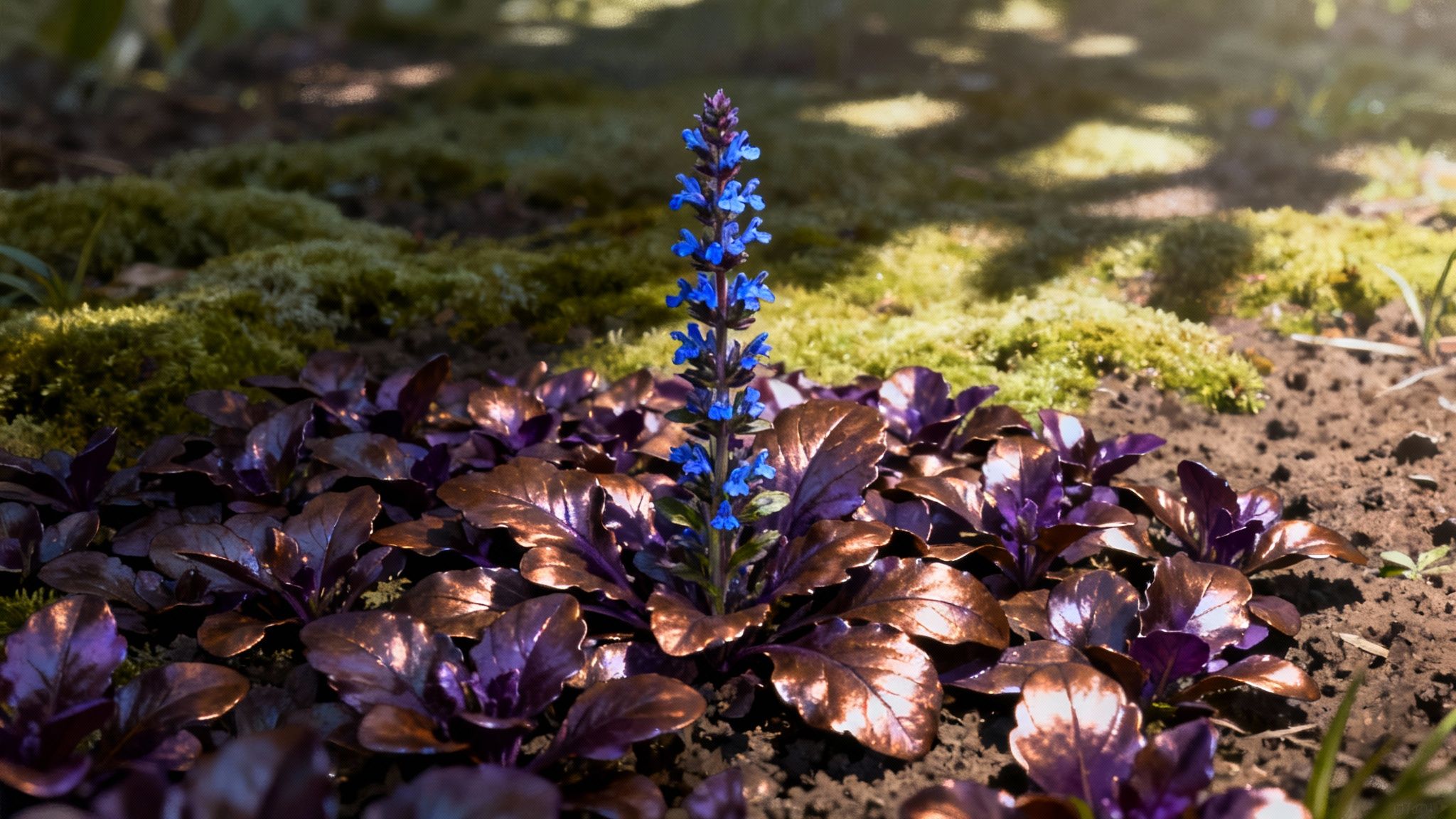
Its ability to thrive in damp shade makes it indispensable in tricky garden areas where other plants fail. You can see it used effectively in many National Trust properties, where it provides lush underplanting for rhododendrons and woodland borders. It's also a popular solution in London townhouse gardens, where it creates a vibrant, low-maintenance tapestry in enclosed, shaded spaces.
Why Choose Ajuga Reptans?
This plant is a superb problem-solver for difficult areas, especially under trees or on shaded banks where grass struggles to grow. Its spreading nature, sending out runners or "stolons," allows it to cover ground rapidly. The glossy foliage offers fantastic colour contrast, with varieties like 'Atropurpurea' providing deep bronze-purple leaves that stand out against greener plants. It's also a great choice for low-maintenance garden ideas due to its minimal care needs once established.
Pro Tip: To prevent Ajuga from becoming too invasive in mixed borders, you can install a root barrier or simply trim back the runners each spring to keep it within its designated area.
Planting & Care Tips
- Best Time to Plant: Plant in spring or autumn. This allows the plant to establish itself in cooler, moister conditions before the extremes of summer or winter.
- Soil Needs: Ajuga is very adaptable but prefers moist, well-drained soil. It will tolerate most soil types, from clay to loam, as long as it doesn't dry out completely.
- Maintenance: A very low-effort plant. You can deadhead the flower spikes after they fade to tidy its appearance and encourage more energy into foliage and root growth. Divide clumps every few years if they become congested.
- Companion Planting: It pairs wonderfully with other shade-loving plants. Combine it with the architectural leaves of Hostas, the delicate fronds of Ferns, and the spring flowers of Brunnera for a layered, textured shade garden.
3. Sedum Species (Stonecrop)
A wonderfully diverse family of succulent groundcovers, Sedum offers remarkable variety in colour, texture, and form. Also known as Stonecrop, these plants are defined by their fleshy, water-storing leaves, making them exceptionally low-maintenance and one of the best ground cover plants for dry, sunny areas. With thousands of varieties, they are perfect for creating modern, architectural garden designs and require virtually no fertiliser or pest management.

Their resilience makes them a popular choice for innovative landscaping. You can see extensive Sedum collections at RHS Garden Wisley and Kew Gardens, while the Chelsea Flower Show regularly features stunning sedum-based designs. They are increasingly used on green roofs across London for their sustainability benefits and minimal upkeep, a testament to their tough nature.
Why Choose Sedum Species?
Sedums are the ultimate problem-solvers for challenging spots where other plants fail. They thrive in poor, shallow soil, making them ideal for rock gardens, gravel beds, filling crevices in walls, or covering sunny banks. Their year-round interest, from the vibrant foliage of spring and summer to the architectural seedheads in winter, ensures your garden never has a dull moment. Their fantastic drought tolerance also makes them a cornerstone of water-wise gardening schemes.
Pro Tip: For a dynamic, tapestry-like effect, combine several low-growing Sedum varieties with different foliage colours and textures. Planting varieties like the lime-green Sedum acre alongside the rich burgundy of Sedum spurium 'Voodoo' creates a stunning visual contrast that evolves with the seasons.
Planting & Care Tips
- Best Time to Plant: Plant in spring after the last frost has passed. This gives them a full growing season to establish a strong root system before winter.
- Soil Needs: Excellent drainage is non-negotiable. Sedums flourish in gritty, sandy, or loamy soil and will rot in heavy, waterlogged clay. They do not require rich compost.
- Maintenance: Once established, Sedums are incredibly self-sufficient. Leave the flower heads on over winter to provide structure and a food source for birds, then trim them back in early spring to make way for new growth.
- Companion Planting: They look fantastic planted with ornamental grasses like Stipa tenuissima, other succulents like Sempervivums, and hardy perennials like Echinacea. Explore more UK drought-tolerant plants on sprucecollective.co.uk to create a resilient garden.
4. Hedera Helix (English Ivy)
A classic and vigorous evergreen, English Ivy offers year-round structure with its distinctive heart-shaped leaves. While often seen as a climber, it excels as a spreading groundcover, forming a dense, weed-suppressing carpet that provides an invaluable habitat for wildlife. Its versatility makes it one of the best ground cover plants for tackling challenging areas.
Its ability to thrive in deep shade where other plants fail is legendary. You can see it used extensively across National Trust properties to stabilise banks and add historic character to woodland gardens. Likewise, many RHS gardens showcase variegated cultivars like 'Goldchild' or 'Glacier' to bring light and texture to shaded borders.
Why Choose English Ivy?
This plant is a superb problem-solver. It’s perfect for covering large, difficult areas, including steep slopes or the dry, dark ground beneath mature trees. Its dense growth habit is highly effective at preventing soil erosion and outcompeting weeds once established. Ivy also provides crucial shelter for insects and nesting sites for birds, adding ecological value to your garden.
Pro Tip: Use ivy with caution near buildings, especially on older, porous brickwork or walls with existing cracks, as its aerial roots can be intrusive. Regular trimming is key to keeping it well-behaved and within its designated boundaries.
Planting & Care Tips
- Best Time to Plant: Plant young ivy in autumn or spring. This allows the roots to establish before the extremes of summer heat or winter cold.
- Soil Needs: Extremely adaptable, it tolerates a wide range of soil types, from heavy clay to poor, dry soil. It performs best in moist, well-drained, alkaline conditions.
- Maintenance: Once established, it requires minimal care. Trim the edges two or three times a year to control its spread and maintain a neat appearance. A hard prune in spring can rejuvenate older, woody patches.
- Companion Planting: It creates a wonderful dark green backdrop for shade-loving plants with contrasting foliage, such as Hostas, Ferns (like Dryopteris), and Hellebores, creating a lush, layered look. You can find more ideas for gardening on a slope where ivy is often a key player.
5. Geranium Species (Hardy Geranium/Cranesbill)
A true workhorse of the British garden, Hardy Geraniums are reliable, herbaceous perennials that provide long-lasting colour and fantastic weed suppression. Not to be confused with tender bedding pelargoniums, these Cranesbills form attractive mounds of divided foliage, which often takes on beautiful burnished tones in autumn. They are among the best ground cover plants for their versatility and prolonged flowering season.
Their ability to thrive in a range of conditions makes them a garden design staple. You can see them used extensively in the celebrated gardens of Beth Chatto, where they contribute to beautiful and ecologically sound planting schemes. Likewise, numerous RHS Gardens use them to brilliant effect as underplanting for roses or to soften the edges of mixed borders, showcasing their adaptability.
Why Choose Hardy Geraniums?
Their main appeal lies in their sheer reliability and long season of interest. Most varieties bloom prolifically from late spring to late summer, attracting bees and other beneficial insects. They quickly form dense clumps of foliage that effectively smother emerging weeds, reducing garden maintenance. Their varied forms mean there is a hardy geranium for almost any situation, from sun-drenched gravel gardens to damp, shady corners under trees.
Pro Tip: For a really long flowering display, combine different varieties. Plant an early-flowering type like Geranium phaeum with a later one such as 'Rozanne', which can flower right through to the first frosts.
Planting & Care Tips
- Best Time to Plant: Plant bare-root or container-grown plants in spring or autumn. This gives them ample time to establish before the extremes of summer heat or winter cold.
- Soil Needs: Most hardy geraniums are unfussy and will grow well in any reasonable garden soil, as long as it isn't waterlogged. Some, like G. cinereum, prefer sharper drainage.
- Maintenance: Deadhead spent blooms regularly to encourage more flowers. Many clump-forming types benefit from the "Chelsea Chop" or a hard cutback in mid-summer after their first flush of flowers to promote fresh foliage and a second wave of blooms.
- Companion Planting: They are perfect for underplanting roses and shrubs, where they hide bare stems and add a layer of colour. They also combine well with Alliums, Salvias, and ornamental grasses.
6. Vinca Minor (Lesser Periwinkle)
A truly reliable choice for shaded or tricky spots, Lesser Periwinkle is a vigorous, evergreen groundcover that offers year-round interest. Its glossy, dark green leaves form a dense, weed-suppressing mat, punctuated by charming, star-like violet-blue flowers from spring through to autumn. This classic plant is one of the best ground cover plants for bringing life and colour to areas where other plants might fail.
Its ability to thrive in partial to full shade makes it invaluable for underplanting trees and shrubs. You can often see it used in National Trust gardens to create a traditional, low-maintenance carpet beneath mature magnolias or rhododendrons. It’s also a frequent feature in Chelsea Flower Show shade garden designs, where its resilience and long-lasting appeal are highly prized.
Why Choose Vinca Minor?
This plant is an exceptional problem-solver for difficult, low-light areas. Its trailing stems root wherever they touch the ground, allowing it to quickly colonise bare earth and prevent soil erosion on banks or slopes. It provides a lush, green backdrop for other shade-loving plants and requires very little attention once established, making it perfect for a low-effort, high-impact garden scheme. If you're looking for more inspiration, you can learn more about plants for partial shade to complement Vinca Minor.
Pro Tip: While its spreading habit is a strength, it can become invasive if not managed. Plant it where its growth can be contained by paths, walls, or lawn edges to prevent it from overwhelming less vigorous neighbours.
Planting & Care Tips
- Best Time to Plant: Plant in autumn or spring to allow the roots to establish before the extremes of summer heat or winter cold.
- Soil Needs: Adaptable to most soil types but performs best in moist, well-drained soil rich in organic matter. It is not well-suited to very dry conditions.
- Maintenance: Exceptionally low-maintenance. To encourage denser, bushier growth and more prolific flowering, shear the entire plant back with garden shears in late winter or very early spring.
- Companion Planting: Pairs beautifully with shade-loving bulbs like Snowdrops, Winter Aconite, and English Bluebells, whose foliage will die back just as the Vinca is putting on its main display.
7. Lamium Maculatum (Dead Nettle)
An excellent choice for illuminating shady corners, Lamium Maculatum, or Dead Nettle, is a fast-spreading, semi-evergreen perennial. It forms a lush carpet of heart-shaped leaves, often beautifully variegated with silver, and produces charming whorls of hooded pink, purple, or white flowers in late spring and early summer. It’s one of the best ground cover plants for underplanting shrubs or brightening up woodland settings.
Its ability to thrive in low light makes it invaluable for difficult garden spots. You can see Lamium used to great effect in RHS Garden Wisley’s shade garden displays, where its silvery foliage seems to glow. Contemporary urban gardens also favour it as a stylish, low-maintenance solution for areas that receive little direct sun.
Why Choose Lamium Maculatum?
This plant’s main appeal is its decorative foliage, which provides year-round interest long after the flowers have faded. It spreads via creeping stems that root where they touch the ground, quickly forming a dense, weed-suppressing mat. It's particularly useful for covering bare earth under trees where grass struggles to grow, and its non-invasive nature makes it a reliable and manageable choice.
Pro Tip: Position Lamium where its silver markings can catch any available light. This will maximise its reflective quality, making dark areas of the garden appear brighter and more dynamic.
Planting & Care Tips
- Best Time to Plant: Plant young specimens in spring or autumn to allow them to establish before the extremes of summer heat or winter cold.
- Soil Needs: Prefers moist, well-drained soil but is tolerant of a range of conditions, including dry shade once established. Avoid waterlogged ground.
- Maintenance: A very low-effort plant. A hard cut-back in late winter or early spring will encourage a fresh flush of vigorous, compact growth. Deadheading after the first flowering can sometimes promote a second, smaller bloom.
- Companion Planting: It creates a beautiful tapestry of textures when planted with other shade-lovers like Hostas, Ferns, and Hellebores, providing contrast in both form and colour.
8. Pachysandra Terminalis (Japanese Spurge)
An excellent solution for tricky, shaded areas, Japanese Spurge is a slow-spreading evergreen that forms a lush, uniform carpet of glossy, dark green leaves. This shade-loving plant is one of the best ground cover plants for creating a formal, structured look beneath trees or in north-facing garden beds. It produces small, subtly fragrant white flowers in early spring, adding a delicate touch to its impressive foliage.
Its ability to thrive where little else will grow makes it a valuable asset in garden design. You can see it used to great effect in the woodland gardens at Kew Gardens, where it provides year-round interest and suppresses weeds under the canopy of large trees. It is also a classic choice in formal settings, like those at RHS Wisley, for creating neat, evergreen borders.
Why Choose Japanese Spurge?
This plant is the ultimate problem-solver for deep or partial shade. Its dense growth habit creates an impenetrable mat that chokes out weeds, drastically reducing garden maintenance. Pachysandra is perfect for underplanting large shrubs like Rhododendrons and Azaleas, covering bare ground on shaded slopes, or creating a refined, tranquil feel reminiscent of historic Japanese gardens.
Pro Tip: In very deep shade, the standard all-green form of Pachysandra terminalis will perform much better and maintain a richer colour than variegated varieties, which may lose their distinct markings in low light.
Planting & Care Tips
- Best Time to Plant: Establish young plants in spring or autumn to allow them to settle in before the extremes of summer heat or winter cold.
- Soil Needs: Prefers moist, well-drained, acidic soil rich in organic matter. It will not tolerate waterlogged conditions or very dry, poor soil.
- Maintenance: Exceptionally low-maintenance once established. It requires no pruning and will slowly spread to fill the available space. Ensure it receives adequate water during its first year.
- Companion Planting: It creates a beautiful textured carpet beneath shade-loving feature plants like Japanese Acers, Hostas, and Ferns, providing a classic woodland garden aesthetic.
9. Saxifraga stolonifera (Strawberry Begonia/Mother of Thousands)
An elegant choice with distinctive foliage, Saxifraga stolonifera forms a spreading mat of rounded, olive-green leaves with attractive silver veining. Though often grown as a houseplant in the UK, it is one of the best ground cover plants for creating lush, exotic effects in sheltered summer bedding schemes and containers. In late spring and early summer, it sends up delicate, airy sprays of small, white, asymmetrical flowers on wiry red stems.
Its common name, "Mother of Thousands," comes from its charming habit of sending out long, strawberry-like runners (stolons) that produce tiny plantlets at their tips. This can be seen to great effect in coastal Cornish gardens, where mild microclimates allow it to grow outdoors year-round. It is also a feature in contemporary displays, such as those at the Chelsea Flower Show, where its unique texture is used in shady, foliage-focused designs.
Why Choose Strawberry Begonia?
This plant’s main appeal lies in its decorative foliage and effortless propagation. The cascading runners make it perfect for hanging baskets, the edges of window boxes, or spilling over low walls, creating a soft, trailing effect. Its ability to thrive in dappled shade makes it an excellent choice for underplanting larger shrubs or for brightening up gloomy corners of the garden where other plants might fail. It's a fantastic solution for gardeners looking for both visual interest and easy-to-grow ground cover.
Pro Tip: To quickly establish a dense patch of ground cover, simply peg the plantlets at the end of the runners into the soil around the mother plant. They will readily root and begin to fill in any gaps, creating a continuous carpet of foliage.
Planting & Care Tips
- Best Time to Plant: Plant out after the last frost in late spring for summer ground cover. In milder regions, it can be planted in spring or autumn.
- Soil Needs: Prefers moist, humus-rich, and well-draining soil. It will not tolerate waterlogged conditions or extreme drought.
- Maintenance: In most of the UK, treat it as a tender perennial. Lift plants before the first frost and pot them up to overwinter on a bright windowsill. Its trailing nature is also perfectly suited to container gardening for beginners.
- Companion Planting: Pairs beautifully with other shade-tolerant, foliage-focused plants like Hostas, Ferns, and Heucheras, creating a tapestry of contrasting textures and colours.
10. Helleborus Niger (Christmas Rose)
An elegant, evergreen choice for shaded areas, Helleborus niger brings sophisticated beauty to the garden when little else is in flower. Known as the Christmas Rose, it produces pristine white (often tinged with pink) flowers from December through to February, providing vital winter interest. Its glossy, deeply-lobed foliage forms a handsome, weed-suppressing clump, making it one of the best ground cover plants for underplanting trees and shrubs.

This plant offers a refined structure that persists all year. You can see hellebores used to great effect in the winter gardens at RHS Garden Wisley, and they are a key feature for winter structure at Sissinghurst. Their ability to thrive in partial shade makes them a popular choice for brightening up gloomy corners or the sophisticated borders of London townhouse gardens.
Why Choose Helleborus Niger?
The Christmas Rose is invaluable for its ability to flower during the bleakest months, offering a source of nectar for any early-emerging pollinators. Its leathery, evergreen leaves provide excellent year-round coverage, creating a lush texture that contrasts well with bare winter stems. Long-lived and reliable, these plants slowly form substantial clumps that become more impressive with each passing year, requiring very little intervention.
Pro Tip: In late winter or very early spring, carefully snip off the old, tatty-looking leaves at the base of the plant. This not only improves its appearance but also reveals the new flowers and helps to prevent the spread of fungal diseases like hellebore leaf spot.
Planting & Care Tips
- Best Time to Plant: Settle young plants in spring or autumn. This allows them to establish in cool, moist soil before the extremes of summer heat or winter cold.
- Soil Needs: Prefers rich, moist, but well-drained neutral to alkaline soil. Enrich the planting hole generously with well-rotted leaf mould or garden compost.
- Maintenance: Once established, hellebores are low-maintenance. Mulch annually with organic matter to retain moisture and feed the plant. They resent being moved, so choose their final position carefully.
- Companion Planting: Pairs beautifully with other shade-lovers like Cyclamen coum, Snowdrops (Galanthus), and early-flowering ferns to create a rich, layered tapestry of winter and early spring interest.
Top 10 Ground Cover Plants Comparison
Choosing The Perfect Living Carpet For Your Garden
We've explored a diverse tapestry of ground cover plants, from the sun-worshipping resilience of Creeping Thyme to the deep shade elegance of the Christmas Rose. The journey through these ten remarkable species reveals a fundamental truth of successful gardening: the ground beneath our feet is not merely empty space, but a canvas ripe with potential. Choosing the best ground cover plants for your specific needs transforms problematic patches into thriving, low-maintenance features that unify your entire garden design.
Reflecting on our list, several key themes emerge. The most successful ground cover schemes are born from careful observation. It's about matching the plant to the place, not the other way around. Sun-baked, free-draining slopes cry out for the vibrant, drought-tolerant nature of Sedum, while the damp, dappled light under mature trees is the perfect home for the glossy leaves of Vinca Minor or the silver-splashed foliage of Lamium. Thinking strategically about these microclimates is the first and most crucial step.
Furthermore, these plants are problem-solvers in disguise. They are your first line of defence against the relentless march of weeds, forming a dense mat that chokes out unwanted growth and drastically reduces your weeding chores. They are masters of erosion control, with fibrous root systems that knit the soil together on banks and slopes. And they are invaluable contributors to biodiversity, offering nectar for pollinators, shelter for beneficial insects, and a living mulch that improves soil health over time.
From Inspiration to Implementation: Your Next Steps
Feeling inspired to roll out your own living carpet? Here's how to translate the knowledge from this guide into tangible action in your garden:
- Assess Your Canvas: Take a walk around your garden with a notepad. Identify the 'problem areas' you want to address. Is it a dry, sunny bank? A shady spot under a large oak? A high-traffic pathway? Note the light conditions (full sun, partial shade, deep shade) and soil type (damp, dry, clay, sandy).
- Shortlist Your Champions: Revisit the plants discussed in this article. Based on your assessment, create a shortlist of two or three candidates that are perfectly suited to each specific area. For example, for that tricky dry shade spot, you might shortlist Hardy Geraniums and Japanese Spurge.
- Plan Your Planting Scheme: Consider the final aesthetic. Do you want a uniform, single-species carpet, or a more naturalistic tapestry weaving different textures and colours together? Think about companion planting. A carpet of Ajuga, for instance, looks stunning under the vibrant leaves of Hostas or the delicate fronds of Ferns.
- Source and Prepare: Once you've made your final selections, it's time to source your plants from a reputable local nursery or garden centre. Prepare your soil as recommended for your chosen species, clearing any weeds and amending the soil if necessary to give your new plants the best possible start.
Mastering the art of ground cover is about shifting your perspective. It's about seeing your garden as a complete, three-dimensional ecosystem where every layer, from the towering canopy to the soil surface, plays a vital role. By thoughtfully selecting and establishing the best ground cover plants, you are not just filling a gap; you are creating a resilient, beautiful, and largely self-sustaining garden that requires less work and provides more joy. This is the foundation of a truly effortless and enchanting outdoor space, a living masterpiece that evolves and thrives with every season.