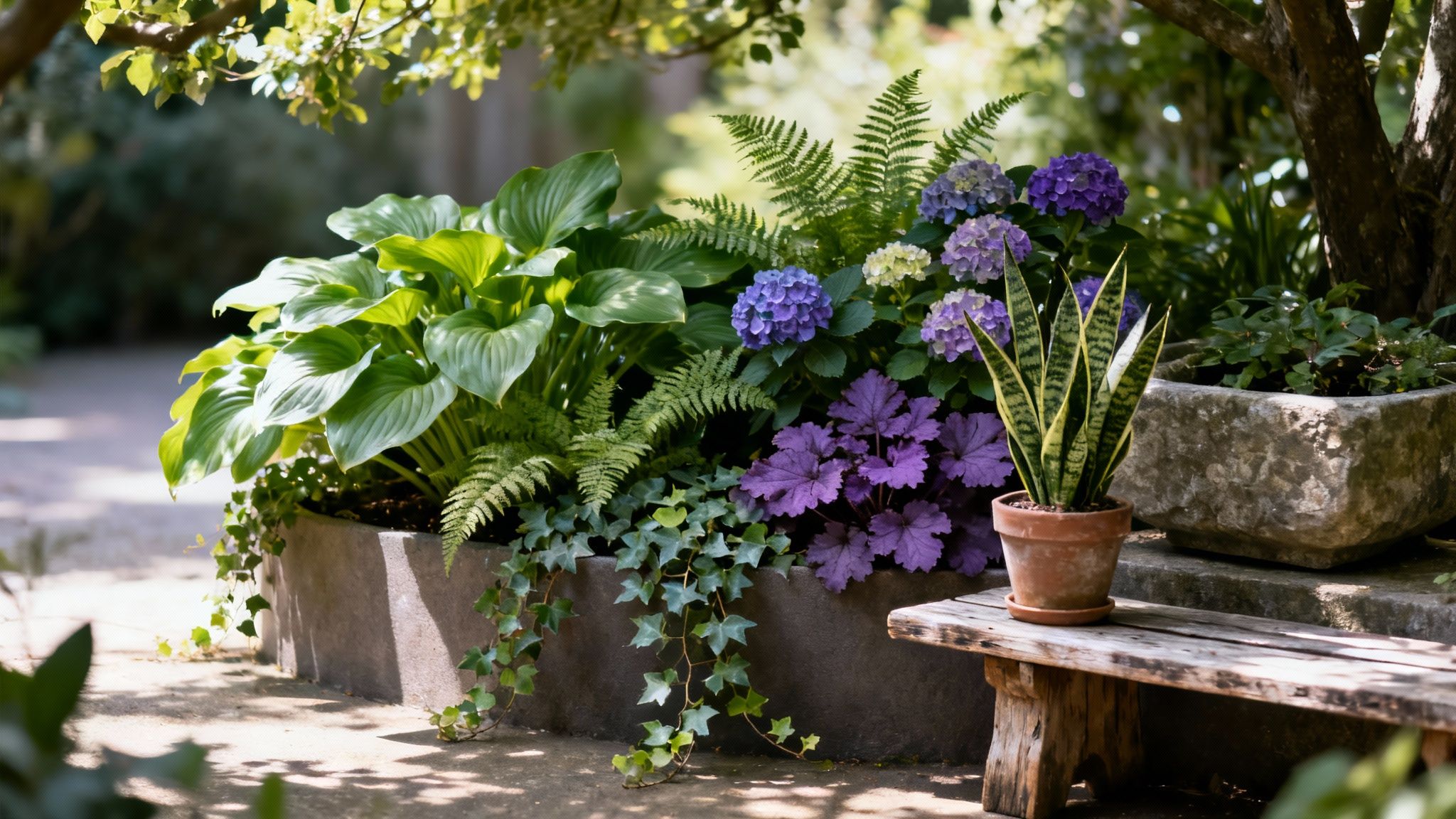
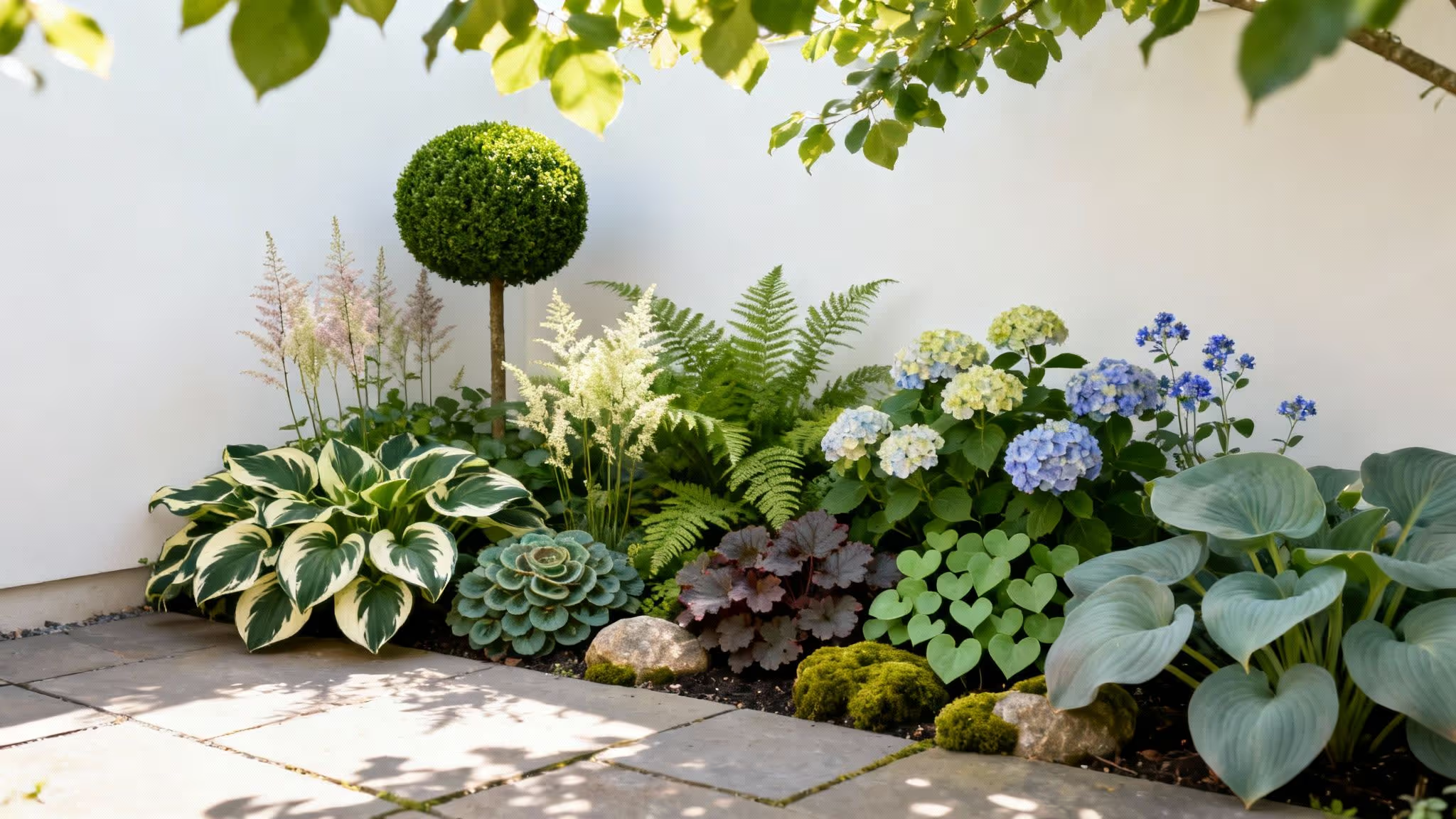
That tricky spot in your garden, the one that gets a few hours of sun but spends most of the day in shadow, is often seen as a challenge. But with the right selection, these areas can become the most enchanting and tranquil parts of your outdoor space. Partial shade, typically defined as receiving between three to six hours of direct sunlight per day, is the perfect condition for a host of sophisticated and elegant plants. Many gardeners find these dappled light conditions frustrating, but they present a unique opportunity for creating layered, textured planting schemes that are impossible in full sun.
Forget struggling with sun-loving varieties that fail to perform. This guide is your curated collection of the top 10 plants for partial shade, specifically chosen for their resilience, beauty, and suitability for UK gardens. We have organised this list to give you immediate, actionable insights, removing the guesswork from your garden planning.
Within this comprehensive roundup, you will discover:
- Year-Round Interest: From architectural evergreens providing winter structure to delicate ferns adding seasonal movement.
- Practical Care Tips: Concise advice on soil, watering, and pruning for each plant.
- Design Inspiration: Smart planting combinations and styling ideas for borders, containers, and patios.
Prepare to transform those overlooked corners into lush, vibrant displays of colour and form. This is your essential resource for unlocking the potential of your garden's shadier spots, proving that you don't need constant sunshine to cultivate a stunning and thriving landscape.
1. Hosta 'Sum and Substance'
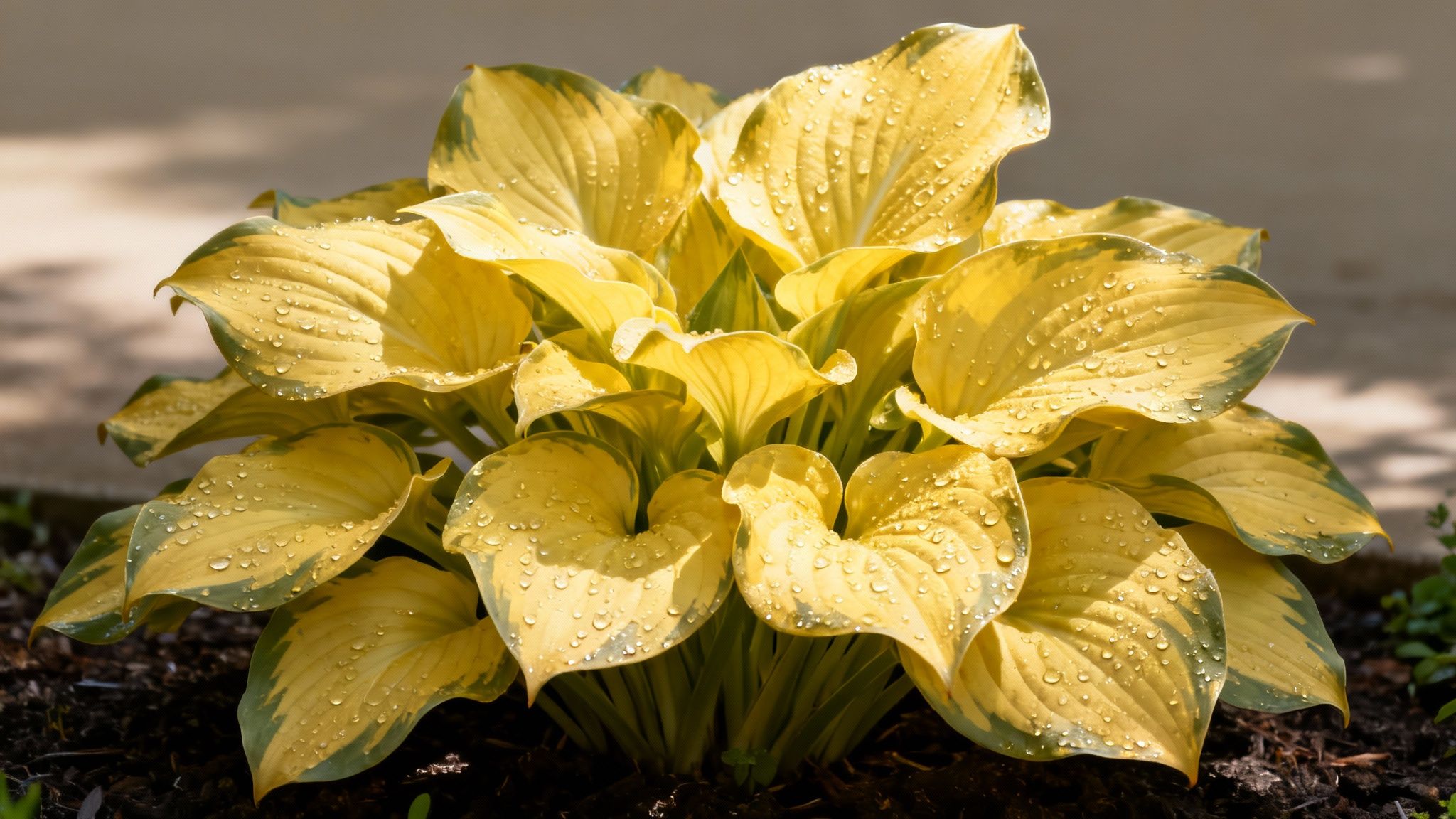
For gardeners seeking a dramatic focal point in a shaded corner, Hosta 'Sum and Substance' is an unrivalled choice. This deciduous perennial is celebrated for its sheer scale and vibrant colour, making it a cornerstone among plants for partial shade. Its enormous, heart-shaped leaves are a brilliant chartreuse-gold, creating an immediate and impactful architectural statement in any garden design.
The foliage can grow up to 60 cm (24 inches) in length, forming a substantial clump that commands attention. In midsummer, tall spires of delicate lavender, bell-shaped flowers emerge, attracting bees and other vital pollinators to your garden. Its robust and hardy nature makes it perfectly suited to the unpredictable UK climate.
Why It Excels in Partial Shade
Hosta 'Sum and Substance' thrives in dappled light or morning sun followed by afternoon shade. This specific lighting condition protects its spectacular leaves from scorching, which can occur in direct, harsh sunlight. The partial shade also helps maintain the luminous quality of its chartreuse foliage; too much deep shade can cause the leaves to revert to a darker green, losing their signature golden glow.
This cultivar’s impressive size and slug-resistant leaves (more so than many other hosta varieties) make it a reliable and low-maintenance option once established. It’s a plant that not only tolerates shade but uses it to showcase its best features, making it a garden designer's favourite, often seen in show gardens at the Chelsea Flower Show and within National Trust properties.
Planting and Care Tips
- Optimal Planting Time: Plant bare-root or container-grown specimens in early spring or autumn to allow roots to establish before extreme temperatures.
- Pest Control: While more resistant than other hostas, slugs and snails can still be a nuisance. Surround the base with a mulch of sharp grit, wool pellets, or copper tape to deter them.
- Watering: Keep the soil consistently moist but not waterlogged, especially during dry spells in its first year.
- Companion Planting: Pair with contrasting textures and colours. Ferns like Dryopteris erythrosora, deep purple Heucheras (coral bells), or early-flowering Hellebores create a stunning, multi-layered display. Its bold form is a perfect candidate for exploring creative garden border plant ideas.
- Division: To rejuvenate the plant and manage its size, divide large, mature clumps every four to five years in early spring.
2. Helleborus × hybridus 'Winter Jewels'
For bringing sophisticated colour and life to the garden during the darkest months, Helleborus × hybridus 'Winter Jewels' is an essential choice. This premium, evergreen perennial series offers exquisite flowers from late winter through to early spring, a time when many other plants for partial shade are dormant. The exquisite, cup-shaped blooms come in an exceptional range of colours, from deep burgundy and slate grey to pale pink and cream, often featuring distinctive dark centres or delicate picotee markings.
The leathery, dark green foliage provides year-round structural interest, forming neat clumps that act as a perfect foil for its stunning flowers. This invaluable plant is a favourite among high-end garden designers and is frequently seen in winter displays at RHS Gardens and within National Trust properties, celebrated for its elegance and resilience in the UK climate.
Why It Excels in Partial Shade
Helleborus × hybridus thrives in the dappled light found under deciduous trees and shrubs, a condition that mimics its natural woodland habitat. This partial shade protects its evergreen foliage from being scorched by intense summer sun and helps the soil retain the moisture it needs to flourish. The flowers also benefit, as their delicate colours last longer without the stress of direct sunlight.
Unlike plants that require full sun to initiate flowering, hellebores are perfectly adapted to lower light levels, making them a cornerstone for any winter garden design. Their ability to produce such spectacular blooms in cool, shaded conditions when little else is growing makes them a truly indispensable plant for creating year-round interest.
Planting and Care Tips
- Optimal Planting Time: Plant in autumn or spring in well-drained, humus-rich soil to allow the root system to establish.
- Foliage Care: In late January, remove any old or damaged leaves at the base to better showcase the emerging flowers and reduce the risk of fungal diseases like hellebore leaf spot.
- Positioning: Site them near paths, entrances, or windows where their downward-facing blooms can be appreciated up close during winter.
- Companion Planting: Create a beautiful layered display by planting them with early-flowering bulbs like snowdrops (Galanthus nivalis), winter aconites, and the vibrant stems of Cornus sanguinea 'Midwinter Fire'.
- Deadheading: Remove spent flower heads after the display has finished to encourage energy back into the plant, unless you wish for them to self-seed and naturalise in the area.
3. Fatsia japonica (Japanese Aralia)
For a touch of the exotic in a shady corner, Fatsia japonica, or the Japanese Aralia, is an exceptional choice. This striking architectural evergreen brings year-round tropical glamour to UK gardens with its magnificent, hand-shaped leaves. The large, glossy, deep-green foliage creates a bold statement, offering a dramatic form that few other plants for partial shade can match.
The plant forms a handsome, rounded shrub and, in autumn, produces intriguing spherical clusters of creamy-white flowers, which are a valuable late-season nectar source for insects. These are often followed by small, black, ornamental berries. Its robust and structural presence makes it a favourite in contemporary garden designs, frequently seen in Chelsea Flower Show gardens and sophisticated London courtyards.
Why It Excels in Partial Shade
Fatsia japonica is perfectly adapted to life under a canopy or in the shadow of a building. Its large leaves can easily scorch and yellow in the harsh glare of direct summer sun, so a position in partial or even full shade is ideal to keep the foliage looking its best. The dappled light allows the deep green colour to intensify, enhancing its lush, jungle-like appearance.
This plant’s tolerance for lower light levels and its evergreen nature make it invaluable for providing structure and interest throughout the winter when other plants have died back. It thrives in the sheltered conditions often found in shady spots, which protect it from wind damage and severe frosts. This resilience makes it a reliable performer in many National Trust coastal gardens, where it provides year-round verdant interest.
Planting and Care Tips
- Optimal Planting Time: Plant container-grown specimens in spring or autumn. Ensure the soil is well-draining but moisture-retentive.
- Siting: In colder northern regions, plant against a south or west-facing wall for added protection from harsh weather. Shelter from strong winds is crucial to prevent leaf damage.
- Pruning: To maintain a desirable shape and size, prune lightly in late spring, removing any dead or damaged stems and trimming back leggy growth.
- Companion Planting: The bold texture of Fatsia contrasts beautifully with the delicate fronds of ferns like Polystichum setiferum or the trailing habit of ivy (Hedera helix).
- Container Growing: It performs exceptionally well as a specimen plant in a large container (at least 18-20 inches in diameter), making it perfect for a shaded patio or balcony.
4. Athyrium niponicum 'Pictum' (Japanese Painted Fern)
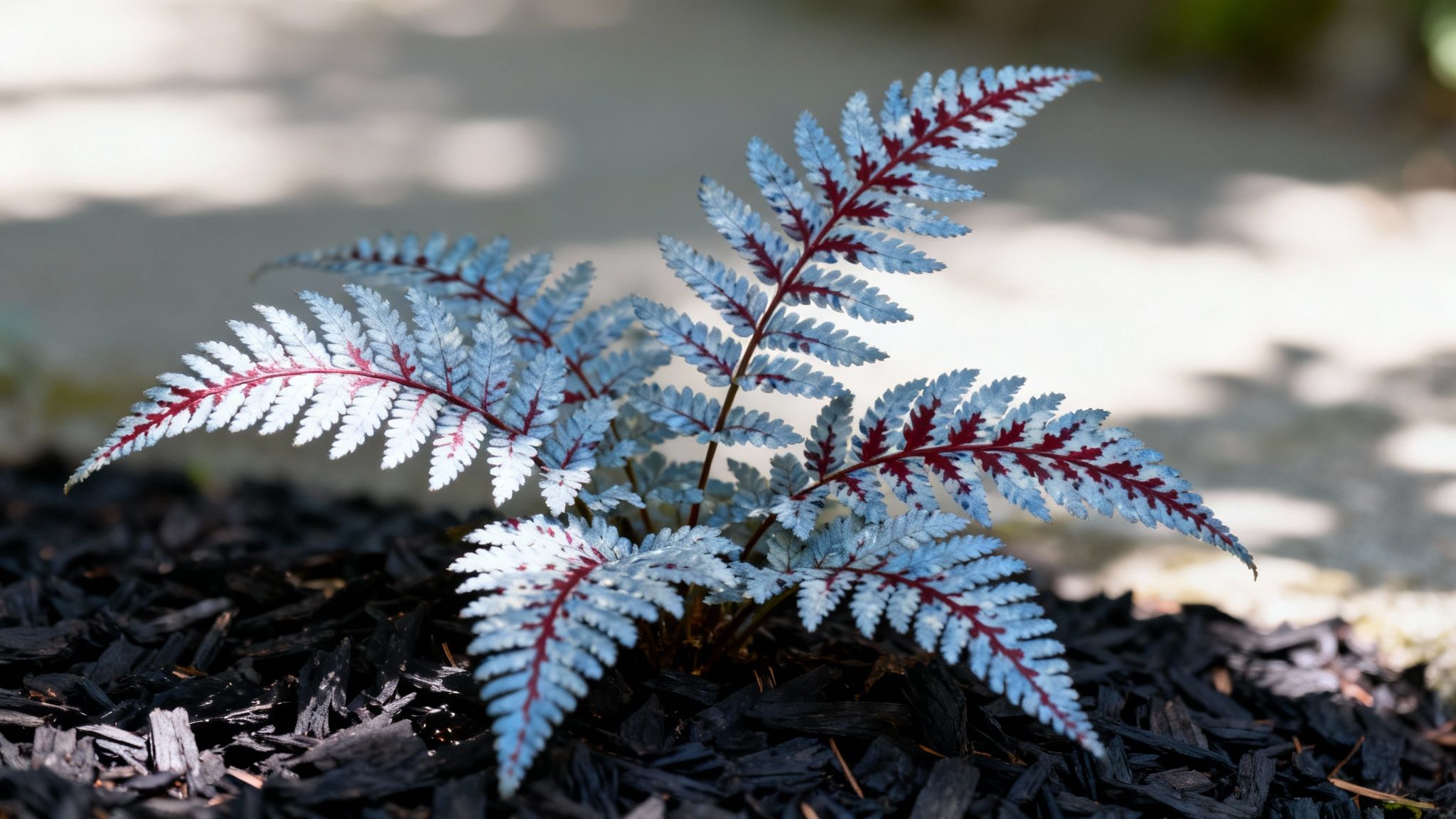
For a touch of ethereal elegance in a shaded setting, Athyrium niponicum 'Pictum' is an exceptional choice. This deciduous fern, commonly known as the Japanese Painted Fern, is celebrated for its intricate and beautifully coloured fronds. Its foliage presents a striking metallic sheen, blending silvery-grey with hints of deep burgundy and blue-green, which seems to glow in low light, making it one of the most artistic plants for partial shade.
The graceful, arching fronds create a soft, feathery texture that contrasts beautifully with bolder shade-loving plants. It grows to a modest height of around 30-45 cm (12-18 inches), forming a slow-spreading clump that illuminates dark corners. Its unique colouration has made it a darling of contemporary garden design, frequently seen in Chelsea Flower Show gardens and sophisticated perennial displays at RHS Garden Wisley.
Why It Excels in Partial Shade
The Japanese Painted Fern develops its most vibrant and complex colours in partial or dappled shade. While it can tolerate deeper shade, its signature silvery and burgundy tones become more pronounced with a little gentle morning sun. Direct, harsh afternoon sun will scorch its delicate fronds, causing them to bleach and turn brown, so a protected position is essential.
This fern thrives in the cool, moist conditions that partial shade provides, mimicking its native woodland habitat. It is a plant that doesn't just survive in shade but truly depends on it to unlock its full visual potential. Its manageable size and striking appearance make it a low-maintenance, high-impact plant for brightening up challenging, dimly lit areas of the garden.
Planting and Care Tips
- Optimal Planting Time: Plant in spring to allow the fern to establish a strong root system before the heat of summer arrives.
- Soil Conditions: It prefers consistently moist, well-drained, humus-rich soil. Mulching with leaf mould or compost helps retain moisture.
- Maintenance: A low-maintenance plant, simply cut back the old, tatty fronds in late winter or early spring just before new growth emerges.
- Companion Planting: Pair its fine texture and cool tones with dark foliage plants like Heuchera 'Obsidian' or the black grass Ophiopogon planiscapus 'Nigrescens' for a dramatic contrast. It also works beautifully with Astilbes and Hellebores.
- Container Use: Its compact nature makes it an excellent candidate for shaded pots and window boxes. For more ideas, explore these tips for container gardening for beginners.
5. Heuchera 'Obsidian' (Coral Bells)
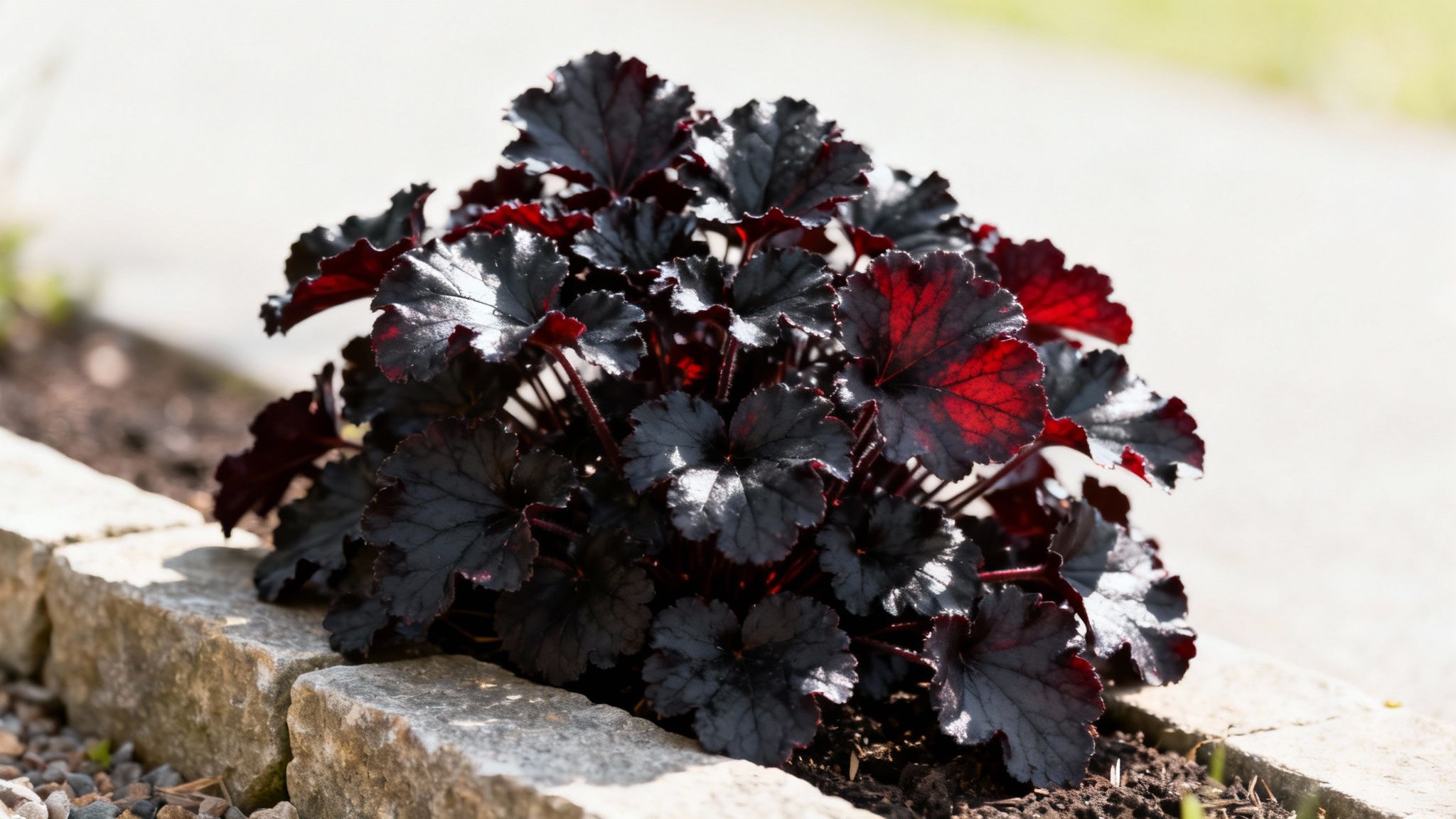
For gardeners aiming to introduce sophisticated colour and year-round structure, Heuchera 'Obsidian' is an indispensable choice. This evergreen perennial is celebrated for its dramatic, deep burgundy-almost-black foliage, providing a powerful contrast against brighter greens and silvers. Its neatly mounded, scalloped leaves offer an architectural form that brings a contemporary edge to shaded borders and containers, making it a standout among plants for partial shade.
The glossy leaves form a compact clump, typically reaching about 25 cm (10 inches) tall and 40 cm (16 inches) wide. In late spring and early summer, delicate wands of small, bell-shaped, creamy-white flowers rise above the dark foliage, attracting bees and adding a touch of elegance. Its robust nature and evergreen presence ensure it provides interest even in the depths of a British winter.
Why It Excels in Partial Shade
Heuchera 'Obsidian' achieves its deepest, most intense colouring in partial shade. While it can tolerate more sun than some other Heuchera varieties, the morning sun and afternoon shade combination prevents the dark leaves from scorching or fading. Too much dense shade may slightly reduce its colour intensity, but it remains a superb performer in dappled light conditions.
This cultivar is particularly valued for its reliability and low-maintenance habit. Its compact size makes it versatile for edging paths, underplanting taller shrubs, or creating striking container displays. Modern garden designers frequently use it in schemes seen at the Chelsea Flower Show and RHS Hampton Court Palace Garden Festival to create bold, sophisticated planting palettes that last all year.
Planting and Care Tips
- Optimal Planting Time: Plant container-grown specimens in spring or autumn. Ensure the crown is not buried below the soil level to prevent rot.
- Soil Requirements: It thrives in well-drained, humus-rich soil. Poor drainage, especially in winter, can be detrimental.
- Watering: Water regularly during its first season to establish a strong root system. Once established, it is moderately drought-tolerant, which makes it a good candidate for trickier locations; you can explore more options in our guide to plants for dry shade.
- Companion Planting: Pair 'Obsidian' with silver-leaved plants like Brunnera macrophylla 'Jack Frost', lime-green Hostas, or the delicate fronds of Japanese painted ferns (Athyrium niponicum) for a stunning visual contrast.
- Maintenance: Remove spent flower stems after blooming to direct energy back into foliage growth. Tidy up any tired-looking leaves in early spring to make way for new growth. Divide clumps every three to four years to maintain vigour.
6. Polystichum setiferum (Soft Shield Fern)
For a touch of elegant, native woodland charm, Polystichum setiferum, the Soft Shield Fern, is an exceptional choice. This graceful, evergreen fern brings a delicate, feathery texture to shaded borders and underplantings, providing year-round structure and interest. Its finely-divided, soft green fronds unfurl to create a distinctive shuttlecock shape, offering a refined architectural quality that softens hard landscaping and complements bolder foliage.
The cultivar 'Acutilobum', often called the Persian Shield Fern, is particularly prized by garden designers for its exceptionally delicate and intricate fronds. This fern’s adaptability and timeless appearance have secured its place in many prestigious gardens, from the naturalistic woodland areas at RHS Garden Wisley to the historic grounds of National Trust properties, where it enhances authentic woodland planting schemes.
Why It Excels in Partial Shade
Polystichum setiferum is one of the best ferns among plants for partial shade, thriving in the dappled light found beneath a tree canopy or in a north-facing border. These conditions mimic its natural woodland habitat, protecting its soft fronds from the risk of scorching that direct sunlight can cause. The shade also helps the plant retain essential moisture, keeping its evergreen foliage lush and vibrant throughout the year.
Unlike many perennials that die back in winter, this fern maintains its form, providing crucial structural interest when other plants are dormant. Its non-invasive, clumping habit makes it a reliable and well-behaved addition to any shade garden, offering a soft texture that contrasts beautifully with broad-leaved plants like Hostas and Brunnera.
Planting and Care Tips
- Optimal Planting Time: Plant in autumn or spring to allow it to establish its root system. Autumn planting gives it a head start for vigorous spring growth.
- Soil and Position: It prefers humus-rich, well-drained but consistently moist soil. Position in dappled or full shade for the best results.
- Maintenance: Mulch annually with leaf mould or well-rotted garden compost to retain moisture and enrich the soil. Tidy the plant in late winter or early spring by removing any dead or damaged fronds to make way for new growth.
- Companion Planting: Create a classic woodland tapestry by pairing it with Hellebores, Epimedium, Pulmonaria (lungwort), and drifts of spring-flowering bulbs like snowdrops and bluebells.
- Propagation: The plant sometimes produces tiny plantlets (bulbils) along the midrib of its fronds. These can be pegged down into compost to root and create new plants.
7. Acer palmatum 'Bloodgood' (Japanese Maple)
For adding a touch of refined elegance and year-round structure, Acer palmatum 'Bloodgood' is a spectacular choice among plants for partial shade. This premium deciduous tree is prized by garden designers for its deep, wine-red, finely-divided foliage that brings a dramatic yet graceful presence to any garden. Its delicate, layered form creates a stunning silhouette, making it an architectural focal point even in winter.
The foliage of 'Bloodgood' holds its rich colour exceptionally well from spring through summer, before transforming into a fiery crimson in autumn. Small, reddish-purple flowers appear in spring, followed by attractive winged seed pods. Its enduring beauty makes it a true investment piece, often showcased in RHS gardens and high-end landscape designs across the UK.
Why It Excels in Partial Shade
Acer palmatum 'Bloodgood' thrives in a sheltered spot with dappled light or morning sun and afternoon shade. This protection is crucial, as the intense midday or afternoon sun can scorch its delicate leaves, causing them to crisp and brown at the edges. The partial shade helps the tree retain its deep crimson foliage; too much sun can bleach the colour, while deep shade may cause it to turn a murky bronze-green.
This cultivar is perfectly suited to the UK climate, but it benefits from a location shielded from strong, cold winds, which can damage the leaves and branches. It’s a plant that uses the gentle light of a shaded spot to illuminate its foliage, creating a captivating display that elevates woodland and Japanese-inspired garden schemes from ordinary to exceptional.
Planting and Care Tips
- Optimal Planting Time: Plant container-grown trees in autumn or early spring to give the root system ample time to establish.
- Soil and Location: Choose a spot with moist, well-draining, slightly acidic soil. Ensure it is protected from harsh winds and late frosts, which can damage new growth.
- Watering: Water regularly during its first few years and throughout any dry periods to ensure the soil remains consistently moist but never waterlogged.
- Pruning: 'Bloodgood' requires minimal pruning. Simply remove any dead, damaged, or crossing branches in late autumn or winter when the tree is dormant to maintain its natural, elegant shape.
- Companion Planting: Underplant with contrasting textures such as the delicate fronds of shade-loving ferns, Hakonechloa grass, or the glossy leaves of Hellebores for a sophisticated, layered look.
8. Hakonechloa macra 'Aureola' (Japanese Forest Grass)
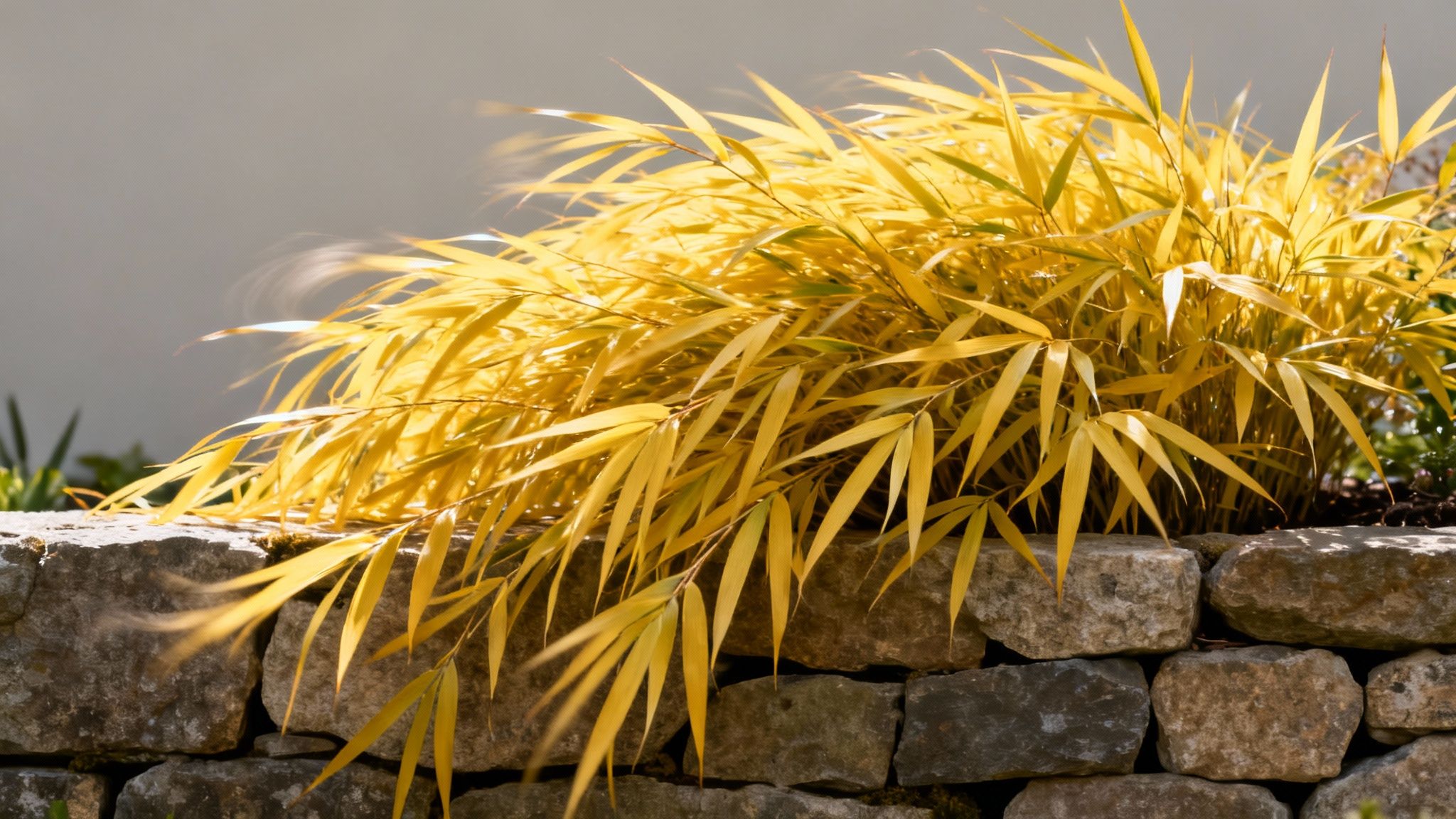
For adding a sense of graceful movement and luminous colour to shady spots, Hakonechloa macra 'Aureola' is an exceptional choice. This deciduous ornamental grass, often called Japanese Forest Grass, is treasured for its elegant, cascading mounds of slender, variegated leaves. Its arching foliage is a vibrant golden-yellow striped with green, creating a soft, waterfall-like effect that brightens up even the darkest garden corners.
This premium grass provides multi-seasonal interest, with its brilliant colour holding strong from spring through autumn before taking on beautiful pink or coppery tones in cooler weather. Its refined texture and flowing form make it a favourite among garden designers, frequently featured in contemporary schemes at the Chelsea Flower Show and within the serene Japanese garden collections of National Trust properties.
Why It Excels in Partial Shade
Hakonechloa macra 'Aureola' thrives in dappled sunlight or locations that receive gentle morning sun and are protected from the harsh glare of the afternoon. This specific light condition is key to developing its signature golden foliage; too much direct sun can scorch the delicate leaves, while deep, constant shade may cause the colour to become more lime-green and less vibrant.
It is one of the few grasses that truly performs best out of full sun, making it an invaluable plant for partial shade. Its ability to introduce a fine texture and soft, flowing movement provides a beautiful contrast to the bold, broad leaves of typical shade-dwellers like Hostas and Brunnera. This makes it a sophisticated and dynamic addition to any planting scheme.
Planting and Care Tips
- Optimal Planting Time: Plant from pots during spring or early autumn. This allows the root system to establish well before the extremes of summer heat or winter cold.
- Soil Requirements: It prefers consistently moist, humus-rich, and well-drained soil. Amend heavy clay or sandy soils with plenty of organic matter like leaf mould or garden compost.
- Pruning: Simply cut back the dead foliage to just above ground level in late winter or very early spring, before the new shoots emerge.
- Companion Planting: Create a stunning contrast by pairing its bright, arching foliage with dark-leaved plants like Heuchera 'Obsidian' or the deep green fronds of ferns. It also complements the structure of a Japanese Maple, creating a harmonious partnership. You can explore expert advice on pruning Japanese Maples to perfect this pairing.
- Placement: Its cascading habit is perfect for softening the edges of pathways, spilling over the sides of containers, or planting on a gentle slope where its form can be fully appreciated.
9. Epimedium × versicolor 'Sulphureum' (Barrenwort)
For gardeners seeking a sophisticated and resilient groundcover, Epimedium × versicolor 'Sulphureum' is an outstanding choice. Often known as Barrenwort, this semi-evergreen perennial provides elegant, year-round interest and is a superb solution for tricky dry shade areas. It forms a dense mat of delicate, heart-shaped leaflets that are often flushed with bronze-red in spring before maturing to a lush green.
In mid to late spring, sprays of dainty, sulphur-yellow flowers with subtle spurred petals appear, held on wiry stems just above the foliage. These intricate blooms resemble tiny daffodils and bring a soft, refined light to shaded spots. Its ability to thrive where other plants struggle makes it a cornerstone among plants for partial shade, valued by designers for its weed-suppressing qualities and understated charm.
Why It Excels in Partial Shade
Barrenwort is exceptionally adapted to the low-light conditions found under the canopy of trees and shrubs. Partial shade protects its delicate foliage from being scorched by intense sun and helps the plant retain soil moisture, which is crucial for establishment. While it is famously drought-tolerant once mature, this lighting environment prevents stress on the plant.
This plant's true value is its ability to create a lush, weed-free carpet in challenging shady areas. Its dense, rhizomatous root system effectively outcompetes weeds, making it a low-maintenance superstar. It’s a plant that doesn’t just survive in shade but flourishes, offering a multi-seasonal display that solves common garden problems. Its inclusion in woodland schemes at RHS Garden Wisley and National Trust properties highlights its reliability and aesthetic appeal.
Planting and Care Tips
- Optimal Planting Time: Establish in autumn or early spring to allow the roots to develop before summer heat or winter cold.
- Foliage Care: To best appreciate the fresh spring flowers and new leaf colour, shear back the old, tired-looking foliage in late winter before new growth emerges.
- Soil and Position: It thrives in well-drained, humus-rich soil. While it tolerates dry shade once established, consistent moisture during its first year is beneficial.
- Companion Planting: Pair with other woodland treasures such as ferns (Polystichum setiferum), Brunnera 'Jack Frost', or the delicate blooms of wood anemones for a beautifully layered, naturalistic effect.
- Groundcover Strategy: For a dense groundcover, space plants approximately 30-45 cm (12-18 inches) apart. Be patient, as it takes a few years to form a thick, impenetrable mat.
10. Carex oshimensis 'Evergold' (Japanese Sedge)
For adding year-round structure and a touch of elegance to shady spots, Carex oshimensis 'Evergold' is an indispensable choice. This evergreen sedge is celebrated by garden designers for its graceful, arching habit and striking foliage, making it a star performer among plants for partial shade. Its slender leaves feature a bright, creamy-yellow centre bordered by fine, dark green margins, creating a fountain-like clump that illuminates gloomy corners.
The vibrant foliage forms a neat mound, typically reaching around 30 cm (12 inches) in height and spread. Unlike many perennials that die back in winter, 'Evergold' provides invaluable colour and texture throughout the seasons, ensuring your garden never looks bare. Its subtle, brown flower spikes in late spring are secondary to the magnificent, architectural quality of the leaves.
Why It Excels in Partial Shade
Carex oshimensis 'Evergold' thrives in the dappled light of a woodland setting or a position with morning sun and afternoon shade. These conditions are ideal for maintaining the vivid variegation of its leaves; too much intense, direct sun can scorch the foliage and wash out its brilliant colour. While it can tolerate deeper shade, its golden tones are most pronounced in partial light.
This plant’s compact form and robust, evergreen nature make it a low-maintenance powerhouse. It is frequently specified for contemporary urban gardens and used extensively by the RHS and National Trust to provide reliable ground cover and border edging. It is a plant that not only survives in lower light but uses it to enhance its luminous quality, making it a perfect selection from the best plants for low light.
Planting and Care Tips
- Optimal Planting Time: Plant container-grown specimens in spring or autumn. This allows the roots to establish before the extremes of summer heat or winter cold.
- Maintenance: 'Evergold' is exceptionally low-maintenance. Simply comb through the plant with your fingers in late winter or early spring to remove any dead or damaged foliage.
- Watering: It prefers consistently moist, well-drained soil. Water regularly after planting and during prolonged dry spells, but avoid waterlogged conditions.
- Companion Planting: Its fine texture and bright colour contrast beautifully with bold, dark-leaved plants like Heuchera 'Obsidian' or the glossy fronds of Hart's Tongue Fern (Asplenium scolopendrium). It also makes a superb container partner for Hellebores and spring bulbs.
- Positioning: Use it to soften the edges of paths and borders, plant in drifts for mass impact, or feature it in a stylish patio pot for year-round interest.
Top 10 Partial-Shade Plants Comparison
Bringing Your Shade Garden to Life
Transforming a challenging, partially shaded area from a neglected corner into a lush, vibrant sanctuary is one of the most rewarding gardening achievements. Throughout this guide, we've explored ten exceptional plants for partial shade, each offering a unique combination of texture, colour, and form to elevate your garden design. From the architectural grandeur of Hosta 'Sum and Substance' to the delicate, cascading beauty of Hakonechloa macra 'Aureola', you now have a curated palette to work with.
The journey doesn't end with simply choosing plants; it begins with understanding how they interact. The true artistry of a shade garden lies in the composition. Remember the core principles we've discussed: contrast and complement. A successful design is a tapestry woven from different threads, where the bold, glossy leaves of Fatsia japonica provide a stunning backdrop for the silvery fronds of the Athyrium niponicum 'Pictum'.
Your Actionable Next Steps
Feeling inspired? Here’s how to channel that energy into tangible results and start building your dream shade garden today.
- Assess Your Space Again: With these plants in mind, revisit your garden. Note exactly how the light moves throughout the day. Is it dappled morning sun or more consistent afternoon shade? This detailed observation will be crucial for precise placement.
- Sketch a Simple Plan: You don’t need to be an artist. A basic layout on paper helps visualise placement and spacing. Consider the mature size of each plant. Position taller specimens like Acer palmatum 'Bloodgood' at the back of a border and lower-growing groundcovers like Epimedium × versicolor 'Sulphureum' at the front.
- Prioritise Soil Preparation: This is the single most important step for success. Most of these plants for partial shade thrive in moist, well-drained soil rich in organic matter. Before planting, amend your beds with well-rotted compost or leaf mould to create the ideal foundation for healthy root growth.
- Thrill: Acer palmatum 'Bloodgood' or Fatsia japonica for vertical interest.
- Fill: Heuchera 'Obsidian' or a collection of Helleborus × hybridus for mid-level fullness.
- Spill: Hakonechloa macra 'Aureola' or Carex oshimensis 'Evergold' to soften the edges.
The Lasting Value of a Well-Planned Shade Garden
Mastering the art of shade gardening moves you beyond the conventional pursuit of sun-loving blooms. It encourages a deeper appreciation for the subtle yet profound beauty of foliage. The interplay of light on a Japanese Painted Fern, the deep, moody tones of a Coral Bell, or the structural elegance of a Soft Shield Fern create a sense of calm and sophistication that is difficult to replicate in a sun-drenched border.
These spaces often become the most tranquil and inviting parts of a garden, offering a cool respite on warm days. By embracing the unique conditions of your plot and selecting the right plants for partial shade, you are not just filling a difficult spot. You are curating an experience, creating a layered, textured, and dynamic display that offers visual interest through every season. Your shade garden is waiting to become the most captivating feature of your home’s landscape.