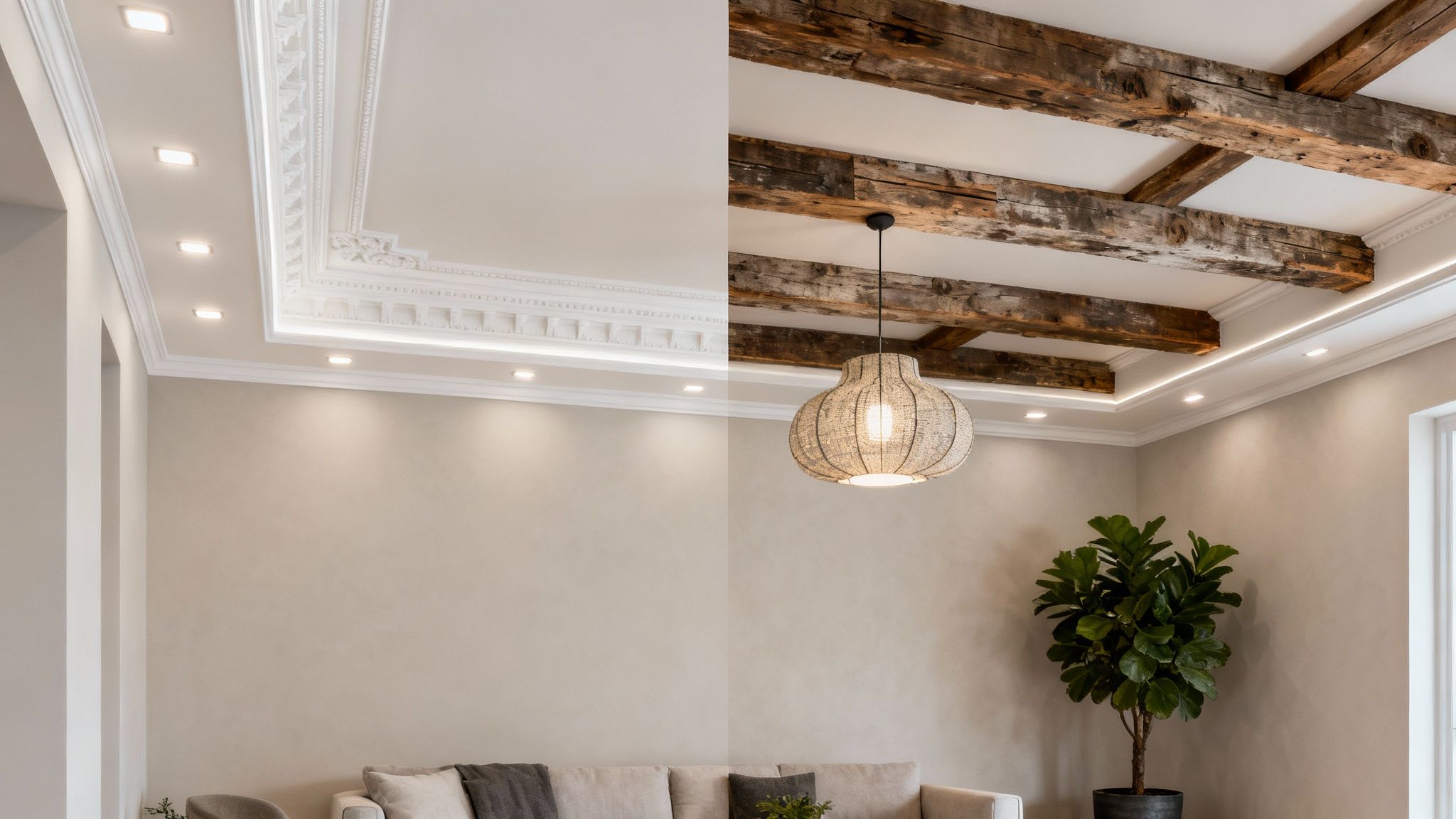
Often overlooked, the ceiling is a vast canvas with the potential to transform any room from ordinary to extraordinary. This frequently neglected 'fifth wall' can define a space's character, manipulate its perceived proportions, and add a layer of sophistication that wall décor alone cannot achieve. A thoughtful ceiling design makes a room feel complete, drawing the eye upwards and creating a sense of depth, drama, or cosiness.
Whether you're aiming for a rustic farmhouse feel or a grand, architectural statement, the right ceiling treatment can be the finishing touch that ties your entire design scheme together. In this guide, we'll explore an array of impactful ceiling decoration ideas, moving far beyond a simple coat of white paint. We will delve into everything from classic plasterwork and exposed beams to modern integrated lighting and bold wallpaper applications.
Prepare to be inspired to look up and reimagine the design possibilities that await. We will provide actionable tips on materials, costs, implementation, and styling for various rooms in your home, helping you choose the perfect concept to elevate your space.
1. Coffered Ceilings
For those seeking to add architectural grandeur and a sense of history, the coffered ceiling is an unrivalled choice. This classic design features a grid of sunken panels, typically square, rectangular, or octagonal, framed by decorative beams. It’s a powerful ceiling decoration idea that instantly adds depth, texture, and a sophisticated, three-dimensional quality to a room, moving beyond a simple flat surface to become a major design feature.
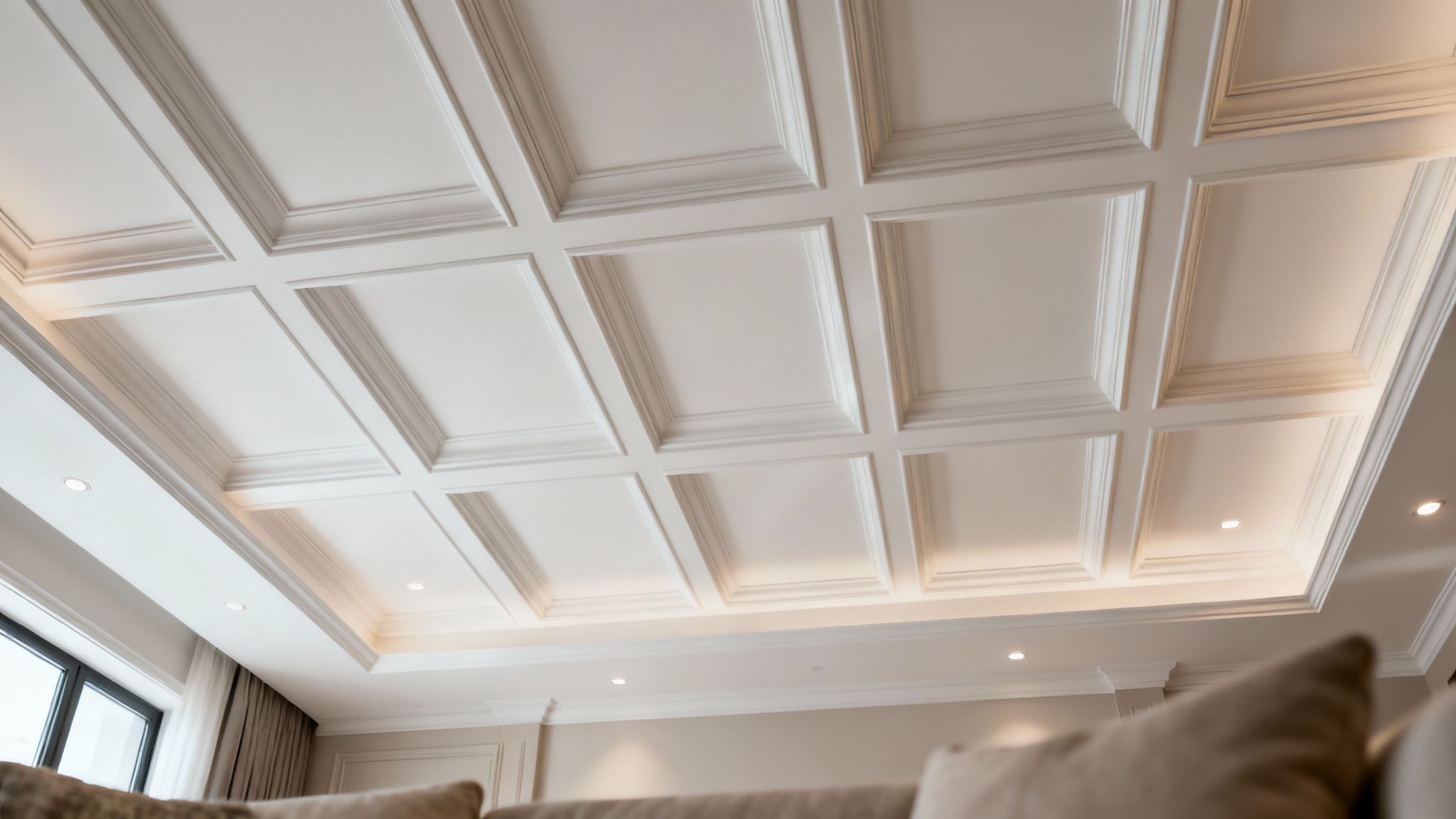
Often associated with the grand interiors of period properties, from Georgian townhouses to stately Victorian manors, coffered ceilings are being re-imagined in contemporary spaces. Leading UK interior designers like Kelly Hoppen have popularised their use in modern homes, proving their versatility.
Implementation and Styling Tips
A successful coffered ceiling requires careful planning, especially regarding room scale. This treatment is best suited for rooms with high ceilings, typically a minimum of 10 feet, to avoid making the space feel cramped. Consider these practical tips:
- Enhance Depth: Paint the sunken panels a crisp white and the surrounding beams a slightly darker, contrasting shade to accentuate the three-dimensional effect.
- Integrate Lighting: Recessed LED spotlights or a central pendant light can be integrated within the panels for a dramatic, layered lighting scheme.
- Start Small: If you're hesitant to commit to a large space, a home office, library, or dining room is an excellent place to introduce this feature.
- Professional Installation: Due to the structural and precision work involved, it's crucial to hire a qualified contractor or carpenter experienced in custom ceiling installations to ensure a flawless finish.
2. Exposed Wooden Beams
Exposed wooden beams are a fantastic ceiling decoration idea for adding instant character, warmth, and rustic charm. Whether using genuine reclaimed timber or lightweight modern reproductions, this design element leaves structural or decorative beams visible, introducing natural texture and architectural interest. It transforms the ceiling into a focal point, breaking up a flat plane with organic lines and a sense of history.
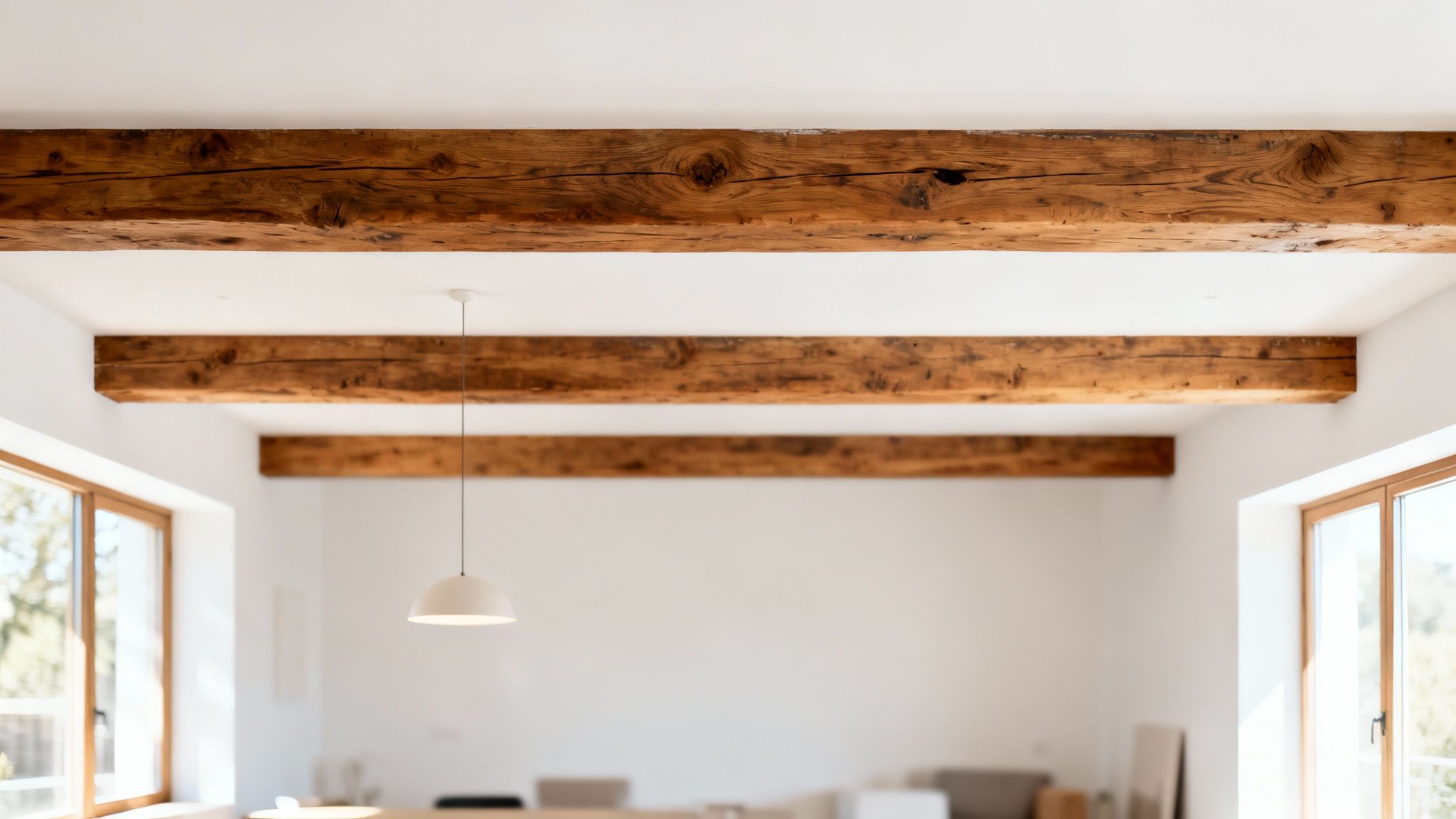
This aesthetic is heavily featured in UK property trends, from the quintessential Cotswold farmhouse to modern barn conversions championed on programmes like Grand Designs. Popularised by period property specialists and designers like Sophie Robinson, exposed beams complement both traditional and contemporary interiors, adding a cosy, grounded feel. You can explore a variety of rustic interior designs on sprucecollective.co.uk to see how this feature is used.
Implementation and Styling Tips
To successfully integrate exposed beams, the key is to balance their visual weight with the rest of the room's decor. They are highly versatile but require thoughtful placement and finishing. Consider these practical tips:
- Create Contrast: Paint the ceiling surface between the beams a crisp white or a very pale colour. This contrast makes the beams pop and prevents the room from feeling dark or heavy.
- Define Zones: In open-plan living areas, use beams to visually demarcate different zones, such as the dining area from the kitchen or the lounge space from a hallway.
- Integrate Lighting: Wrap fairy lights around beams for a whimsical touch, or install track lighting or spotlights that highlight their texture and form a cohesive lighting scheme.
- Material Matters: For an authentic look, source reclaimed timber from salvage yards. If structural support isn't needed, lightweight faux beams made from high-density polyurethane are a cost-effective and easy-to-install alternative.
3. Statement Wallpapered Ceilings
For a bold and unexpected design element, applying wallpaper to the ceiling is a transformative idea that creates an immersive and highly personalised atmosphere. This approach turns the often-neglected "fifth wall" into a captivating focal point, drawing the eye upwards and adding pattern, colour, and texture. It is one of the most impactful ceiling decoration ideas for instantly injecting personality into a space without requiring any structural alterations.
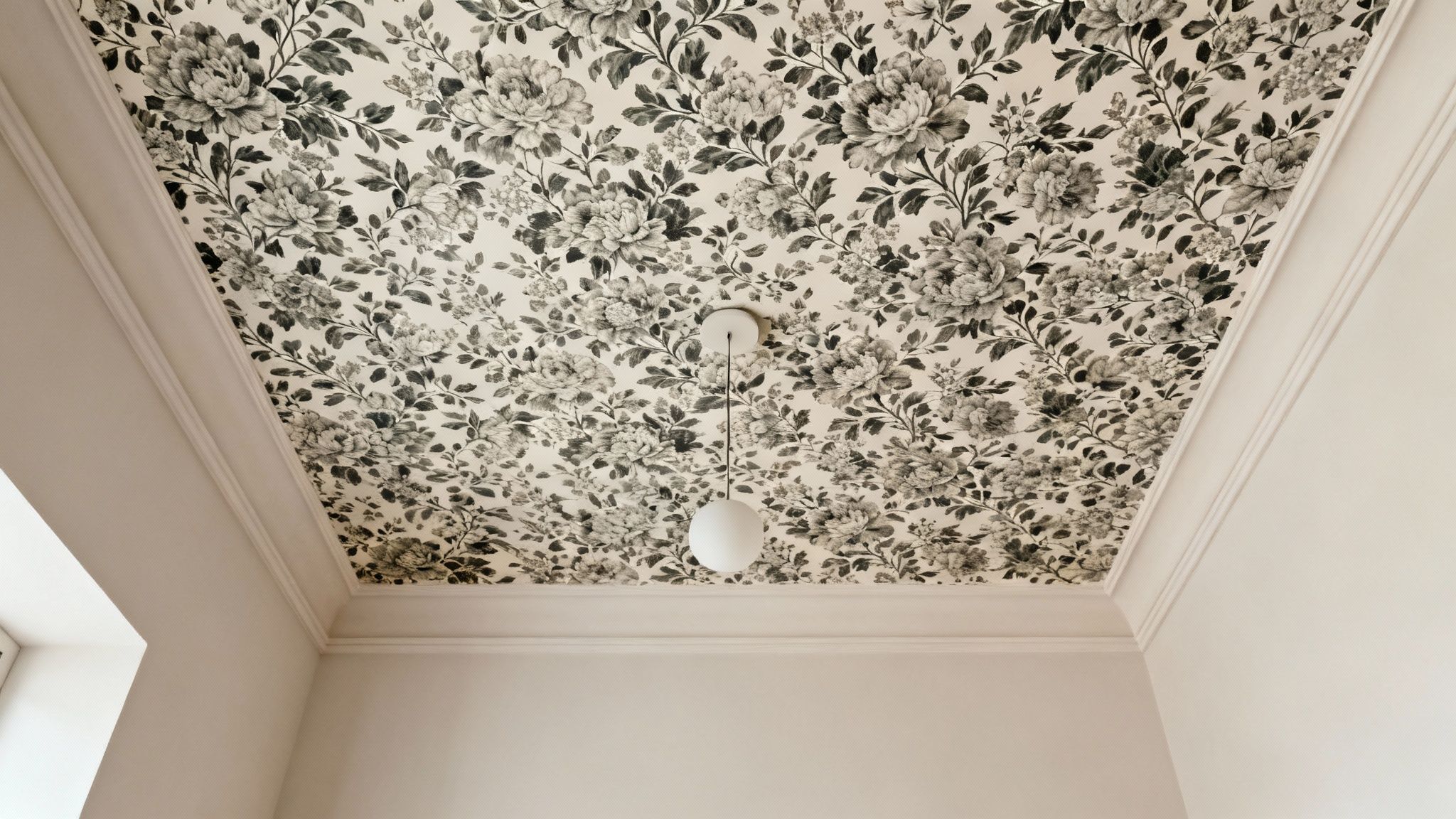
This trend has been championed by high-end wallpaper brands like Farrow & Ball and Cole & Son, whose designs are frequently featured in publications such as Elle Decoration. From the dramatic, art-filled interiors of London's Sketch restaurant to residential projects by leading designers, wallpapered ceilings prove their ability to elevate any room from ordinary to extraordinary.
Implementation and Styling Tips
A successful wallpapered ceiling balances boldness with the room's overall aesthetic. It works well in various spaces, from a playful nursery to a sophisticated dining room, but careful selection is key to achieving the right effect.
- Balance the Room: To prevent visual overwhelm, pair a patterned ceiling with simple, neutral-coloured walls. This allows the ceiling to be the star feature without competing with other elements.
- Scale and Colour: In rooms with lower ceilings, opt for lighter-coloured wallpapers with smaller-scale patterns to create a sense of openness and height. Darker, larger prints are best reserved for rooms with ample height.
- Professional Finish: Hanging wallpaper on a ceiling is notoriously tricky. For a seamless and professional finish, especially with intricate patterns, hiring an experienced installer is highly recommended.
- Consider Room Function: In spaces like bathrooms or kitchens, choose moisture-resistant or vinyl wallpapers. For more ideas on using wallpaper in these areas, see this guide to modern kitchen wallpaper.
4. Painted Ceiling Accents and Trompe-l'oeil
For a truly custom and artistic touch, painted ceiling accents offer limitless possibilities. This approach transforms the ceiling from a forgotten surface into a canvas, using decorative paint techniques to create anything from simple colour blocks to intricate trompe-l'oeil illusions. Translating to "fool the eye," trompe-l'oeil is a powerful ceiling decoration idea that creates convincing three-dimensional scenes, like a domed cupola or a serene sky, on a completely flat surface.
This technique has been embraced by contemporary UK interior designers and is frequently showcased by premium paint brands like Farrow & Ball and Little Greene. From geometric patterns adding dynamism to modern flats to whimsical sky murals in nurseries, painted accents provide a deeply personal and often surprisingly affordable way to make a dramatic statement.
Implementation and Styling Tips
A successful painted ceiling depends on careful colour selection and precise application. This method is incredibly versatile, working in rooms of all shapes and sizes, but planning is key to achieving a professional look. Consider these practical tips:
- Define with Colour: Use a darker, moodier colour on the ceiling in a well-lit room with high ceilings to create a cosy, enveloping feel. Lighter shades will make a smaller room feel more expansive and airy.
- Create Illusions: For trompe-l'oeil, it's best to hire a professional muralist or artist experienced in perspective and shading to achieve a realistic effect. Learn more about the potential of wall and ceiling murals to get inspired.
- Use the Right Paint: Opt for a high-quality, matte-finish ceiling paint specifically formulated to minimise drips and splatters, ensuring better coverage and a smoother finish.
- Test Your Colours: Always test your chosen paint colours on a small, inconspicuous section of the ceiling or a large board. Observe how the colour changes throughout the day with natural light before committing.
5. Suspended Acoustic Panels and Modern Treatments
For a solution that marries cutting-edge design with superior functionality, suspended acoustic panels offer a modern approach to ceiling decoration. These treatments are engineered to absorb sound, reducing echo and improving the acoustic comfort of a room. Far from being purely utilitarian, they are available in a vast array of shapes, colours, and textures, allowing them to serve as a striking visual feature that enhances the contemporary aesthetic of a space.
This ceiling decoration idea is particularly effective in open-plan homes, minimalist interiors with hard flooring, or spaces with high ceilings where noise can easily reverberate. Championed by acoustic design specialists and wellness-focused architects, brands like Rockfon and Kvadrat have transformed these panels into desirable design elements, seen in high-end London flats and creative home offices.
Implementation and Styling Tips
A successful installation enhances both auditory and visual harmony. The key is strategic placement and thoughtful integration with your existing decor. Consider these practical tips:
- Strategic Placement: Install panels directly above areas where sound concentrates, such as over a dining table, a kitchen island, or in a central seating area in your living room.
- Combine with Lighting: Integrate LED strips or spotlights around or between the panels to create an ambient, layered lighting effect that highlights their form and texture.
- Colour Coordination: Choose panels in colours that either blend seamlessly with your ceiling for a subtle look or provide a bold, contrasting accent to match your overall interior scheme.
- Professional Assessment: For optimal results in larger or more complex spaces, consider a professional acoustic assessment to identify the most effective placement and coverage needed.
6. Ornate Plasterwork and Decorative Cornicing
For a truly classic and sophisticated aesthetic, ornate plasterwork and decorative cornicing offer timeless elegance. This ceiling decoration idea involves adding detailed architectural mouldings, from the subtle sweep of a coving to elaborate ceiling roses and intricate friezes. It draws inspiration from historical interiors, adding character, definition, and a sense of grandeur to the junction where walls meet the ceiling.
This traditional craft is a hallmark of period properties across the UK, from the intricate designs found in Georgian townhouses to the distinguished cornicing of Victorian homes. Today, heritage specialists and conservation architects are not just restoring original features but also introducing authentic, period-appropriate designs into new builds to imbue them with historical charm.
Implementation and Styling Tips
Achieving an authentic and refined look with plasterwork requires precision and an appreciation for architectural context. The scale of the moulding should correspond with the room's ceiling height and overall proportions. Consider these practical points:
- Source Authentic Profiles: To maintain historical accuracy, especially in period properties, source mouldings that match the original architectural style.
- Combine Elements: For maximum impact, pair decorative cornicing with a central ceiling rose to create a beautiful focal point for a chandelier or pendant light.
- Choose Appropriate Colours: Painting the plasterwork in soft, heritage-inspired whites or off-whites allows the shadows to highlight the intricate details of the design.
- Hire a Specialist: The installation of plaster mouldings is a skilled craft. Always engage a specialist plasterer experienced in period work to ensure a seamless and professional finish.
7. Integrated Lighting Solutions and Cove Lighting
More than just a source of light, integrated lighting is a transformative ceiling decoration idea that merges technology with architectural design. This approach involves embedding light sources, such as LED strips and recessed spotlights, directly into the ceiling structure. Cove lighting, a popular technique where lights are hidden within ledges or recesses, washes the ceiling with a soft, indirect glow, creating ambient illumination and a sense of visual drama without the harshness of a visible bulb.
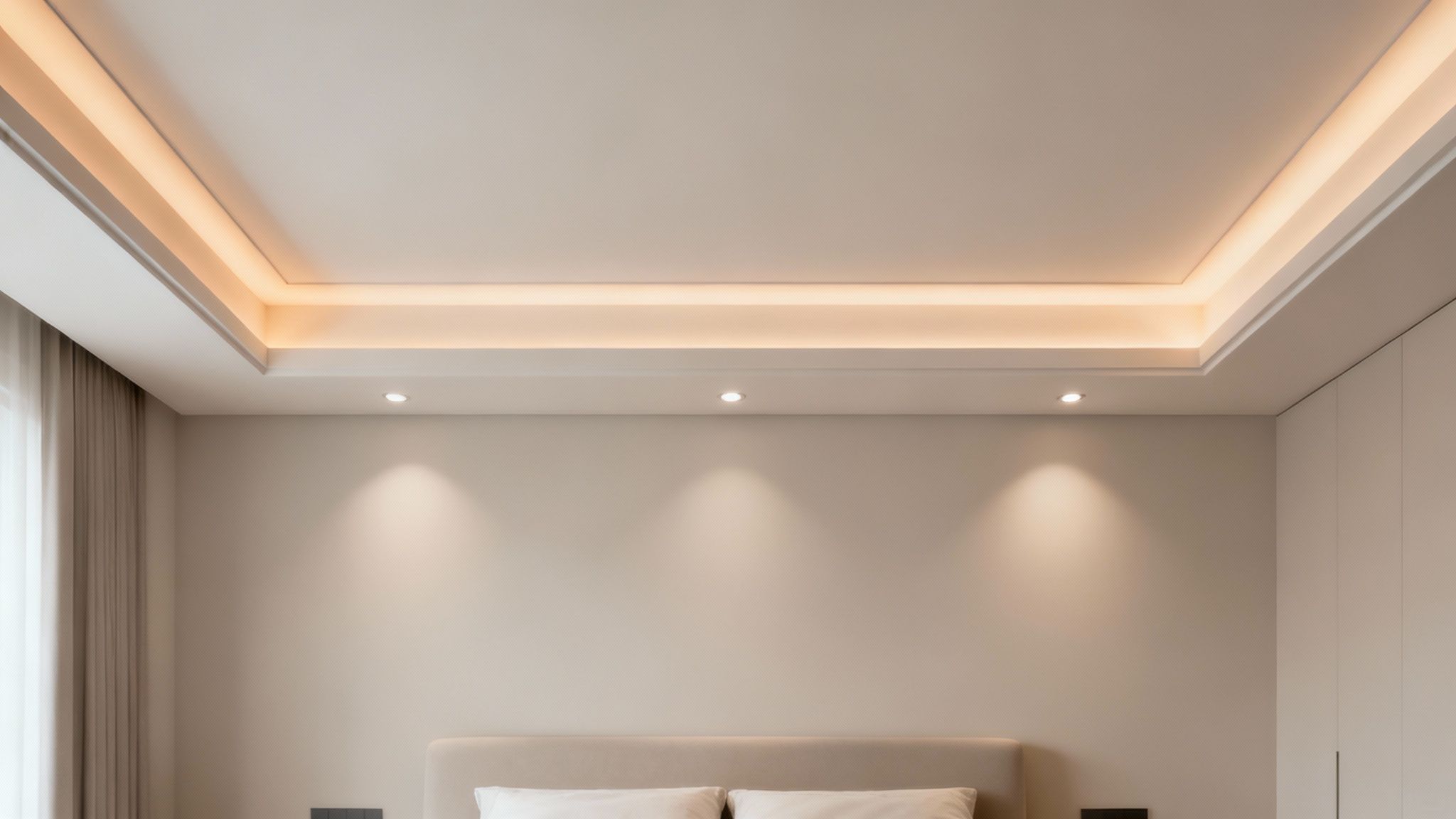
Popularised by luxury lighting designers and smart home specialists, this method turns the ceiling into an integral part of a room’s atmosphere. It’s particularly effective in contemporary living rooms for mood-adjustable lighting and luxury kitchens for a sleek, layered look. Brands like Philips Hue and Lutron have made sophisticated, app-controlled lighting schemes more accessible for modern homes.
Implementation and Styling Tips
A well-executed integrated lighting plan should feel deliberate and seamless. It requires careful consideration during the early stages of a renovation or build to ensure all wiring is concealed. To learn more about different fixture options, explore these ceiling lights ideas.
- Plan Ahead: Your lighting layout should be finalised before any ceiling work begins. This allows for wiring to be installed cleanly and efficiently.
- Layer Your Lighting: Combine different types for maximum functionality. Use cove lighting for general ambience, and recessed spotlights to highlight artwork or workspaces.
- Choose the Right Temperature: For a comfortable, inviting atmosphere in living areas and bedrooms, opt for warm LED temperatures between 2700K and 3000K.
- Embrace Smart Controls: Integrating a smart dimming system provides effortless control over brightness and mood, and can help manage energy consumption.
- Safety First: Always consult a qualified electrician for the installation of integrated lighting to ensure it is safe, compliant with UK regulations, and professionally finished.
8. Skylights and Ceiling Windows
For an idea that physically transforms a room's atmosphere, installing skylights or ceiling windows is an unparalleled choice. This architectural approach turns the ceiling into a dynamic connection to the outdoors, flooding interior spaces with natural light. It’s a powerful ceiling decoration idea that not only enhances brightness and perceived space but also serves as a stunning design feature, drawing the eye upwards to a view of the sky.
This method is particularly effective in spaces that lack adequate wall windows, such as loft conversions, kitchen extensions, and internal hallways. Leading brands like Velux have made skylights a staple in UK home renovations, proving their value in both modern new-builds and period property updates by creating bright, airy, and more energy-efficient environments.
Implementation and Styling Tips
A successful skylight installation balances light maximisation with practicality. It requires professional assessment of your roof structure to ensure feasibility and correct placement. Consider these practical tips for a flawless integration:
- Optimise Placement: For maximum light throughout the day, install skylights on south-facing roof pitches. North-facing installations provide softer, more consistent light with less glare.
- Control Light and Heat: Integrate automated or manual blinds. These are essential for managing privacy, controlling room temperature on hot days, and darkening rooms like bedrooms.
- Ensure Proper Sealing: Professional installation is critical to prevent leaks and ensure adequate ventilation, which helps to avoid condensation issues, especially in kitchens and bathrooms.
- Consider Smart Glass: For ultimate control, explore smart glass options that can tint electronically to reduce glare and solar heat gain at the touch of a button.
9. Decorative Pendant Lighting and Chandelier Features
Beyond just providing illumination, decorative pendant lighting and statement chandeliers transform ceilings into captivating showcases. This approach treats lighting fixtures as artistic installations, turning a functional necessity into a primary design feature. It’s a powerful ceiling decoration idea that creates a distinct focal point, drawing the eye upward and defining the character of a space.
This trend is a favourite among leading UK designers like Tom Dixon and has become a staple in high-end London properties and contemporary kitchens. From clusters of minimalist pendants over a kitchen island to grand crystal chandeliers in a formal dining room, these fixtures add layers of light, texture, and personality, moving beyond simple utility to become a central piece of décor.
Implementation and Styling Tips
Choosing the right fixture is about balancing scale, style, and function. An oversized chandelier can overwhelm a small room, while a tiny pendant will get lost beneath a high ceiling. Consider these practical tips for a successful installation:
- Mind the Proportions: Ensure your chosen fixture is proportional to the room's size and ceiling height. For dining tables, the fixture should be about 12 inches narrower than the table's width.
- Layer Your Lighting: Don’t rely solely on one statement piece. Combine it with ambient and task lighting, such as recessed spotlights or lamps, for a versatile and functional scheme.
- Coordinate Finishes: Select finishes like brass, chrome, or matte black that complement other metallic elements in the room, such as tapware or cabinet handles, for a cohesive look.
- Install a Dimmer: A dimmer switch offers ultimate control, allowing you to adjust the mood from bright and functional to soft and atmospheric.
- Choose the Right Bulb: The bulb itself is a key design element. To find the perfect match for your new fixture, you can explore the options available for decorative light bulbs on sprucecollective.co.uk.
10. Tray Ceilings and Geometric Ceiling Designs
For a sophisticated feature that adds depth and architectural character, the tray ceiling is an excellent choice. Also known as a recessed or inverted ceiling, this design features a central section that is raised higher than the perimeter, creating a tray-like effect. It's a versatile ceiling decoration idea that draws the eye upward, making a room feel more spacious and grand while providing a perfect canvas for creative lighting and paint treatments.
Popularised by contemporary residential architects and luxury home builders, tray ceilings seamlessly blend into both modern new-builds and renovated period properties. They add a touch of drama and custom-built elegance, particularly in master bedrooms, dining rooms, and living areas where a defined, impactful feature is desired. Geometric variations on this concept offer even more opportunities for unique expression.
Implementation and Styling Tips
A successful tray ceiling elevates a room from standard to statement. It’s a structural enhancement that requires professional planning to maximise its visual impact. Consider these practical tips for a stunning result:
- Play with Colour: Paint the recessed area a darker shade than the surrounding ceiling and walls to add visual depth, or use a lighter hue to create an airy, open feeling.
- Integrate Ambient Lighting: Install LED strip lighting within the recessed cove for a soft, indirect glow that highlights the architectural detail and creates a luxurious ambience.
- Add Finishing Touches: Combine the tray design with crown moulding along the inner and outer edges for a more traditional, polished, and sophisticated appearance.
- Plan for Headroom: While effective in rooms with standard ceiling heights, ensure the drop-down perimeter doesn't feel too low. A professional can advise on the optimal dimensions for your space.
- Consult the Experts: As this involves structural alterations, working with an experienced builder or contractor is essential to ensure the design is executed safely and flawlessly.
10-Option Ceiling Decoration Comparison
Choosing the Right Ceiling to Complete Your Vision
The journey through the world of ceiling decoration ideas reveals one undeniable truth: the “fifth wall” is no longer an afterthought but a primary canvas for expressing personal style and architectural character. From the stately grandeur of coffered ceilings and ornate plasterwork to the bold, contemporary statement of a wallpapered accent, your ceiling holds the potential to fundamentally transform a room’s atmosphere. It’s the final brushstroke that pulls a design narrative together, creating a truly cohesive and immersive space.
We’ve explored a diverse range of options, each offering a unique aesthetic and functional benefit. Whether you were drawn to the rustic charm of exposed wooden beams, the modern sleekness of integrated cove lighting, or the dramatic flair of a hand-painted mural, the key is to select a design that resonates with your home's inherent architecture and your personal vision. Remember, the most impactful ceiling decoration ideas are those that feel intentional and harmonious with the rest of the interior.
Synthesising Your Ideas: Key Takeaways
Before you commit to a design, let’s recap the core principles to guide your decision:
- Scale and Proportion are Paramount: A grand chandelier or heavy wooden beams can overwhelm a small room with a low ceiling. Conversely, delicate cornicing might get lost in a cavernous, open-plan space. Always measure your ceiling height and room dimensions to ensure your chosen design element is appropriately scaled.
- Function Dictates Form: Consider how you use the space. In a home office or kitchen, integrated lighting solutions provide essential task lighting. In a bedroom or snug, a dark, painted ceiling or textile treatment can create a cosy, intimate sanctuary. For high-traffic areas prone to noise, suspended acoustic panels offer both style and sound-dampening functionality.
- Cohesion is Crucial: Your ceiling should complement, not compete with, your existing décor. A minimalist room might benefit from a simple tray ceiling with a subtle paint contrast, while a maximalist interior can handle a vibrant, patterned wallpaper. Tie your ceiling into the room by echoing colours or materials found elsewhere in the space.
Your Action Plan: Turning Inspiration into Reality
Feeling inspired? Here are your next steps to bring your vision to life:
- Create a Mood Board: Gather images of the ceiling decoration ideas you love. Pinpoint the common themes, colours, and textures that appeal to you.
- Assess Your Space: Evaluate your room’s lighting (both natural and artificial), ceiling height, and existing architectural features.
- Budget and DIY Potential: Determine your budget. Research material costs and decide whether this is a project you can tackle yourself or if you'll need to hire a professional tradesperson.
- Start Small and Sample: Before committing, test your ideas. Paint a large sample board with your chosen colour and observe it at different times of day. Order a wallpaper sample to see how the pattern and scale work in your room.
Ultimately, decorating your ceiling is an invitation to be creative and add a layer of depth and personality that many people overlook. It’s an opportunity to direct the eye upward, to create drama, and to craft a space that feels truly complete. By thoughtfully considering the options we've discussed, you can select and implement a design that not only looks stunning but elevates your home’s entire aesthetic.