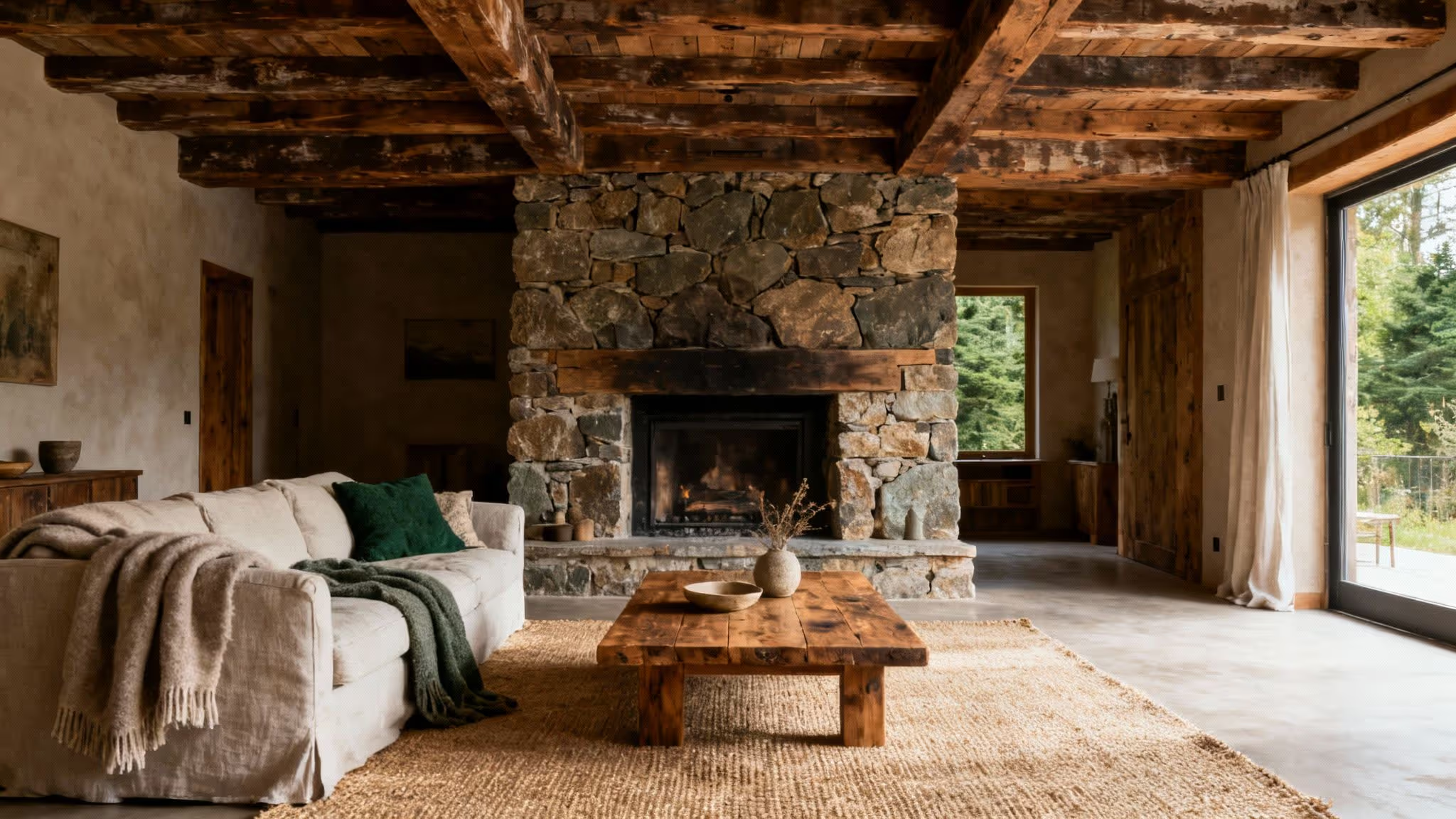
Rustic design is all about embracing the raw, unpretentious beauty of the outdoors and bringing that feeling inside. It’s a style defined by rugged materials, earthy colours, and a real appreciation for things that show a bit of age and character. Forget perfection; this look is all about authenticity.
What Exactly Is Rustic Interior Design?
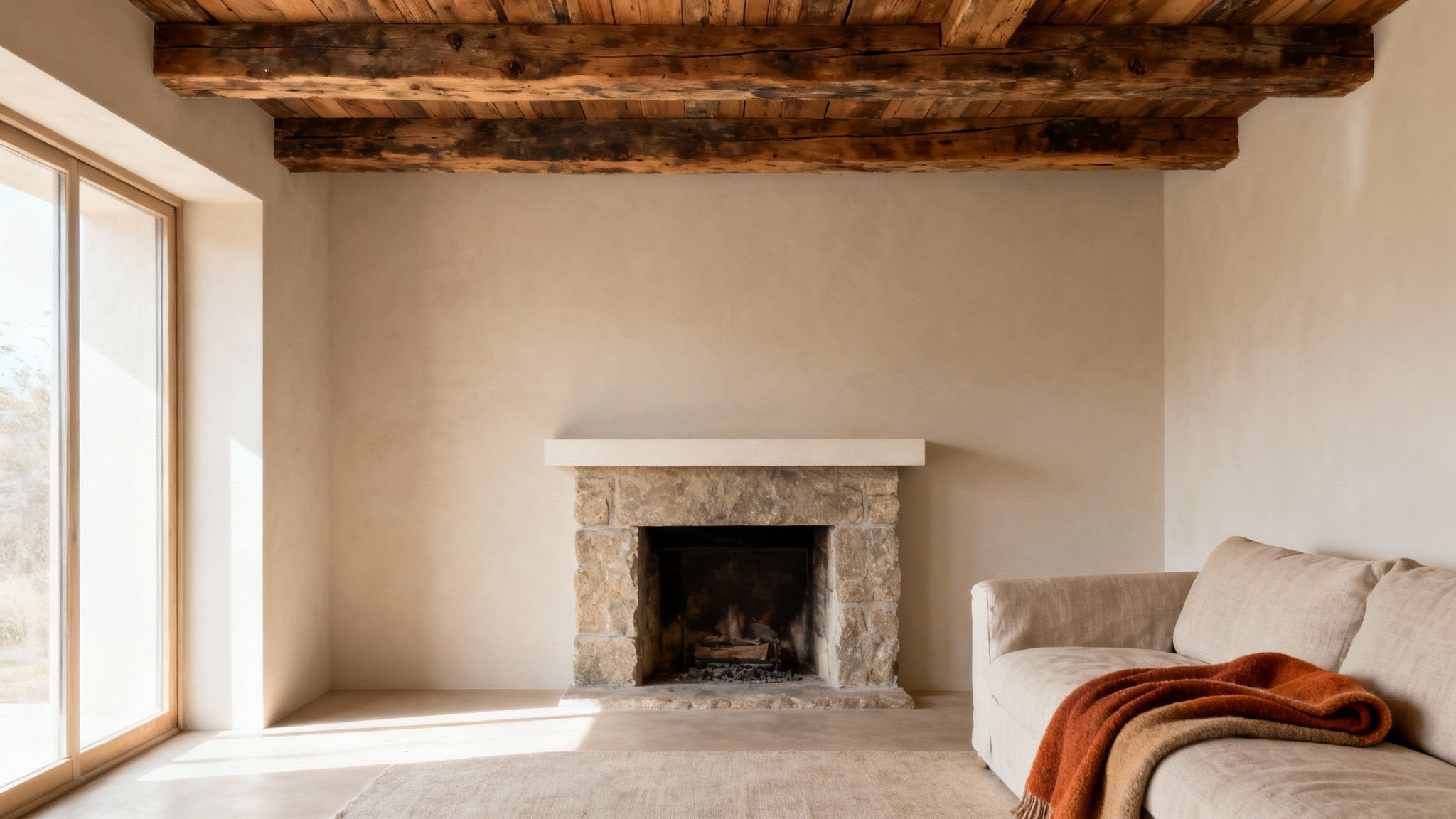
At its heart, rustic interior design celebrates all things organic and imperfect. It’s a move away from the sleek, polished finishes you see in more modern decor. Instead, it finds beauty in the grain of unfinished wood, the rough texture of natural stone, and the solid heft of a handcrafted piece of furniture.
This approach creates spaces that feel grounded, inviting, and deeply connected to nature. Think of a cosy cabin nestled in the woods or a historic farmhouse that’s full of stories—that’s the feeling rustic design aims for. It’s a style that puts comfort and a lived-in atmosphere first, way before stark minimalism.
The Philosophy Behind the Style
The core idea is pretty simple: let natural materials do the talking. This means features like exposed wooden beams, original stone walls, or wide-plank flooring aren't just structural—they’re celebrated parts of the decor. The whole point is to create a sanctuary that feels both robust and restful.
Rustic design is less about a strict set of rules and more about a feeling. It’s about creating an environment that feels authentic, warm, and welcoming—a true escape from the complexities of modern life.
Core Principles Of Rustic Design At A Glance
To really get the hang of rustic interiors, it helps to know the key ingredients that give the style its signature warmth and character. This table breaks down the essentials.
These elements all work together to create that cosy, grounded feeling. It’s a style that shares a similar spirit with other relaxed aesthetics, and if you like this vibe, you might enjoy our guide to cottage interior decorating too.
The Building Blocks of Authentic Rustic Style
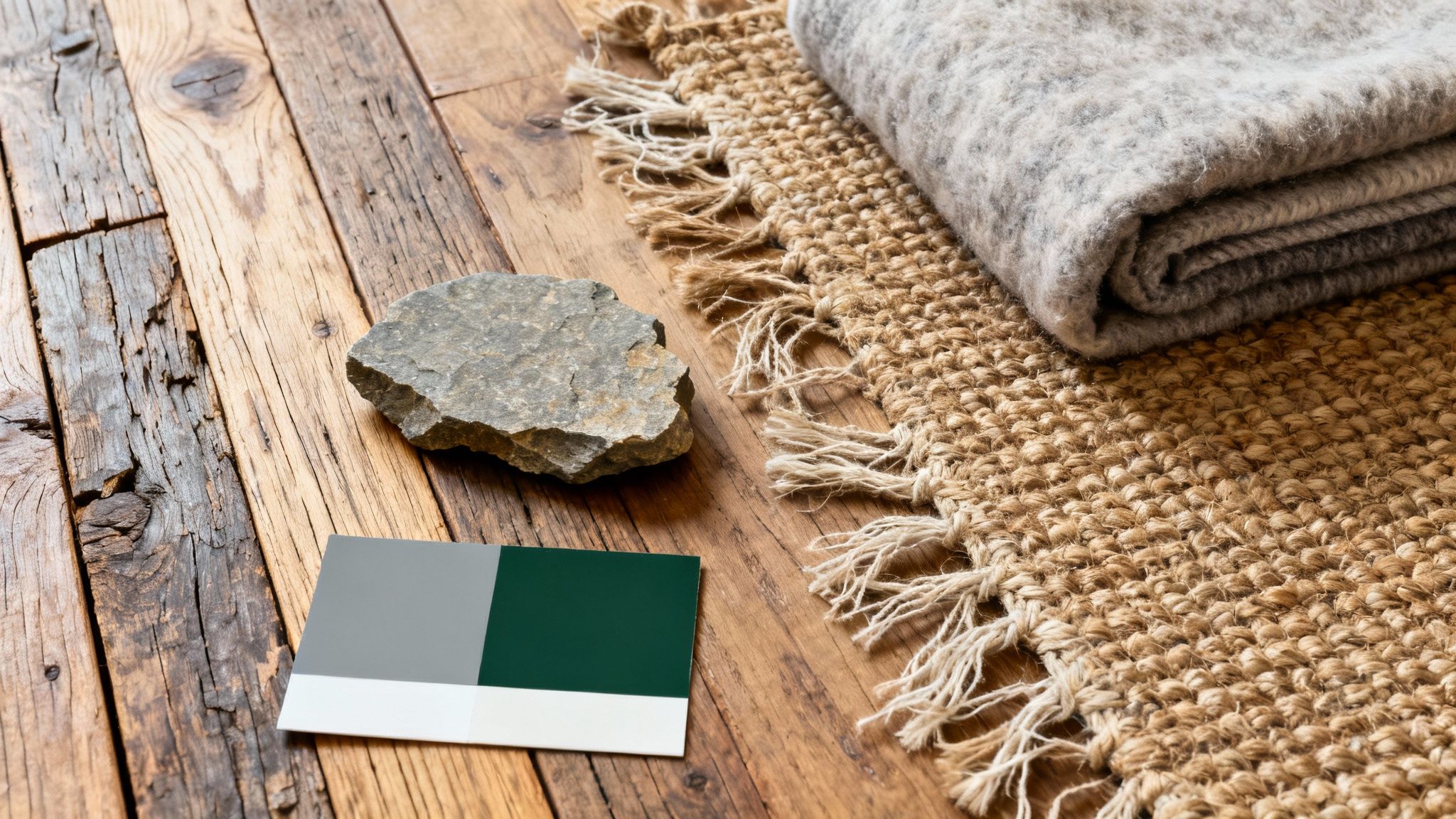
To really nail that rustic look, you have to start with the right foundations. It’s about so much more than scattering a few wooden bits around; it’s a careful layering of honest materials, earthy colours, and touchable textures that work together to create that warm, pulled-from-nature vibe.
Think of it like making a really good stew. You need simple, quality ingredients that are allowed to be themselves. For rustic interiors, that means leaning into raw and organic materials that connect your home straight back to the great outdoors.
Embracing Natural Materials
The true heart of rustic design is in its materials. Wood is the undeniable hero here, but not the polished, perfect kind. We’re talking about timber with a bit of a story to tell—reclaimed oak showing its knots, hefty ceiling beams with a rough-sawn finish, or a solid, chunky pine dining table that feels like it’s been in the family for years. Every grain and imperfection adds to the room's character.
Stone is the other big player, often used to create an unmissable focal point. A rugged fieldstone fireplace, for example, instantly anchors a living room, giving it a sense of permanence and warmth that sleek, modern materials just can’t touch. These elements aren’t just for show; they’re fundamental to the style’s honest-to-goodness appeal.
This shift towards raw materials is becoming a major movement across the UK. More and more, homeowners are seeking out natural materials and "rougher, more rustic textures" like reclaimed wood and stone. It’s part of what’s fuelling the residential interior design market, which is on track to hit an industry revenue of £1.9 billion by 2025. You can read more about these interior design trends and their impact.
Weaving in Rich Textures
Texture is where a rustic room really starts to sing. It’s the sensory layer that stops the space from feeling flat. The aim is to create a lovely interplay between different surfaces that feels as good as it looks.
Imagine running your hand over a coarse jute rug, then sinking into a soft woollen throw draped over a worn leather armchair. It’s that contrast that makes all the difference. It adds a depth that makes a room feel thoughtfully put together, yet completely effortless.
A great rustic interior is a feast for the senses. It’s the sight of natural wood grain, the feel of a chunky knit blanket, and maybe even the earthy scent of a log fire—all working together to create an immersive, calming space.
Here are a few classic textural pairings that just work in rustic design:
- Rough and Smooth: A raw, unfinished wooden mantelpiece styled with some smooth, hand-thrown ceramic vases.
- Hard and Soft: A rugged stone accent wall balanced by the softness of linen curtains and oversized cushions.
- Woven and Sleek: A handwoven kilim rug on the floor, with the simple, clean lines of a wrought-iron light fitting overhead.
When you thoughtfully layer these building blocks—materials, colours, and textures—you’re doing more than just decorating. You’re crafting a space that feels genuine, lived-in, and deeply connected to the timeless beauty of the natural world.
How to Choose Furniture with Rustic Charm
In a rustic home, furniture is never just there – it’s the soul of the room. It’s got to have a bit of weight to it, a sense of history, and absolutely zero pretence. This isn't about chasing the latest trend; it's about finding solid, honest pieces that feel like they've been around for ages and will be for many more to come.
Think of items with a real presence. A hefty farmhouse dining table made from thick planks of wood or a solid four-poster bed are perfect examples. They anchor the whole space, letting their simple forms and beautiful materials do all the talking.
Selecting Your Anchor Pieces
When you’re looking for those big, foundational items, always start with solid, natural materials. Hunt for pieces made from reclaimed wood, chunky oak, or characterful pine. Those little imperfections – the knots, the grain, the odd scuff mark – aren’t flaws. They’re the good stuff, the details that tell a story and give the piece its rustic charm.
You can unearth these gems anywhere from antique shops to modern makers who specialise in this style. Asking a local carpenter to create something bespoke is also a brilliant way to get a one-of-a-kind piece with real soul. And if you find a second-hand table or chest of drawers with great bones but a dodgy finish? Don't walk away. A bit of work can completely transform it, and our guide on how to paint old wood furniture has all the tips you’ll need.
The best rustic furniture feels like it has always belonged in the room. It should be comfortable, robust, and inviting, encouraging you to slow down and get cosy.
Furnishings for Comfort and Warmth
With your main pieces sorted, it's time to bring in the comfort. Sofas, armchairs, and lighting are what turn a rustic room into a genuinely welcoming retreat.
For seating, you want natural fabrics that are lovely to touch and only get better with age. Think durability, but make it cosy.
- Worn Leather: A classic for a reason. A leather armchair develops a beautiful patina over time, adding so much character to a quiet corner.
- Linen and Cotton: These fabrics feel relaxed and effortless, perfect for creating a space that’s light and airy but still feels like a hug.
- Wool and Tweed: Absolutely perfect for our UK climate. These textiles bring instant warmth and texture – just the thing for snuggling into on a chilly evening.
Lighting is what sets the mood. A wrought-iron chandelier can make a brilliant focal point over a dining table, while a few ceramic table lamps dotted around the room will cast a soft, ambient glow that’s perfect for winding down. The trick is to layer different light sources to create a space that’s both practical and beautifully atmospheric.
Bringing Rustic Designs into Every Room
This is where the real magic happens: translating those core rustic principles into your actual home. The best part about this style is its versatility. You can sprinkle its warmth and character into any room, no matter the size or original architecture. It’s all about focusing on a few key elements to create a feeling that flows from one space to the next.
The goal isn't to create carbon-copy rooms. Think of it more like a common thread running through your home, with each space interpreting the rustic theme in its own unique way. This is how you build a home that feels both unified and full of personality.
Creating a Cosy Living Room Hub
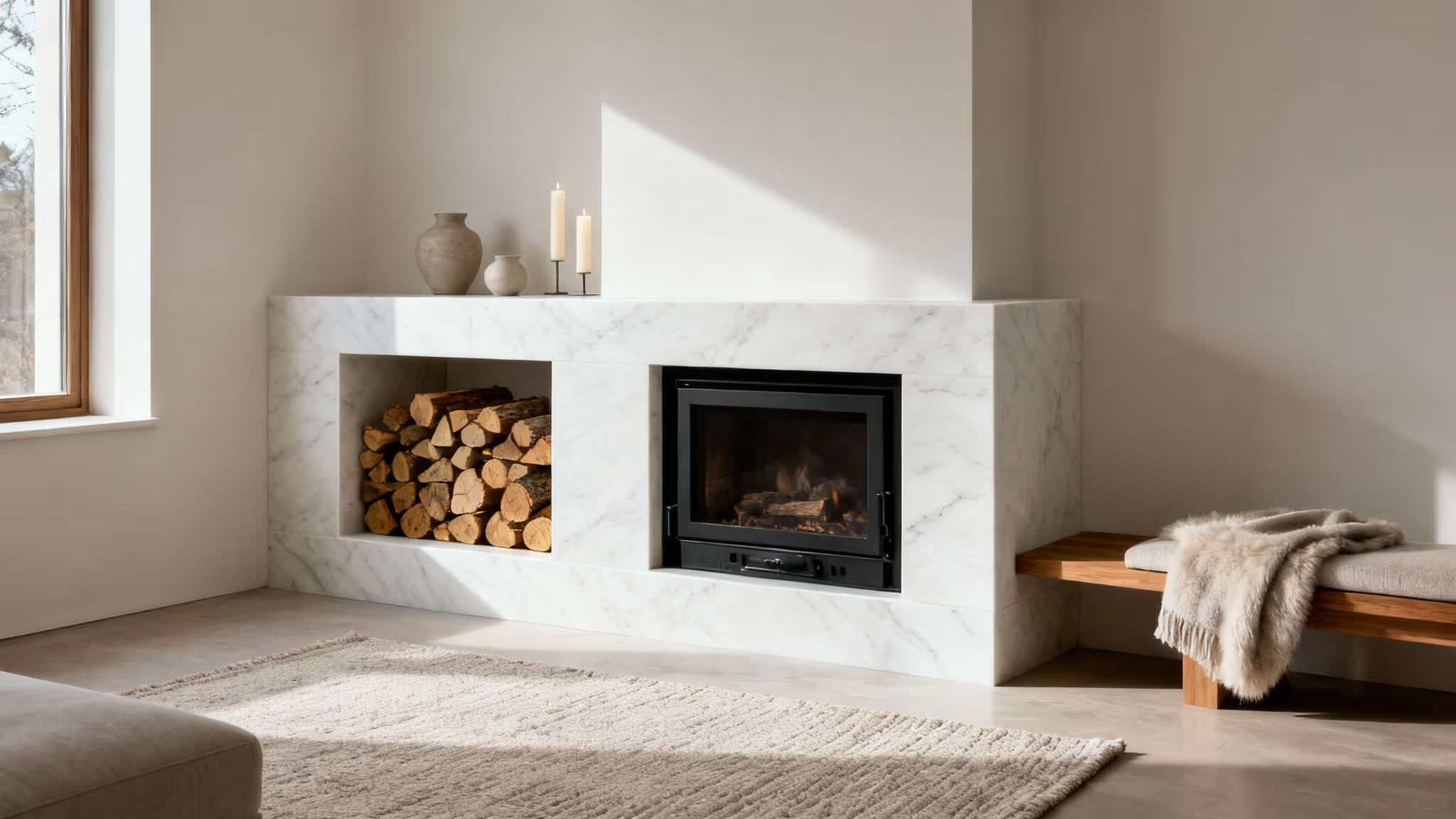
The living room is usually the heart of the home, making it the perfect place to lay a strong rustic foundation. Start with a focal point that feels permanent and warm – a rugged stone fireplace or an accent wall clad in reclaimed wood instantly sets that cosy, cabin-like tone.
From there, it’s all about comfortable, substantial furniture. A deep-seated linen or leather sofa just begs you to curl up on it, especially when piled high with woollen throws and textured cushions. This is the perfect spot to mix old and new, too. Try pairing a solid wooden coffee table with more contemporary lighting to keep the look fresh. To go a bit deeper, check out our dedicated guide to creating a welcoming rustic living room.
Designing a Functional Rustic Kitchen
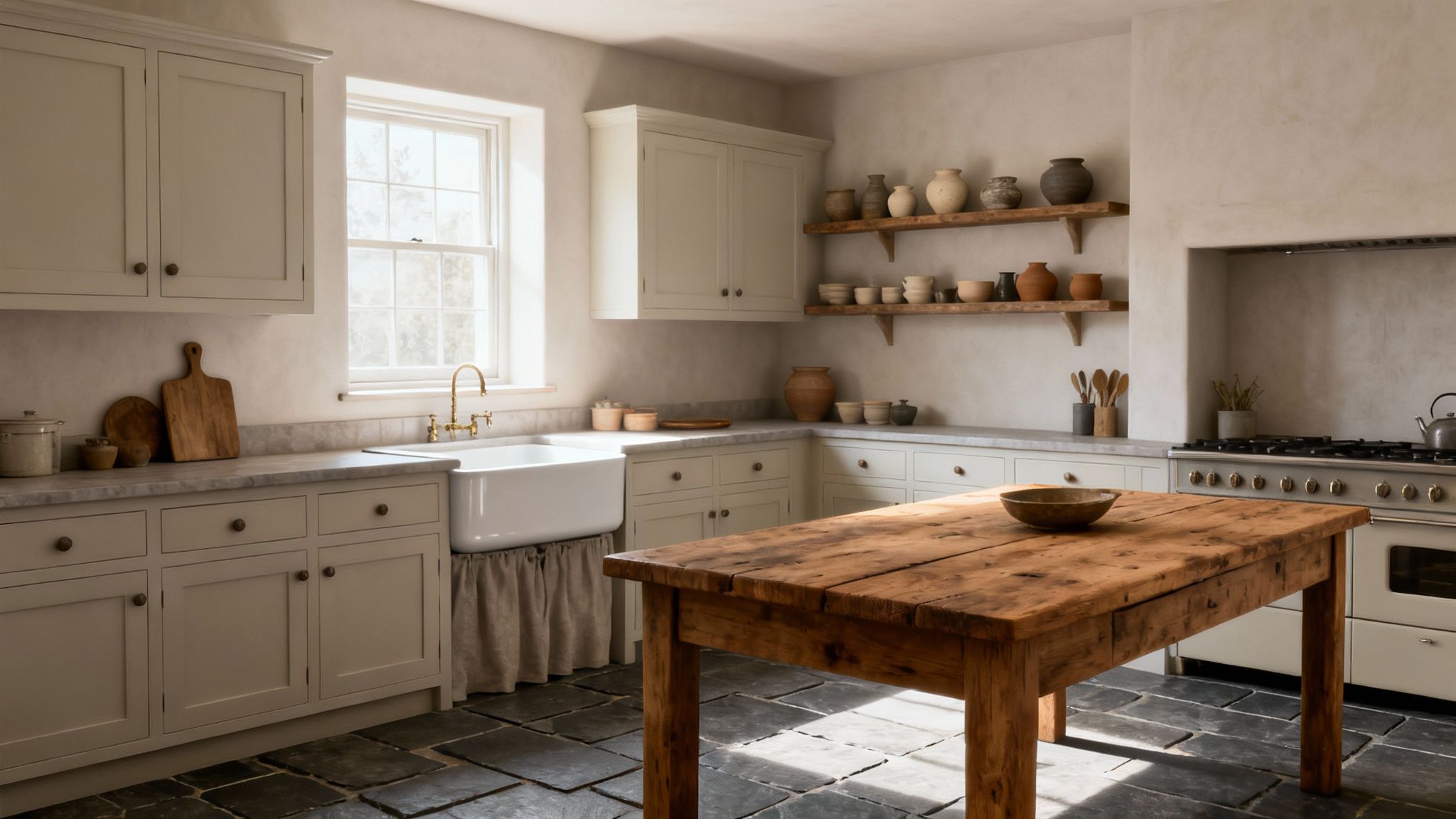
In the kitchen, rustic design is all about blending practicality with timeless charm. It should feel hardworking and welcoming, like the hub of a busy farmhouse. Simple, well-crafted cabinetry (classic Shaker-style units are perfect) provides a clean, traditional backdrop.
Pair these with durable worktops made from natural materials like solid wood or slate. A classic Belfast sink is an iconic choice that really cements the look. Finish it off with open shelving to display your hand-thrown pottery, vintage copper pans, and wooden chopping boards, turning everyday items into part of the decor.
A rustic kitchen is all about touchable materials and an atmosphere of hospitality. It should feel like a space where meals are lovingly prepared and stories are shared over a cup of tea.
Crafting a Tranquil Bedroom Retreat
Your bedroom should be a sanctuary, and the rustic style is perfectly suited for creating a calm, restorative atmosphere. The bed is the undeniable centrepiece. Choose a solid wood bedframe with a simple, sturdy design to anchor the room.
Then, layer it with soft, natural textiles to dial up the comfort. Think breathable linen sheets, a chunky knit woollen blanket, and a pile of plump cushions. Keep the lighting muted and warm with shaded lamps on simple wooden bedside tables.
- Flooring: Stick to natural materials. Wide-plank wood floors softened with a simple jute or wool rug are ideal.
- Storage: A vintage wooden chest or a freestanding armoire adds immense character while hiding your clutter.
- Accents: Keep it simple. A few botanical prints or a single ceramic vase with dried flowers is all you need.
Extending Rustic Charm to the Bathroom
Even a typically modern space like the bathroom can be transformed with a few rustic touches. The aim is to create a spa-like retreat with an organic, earthy feel. A freestanding roll-top tub makes for a stunning focal point.
Pair this with natural stone floor tiles, like slate or travertine, which are both beautiful and practical. For the vanity, a simple wooden unit, perhaps with an exposed basin, works wonders. Finishing touches like brass taps, a large framed mirror, and soft, fluffy cotton towels complete the look, proving that rustic warmth can find a home in every corner of your house.
Styling Your Space with Rustic Decor
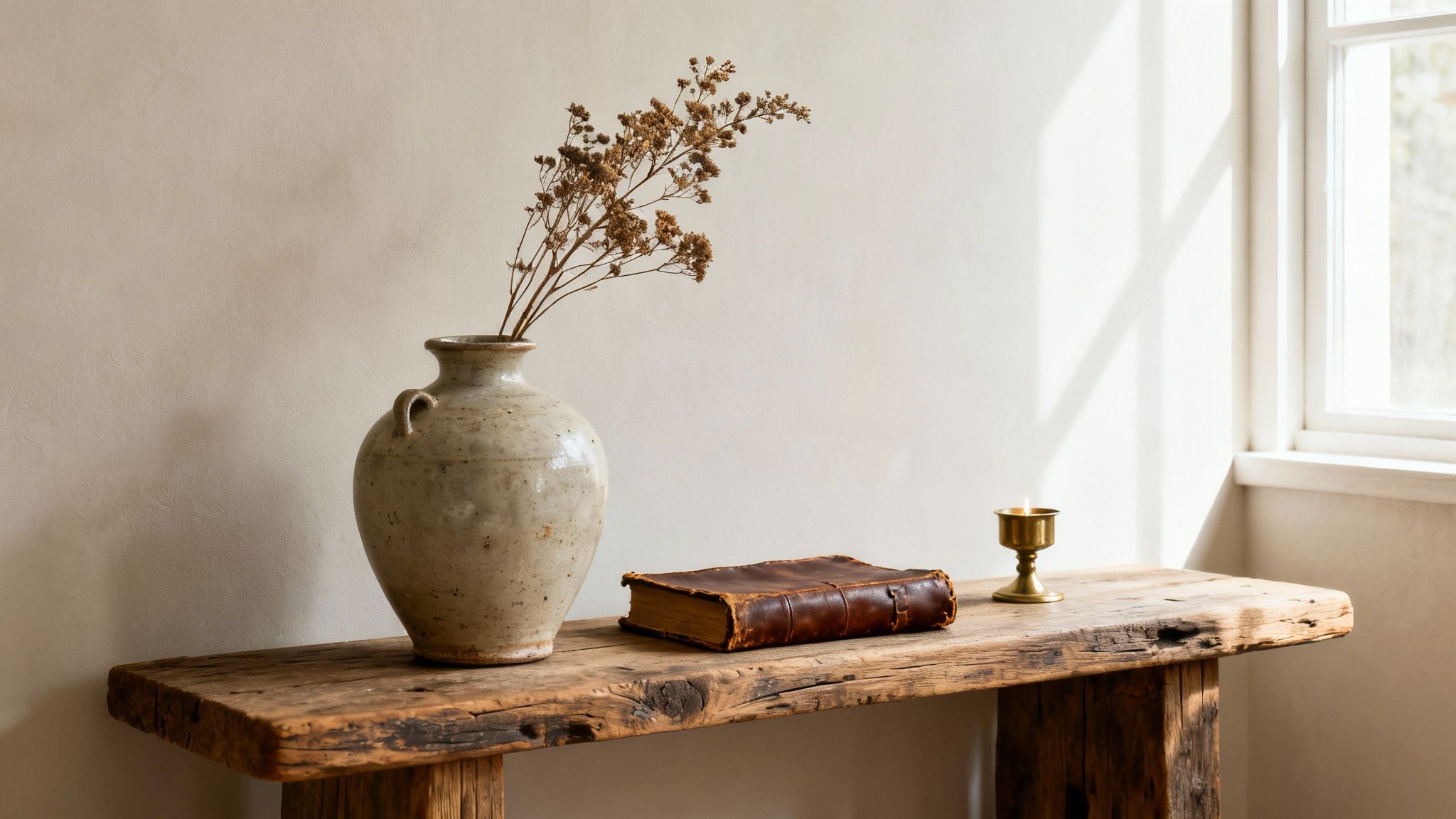
Once the big pieces are in place, it’s the final layer of styling that really makes a rustic space sing. This is where you swap the rulebook for your own story, turning a room that’s just ‘decorated’ into one that feels like a real home. It’s all about creating that sought-after, 'collected-over-time' feeling.
The trick is to think like a curator, not just a decorator. Steer clear of buying perfectly matching sets from a single shop. Instead, you're on a mission to gather objects that feel personal and meaningful, creating an atmosphere that’s not just beautiful, but truly yours.
Sourcing Unique Rustic Treasures
Let’s be honest, hunting for the perfect pieces is half the fun. Rustic decor is all about character, which means your best finds will often come from places that celebrate age, craftsmanship, and a little bit of history. It’s time to think beyond the high street.
Here are a few of our favourite spots to start the search:
- Antique Fairs and Flea Markets: These are absolute goldmines for one-of-a-kind treasures. Think aged stoneware, vintage textiles, and weathered wooden crates with stories to tell.
- Local Artisan Markets: Supporting local makers is a brilliant way to find unique, handcrafted pieces like pottery, hand-thrown ceramics, and bespoke wooden decor.
- Independent Online Boutiques: So many small online shops specialise in curated rustic and vintage homewares, making it easier than ever to discover unique finds from the comfort of your sofa.
This connection to craftsmanship is a huge part of the UK’s thriving home decor scene. The UK interior design market was estimated to pull in around USD 5,109.2 million in 2024, with over 6,415 design businesses fuelling our love for beautiful homes. For us at Spruce Collective, this creative community is a dream, opening up amazing opportunities to partner with UK makers for curated giveaways – from hand-thrown pottery to lovely linen textiles.
Budget-Friendly Styling and DIY Ideas
You don’t need a massive budget to create a stunning rustic look. In fact, some of the most charming decor can be found, foraged, or repurposed for next to nothing, adding an extra layer of authenticity to your space.
Styling a rustic interior is all about celebrating imperfection and resourcefulness. The most charming elements are often those that cost very little but are rich in story and character.
Here are a few ideas to get you started:
- Forage from Nature: Bring the outside in. A few foraged branches, some dried flowers, pinecones, or even interesting stones can look incredible. Pop them in a simple glass jar or ceramic vase for an effortless, organic touch.
- Repurpose with Purpose: Give old things a new life. An old wooden ladder makes a brilliant blanket holder, and a stack of vintage books can become the perfect pedestal for a lamp or a favourite plant.
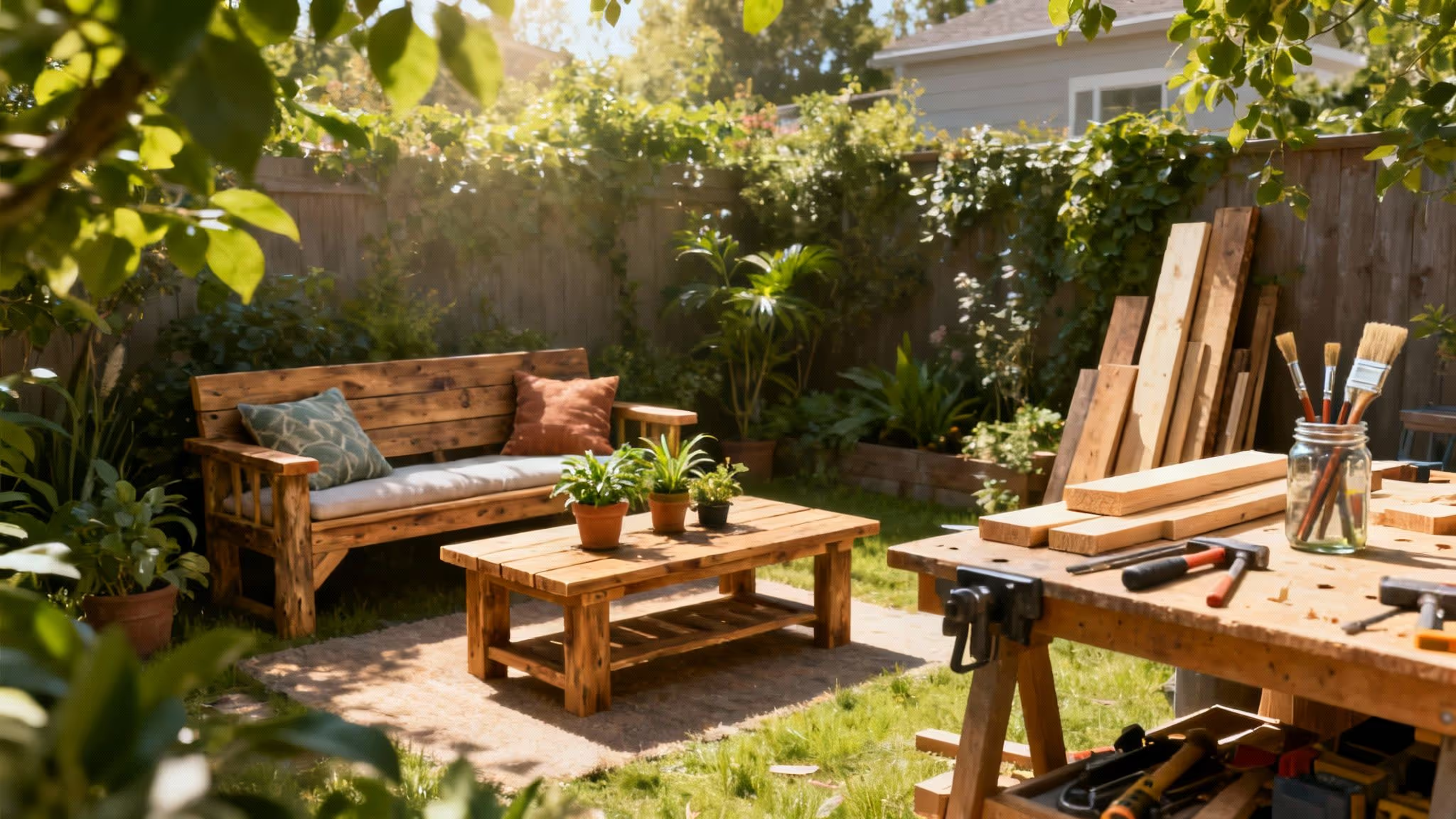
- Embrace DIY Projects: A simple DIY can make a huge impact. For a weekend project with bags of rustic flair, check out our guide to creating amazing things with pallet wood projects. It’s a super affordable way to add custom, handmade character to your home.
Common Questions About Rustic Interior Designs
When you first dive into the world of rustic interiors, it’s natural to have a few questions. It’s a wonderfully flexible style, but getting your head around the basics makes the whole process feel much less daunting. Here are a few of the most common queries we hear.
What Is The Difference Between Rustic and Farmhouse Design?
This is a big one, as they’re often lumped together. While they’re certainly cousins, they have very different personalities. Think of farmhouse as a tidy country cottage – it’s generally lighter, brighter, and a bit more polished with its clean lines, white-washed finishes, and sweet vintage touches.
Rustic, on the other hand, is the cosy mountain cabin to the farmhouse's cheerful cottage. It leans into the raw, rugged beauty of nature. The focus is much more on the unrefined character of materials like heavy, dark woods and rough-hewn stone. It’s less about nostalgia and more about a direct connection to the outdoors.
Can Rustic Interior Design Work In A Modern Home?
Absolutely. In fact, the blend of the two – often called 'modern rustic' – is one of the most stunning and liveable styles out there. The magic is in the contrast. You get the clean lines and minimalist feel of a modern space, warmed up by the raw, textured honesty of rustic elements.
It’s a combination that feels both sophisticated and incredibly welcoming. A few examples:
- Imagine a sleek, polished concrete floor grounded by a huge, chunky reclaimed wood dining table.
- Or a minimalist living room made instantly dramatic with a floor-to-ceiling stone accent wall.
- Simple, modern kitchen cabinets look incredible paired with a thick, live-edge wooden worktop.
How Can I Create A Rustic Look On A Small Budget?
You absolutely don’t need a huge budget for this look. The style’s love for simplicity and found objects makes it wonderfully accessible. A great place to start is with an earthy paint palette to create a warm, natural backdrop for the whole room.
Next, get friendly with your local charity shops, flea markets, and car boot sales. Keep an eye out for second-hand solid wood furniture – any scuffs or imperfections just add to its story. You can layer in texture cheaply with things like jute rugs, linen-blend cushions, and cosy wool throws. And don't forget to use nature as your decorator! A few foraged branches in a vase or some dried flowers can add an instant organic touch for free. For more ideas on making your space feel inviting, check out these creative and cosy home ideas that pair perfectly with this style.
Embracing rustic design is fundamentally about creating a feeling, not following a trend. Its core principles of comfort, authenticity, and a connection to nature are truly timeless.
Is Rustic Design Considered Outdated?
Not at all. While specific trends come and go, the core values of rustic design have a timeless appeal. In a world that often feels fast-paced and screen-heavy, the desire for a home that feels grounding, warm, and real has made this style more relevant than ever. It's a design philosophy that's all about creating a lasting sense of sanctuary.