
The secret to a stunning flower arrangement happens long before the first stem even touches the vase. It’s all in the prep work—getting your tools in order, giving your blooms a proper drink, and picking the right vessel. Nail this foundation, and you're already halfway to creating something that looks vibrant and actually lasts.
Setting the Stage for a Stunning Arrangement
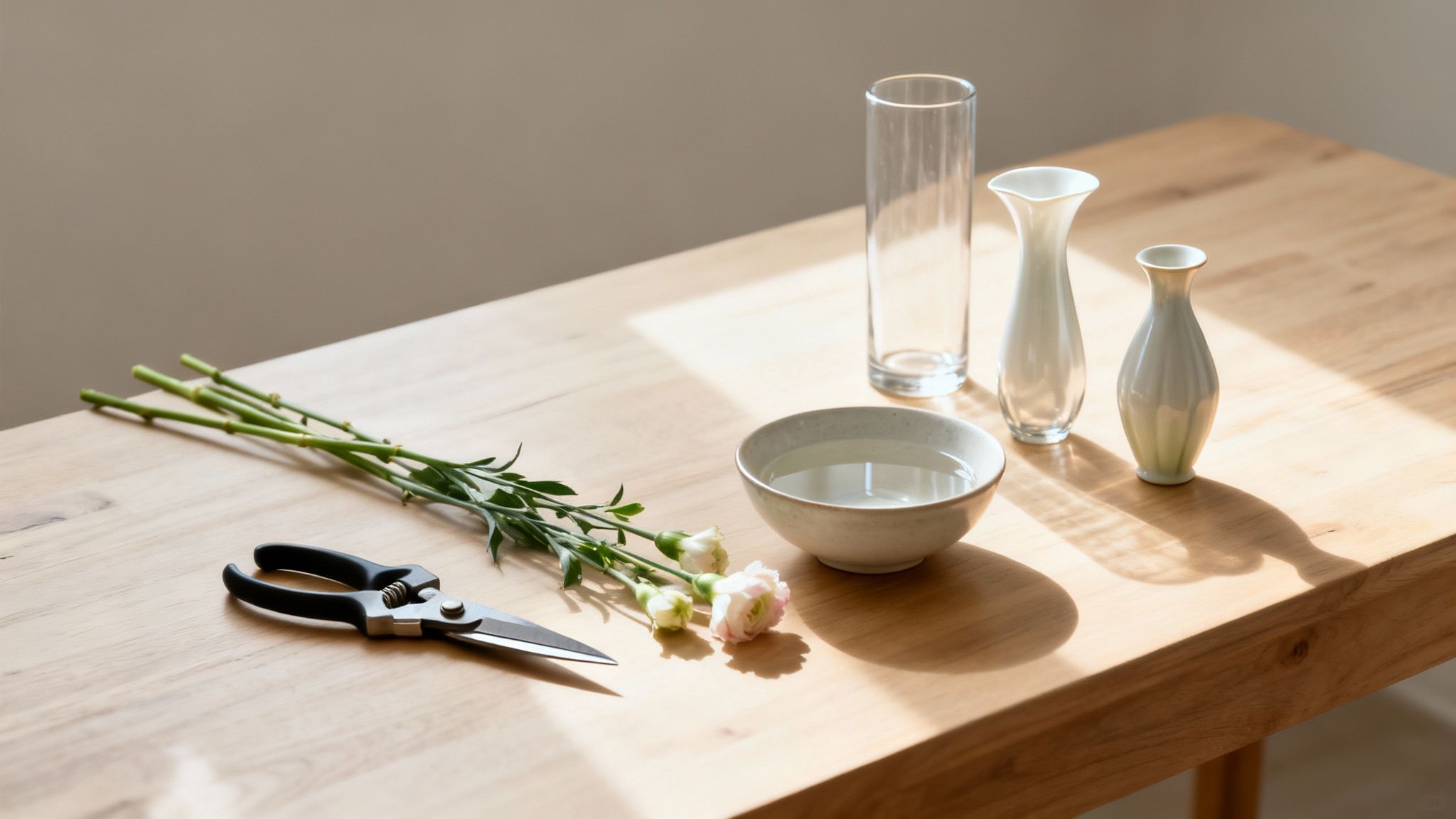
Before you even think about the creative part, you need to gather your kit. Just like a chef needs a good set of knives, a bit of the right equipment turns flower arranging from a faff into a genuine pleasure.
Your number one tool? A pair of sharp floral snips or secateurs. Kitchen scissors will crush the delicate stems, stopping them from drinking properly. A clean, precise cut from proper snips, on the other hand, can add days to the life of your arrangement. Trust me, it makes a huge difference. A little thorn stripper is also a godsend if you’re working with roses.
Preparing Your Flowers for Longevity
With your tools ready, it’s time to condition your flowers. This is the single most important step for making sure your blooms are fully hydrated and ready to shine. Skip it, and you’ll be faced with sad, drooping heads in a day or two, no matter how beautifully you’ve arranged them.
First, strip off any leaves that will end up below the waterline of your vase. Any foliage left sitting in the water will quickly rot, creating a bacteria soup that clogs the stems and makes your flowers wilt. This is non-negotiable for a healthy, long-lasting display.
Next up, give every single stem a fresh cut. Using your sharp snips, trim at least an inch off the bottom at a sharp 45-degree angle. This little trick dramatically increases the surface area for water to be absorbed, letting the flowers have a proper drink.
Here’s a pro tip: cut the stems under a running tap or submerged in a basin of water. It stops tiny air bubbles from getting sucked into the stem, which can create an airlock and block hydration completely.
Once trimmed, pop your flowers into a bucket of cool, fresh water and leave them to hydrate for at least a few hours (or even overnight) somewhere cool and dark. This gives them time to recover from their journey and drink deeply before you start the fun part.
Choosing the Perfect Vase
The vase isn’t just a container; it's the骨架 of your design. Its shape, size, and opening dictate the entire look and feel of what you’re about to create.
- Cylinder Vases: These tall, straight-sided vessels are brilliant for supporting long-stemmed flowers like lilies, delphiniums, or sunflowers. They create a clean, modern, and structured look.
- Flared Vases: If you want a more relaxed, abundant, and rounded arrangement, a vase with a wider mouth is your best friend. It gives lush bouquets of roses, peonies, and hydrangeas the space they need to open up beautifully.
- Bud Vases: Don’t underestimate the power of a single stem. A bud vase is perfect for showing off one spectacular bloom or a tiny cluster of delicate stems. Grouping a few together creates a really charming, dynamic display on a mantelpiece or side table.
Bringing the outside in is a huge part of making a house feel like a home. If you love the idea of connecting your space with nature, you might enjoy our guide on what biophilic design is—it’s the perfect complement to the art of arranging fresh flowers.
Choosing Your Flowers and Designing a Palette
A really stunning arrangement isn’t just a random bunch of stems. It's a thoughtful story of colour, shape, and texture. Now that your flowers are prepped, this is where the fun begins and your creative vision starts to take shape.
Understanding just a few simple design principles will completely change how you approach arranging flowers, taking your bouquets from simply ‘nice’ to genuinely breathtaking. The easiest place to start is with the classic 'thriller, filler, and spiller' framework. It’s a simple trick florists use to create balance and visual interest every single time.
Building Your Bouquet Structure
Think of your flowers as having three distinct roles to play. Getting the right mix is the secret to a professional-looking design.
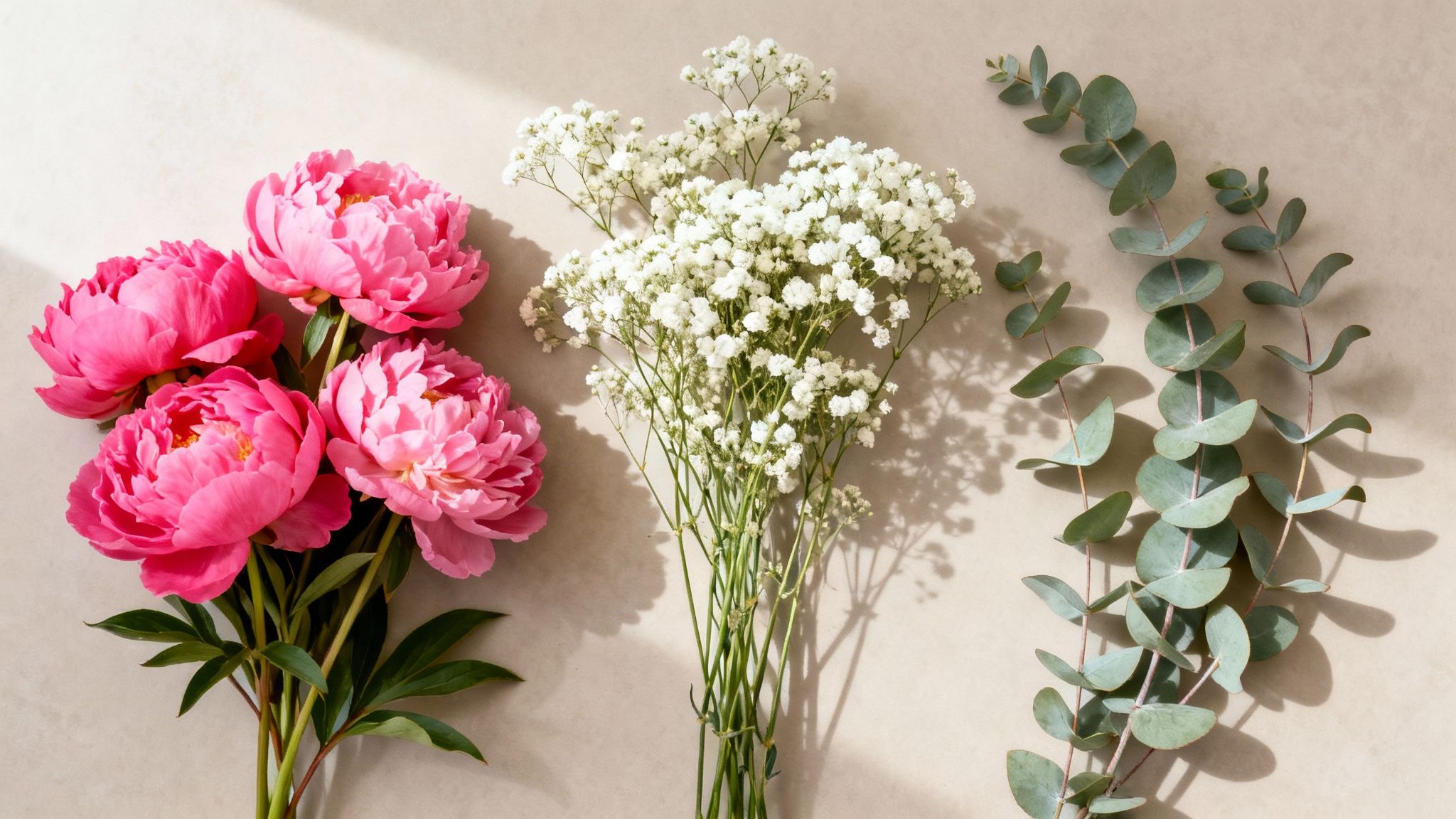
- Thrillers: These are your showstoppers. They're the bold, eye-catching blooms that demand all the attention. Think of a big, blousy peony, a dramatic lily, or a sculptural iris.
- Fillers: This is the supporting cast. They add volume and texture, filling in the gaps between your main event flowers. Delicate stems like baby's breath, alstroemeria, or Queen Anne's lace work beautifully here.
- Spillers: These are the bits that create shape and movement. Spillers are the graceful stems and foliage – like cascading eucalyptus or trailing ivy – that drape over the edge of the vase and soften the whole look.
For a classic pairing, try matching bold peonies (thriller) with some airy gypsophila (filler) and a few stems of arching eucalyptus (spiller) to finish it off.
Designing a Colour Palette
Colour is where you really inject personality and mood into your arrangement. You don’t need to be an artist to get this right; a few guidelines are all you need for a cohesive, impactful palette.
A monochromatic scheme uses different shades of a single colour, like pairing pale pink ranunculus with deep magenta roses. It's a sophisticated and calming look. For something with a bit more energy, try a complementary palette. This means using colours opposite each other on the colour wheel, like vibrant orange tulips with deep blue delphiniums. The contrast is guaranteed to turn heads.
Don't be afraid to let nature be your guide. Look at how colours combine in a garden or a meadow—often, the most beautiful palettes are the ones found organically in the wild.
The UK florist industry is always adapting to these design principles, with trends for specific flowers and colours changing with the seasons. If you’re ever stuck for ideas, having curated blooms delivered can be a great source of inspiration. We’re big fans of the combinations put together by Freddie's Flowers.
Mastering Core Floral Arranging Techniques
With your flowers prepped and your colour palette chosen, it’s time for the fun bit – bringing it all to life. This is where a little bit of structure meets your creative flair. Florists rely on a few core techniques to build their arrangements, and honestly, they're much easier to master than you might think.
These methods are the secret to giving your flowers the support they need to sit exactly where you want them, turning a simple bunch into a properly considered design.
The Simple and Sturdy Grid Method
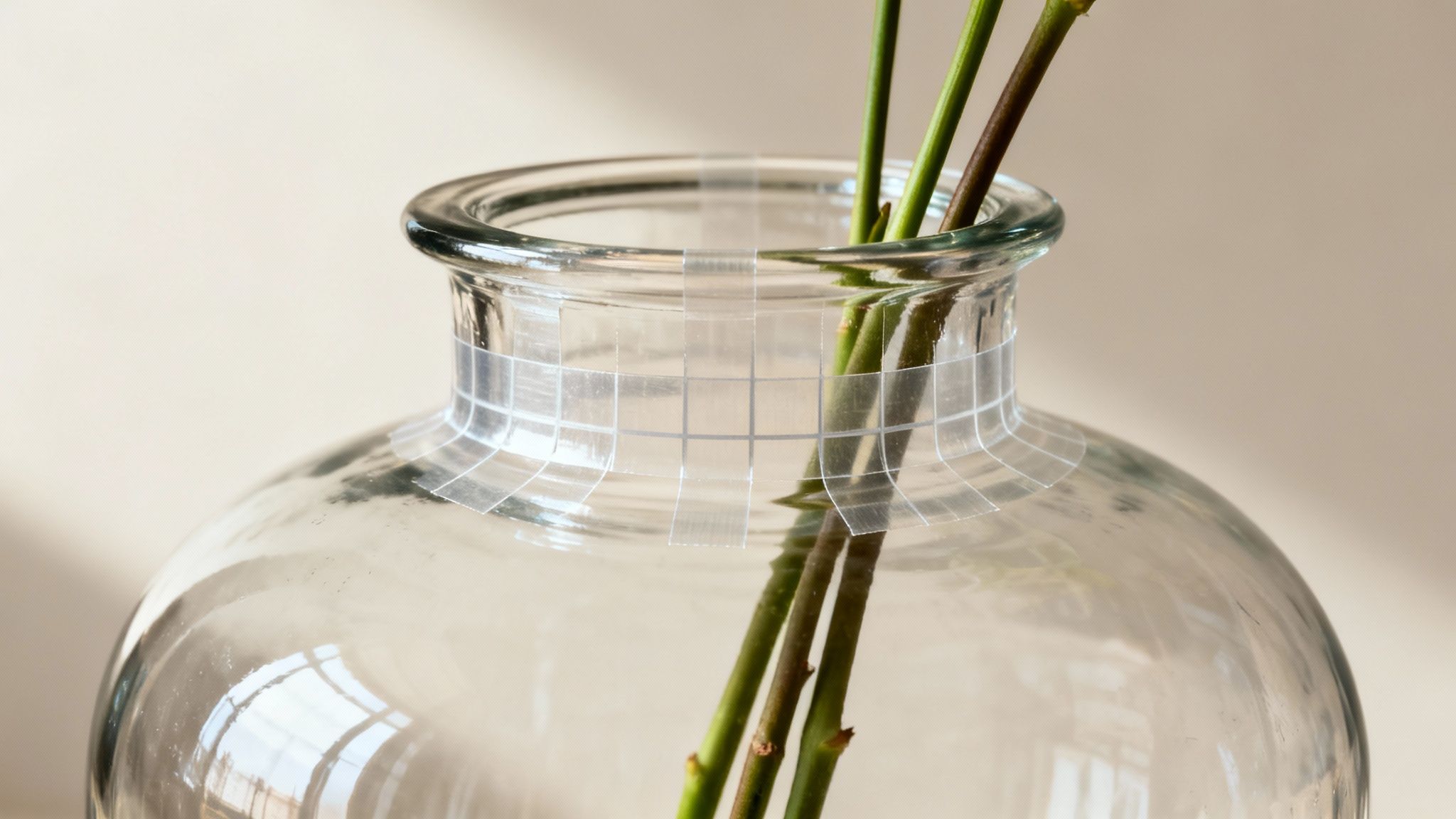
One of the easiest yet most effective tricks in the book is creating a simple tape grid. This technique is an absolute lifesaver for those wide-mouthed vases where stems love to flop over to the sides. It creates a sturdy, invisible structure that gives you total control over where everything goes.
Just make sure the rim of your vase is clean and bone-dry first. Using clear waterproof floral tape (or even just some clear sticky tape in a pinch), create a grid across the opening. Think of a simple noughts-and-crosses pattern. Each little square in the grid now acts as a slot to hold a stem perfectly in place.
By building a grid, you can place your heavier focal flowers and delicate filler stems with precision, preventing the whole thing from looking crowded or collapsing under its own weight.
This method is brilliant for building height and shape with confidence, ensuring every single bloom gets its moment to shine.
The Classic Spiral Technique
The spiral or hand-tied technique is a classic for a reason. It creates a gorgeous, self-supporting dome where the stems cleverly interlock, making the bouquet stable enough to stand on its own – both in and out of the vase. This is exactly how florists create those professional bouquets you see in shops.
To give it a go, hold your first stem (usually a sturdy bit of greenery) in your non-dominant hand. Add the next stem, laying it across the first at a slight angle. Keep adding stems one by one, always placing them at the same diagonal angle and gently rotating the bunch in your hand as you go. This is what creates that signature spiral at the base.
This technique is fantastic for creating those lush, rounded arrangements that look so good as a table centrepiece. If you've used any herbs as foliage, you could even dry them afterwards. Our guide on how to dry fresh herbs has some great tips on how to do just that: https://www.sprucecollective.co.uk/journal/how-to-dry-fresh-herbs.
The Layered Building-Block Approach
Another really intuitive way to arrange flowers is to think in layers. This approach involves building your design from the outside in, starting with a base and working your way up. It feels very natural and is incredibly forgiving if you're just starting out.
Begin by creating a collar of greenery around the rim of the vase. This foliage base does two things: it hides any mechanics (like that tape grid we talked about) and sets the overall shape and scale for your finished arrangement.
Next, dot your filler flowers throughout the greenery, spreading them out evenly to add texture and bulk. Finally, place your big, show-stopping focal flowers into the pockets you’ve created. This way, they’re perfectly framed by the other elements and become the undisputed stars of the show.
Styling and Placing Your Finished Bouquet
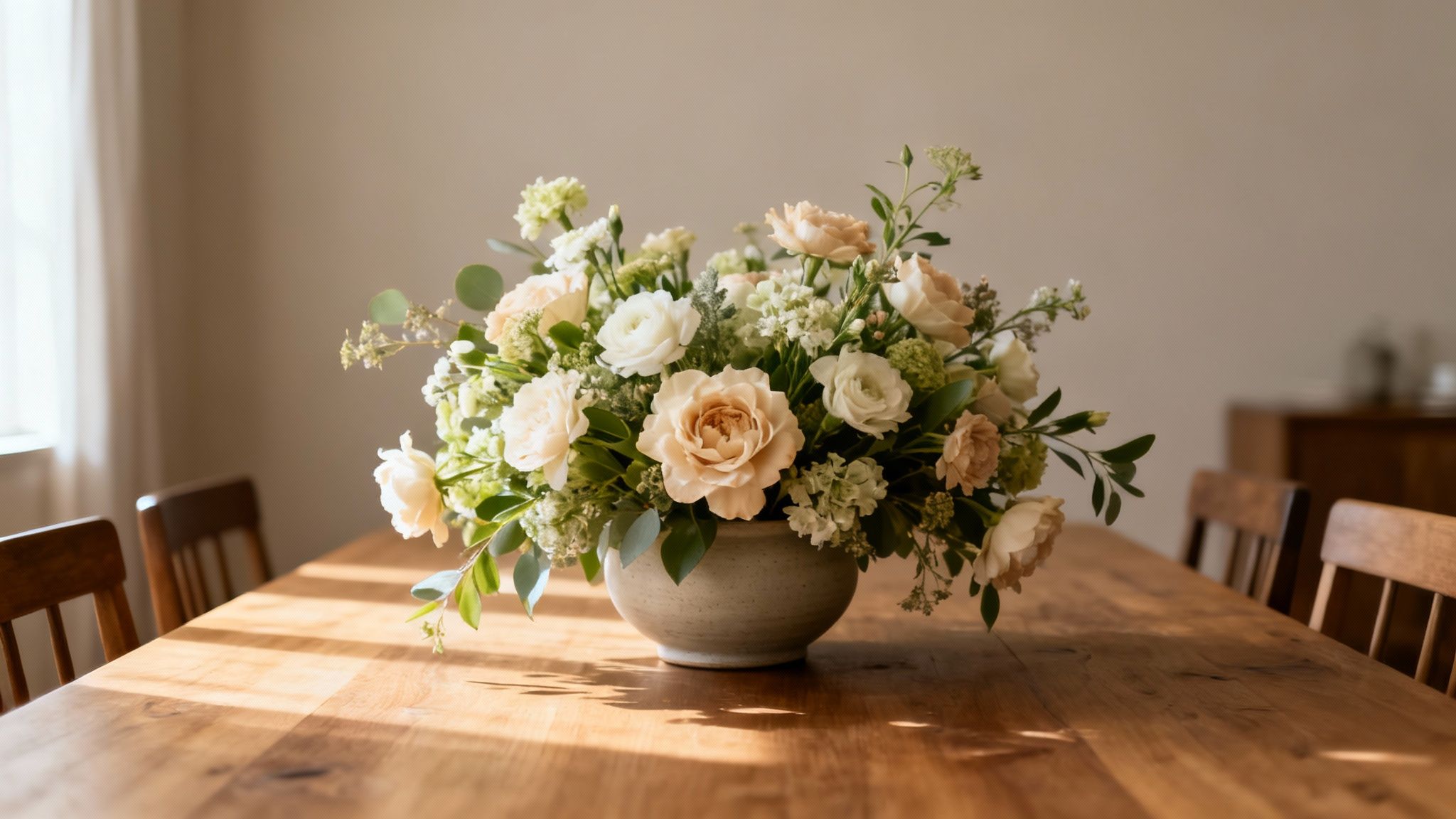
You’ve snipped, spiralled, and styled something beautiful – now for the best part. Finding the perfect spot for your flowers is what turns a lovely bunch of blooms into a real piece of interior styling.
This is where your arrangement really starts to connect with its surroundings. The two things to keep in mind are scale and proportion. A huge, dramatic display will feel overwhelming on a small bedside table, just as a tiny bud vase will get completely lost in a grand hallway. It’s all about finding the right balance.
Matching the Arrangement to the Room
Think about how you use the space. Different rooms call for different floral styles, and getting this right means your arrangement feels like it was meant to be there.
- The Dining Table: It's all about connection here. Go for a low, lush centrepiece that sits below eye level. This keeps conversation flowing easily across the table while adding a little something special to mealtimes.
- An Entrance Hall: This is your chance to make a statement. A tall, structural arrangement with plenty of height creates an instant 'wow' moment and makes the whole house feel more welcoming.
- A Bedside Table or Mantelpiece: Often, small and simple is best. A little cluster of delicate bud vases, each holding a single stem or a tiny posy, adds just the right amount of charm without creating clutter.
If you’re looking for more ideas on creating beautiful focal points, our guide on styling a coffee table uses these same principles of balance and scale.
Setting the Mood with Flowers
Your choice of flowers can completely shift the atmosphere of a room. A loose, airy bunch of wildflowers and grasses brings a relaxed, rustic charm that feels right at home in a country kitchen.
On the other hand, a sleek, minimalist arrangement with just a few architectural stems—think calla lilies or orchids—feels modern and sophisticated. It’s a great example of how learning to arrange flowers in a vase becomes another tool in your home styling kit.
The real magic happens when your arrangement feels like it truly belongs in its space, complementing the existing decor and elevating the overall ambience of the room.
It’s no surprise that for those who love year-round blooms without the upkeep, the UK's artificial flower market is booming, thanks to incredibly realistic materials. You can find out more about this trend over at Grand View Research.
Keeping Your Floral Creations Fresh and Vibrant
You’ve created something beautiful, but the job isn’t quite finished. Now, it’s all about making that beauty last. The secret to keeping your flowers looking fresh for longer comes down to a few simple habits that tackle the two biggest culprits of wilting: bacteria and dehydration.
Think of the vase water as your arrangement's lifeline. After a day or two, it starts to get a bit murky with bacteria from decaying leaves and stems. This gunk can clog up the flower's 'straws', stopping them from getting the water they desperately need. This is why fresh, clean water is absolutely non-negotiable.
Daily Rituals for Lasting Blooms
To keep your blooms happy, get into the habit of changing the water every day or two. It’s a quick job: just lift the whole arrangement out, tip away the old water, give the vase a quick rinse, and refill it with cool, fresh water. It sounds simple, but this one act makes a huge difference in slowing down bacterial growth.
While you’re at it, give the stems another little trim. Every couple of days, snipping another centimetre off the bottom at that 45-degree angle re-opens the drinking channels. This tiny cut ensures they can keep soaking up water efficiently, which is the best defence against premature drooping.
If you spot one particular flower looking a bit sad – a wilting rose, for instance – this trick can often bring it right back to life. In fact, if you’re struggling with droopy heads, our guide on how to revive roses has some fantastic emergency tips.
Smart Placement and Feeding
Where you put your vase matters more than you might think. Flowers are sensitive little things, and some common household spots can seriously shorten their lifespan.
Try to keep your arrangement away from:
- Direct Sunlight: The heat makes flowers lose moisture way too quickly and can even scorch delicate petals.
- Heating Vents or Radiators: That constant flow of dry, hot air is the enemy of fresh flowers and will cause them to wilt in no time.
- Ripening Fruit: A bowl of fruit gives off ethylene gas, a natural hormone that speeds up the ageing process in flowers, making them fade and drop their petals much faster.
The question of flower food always comes up. Those little sachets you get with bouquets are genuinely helpful. They’re a clever mix of sugar for energy, a biocide to kill bacteria, and an acidifier to help the stems drink. They definitely work.
If you run out, though, a homemade fix can tide you over. A tiny drop of bleach in the water will curb bacterial growth, and a pinch of sugar adds a bit of nourishment. But honestly, for most arrangements, simply keeping the water meticulously clean is the most effective thing you can do to enjoy the results of your efforts for days to come.
Your Flower Arranging Questions, Answered
Even when you've followed all the steps, a few little questions can pop up. Think of this as your troubleshooting guide – quick fixes for the common hitches that get between you and a perfect vase of flowers.
Why Are My Flowers Drooping Even in Water?
It's one of the most frustrating things to see: a perfectly lovely bloom suddenly looking sad and limp, despite sitting in a full vase. This is nearly always down to an air bubble trapped in the stem, creating a blockage so water can’t get through. Sometimes, bacteria in the vase can cause a similar issue, clogging things up.
Luckily, the fix is usually simple. Take the drooping flower out, hold it under a running tap, and re-cut the stem at a sharp angle. This little trick dislodges any air bubbles and gives it a fresh surface to drink from. Pop it back into clean water, and it should perk up within a few hours.
What Are the Easiest Flowers for a Beginner to Arrange?
When you’re just starting out, you want flowers that are a bit more forgiving. Choosing sturdy, reliable blooms makes the whole process more enjoyable and gives you a confidence boost right from the start.
Some of the best choices for beginners include:
- Roses: Their strong, woody stems are a dream to handle and position.
- Carnations: These are incredibly long-lasting, and their frilly heads add fantastic texture with zero effort.
- Alstroemeria: Often called the 'Peruvian Lily', they offer multiple blooms per stem and last for ages.
- Chrysanthemums: Available in a huge variety of shapes and sizes, they’re brilliant for adding bulk and structure.
And for greenery, you really can't go wrong with something robust like eucalyptus or salal. They create a beautiful, fragrant base that supports everything else perfectly.
Once you get more confident, you’ll start to get a feel for what works. The most important thing is just to have fun with it and not be afraid to mix things up.
The way we buy and arrange flowers is always changing, too. Trends in e-commerce and personalisation are shaping how we choose and send bouquets, making it easier than ever to create something unique for our homes. You can read more about the rise of customisation in floral gifting on eternalblossom.co.uk.
How Do I Stop Tall Flowers Falling Over?
We’ve all been there. You have some gorgeous, top-heavy flowers like lilies, delphiniums, or sunflowers, and they just want to flop over the side of the vase. The key is giving them enough support right from the beginning.
The tape grid method we mentioned earlier is your best friend here. It creates an invisible net across the top of the vase, holding each stem exactly where you put it. Another great trick is to pick a heavier vase with a narrower opening – the weight and shape will provide natural stability. You can also build a strong, interwoven base of greenery at the bottom to prop up those taller stems and keep them in place.