Styling a coffee table is about more than just finding a home for your remote control. It’s the art of creating a small, curated moment that pulls the whole room together, balancing everyday function with a bit of your personality.
Think of it this way: a well-styled table turns a simple piece of furniture into a real focal point.
Beyond Clutter: How a Styled Coffee Table Transforms Your Space
Let's be honest, most coffee tables are magnets for clutter. Stray mugs, a stack of unopened mail, the remote you were looking for yesterday... we’ve all been there. But what if that same surface could be the thing that makes your living room feel truly finished?
Forget complicated design rules. This is about making a small, achievable change that has a massive impact on how your home feels.

We're not aiming for a sterile, untouchable showroom look here. The goal is to create a centrepiece that’s both beautiful and practical enough for real life. It’s a chance to tell a little story about who you are and what you love.
Why Styling Matters Now More Than Ever
In the UK, where our living spaces are often on the cosier side, every piece of furniture has to earn its keep. With the average living room measuring around 4.1 by 3.7 metres, it’s no surprise that 63% of households are prioritising flexible, hardworking spaces.
This has changed how we see our coffee tables. We're leaning towards more deliberate, compact styling—a few well-chosen books, a tray to keep things tidy, and a single plant—to balance aesthetics with the need for actual, usable surface area.
A thoughtfully styled coffee table is a quiet powerhouse in your home’s design. Here’s why it’s so important:
- It sets the tone. A minimalist display creates a calm, uncluttered feeling. A stack of art books and travel souvenirs? That says cosy, lived-in, and interesting.
- It adds personality. This is your spot to show off things you love, whether that’s a favourite scented candle, a unique ceramic bowl, or a small vase of fresh flowers.
- It creates visual harmony. A great display connects with other elements in the room—picking up on colours in your cushions or the style of your rug—making the whole space feel more cohesive. To dig deeper into this, check out our guide on creating the perfect living room layout.
Think of your coffee table as a small canvas. With a bit of thought, you can transform it from a simple surface into a dynamic focal point that elevates the entire room’s character and functionality.
The Building Blocks of a Beautiful Coffee Table Display
Ready to move beyond guesswork and start styling your coffee table with confidence? Great design isn’t about magic; it’s about understanding a few core principles. These are the building blocks that professionals use to create displays that look effortlessly chic and pulled together.
We're going to dive into five key concepts: scale, height, balance, texture, and colour. Think of these as your personal toolkit for creating a display that feels intentional, layered, and perfectly suited to your home.
Master Scale and Proportion
Scale is all about the relationship between the size of your coffee table and the objects you place on it. If your decor is too small, it will look lost and insignificant. Too large, and the table will feel cluttered and overwhelmed, leaving no room for, well, an actual coffee cup.
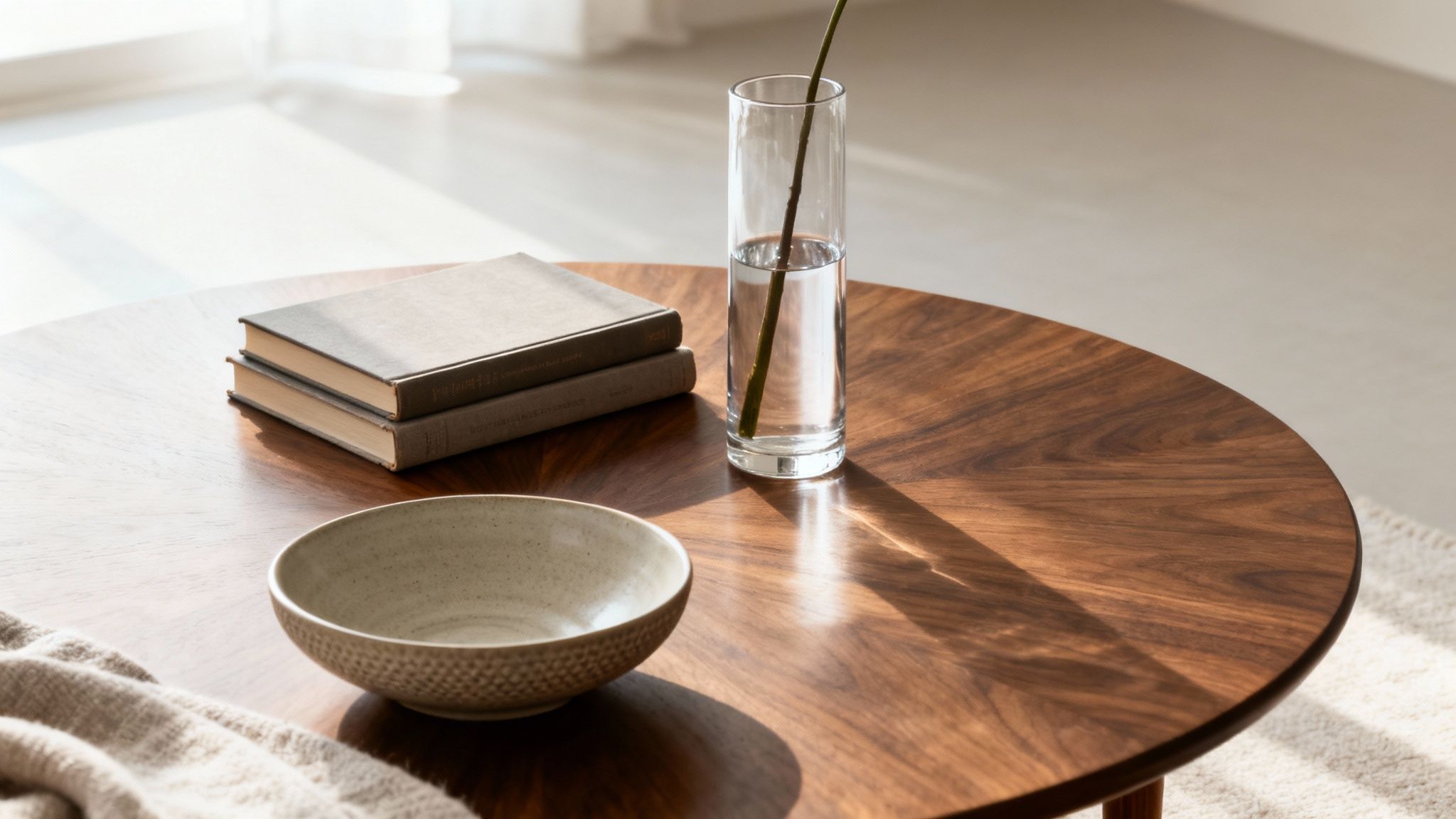
The goal is to choose items that feel substantial enough to make an impact without dominating the entire surface. For a large, chunky wooden table, you can get away with a bigger vase or a more generous stack of books. On a smaller, more delicate glass table, a few carefully chosen smaller items will feel much more at home.
A good rule of thumb is that your main decor should occupy about two-thirds of the surface area, leaving the final third clear for practical use. This keeps the display feeling balanced without sacrificing function.
Introduce Varied Height
A display where every object is the same height can look flat and uninspired. Introducing a mix of heights is one of the quickest ways to add visual interest and create a dynamic, layered look. It forces the eye to travel up and down, making the whole arrangement far more engaging.
You don’t need anything complicated to achieve this. It can be as simple as:
- A Stack of Books: Placing a few beautiful coffee table books creates an instant platform. You can then pop a smaller object, like a decorative bowl or a candle, on top to give it a little lift.
- A Tall Vase: A slender vase with a few stems of eucalyptus or dried flowers adds verticality without taking up too much precious surface space.
- Taper Candles: A pair of elegant taper candles in interesting holders can introduce height and a touch of sophistication.
Achieve a Sense of Balance
Balance doesn't have to mean perfect symmetry. While a symmetrical arrangement can look formal and elegant, an asymmetrical layout often feels more modern, relaxed, and lived-in. The key is distributing the visual weight of your items across the table so it feels grounded.
For example, a large, heavy-looking ceramic pot on one side can be balanced by a group of three smaller objects on the other. It’s all about creating a sense of equilibrium without being rigidly identical. A tray is a brilliant tool for this; it can corral several small items, giving them the collective visual heft to balance out a larger single object.
Layer with Interesting Textures
Texture is the secret ingredient that adds warmth, depth, and a tactile quality to your display. A coffee table styled only with smooth, shiny objects can feel cold and a bit one-dimensional. By mixing different textures, you create a richer, more inviting vignette that begs to be touched.
Think about combining contrasting materials. Place a rough, organic ceramic bowl next to a smooth glass vase. Let a soft, woven coaster sit beside a hardback book. These subtle contrasts are what make a display feel curated and thoughtful. The same principles apply elsewhere in your home – for more inspiration, explore our guide on how to style bookshelves and see how texture transforms any surface.
Unify with a Cohesive Colour Palette
Finally, colour is what ties everything together. Your coffee table display should feel connected to the rest of your living room, not like a separate island of random objects. Pull colours from your cushions, rug, or artwork to create a cohesive and harmonious palette.
This doesn't mean everything has to match perfectly. Instead, choose two or three main colours and repeat them in varying shades and tones throughout your display. A little pop of a contrasting accent colour can add a playful touch and prevent the scheme from feeling too uniform.
Four Go-To Formulas for Effortless Styling
Knowing the styling principles is one thing, but standing in front of an empty coffee table can feel a bit like staring at a blank canvas. Where do you even start?
If you’re looking for a jumping-off point, these four tried-and-true formulas are your blueprint. Think of them as recipes you can follow to the letter or tweak with your own personal flair. Each one is designed to set a different mood, from calm and minimal to cosy and collected, taking the guesswork out of the process.

The Modern Minimalist
This one is all about “less is more.” It champions clean lines, a tight neutral colour palette, and a few high-impact pieces that make a statement without creating clutter. It’s perfect if you’re craving a sense of calm and order in your living space.
Start by clearing everything off. Then, choose just three to four objects that feel intentional and sculptural. A simple tray can anchor the whole display, holding a sleek ceramic vase with a single monstera leaf and a beautiful scented candle.
The key here is giving your objects room to breathe. That negative space is just as important as the items themselves. The Modern Minimalist look is one of those easy styling tweaks that can instantly refresh any room, proving that sometimes the biggest impact comes from taking things away, not adding more.
The Book Lover's Nook
For anyone who believes a room isn’t quite complete without books, this formula turns your coffee table into a tiny, personal library. It’s a cosy and inviting style that just encourages you to slow down and get lost in a good read.
Begin with a stack of two or three of your best-looking coffee table books. Arrange them with the spines facing out to create a neat little platform. On top, place something small and personal – maybe a little dish for trinkets or a souvenir from your travels.
To finish it off, add a source of soft light, like a lovely candle in a ceramic holder. This mix of literature and warmth creates a vignette that feels both thoughtful and incredibly welcoming, practically inviting guests to flick through a book.
The Organic Oasis
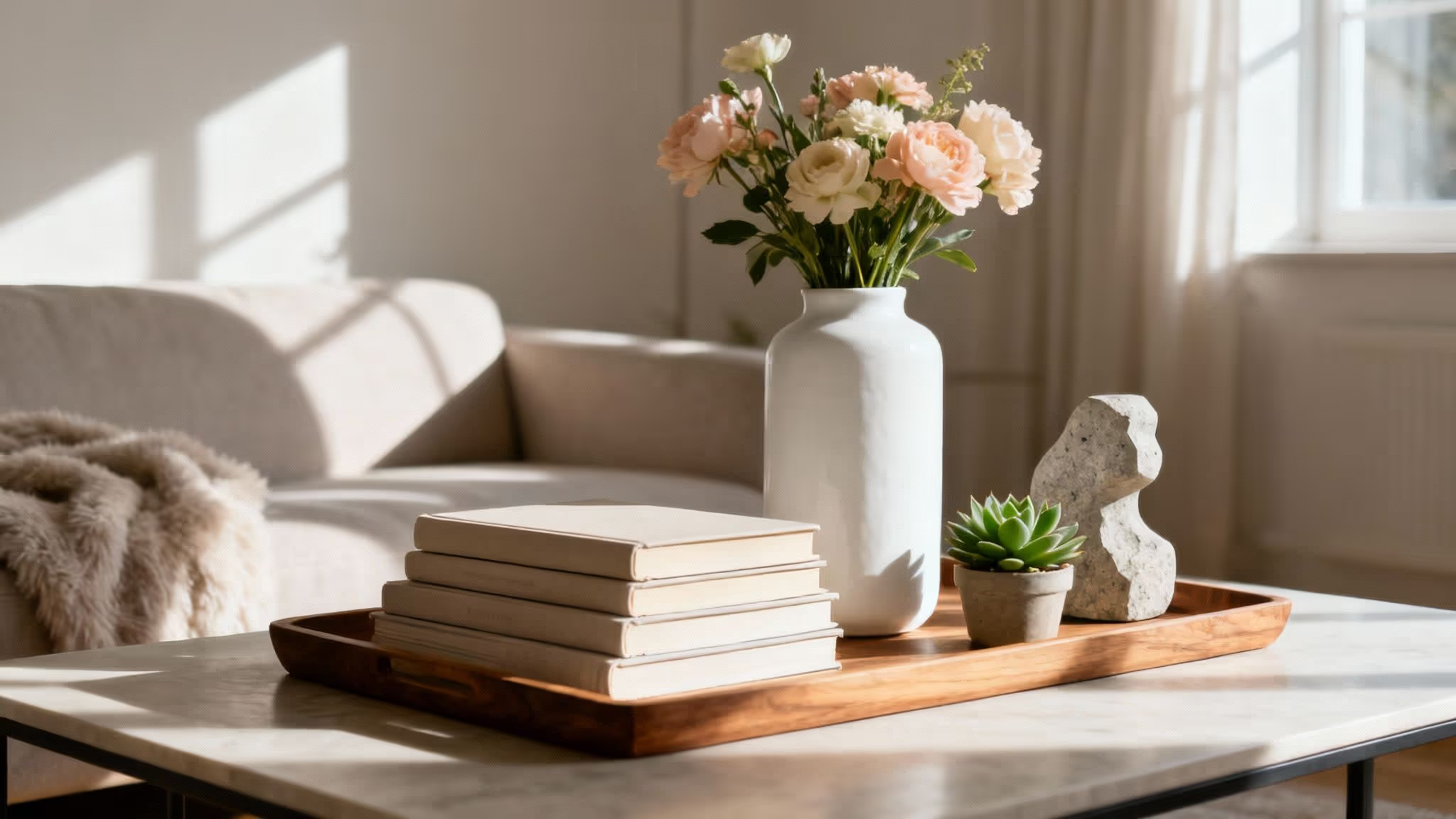
Bring the outside in with this refreshing, serene formula. The Organic Oasis is all about natural materials, earthy tones, and living things to create a tranquil focal point. It’s a brilliant way to connect your indoor space with the great outdoors.
The star of this show is almost always a plant. Choose a small potted succulent, an air plant in a unique holder, or a vase filled with fresh eucalyptus or dried grasses. These living elements add immediate life and texture.
Surround your greenery with objects made from natural materials. Think about things like:
- A wooden tray to ground the display.
- A rough-hewn stone or crystal for some earthy texture.
- Woven coasters to add a soft, tactile element.
This approach creates a display that feels both grounded and restorative, turning your coffee table into a mini retreat from the daily hustle.
This formula works so well because it engages multiple senses—the visual appeal of the plant, the tactile feel of wood and stone, and even the subtle scent of fresh foliage.
The Collected Eclectic
This is the one for the storytellers, the collectors, and anyone whose style can’t be put in a single box. The Collected Eclectic is an artful arrangement of meaningful objects, treasured finds, and unique pieces that tell your story. It’s basically a curated "shelfie" for your coffee table.
The trick to stopping this from looking messy is to find a common thread. This could be a consistent colour, a shared material like brass or glass, or even a theme like travel. Using a tray to group smaller items is a game-changer, giving them a sense of purpose and stopping them from looking like clutter.
Feel free to mix heights, shapes, and textures. A tall, sculptural object can sit next to a low, wide bowl, which might be placed beside a stack of vintage postcards. This formula is your chance to put the things you truly love on display, making your coffee table a real conversation starter.
Adapting Your Style to Any Table Shape
The shape of your coffee table isn't a restriction; it’s a starting point. Instead of fighting its natural form, the secret to beautiful styling is to work with its lines and proportions. Whether you have a round, square, or rectangular table, each shape offers a unique canvas to play with.
Knowing how to lean into your table's strengths is what creates a display that feels intentional and just… right. Let’s break down the most common shapes and how to style each one.
Styling Round and Oval Tables
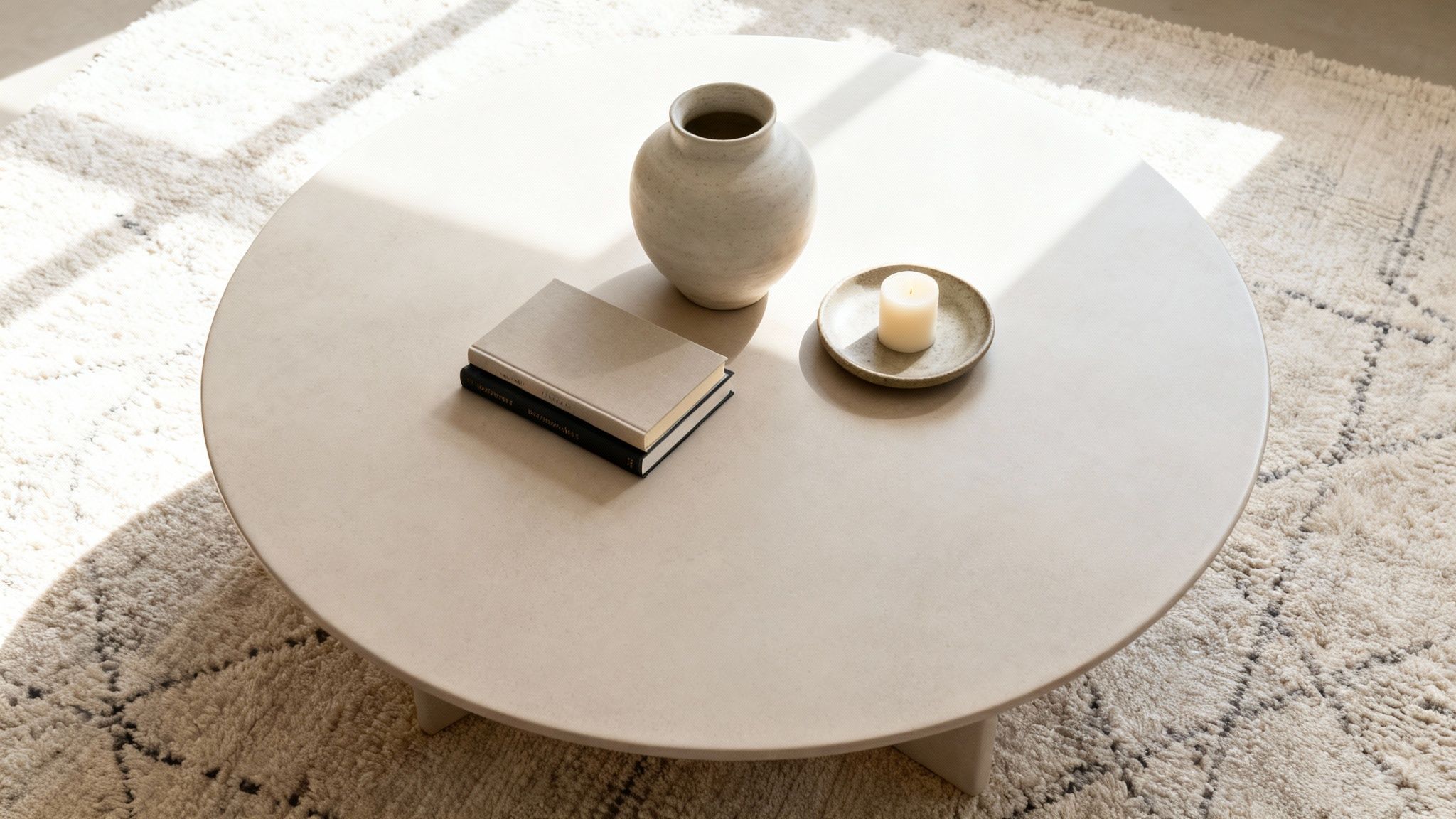
Round and oval tables are brilliant for softening a room and encouraging conversation to flow. With no hard corners, they naturally pull your focus towards the centre.
This makes them perfect for a single, curated cluster of objects. The classic ‘Rule of Three’ is your best friend here. Try grouping three items of different heights—like a small plant, a couple of books, and a candle—in a relaxed triangle right in the middle. It creates a neat little vignette that looks good from any angle.
Styling Square Tables
Square tables have a lovely, satisfying sense of symmetry. You can go one of two ways here: either embrace that structure with a grid-like layout, or soften its edges with a central, circular display.
- The Grid Approach: Picture your table divided into four equal squares. Place an object or a small grouping in two or three of these quadrants, leaving at least one clear for balance (and for putting your cup of tea).
- The Central Focus: A large, round tray placed in the middle works wonders. It instantly breaks up the hard lines and creates the perfect contained space for arranging your favourite items.
A square table provides a strong foundation. Whether you embrace its linear nature with a grid or soften it with a central display, the goal is to create a focal point that feels deliberate and organised.
Styling Rectangular Tables
Long and narrow, the rectangular coffee table is the most common shape out there—and gives you the most surface area to play with. The trick is to think in zones rather than trying to create one big centrepiece.
I always like to think in thirds. Anchor one end with something tall, like a vase filled with branches. In the middle third, use a tray to corral smaller bits like coasters and the remote. Leave the final third fairly clear, maybe with just a simple stack of books. This ensures there's always a practical spot to put down a drink and makes the whole surface feel balanced.
Of course, the space around your table matters, too. To frame your setup perfectly, have a read of our guide on how to choose a rug for your living room.
This move towards zoned, minimalist styling has become particularly popular in the UK, especially as living spaces get smaller. In fact, 63% of households now prioritise flexible, multi-functional design. This has led to a preference for styling with just three to five key objects—a look that keeps surfaces clear but still feels curated and ready for that perfect Instagram shot. You can dig into more UK furniture retail trends from Statista.com.
Common Styling Mistakes and Simple Fixes
We’ve all been there. You spend ages arranging your coffee table, stand back, and… something’s just not quite right. It’s a feeling every home enthusiast knows, but the good news is that most styling issues boil down to a few common missteps that are incredibly easy to sort.
This is your troubleshooting guide. We’ll walk through the most frequent hurdles people hit when styling a coffee table and share the simple, straightforward tweaks that make all the difference. Think of it as learning to spot what isn’t working, so you can make tiny changes with a massive impact.
The Clutter Magnet
This is by far the biggest offender: a random collection of small, unrelated items. We’re talking remotes, a couple of coasters, a lone candle, a small dish, maybe a lip balm. On their own, they’re harmless, but together they create visual noise that makes the whole table feel messy, even when it’s technically clean.
The Simple Fix: Get a tray. A tray is your secret weapon in the war against clutter. It acts as a visual container, instantly pulling all those little bits and bobs into a single, cohesive unit. Suddenly, the random objects look intentional and organised, not just abandoned.
The Flat and Lifeless Display
Another classic mistake is when every object sits at roughly the same height. A stack of magazines, a low bowl, and a small candle can leave the display feeling a bit… meh. It lacks dimension, so your eye just skims over it without finding anything interesting to land on.
The Simple Fix: Create some peaks and troughs. This is where those core styling principles really come into their own.
- Give things a lift: Stack two or three of your favourite coffee table books to create a little pedestal for another object.
- Go vertical: A slender vase with a few tall stems of eucalyptus or dried grasses adds instant elegance.
- Light it up: Taper candles in interesting holders are perfect for adding height and a touch of drama.
By simply varying the heights of your objects, you create a more dynamic and engaging arrangement that encourages the eye to move up and down, adding instant rhythm and life to your display.
The Impersonal Showroom
This is what happens when a coffee table is styled with objects that, while lovely, feel generic and disconnected from the people who actually live there. It might look perfectly styled, but it lacks warmth and personality, feeling more like a page from a furniture catalogue than a real, lived-in home.
The Simple Fix: Inject your story. Your coffee table is prime real estate for showing off things you genuinely love. Swap a generic accessory for something with meaning—a beautiful piece of coral from a family holiday, a quirky ceramic you picked up at a local market, or even a small, beautifully framed photo. These are the touches that turn a styled surface into a true reflection of you, making your whole home feel more authentic and welcoming.
Your Coffee Table Styling Questions, Answered
It’s one thing to style a coffee table for a photo, and another to make it work for your actual, everyday life. This is where the theory hits reality—and where most of us get a bit stuck. Think of this as your go-to guide for those practical, real-world styling dilemmas.
Let's tackle the common questions that pop up after you've placed that final accessory, from finding the sweet spot between beautiful and usable to keeping things safe around tiny hands and wagging tails.
How Much Space Should I Actually Use?
This is the big one: how much surface area do you give up for the sake of style? I always come back to the two-thirds principle. Try to keep your decorative bits and pieces to about two-thirds of the table’s surface, leaving that last third clear.
This gives you a dedicated, clutter-free zone for mugs, magazines, or putting your feet up after a long day. It’s the perfect compromise between a beautifully curated display and a piece of furniture that actually does its job.
What If I Have Kids or Pets?
Having children or pets doesn't mean giving up on a stylish coffee table. Not at all. It just calls for being a bit more strategic with your choices. Safety and durability suddenly jump to the top of the list.
- Soften the edges: Go for items without sharp corners. Think rounded trays, soft woven baskets for the remotes, and accessories made from chunky wood or tactile fabric.
- Ditch the breakables: Swap delicate glass vases or ceramic sculptures for something more robust. A sturdy wooden bowl or a hardy potted succulent are great, resilient options.
- Go for weight: Use heavier items that are less likely to be knocked over by a curious toddler or an enthusiastic tail.
A well-styled coffee table in a busy family home is all about clever curation. Choose pieces that are beautiful but also tough enough to handle the beautiful chaos of daily life.
How Often Should I Change Things Up?
Honestly, there are no hard and fast rules here. The best approach is to do whatever feels right for your home. Some people love a full seasonal refresh, switching things out as the months change, while others prefer to find a look they love and stick with it.
A good guideline is to give it a little tweak whenever you’re feeling a bit uninspired by your space. This doesn't mean a complete overhaul. Something as simple as swapping a candle for a new scent, adding a small vase of seasonal flowers, or changing the stack of books can make a huge difference. For more inspiration on getting a high-end look without the spend, have a read of our tips for affordable interior design.