
Learning how to declutter is really about making small, thoughtful choices that clear your home and, surprisingly, your mind too. It’s not about chasing some sterile, minimalist fantasy you’ve seen online. It’s about creating a space that actually supports you and makes you feel good, freeing you from the quiet stress of just having too much stuff.
The best way to start is to stop seeing it as a chore and reframe it as an act of self-care. Because it is.
Reclaim Your Home By Decluttering
We’ve all been there – that feeling of being totally overwhelmed by clutter. But the journey to a calm, organised space is one of the most rewarding things you can do for your home. This guide isn't about unrealistic perfection; it's about making deliberate choices to surround yourself only with things that bring you function and joy.
When you let go of physical excess, you create a surprising amount of mental space. It’s a feeling of lightness that can genuinely reduce daily stress and boost your well-being. Thinking about it this way is the perfect foundation for the practical steps we're about to get into.
The Positive Side of Clearing Out
Interestingly, decluttering has shifted from a once-a-year spring clean to a routine that many people genuinely enjoy. A recent YouGov survey found that 46% of Britons actually get a kick out of clearing out their house, while only about a quarter actively dislike it.
This shows that lots of us are ready to embrace decluttering as a regular, uplifting habit rather than a dreaded task.
By consciously choosing what to keep in your home, you're not just tidying up—you're curating a life filled with more of what truly matters to you.
Your Quick-Start Decluttering Framework
Before you start pulling everything out of the cupboards, it helps to have a simple game plan. Think of this as your roadmap—the core principles to keep in mind as you go.
This approach brings a sense of control from the very beginning. By focusing on one small victory at a time, you build the confidence to tackle bigger areas. Applying these ideas to even a tiny corner can make a huge difference, especially if you're wrestling with a smaller home. For more tips on that, check out our guide to small space decorating ideas.
Prepare for a Successful Decluttering Session
The secret to a good clear-out isn't brute force or sheer willpower; it's all in the preparation. Let’s be honest, diving in without a plan is a fast track to getting overwhelmed and giving up. So, let’s get you set up for success before you even start.
It begins with your mindset. It’s completely normal to feel a bit emotional about letting things go. Acknowledge that, but then focus on the vision: that calm, finished, peaceful space you’re craving. This simple shift turns a daunting chore into an empowering project.
Gather Your Essential Tools
Before you touch a single item, get your kit ready. This is a small thing, but it stops you from breaking your flow halfway through to hunt for a marker pen, which is exactly when the motivation drains away.
You don’t need much, just a few basics:
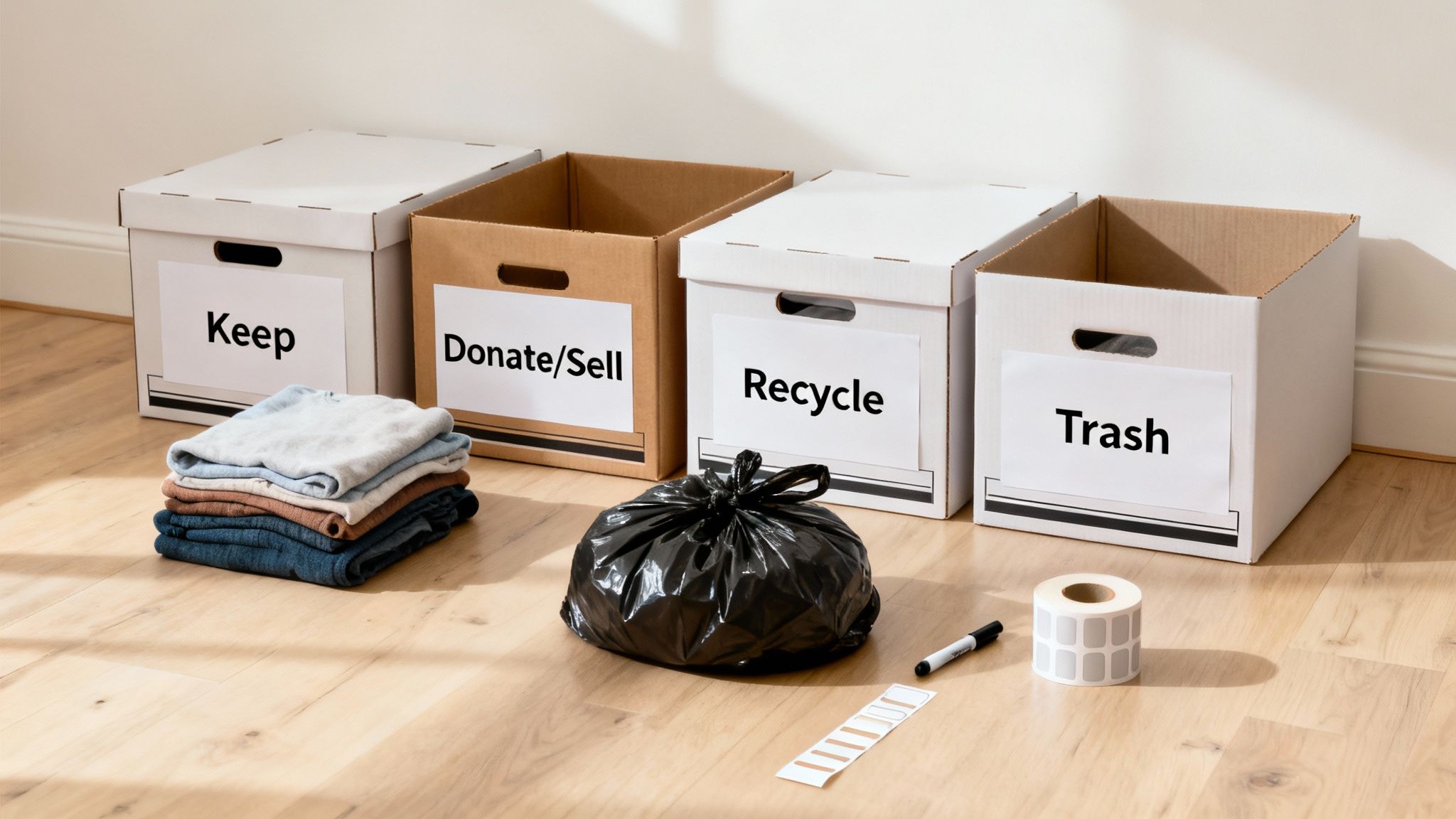
- Sturdy Boxes or Bags: Grab at least four. Old cardboard boxes or reusable shopping bags are perfect.
- Labels or a Marker Pen: You’ll want to clearly mark your boxes so you don’t mix things up.
- Cleaning Supplies: A duster and some spray for wiping down shelves as you go.
Having everything to hand means you can concentrate on making decisions without any distracting interruptions. It’s a tiny detail that makes a huge difference to your energy and focus.
Adopt the Four-Box Method
To sidestep decision fatigue, you need a simple system. We swear by the Four-Box Method because it brings instant clarity to the sorting process.
Label your four boxes clearly:
- Keep: For things you genuinely love, use regularly, and know exactly where they’ll live.
- Donate/Sell: For items in good nick that someone else could get some joy from.
- Recycle: For paper, glass, and anything else that can be recycled.
- Trash: For anything that’s broken, expired, or truly unusable.
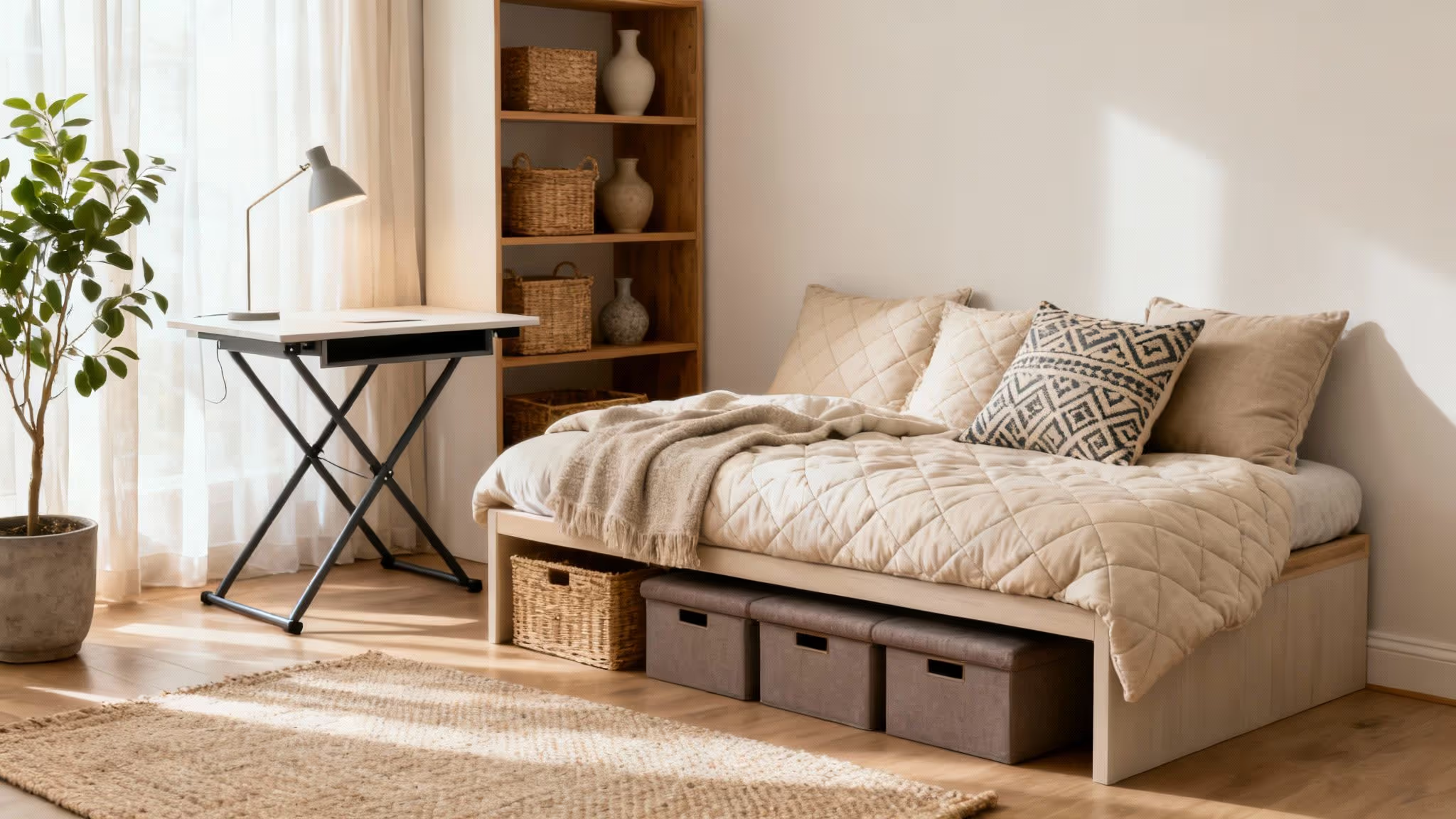
This structured approach takes the guesswork out of it. Every single thing you pick up immediately has a destination, helping you move from a state of overwhelm to one of calm control. Once a room is sorted, you'll need a plan for the 'Keep' pile; our advice on practical bedroom storage solutions can help with that next stage.
This systematic approach is crucial because it turns emotional apprehension into logical action, which is where real progress happens.
Even when Brits are desperate for a clear space, many feel emotionally tangled up. A Good Housekeeping decluttering survey found that while 95% of people declutter, 29% feel 'apprehensive and overwhelmed' before starting. But the reward is huge: afterwards, 70% reported feeling satisfied and 54% felt relieved. This is exactly why a structured method is so important—it turns that anxiety into a real sense of accomplishment.
Your Room-By-Room Decluttering Game Plan
Trying to declutter your entire home in one marathon session is a recipe for burnout. It’s the kind of overwhelming task that makes you want to give up before you’ve even filled the first bin bag. A much saner, smarter approach is to break it down, room by room.
This way, you get to focus your energy and score those quick, visible wins that build momentum. We'll pinpoint the common clutter hotspots—those areas that seem to attract mess no matter what—and give you a clear, achievable path to follow.
Start with the Kitchen: The Heart of the Home
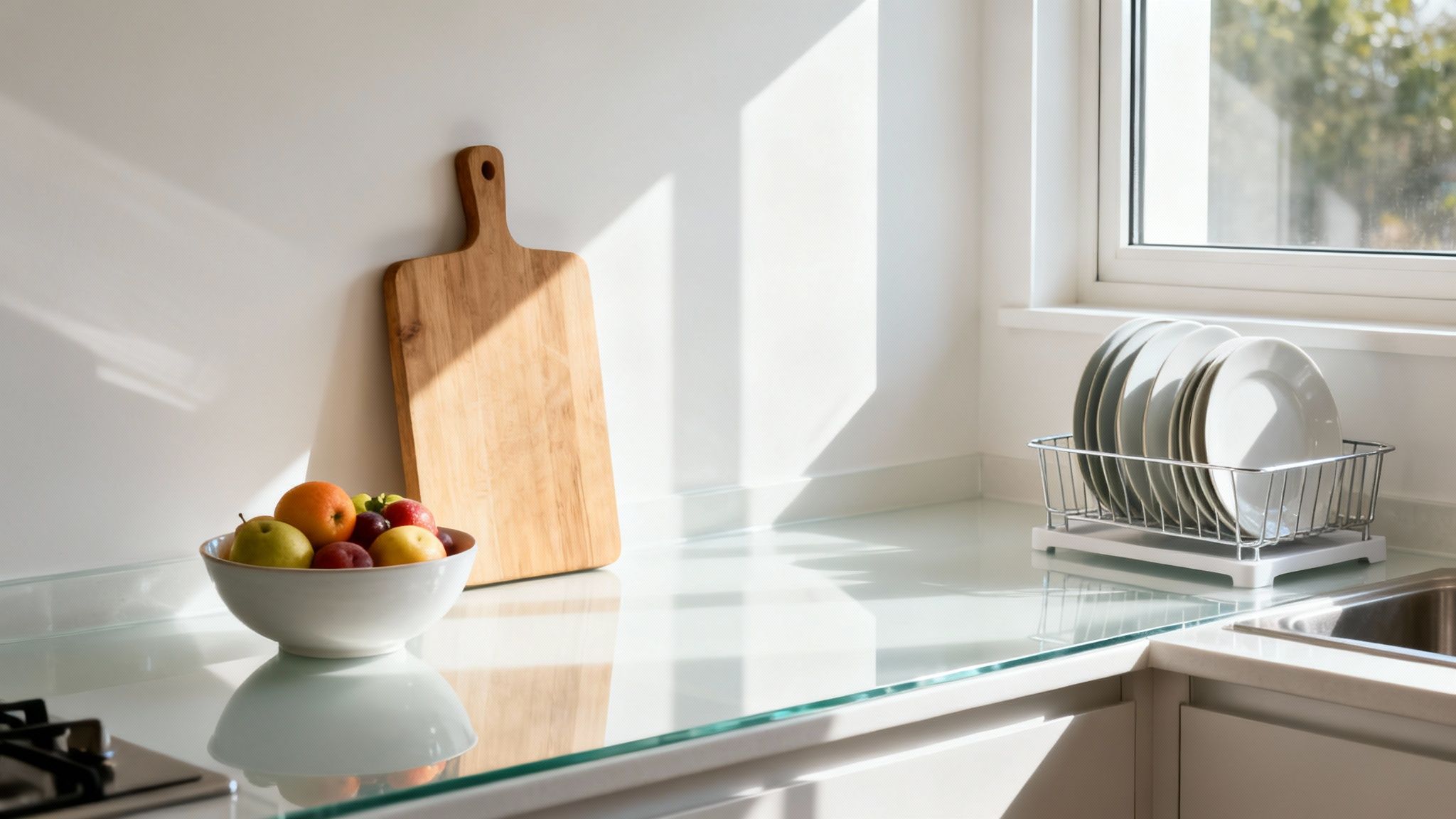
The kitchen is the busiest room in most homes, which makes it a magnet for clutter. Clearing it out first can have a massive impact on your daily life, making everything from your morning coffee to dinner prep feel calmer. Don't try to tackle it all at once; just pick one small area and begin.
Kitchen clutter tends to gather in a few key places:
- The Countertops: These surfaces are for prep, not storage. Find a new home for anything that doesn’t belong, from that pile of post to the smoothie maker you haven't used since January.
- The Food Cupboards: Time to be ruthless. Check for out-of-date tins, that fancy spice you bought for one recipe three years ago, and anything else you know your family simply won’t eat.
- The Utensil Drawer: Seriously, how many wooden spoons does one person need? Weed out duplicates, broken gadgets, and anything you’ve never actually used.
A clear kitchen doesn't just look better; it makes cooking and cleaning so much easier. In fact, studies suggest a tidy home can reduce housework by up to 40%, and a lot of that starts right here. For a deeper dive, our guide on how to organise your kitchen offers a brilliant framework for getting the space in order.
Tackle the Bedroom for a Restful Retreat
Your bedroom should be your sanctuary, but for many of us, it’s a dumping ground for clothes, books, and other odds and ends. The infamous ‘floordrobe’ is a classic sign that a clear-out is long overdue.
The main target here is your wardrobe. It’s a well-known fact that most of us wear about 20% of our clothes 80% of the time. That means your wardrobe is probably crammed with things you don't love or even wear.
When sorting clothes, ask yourself one simple question: "If I were shopping right now, would I buy this?" If the answer is no, it's time to let it go.
This little mental trick helps detach you from the guilt of what you spent and focuses you on how much value it brings to your life today.
Once the wardrobe is done, move on to other hotspots:
- The Bedside Table: This should only hold your immediate nighttime essentials—a lamp, your current book, a glass of water. Clear away old magazines, tangled charging cables, and anything else that’s piled up.
- The Chair in the Corner: We’ve all got one. The goal is to reclaim it for sitting, not as a temporary holding pen for clothes.
Move to the Living Room: The Social Hub
The living room is where we relax and entertain, but it can quickly get bogged down with the clutter of daily life. The aim here is to create a calm, welcoming atmosphere, so start with the surfaces that first catch your eye.
Begin with the coffee table and any side tables. They’re often magnets for remote controls, old newspapers, mugs, and general bric-a-brac. Give every item a proper home, or decide it’s time for it to leave.
Next, take a look at your media storage. Do you still have DVDs you never watch or CDs you haven't played in a decade? With streaming, many of these items are now redundant, yet they’re still taking up valuable shelf space.
Finally, assess your decorative objects. While they add personality, too many can make a space feel busy and chaotic. Curate your absolute favourites and store or donate the rest. By being selective, you allow the items you truly love to shine, creating a more intentional and peaceful environment.
Mastering the Art of Letting Go
You’ll quickly realise that the physical act of decluttering is the easy bit. The real challenge is making the decisions – that quiet, internal debate over every single object. This is where you go beyond just a quick tidy-up and start making real choices about the kind of life you want to live.
Because let’s be honest, true organisation isn’t just about finding clever new boxes for your stuff. It’s about intentionally having less of it. So when you pick up an item, pause for a moment. Ask yourself a few questions to cut through the noise.
Guiding Questions for Confident Choices
To make things less emotional and a bit more logical, run through this simple checklist. An honest 'no' to any of these is a pretty strong sign it’s time to say goodbye.
- Have I used this in the last year? Be brutally honest. If it’s sat through four seasons without seeing the light of day, chances are you won’t miss it.
- If I saw this in a shop today, would I buy it? This little trick is brilliant. It cuts through any past guilt about what you spent and forces you to think about its value to you right now.
- Does this fit the life I actually want? Your home should be a launchpad for your future, not a museum of your past. Let go of things that belong to a version of you that just isn't there anymore.
Making these choices is about investing in things that genuinely earn their keep. It’s a mindset we’re passionate about, and if you're keen to explore it further, you might like our article on the case for investing in forever homeware.
Ultimately, this is about curating a home that feels like you, right now. It's a powerful shift from just owning things to actively choosing them.
The goal is to surround yourself with items that either serve a practical function or bring you genuine joy. Anything else is just getting in the way.
Handling Sentimental Items Gently
Ah, the sentimental stuff. This is often the biggest hurdle. The fear of losing a memory can keep us clinging to things we simply don't have the space for. But here's the thing: the memory doesn't live in the object; it lives in you.
Here are a couple of gentle ways to handle these precious items:
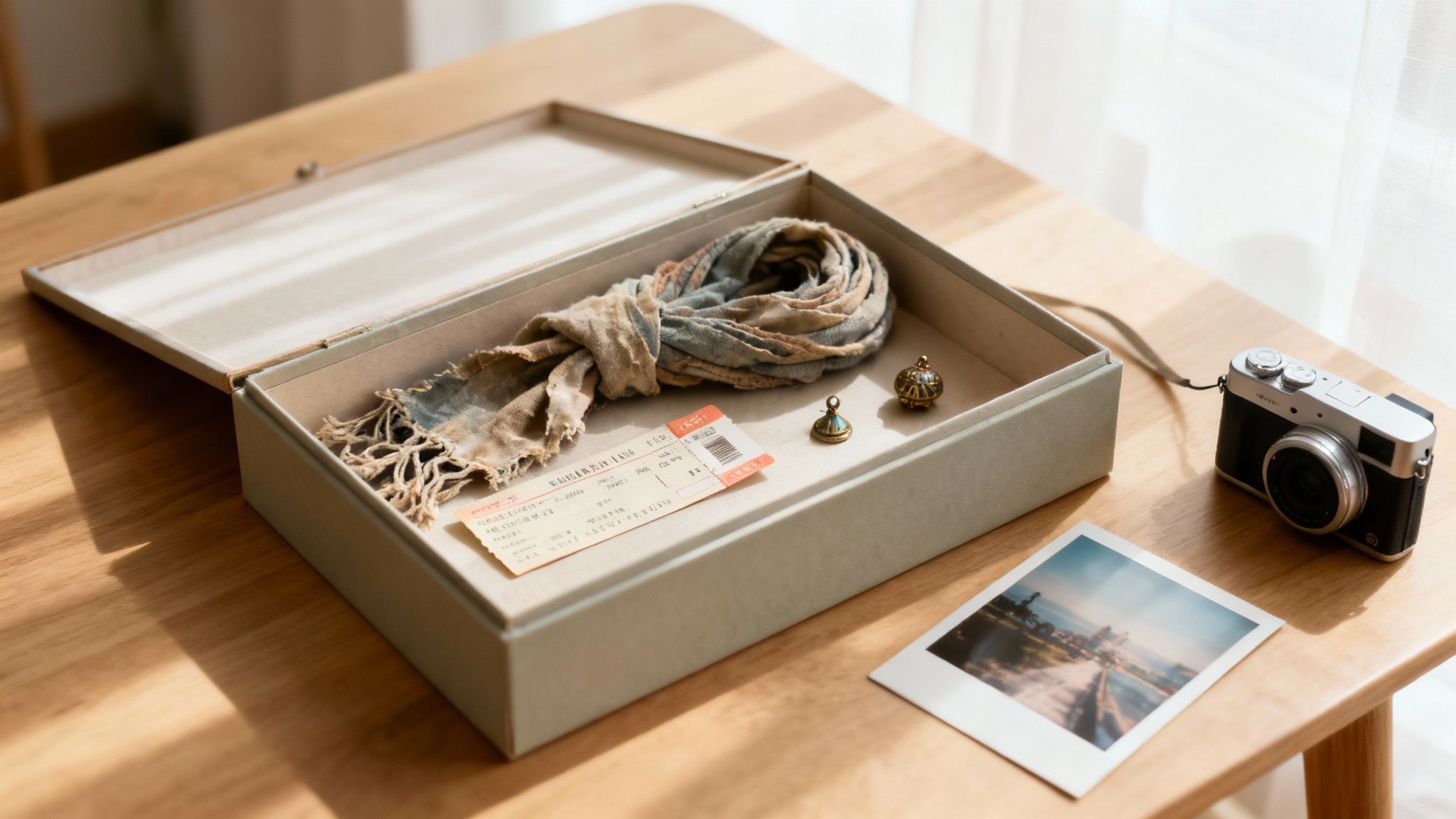
- Create one memory box: Just one. Find a beautiful box and dedicate it to your most treasured keepsakes—a few childhood drawings, love letters, a ticket stub from a memorable trip. This gives them a place of honour without letting them take over the house.
- Take a photograph: For bulkier things you just can't keep, take a really good photo. You can create a digital album or a small photo book that preserves the feeling without the physical footprint.
This is especially important in the UK, where we’ve become masters of hiding our clutter. Instead of letting go, we often just find better places to stash it. A recent survey even revealed that 69% of Brits hold on to excessive digital data, proving our hoarding habits go beyond the physical. It’s a wake-up call that we need to focus on genuine reduction, not just shuffling our belongings out of sight.
Building Habits to Stay Clutter-Free
So, you’ve done the big clear-out. The black bags are gone, the charity shop knows you by name, and for the first time in ages, you can actually see your surfaces. Pat yourself on the back. Seriously.
But here’s the thing: that was only half the battle. The real win is keeping that lovely, hard-won calm from slowly disappearing under a fresh wave of stuff. The secret isn’t another weekend-long decluttering marathon. It’s about weaving small, almost effortless habits into your daily life that keep the clutter from ever building up again.
This isn't about chasing some impossible, minimalist ideal. It's about creating simple systems that work for your life, turning tidiness from a massive chore into a quiet, background rhythm.
The Power of Small Daily Routines
The most effective way to keep your home feeling sorted is to make tidying a gentle, consistent practice. Think of it less like a deep clean and more like brushing your teeth – a small action you do without thinking, which prevents much bigger problems later on.
One of the best habits to get into is the 15-minute evening 'reset'. Before you properly switch off for the night, just set a timer and blitz the day’s clutter hotspots. This might mean wiping down the kitchen counter, folding the throw on the sofa, or dealing with the post that’s been sitting on the console table. You’d be amazed at what you can sort in just 15 focused minutes.
Resetting your main living spaces each evening means you wake up to a calmer, more inviting home. It’s a small act that stops the daily build-up from turning into overwhelming chaos.
These tiny, consistent actions are what really make the difference. You can also explore little furniture rituals that make your home feel better to introduce simple, comforting routines into your day.
Creating Smart Systems for Long-Term Success
Beyond the daily tidy, you need a few clever rules to manage the flow of things in your home. These systems act like friendly gatekeepers, stopping clutter before it even gets a foot in the door.
Implement the 'One In, One Out' Rule
This one’s brilliantly simple but incredibly effective. For every new non-essential item that comes into your home—a jumper, a book, another mug—an old one has to leave. It’s a non-negotiable pact with yourself. This rule forces you to pause and properly consider your purchases and possessions, maintaining a perfect equilibrium and stopping that slow, sneaky creep of accumulation.
Give Every Single Item a Home
Let’s be honest, clutter is often just a pile of decisions you haven’t made yet. Or, more accurately, items that don’t have a designated place to live. When everything has a logical ‘home,’ putting things away becomes second nature.
Take a few minutes to assign proper spots for the things you use every day.
- Keys and Wallets: A specific bowl or hook right by the front door. No more frantic morning searches.
- Daily Post: A designated letter rack or tray, ready to be sorted once a week.
- Remote Controls: A small basket or tray on the coffee table.
This simple logic completely changes your mindset. You're no longer "tidying up," you're just "putting away," which feels far less daunting. In fact, some studies show that organised systems like these can cut down on housework by as much as 40%, freeing up your time and energy for things you actually enjoy. By building these habits, you make sure your home stays the peaceful sanctuary you worked so hard to create.
Common Questions About Decluttering
Even the most organised person hits a wall sometimes. You start with the best intentions, a clear plan, and then… you’re stuck staring at a pile of old jumpers, completely frozen. It’s normal.
Learning to declutter is a skill, and like any skill, it comes with a few wobbles. Here are the answers to the questions that pop up most often, designed to get you unstuck and back on track.
How Do I Stay Motivated When I Feel Overwhelmed?
That feeling of being totally overwhelmed is the number one reason people give up. The trick is to stop thinking about the whole room and start ridiculously small.
Pick one drawer. Just one. Or a single shelf on a bookcase. Set a timer for 15 minutes and tackle only that tiny patch. Seeing one small area cleared gives you a little hit of satisfaction that makes you want to keep going. Stick on a podcast or your favourite playlist to turn it from a chore into some much-needed 'you' time.
What Should I Do with Unwanted but Good Items?
This is where the 'donate' and 'sell' boxes become your best friends. The goal is to get things out of your house, not just move them into a different pile in the hallway.
- Donations: Good quality clothes, books, and home bits can go straight to a local charity shop. For bigger things, many charities offer free furniture collection, which is a lifesaver.
- Selling: For those more valuable pieces, online marketplaces like Vinted, Facebook Marketplace, or eBay are your best bet.
The real secret here is speed. Don’t let that donation bag sit by the door for two weeks. Schedule the drop-off or list the item online within a day or two. Otherwise, it just becomes a new kind of clutter.
How Do I Handle Sentimental Items?
Let's be clear: you don't have to get rid of everything that means something to you. This isn't about erasing memories; it's about curating them so they don't get lost in a dusty box in the loft.
Give yourself one dedicated 'memory box'. Just one. This forces you to choose the things that are truly special, elevating their status. For bigger things you feel guilty parting with, try taking a beautiful photo of it. Often, the photo is enough to capture the memory without taking up precious space. Ask yourself: does the memory live in this object, or does it live inside me?