

If you want to grow rosemary, there are just three things you need to get right: plenty of sun, well-drained soil, and a light hand with the watering can. It’s a wonderfully resilient herb that actually thrives on a bit of neglect, which is great news for both new gardeners and seasoned experts. Get these three things sorted, and you’ll have a fragrant, evergreen supply for your kitchen all year round.
Your Essential Guide to Growing Rosemary
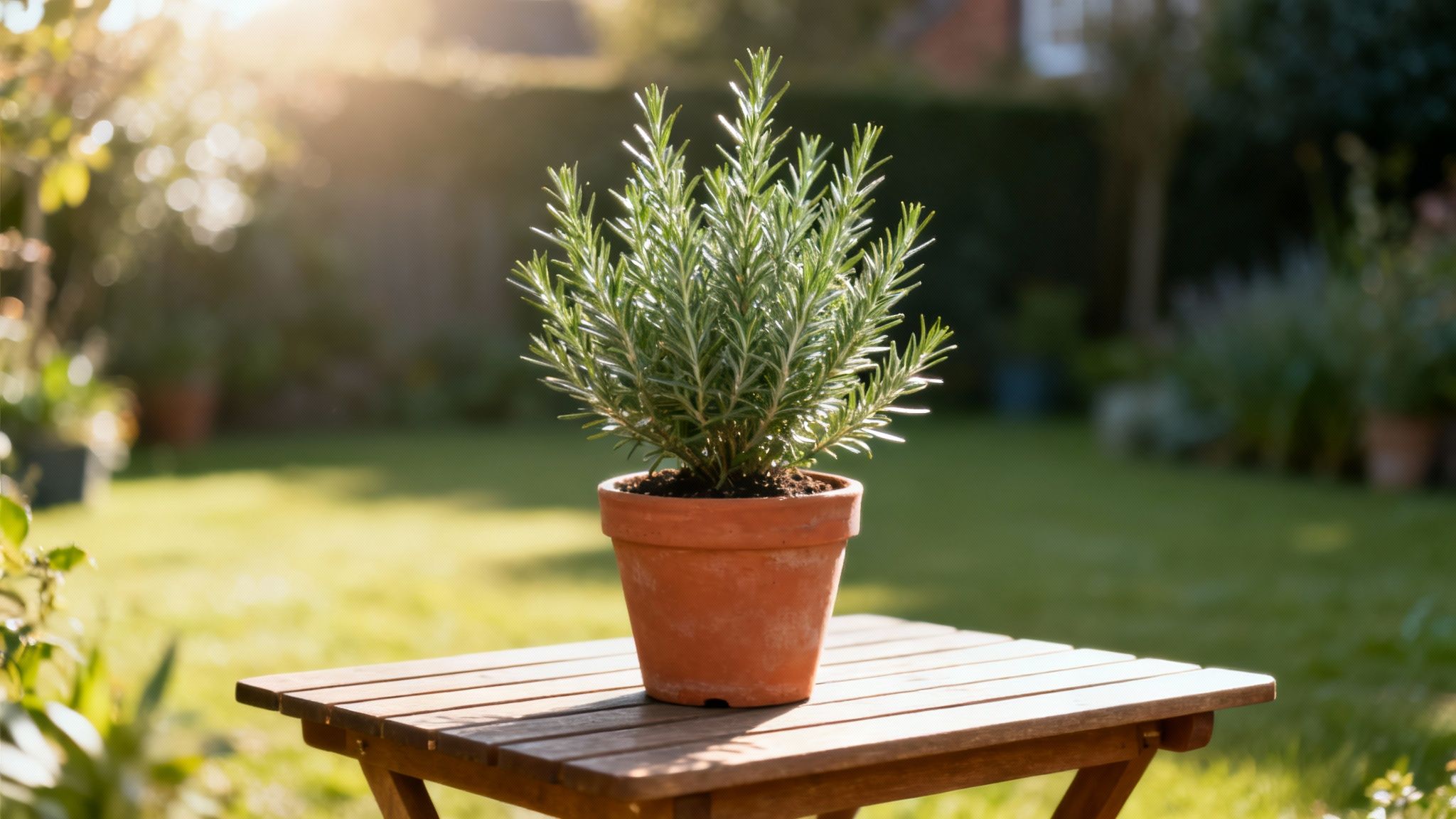
Welcome to the only guide you’ll need for growing rosemary, the beautifully fragrant herb that feels right at home in any UK garden. Originally from the sun-baked hills of the Mediterranean, rosemary (Salvia rosmarinus) is much more than just a roast dinner staple. It’s a handsome, low-maintenance shrub that gives you year-round greenery and pretty blue flowers in spring.
Its Latin name even translates to "dew of the sea," a nod to its coastal roots where it grows happily in the sea spray and sunshine.
This guide is here to give you all the practical know-how to get it right from the start. We’ll cover everything from picking the perfect sunny spot to getting the soil just right – a crucial step to avoid root rot, the number one killer of rosemary.
Why You Should Be Growing Rosemary
There’s something so rewarding about having your own rosemary bush. Beyond the obvious culinary perks, it brings so much more to your outdoor space.
- A Treat for the Senses: The rich, pine-like scent that’s released every time you brush past is reason enough to plant it near a path or patio.
- Good for the Bees: Its flowers are a brilliant source of early-season nectar for bees and other friendly pollinators.
- Drought-Proof: Once it’s settled in, rosemary barely needs watering, making it a perfect pick for a low-maintenance, water-wise garden.
- Looks Good Anywhere: It works just as well as a standalone shrub, in a mixed border, or in a pot. For more inspiration, check out our guide on how to garden with potted plants.
Whether you’ve got a huge garden or a tiny balcony, there’s a rosemary for you. Upright types like 'Tuscan Blue' make a fantastic informal hedge, while trailing varieties like 'Prostratus' are perfect for spilling over the edges of walls and containers.
Here’s a quick rundown of what rosemary needs to thrive.
Rosemary At-a-Glance Growing Requirements
Use this quick reference table to understand the ideal conditions for growing healthy rosemary in a UK climate.
By understanding these simple needs, you’ll be all set to grow a healthy, happy rosemary bush that will reward you with flavour and fragrance for years. Let’s get into the details.
Choosing the Best Location and Preparing Your Soil
Before you even pick up a trowel, let’s talk location. Getting this right is the single most important thing you can do for your rosemary, and it's where most people go wrong. The trick is to think less about your British garden and more about a sun-drenched Mediterranean coastline.
Your mission is simple: find the sunniest, most sheltered spot you have. Get this right from the start, and you're already halfway to a healthy, fragrant plant that’ll be with you for years.
Finding That Perfect Sunny Spot
Rosemary is a complete sun-worshipper. It needs at least six to eight hours of direct sunlight a day to develop the aromatic oils that give it that incredible scent and flavour. Anything less, and you’ll end up with a weak, leggy plant that just doesn't pack the same punch.
Spend a day watching your garden to see where the sun falls. The sweet spot is usually against a south or west-facing wall or fence.
This isn't just for the light; that wall acts like a giant storage heater, soaking up warmth all day and radiating it back at night. This creates a lovely, cosy microclimate that rosemary absolutely thrives in, giving it a bit of extra protection when the temperature drops.
Protecting Your Plant From Wind and Rain
While rosemary loves a bit of a breeze to keep its foliage dry, it has no time for harsh, cold winds or soggy roots. A sheltered spot protects it from being battered by gusts that can easily snap stems or dry out the leaves.
More importantly, it shields the plant from the relentless winter rain. The combination of cold and wet is the number one killer of rosemary in the UK, so a protected position is non-negotiable for its survival.
Expert Tip: Think like a Mediterranean native. Choose a spot where your rosemary can bake in the sun but is shielded from the worst of the British winter. A sunny corner of a patio or a well-placed raised bed can provide the perfect balance of sun and shelter.
Creating the Perfect Soil Mix
Now for the next big hurdle in UK gardens: the soil. Rosemary hates having 'wet feet' and will quickly rot in the heavy, waterlogged clay soil that so many of us have. The secret is to create a gritty, free-draining mix that’s not too rich in nutrients.
Whether you're planting in a pot or in the ground, your main goal is to improve the drainage.
For pots, the perfect recipe is simple:
- Mix two parts peat-free, multipurpose compost with one part horticultural grit or coarse sand.
- Throw in a handful of perlite if you have it for extra aeration.
This blend gives just enough goodness while letting water drain away freely, just like the sandy soils of its homeland. And make sure your pot has plenty of drainage holes at the bottom!
Amending Garden Soil for Rosemary
If you're planting straight into a garden bed, you’ll need to do a bit of prep work. Dig a hole at least twice as wide as the root ball and just as deep.
Then, you'll want to improve the soil you've just dug out by mixing it with plenty of grit and organic matter. Aim for a blend of roughly 50% original soil and 50% amendments.
Focus on things that open up the soil structure:
- Horticultural Grit: Absolutely essential for breaking up heavy soil.
- Well-Rotted Compost: Adds a little structure without making the soil overly rich.
- Leaf Mould: A fantastic soil conditioner for creating a light, crumbly texture.
Putting in this groundwork sets your rosemary up for a long, healthy life. If you want to get really into it, you can learn more about how to prepare soil for planting in our full guide. Trust us, getting the soil right is the best thing you can do.
How to Plant and Propagate Rosemary Successfully
You’ve found the perfect sunny spot and sorted your soil, so now for the fun bit – getting your rosemary settled in its new home. Planting rosemary is wonderfully straightforward, but a little bit of know-how on timing and technique goes a long way.
We’ll also get into the simple magic of propagation. It's the best trick in any gardener's book for multiplying your plants, completely free of charge. Soon you'll have enough to fill your garden borders or gift to friends.
When and How to Plant Rosemary
In the UK, the sweet spot for planting rosemary is in the spring, typically from April to May, once you're confident the last of the hard frosts is behind us. This gives the plant a full season to get its roots down and toughen up before winter rolls around.
If you’ve picked up a potted rosemary from a garden centre, the job is simple. Dig a hole that’s about the same depth as the pot but twice as wide. This gives the roots plenty of space to stretch out into that lovely, gritty soil you’ve prepared.
Before you pop it in, gently tease out the roots at the bottom, especially if they’re tightly wound. Place the plant in the hole, making sure the top of its root ball is sitting level with the soil surface. Backfill with your soil mix, gently firm it down, and give it a good watering to help everything settle.
A Quick Tip: Whatever you do, don't pile soil or mulch right up against the rosemary's main stem. This is a classic mistake that traps moisture and invites stem rot, especially in our damp UK climate. Keep the base clear for good air circulation.
Why Propagation Is Your Best Friend
One of the great joys of gardening is making new plants from ones you already love, and rosemary is practically made for it. While you can grow it from seed, it’s a notoriously slow and tricky business, with germination rates often plummeting below 30%. The plants that do appear might not even be the same variety as the parent.
Propagation from cuttings, on the other hand, is fast, easy, and gives you a perfect clone of your favourite plant. For UK gardeners, it’s the gold standard. In fact, 78% of successful rosemary plants grown here come from cuttings taken in late summer, which can have an impressive 90% rooting success rate with the right method. You can see more on rosemary's habits over on NatureSpot.
Taking Perfect Rosemary Cuttings
The best time to take cuttings is from late summer into early autumn. You’re looking for new growth that has started to feel a bit firm but isn't old and woody yet. Gardeners call this "semi-ripe" wood, and it’s perfect for rooting.
Here's how to do it:
- Pick a healthy stem: Find a strong, non-flowering shoot from this year's growth. The ideal cutting is firm at the base with a soft tip.
- Make the cut: Using sharp, clean secateurs, snip off a piece about 10-15cm (4-6 inches) long. Aim to cut just below a leaf node (the little bump where leaves emerge).
- Prep the cutting: Carefully strip the leaves from the bottom half of the stem. This is the part that will be underground, and removing the leaves stops them from rotting in the compost.
With that, your cuttings are ready for their new start.
Rooting Your Cuttings for New Plants
To give your cuttings a head start, you can dip the bare end into a rooting hormone powder. It's not essential, but I've found it really does speed up root development and boosts your chances of success.
Next, grab a small pot and fill it with a gritty compost mix – a 50/50 blend of multipurpose compost and horticultural grit is spot on. Use a pencil to poke a hole in the compost, then gently pop the cutting in.
You can fit several cuttings around the edge of a single pot. Water them well, then place the pot somewhere warm and bright, but out of direct sun. A greenhouse, a cold frame, or even a clear plastic bag tied over the pot creates the perfect humid little microclimate. If you're inspired to try this with other plants, check out our guide on how to grow herbs indoors.
Give them about six to eight weeks, and you should have strong new roots. Your new rosemary plants are now ready to be potted on
Mastering Rosemary Care: Watering, Light, and Feeding

So, your rosemary is happily settled in its sunny, well-drained spot. The next step is all about getting the day-to-day care right, but this doesn’t mean fussing over it constantly. In fact, when it comes to rosemary, the secret to a healthy, aromatic plant is often a 'less is more' attitude, especially with watering and feeding.
Learning to read your plant’s cues and responding with a light touch will help you sidestep the most common issues gardeners run into. This is especially true here in the UK, where our often-damp climate can be a real challenge for this sun-loving Mediterranean native.
The Golden Rule of Watering Rosemary
The quickest way to kill a rosemary plant is with kindness—or more specifically, too much water. It's a classic mistake. Because they look so robust, it’s easy to think they need frequent drinks, but their roots are incredibly sensitive to sitting in soggy soil.
The best approach is to water deeply but not very often. Give the soil a proper soak until you see water running from the pot’s drainage holes, and then just leave it alone. Let the top two inches of soil dry out completely before you even consider watering it again. In a pot, this might be weekly during a summer heatwave, but it could easily be every three to four weeks during cooler, overcast spells.
Your best tool is your own finger. Push your index finger down into the soil up to the second knuckle. If you feel any hint of moisture, hold off. It’s always better for rosemary to be a little too dry than a little too wet.
It’s also worth learning the visual signs. A thirsty rosemary might have slightly drooping tips, and its needle-like leaves can feel a bit soft. On the other hand, a waterlogged plant often looks sickly and yellow, with leaves dropping from the bottom up—a dead giveaway that root rot is setting in.
Giving It Enough Light
As we touched on earlier, rosemary is a total sun worshipper. It needs at least six to eight hours of direct sunlight every day to really thrive. This intense light is what fuels the production of those aromatic essential oils that give the plant its incredible flavour and scent.
If your rosemary is in a pot, you have the advantage of being able to move it around to chase the sun as the seasons shift.
- Spring & Summer: Pop it in the sunniest, most open spot you can find.
- Autumn & Winter: A south-facing wall is perfect. It will soak up the low winter sun and benefit from the heat retained in the brickwork.
For an indoor rosemary plant, place it in your brightest window, which is usually a south-facing one. It's a good idea to rotate the pot every week or so to make sure all sides get an even amount of light and stop it from leaning towards the sun.
A Minimalist Approach to Feeding
Rosemary is not a greedy plant. It evolved to grow in the poor, rocky soils of its native habitat, so it simply doesn’t need much in the way of fertiliser. Over-feeding is a common mistake that leads to weak, leggy growth with less concentrated essential oils, which means a less flavourful herb for your kitchen.
In most cases, feeding it once a year is plenty. A single application of a balanced, slow-release fertiliser in the spring, just as new growth kicks off, is ideal. Alternatively, a liquid seaweed feed at half-strength once during spring will do the trick. If you're keen on natural solutions, you can find some great ideas in our guide to homemade plant food.
It really is surprising how little it needs. A 2023 BBC Gardeners' World survey of 5,000 enthusiasts found that only 20% of UK rosemary failures were due to overfeeding. This just goes to show that a light touch is best. The survey also highlighted that potting rosemary with 50% grit for drainage is a key to success, as it mimics the free-draining conditions it loves.
Pruning, Harvesting and Overwintering Your Plant

To get the best from your rosemary, a little seasonal care goes a very long way. Think of it as a simple rhythm: regular pruning, thoughtful harvesting, and smart winter protection. These are the secrets to stopping your plant from becoming woody and sparse, keeping it productive and beautiful for years.
Mastering this yearly cycle is what turns a simple herb into a resilient, long-lasting garden feature, giving you a steady supply of aromatic sprigs for the kitchen and a healthy plant that bounces back every spring.
How to Prune Your Rosemary
Pruning is your best tool for keeping rosemary bushy, compact, and full of that fresh, fragrant growth. If left to its own devices, it can get leggy and develop a gnarled, woody base with hardly any leaves. The trick is to prune lightly, but often.
The perfect time for a trim is just after it's finished flowering, usually in late spring or early summer. This gives it plenty of time to push out a fresh flush of leafy growth. Just be sure to avoid pruning too late in the year, as any new shoots need to harden off before the first frosts hit.
When you do prune, never take more than one-third of the plant’s total size at once. Use sharp, clean secateurs to shape the plant, trimming back any long or wayward stems to encourage them to branch out. A word of warning: never cut back into old, bare wood, as rosemary rarely sprouts again from these areas.
My golden rule is to always cut just above a set of leaves. This encourages the plant to send out two new shoots from that point—the secret to getting a dense, full bush rather than a sparse, leggy one.
The Art of Harvesting for Flavour
Picking rosemary is one of the simple joys of the garden, but a bit of timing makes all the difference. For the most intense flavour and aroma, snip your sprigs in the morning after the dew has evaporated. This is when the essential oils in the leaves are at their absolute peak.
Simply cut off stems as you need them, taking them from all over the plant to keep its shape nice and even. The younger, tender stems will always have the best flavour for cooking. Regular harvesting actually counts as a light prune, so don’t be shy about using it.
If you need a big bunch, stick to the same "one-third" rule as pruning to avoid stressing the plant. You can use the sprigs fresh from the garden or dry them for later. If you want to stock your pantry, we've got a great guide on how to dry fresh herbs that works perfectly for rosemary.
Overwintering Rosemary in the UK
Rosemary is tougher than you’d think, but the one-two punch of cold and relentless winter wet is its biggest enemy here in the UK. A bit of protection is crucial, especially for younger plants.
Potted rosemary is the easiest to manage. Just move the container somewhere more sheltered, like against a house wall, or pop it in a cold greenhouse or unheated porch. This shields it from the worst of the rain and wind while still giving it the cool dormancy it needs.
For plants in the ground, it depends on how exposed your garden is.
- Boost Drainage: Before winter sets in, make sure the soil isn't compacted. Adding a layer of horticultural grit around the base helps whisk away excess rain from the crown.
- Give it a Jacket: In very cold or windy spots, wrapping the plant in horticultural fleece during the harshest weather can prevent frost damage.
- Go Easy on the Water: Be extra careful not to overwater in winter. An established plant in the ground will rarely need any extra from you.
Once established, rosemary plants are remarkably resilient. Met Office data shows that after their first year, around 90% can handle winter temperatures dipping to -10°C. Interestingly, a good prune has been shown to boost a plant's essential oil content by up to 15%—great news for your Sunday roast. And pests? They're rarely an issue, affecting only about 8% of plants, according to RHS logs.
Your Rosemary Questions, Answered
Even with the best care, rosemary can sometimes throw a curveball. We've all been there – a flourishing plant suddenly has brown tips, or you're wondering if you can really keep it alive on a kitchen windowsill.
Here, we're tackling the most common questions that pop up. Think of it as your go-to troubleshooting guide for getting your plant back on track and growing with confidence.
Why Is My Rosemary Turning Brown?
That moment of panic when you spot brown leaves on your vibrant green rosemary is a familiar one. But don't worry, it's usually down to one of two things: water or weather.
More often than not, especially in the UK, the culprit is overwatering. Rosemary hates having 'wet feet', and when its roots sit in soggy soil, they can’t breathe. This leads to root rot, which ironically stops the plant from taking up water, causing the foliage to dry out, turn brown, and die back. Before you even think about watering, always check the soil by sticking your finger in an inch or two.
The other classic cause is frost damage. After a particularly harsh cold snap, you might notice the tips of the branches have been 'burnt' by the frost, turning them brown. While it looks alarming, this is often just superficial. The best thing to do is wait until spring, then simply prune off the damaged bits to make way for fresh, green growth.
Can I Grow Rosemary Indoors?
Yes, you absolutely can, but you'll need to give it a little extra love to mimic its happy place – the Mediterranean outdoors. Success really hinges on one thing: light. A south-facing window that gets at least six hours of bright, direct sunlight a day is pretty much non-negotiable.
You’ll also need to be on your A-game with watering. Central heating can dry the soil out quickly, but equally, the reduced light in winter means the plant isn't growing as fast and needs less water. Stick to the finger test – only water when the top couple of inches of soil feel bone dry.
Good air circulation is another secret weapon against powdery mildew, a common grumble for indoor plants. Try not to crowd it with other houseplants and, on milder days, crack open a nearby window to let some fresh air in.
What Are the Best Pots for Rosemary?
Choosing the right pot is half the battle won. Your number one priority should always be drainage, drainage, drainage.
- Terracotta Pots: These are the gold standard for a reason. The porous clay allows air and moisture to move through the sides, helping the soil dry out evenly and stopping the roots from getting waterlogged.
- Glazed Ceramic or Plastic Pots: These can work just fine, but make sure they have plenty of large drainage holes. Because they aren't porous, the soil will hold onto moisture for longer, so you’ll need to be extra careful not to overwater.
- Fabric Grow Bags: A brilliant modern option. They provide fantastic aeration and drainage, plus they prevent roots from circling and becoming 'pot-bound'.
Whatever you pick, steer clear of any pot without drainage holes – it's a recipe for disaster. It’s also wise to choose a container that’s only slightly bigger than the plant's current root ball, maybe 2-4 inches wider. A pot that’s too big holds onto excess soil and water, which is the fast track to root rot.
How Do I Know When to Repot My Rosemary?
Rosemary is a slow-grower and actually quite likes being a little snug in its pot. You'll probably only need to think about repotting every two to three years.
Keep an eye out for a few tell-tale signs that it’s time for a new home:
- Roots peeking out of the drainage holes. This is the most obvious clue that your plant has run out of space.
- Water runs straight through the pot. If you water and it gushes out the bottom almost instantly, it means the pot is mostly roots, with very little soil left to hold any moisture.
- Growth has stalled. If your plant just seems to have stopped growing during spring and summer, it might be root-bound and desperate for fresh soil and a bit more room.
When you do repot, just go up to the next pot size and use a fresh, gritty potting mix. It’s a simple bit of maintenance that will keep your plant happy and thriving for years.