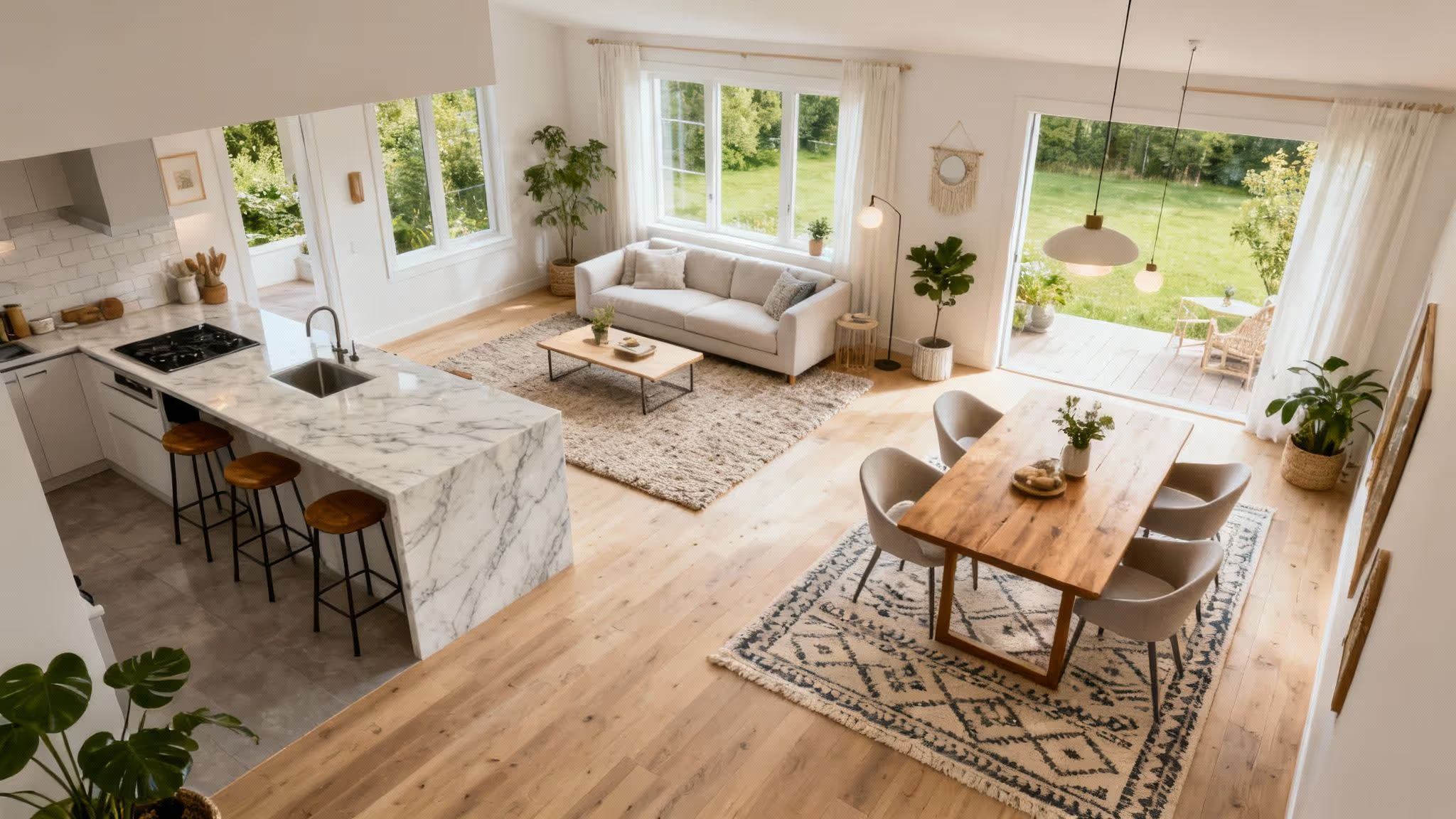
The open plan kitchen living room has cemented its place as the heart of the modern British home. It’s a design philosophy that champions connection, moving away from compartmentalised rooms towards a single, dynamic space for cooking, socialising, and relaxing. This layout not only enhances the sense of space and light but also fundamentally changes how we interact within our homes, creating a more fluid and integrated daily life. The challenge, however, lies in the execution. Achieving a harmonious balance that feels both unified and functionally zoned is key to a successful design.
Without clear strategies, an open plan kitchen living room can feel chaotic or undefined. The goal is to create distinct areas for different activities - cooking, dining, unwinding - while maintaining a seamless visual flow. This requires thoughtful consideration of everything from furniture placement and flooring choices to lighting schemes and storage solutions. A well-designed open plan space should feel both expansive and intimate, catering to quiet family evenings and lively gatherings with equal grace.
This comprehensive guide is designed to provide you with a wealth of actionable inspiration. We will explore eight distinct design styles, each with practical implementation tips tailored to creating your ideal open plan kitchen living room. From the clean lines of Scandinavian design to the rustic charm of a modern farmhouse, you will discover specific layout ideas, furniture selections, and décor tricks to help you define zones, maximise functionality, and infuse your space with personal style. Consider this your definitive resource for transforming the core of your home into a beautiful, cohesive, and perfectly practical living area.
1. Industrial Minimalist Open Plan
An Industrial Minimalist open plan kitchen living room celebrates raw, structural beauty, creating a sophisticated urban loft aesthetic. This design style strips back the unnecessary, focusing on exposed materials like brick, concrete, and steel, paired with clean lines and a curated selection of furniture. It transforms structural necessities into striking design features, where the honesty of the materials takes centre stage.
The goal is to maintain clear, uninterrupted sightlines throughout the kitchen and living areas. This approach is perfectly suited for warehouse conversions, such as those found in London's Shoreditch or Melbourne's inner-city suburbs, but can also bring an edgy, architectural feel to new-builds. The key is balancing the raw, utilitarian elements with softer textures and strategic lighting to avoid a cold or sterile atmosphere.
Why Choose This Style?
The Industrial Minimalist look offers a unique combination of spaciousness and intentionality. By leaving structural elements exposed, you create an inherent sense of character and history that can't be replicated with surface-level decor. It's a style that feels both robust and refined, ideal for those who appreciate architecture and a clean, uncluttered environment.
The open nature of the layout promotes a social, connected living experience, while the minimalist philosophy encourages thoughtful curation of possessions. This results in a space that feels both expansive and deeply personal.
Actionable Tips for Implementation
To successfully create this look in your open plan kitchen living room, focus on a balanced execution:
- Introduce Soft Textures: Counteract the hardness of industrial materials with warmth. Add a large, plush area rug to define the living zone, drape chunky knit throws over a leather sofa, and scatter velvet or linen cushions.
- Zone with Strategic Lighting: Use lighting to create distinct functional areas. A row of black metal pendant lights over the kitchen island or breakfast bar clearly defines the cooking and dining space, while track lighting can highlight artwork or architectural features in the living area.
- Incorporate Natural Elements: Soften the raw edges with greenery. Large-leafed plants like a Fiddle Leaf Fig, Monstera Deliciosa, or a Snake Plant add organic shape and a pop of vibrant colour, preventing the space from feeling too stark.
- Manage Practicalities: In an open plan setting, cooking smells and noise are key considerations. Invest in a high-powered, low-noise extractor fan that is both a functional necessity and a potential design statement. Streamlined, integrated storage is also vital for maintaining the minimalist aesthetic; for more inspiration, explore these essential kitchen storage ideas.
2. Scandinavian Open Plan Living
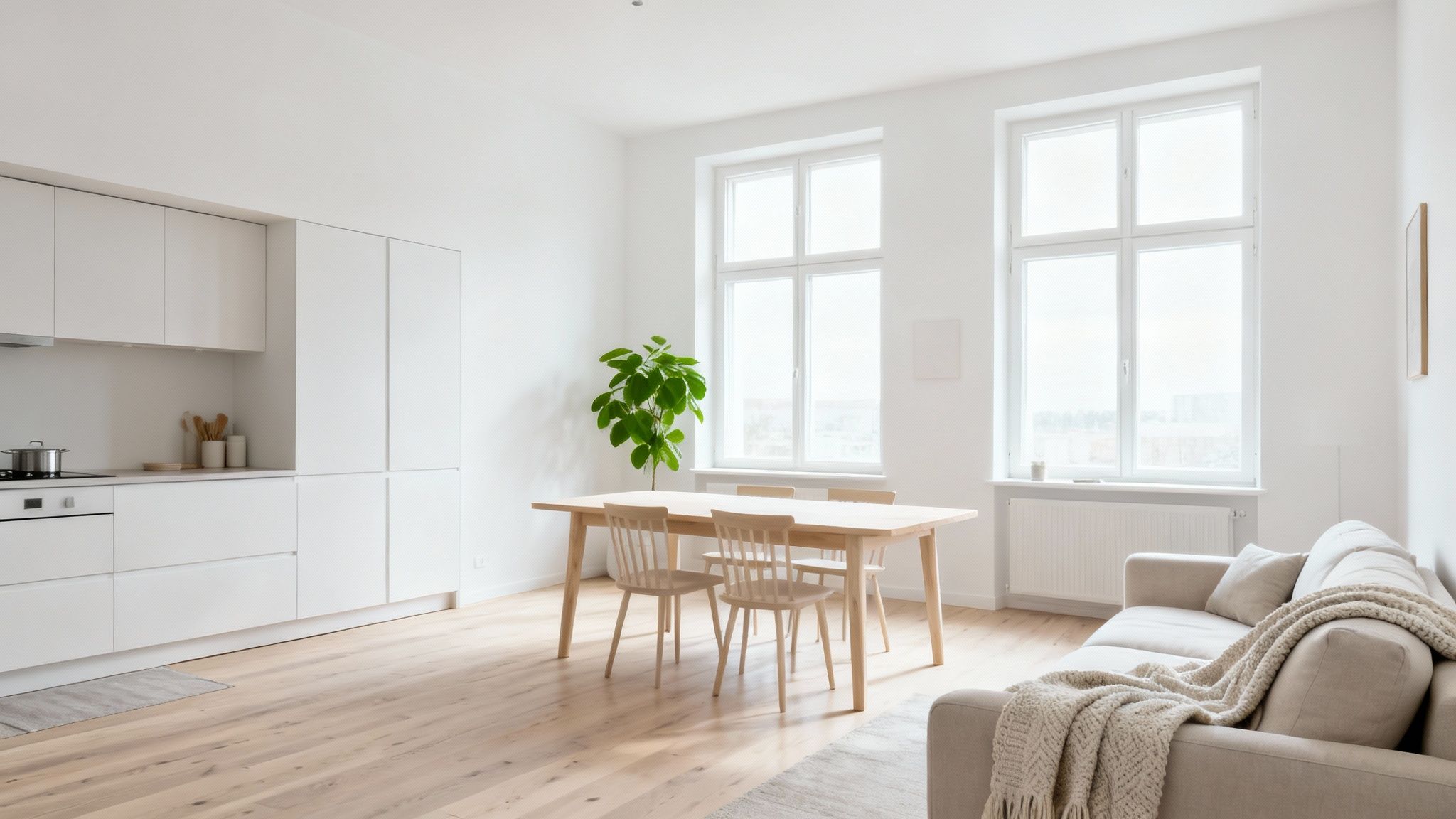
A Scandinavian open plan kitchen living room champions light, simplicity, and a deep connection to nature. This design philosophy, rooted in Nordic principles of functionality and comfort, creates an atmosphere that is both airy and inviting. It revolves around a palette of white and soft neutrals, accented by natural woods and clean lines to foster a sense of calm and uncluttered spaciousness.
The core objective is to maximise natural light and create a seamless flow between the kitchen and living zones, enhancing the feeling of openness. This style is famously embodied by the bright, functional interiors seen across Copenhagen and Stockholm. It’s a design that’s less about stark minimalism and more about creating a warm, liveable environment where every object has a purpose, embodying the Danish concept of hygge (a quality of cosiness and comfortable conviviality).
Why Choose This Style?
The Scandinavian approach offers a perfect balance of form and function, creating a space that feels both aesthetically pleasing and incredibly practical for daily life. Its emphasis on light colours and uncluttered surfaces makes even smaller open plan areas feel larger and more serene. It’s an enduringly popular style because it prioritises human comfort and connection, making it ideal for a sociable family home.
This design encourages a mindful approach to living, where quality craftsmanship and timeless furniture are favoured over fleeting trends. The result is a calming sanctuary that feels both modern and deeply rooted in natural warmth.
Actionable Tips for Implementation
To achieve an authentic Scandinavian feel in your open plan kitchen living room, focus on these key elements:
- Embrace Light Woods and Natural Materials: Use pale woods like pine, ash, and light oak for flooring, cabinetry, and furniture. Complement these with other natural materials such as wool, linen, leather, and stone to add textural depth and warmth.
- Layer Textiles for Hygge: Create a cosy, inviting atmosphere by layering different textures. Place a soft woollen rug in the living area, add linen cushions to the sofa, and drape a chunky knit throw over an armchair. This softens the clean lines and adds a touch of comfort.
- Maximise Natural Light: Keep window treatments minimal with sheer white curtains or simple blinds that allow daylight to flood the space. Use mirrors strategically to reflect light and further enhance the sense of brightness and openness.
- Keep It Functional and Uncluttered: Choose furniture with clean lines and practical uses, such as a coffee table with hidden storage or modular shelving systems. Good organisation is key to this style; discover more ways to perfect your Scandi style kitchen with smart, minimalist solutions.
3. Transitional Open Plan Design
Transitional open plan design offers a sophisticated middle ground, masterfully blending the timeless elegance of traditional style with the clean simplicity of contemporary aesthetics. This hybrid approach creates a cohesive and inviting space that feels both classic and current. It avoids the austerity of pure modernism and the fussiness of traditional decor, resulting in a balanced, enduring look.
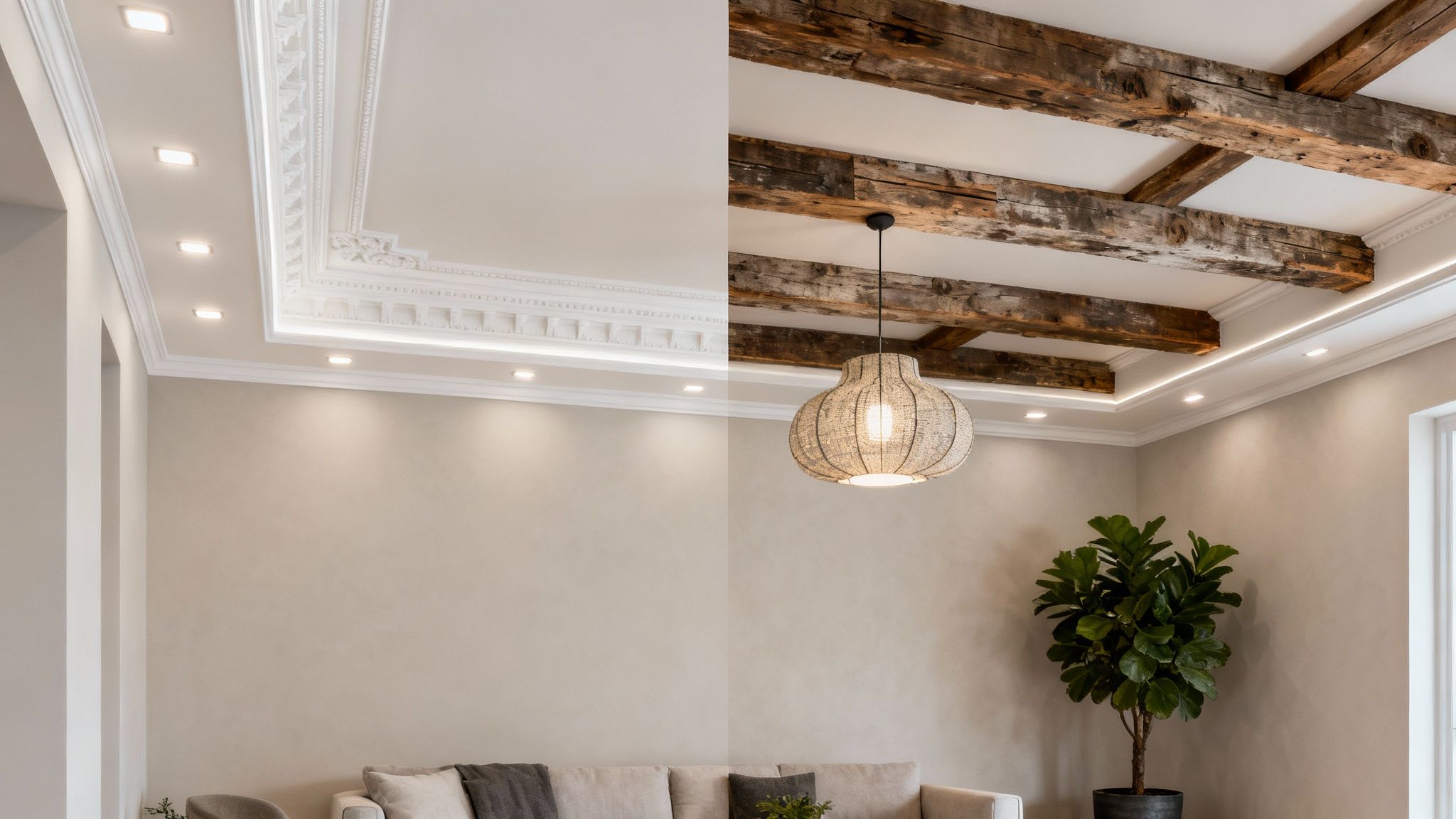
The essence of this style is in the thoughtful curation of elements. Think classic architectural details like cornicing or shaker-style cabinets paired with sleek, modern hardware and minimalist light fittings. This design is prevalent in design-forward suburban homes and modernised British country houses, offering a look that feels curated over time. For an open plan kitchen living room, this means creating a seamless flow that feels both comfortable and refined.
Why Choose This Style?
The primary appeal of Transitional design is its longevity and broad appeal. By not adhering strictly to one trend, it creates a look that won’t quickly feel dated. This style is perfect for those who appreciate both old-world charm and modern convenience, allowing for a space that feels deeply personal and thoughtfully collected.
In an open plan kitchen living room, this approach helps to unify the distinct zones. Shared colour palettes and material choices create a harmonious backdrop, while the mix of furniture styles adds depth and character, preventing the large, open area from feeling monotonous or one-dimensional.
Actionable Tips for Implementation
To achieve a successful Transitional look, focus on balance and deliberate choices:
- Establish a Cohesive Colour Palette: Stick to a sophisticated, neutral palette of three or four colours to unify the space. Shades of grey, taupe, and creamy off-whites work beautifully as a base, allowing you to introduce richer accent colours through textiles and art.
- Mix Your Metals Intentionally: Don't be afraid to combine different metal finishes, but do so with purpose. For example, use polished chrome for taps and appliances in the kitchen, and introduce warmth with brass or bronze on lighting and cabinet hardware in the living area.
- Combine Textures for Depth: A key element of this style is tactile variety. Pair smooth surfaces like a marble worktop or a sleek dining table with richly textured elements. Use a high-quality wool area rug, linen upholstery, and velvet cushions to add warmth and visual interest.
- Select Timeless Furniture Silhouettes: Choose furniture with clean, simple lines that nod to classic forms without being overly ornate. A comfortable sofa with classic track arms, for instance, pairs perfectly with a more modern, streamlined coffee table. This blend is the hallmark of the Transitional open plan kitchen living room.
4. Modern Farmhouse Open Plan
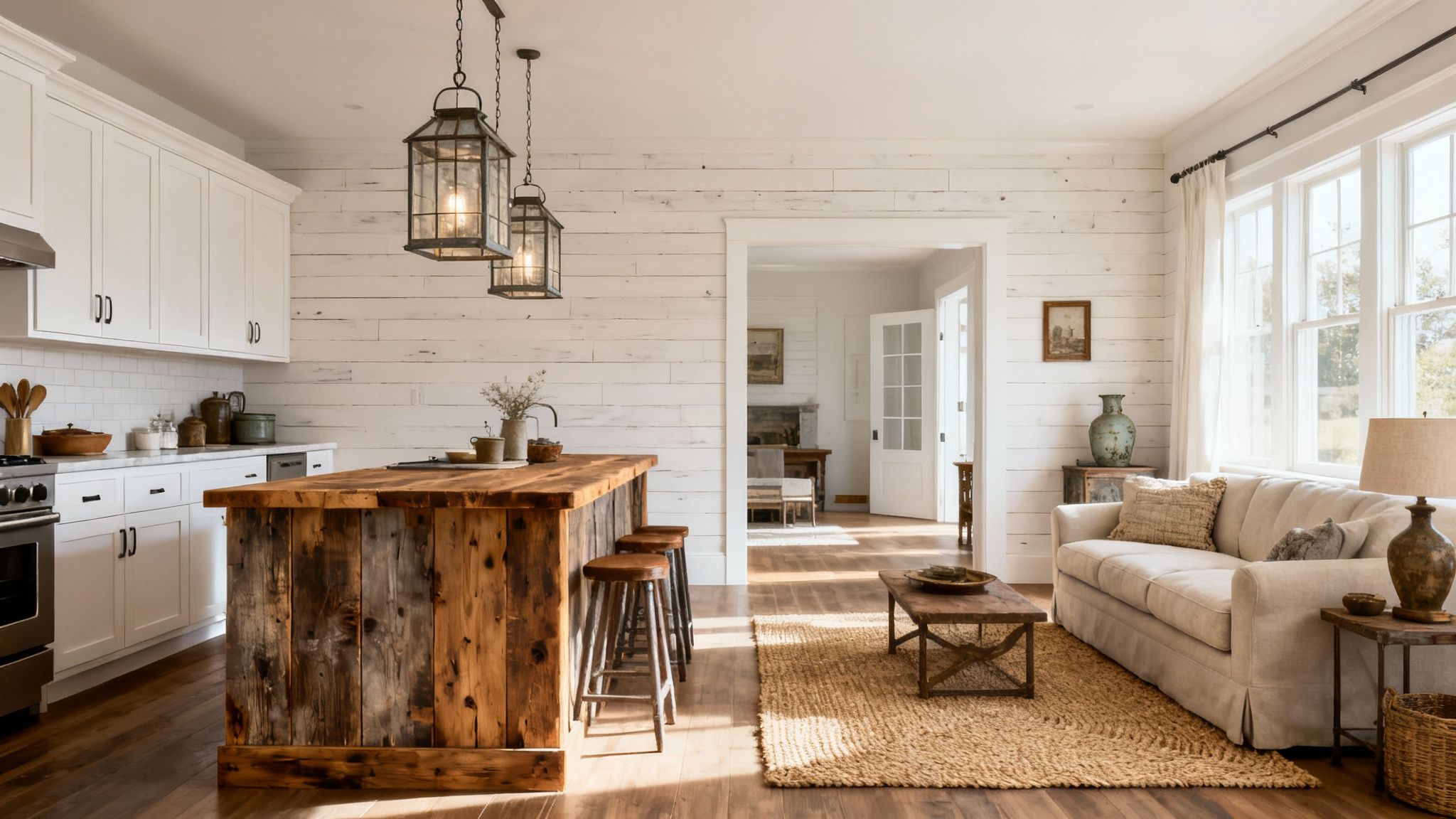
A Modern Farmhouse open plan kitchen living room offers a comforting blend of rustic charm and contemporary clean lines. This popular style, championed by figures like Joanna Gaines, creates a space that feels both welcoming and elegantly curated. It combines the warmth of natural materials like reclaimed wood and stone with the simplicity of modern design, using a neutral colour palette to create a bright, airy atmosphere.
The core principle is to balance rustic, lived-in elements with sleek, practical features. Shiplap walls, apron-front sinks, and barn-style doors are paired with modern appliances, minimalist hardware, and a clutter-free layout. This approach is perfect for creating a family-friendly hub that is as stylish as it is functional, fostering a sense of togetherness without sacrificing sophistication.
Why Choose This Style?
The Modern Farmhouse aesthetic excels at creating a cosy, inviting environment that feels both timeless and current. It's a forgiving style that embraces character and imperfection, making it ideal for busy family life. The emphasis on natural textures and light colours makes the combined kitchen and living area feel larger and more connected to the outdoors.
This style provides a perfect canvas for personalisation, allowing you to mix vintage finds with new purchases to create a space that tells your family's story. It's the ultimate combination of comfort, practicality, and enduring style.
Actionable Tips for Implementation
To achieve an authentic Modern Farmhouse look in your open plan kitchen living room, focus on layering and balance:
- Embrace Natural Textures: Use reclaimed wood for the kitchen island, ceiling beams, or a large dining table. Incorporate other natural materials like jute or wool for rugs, linen for curtains, and galvanised metal for light fixtures or decorative accents.
- Establish a Neutral Base: Paint walls in soft shades of white, cream, or warm grey to create a bright and airy foundation. This allows the textural elements and architectural details, like shiplap, to stand out.
- Invest in Statement Lighting: A large, dark metal chandelier over the living area or a series of oversized pendants above the kitchen island can serve as a stunning focal point, grounding the space and adding a touch of industrial contrast.
- Mix Vintage and New: Blend modern, comfortable seating with antique finds like a distressed wooden coffee table or a vintage display cabinet. For more inspiration on curating this look, explore these modern farmhouse kitchen ideas to perfect your design.
5. Contemporary Luxury Open Plan
A Contemporary Luxury open plan kitchen living room is the epitome of high-end, sophisticated design, focusing on premium materials, refined aesthetics, and seamless integration. This style prioritises quality craftsmanship and a curated, uncluttered environment where every element is chosen with intention. It’s less about overt opulence and more about the quiet confidence of superior materials and flawless execution.
The goal is to create an expansive, light-filled space that feels both impressive and inviting. This approach is often seen in high-end developments, such as London penthouses or contemporary estates in Los Angeles, where the open layout maximises views and creates a perfect backdrop for entertaining. It’s a design philosophy that champions timeless elegance over fleeting trends, resulting in a space that is both state-of-the-art and enduring.
Why Choose This Style?
Opting for a Contemporary Luxury design elevates the open plan concept into a true statement of quality and personal style. It’s perfect for those who appreciate fine details, from the grain of a marble worktop to the precision of bespoke joinery. This style creates an atmosphere of calm sophistication, where form and function are in perfect harmony.
The spaciousness of the layout is enhanced by a "less is more" approach to furnishing, where each piece is a work of art. This allows for strategic use of negative space, making the room feel grand and considered. It’s an investment in a lifestyle that values quality, comfort, and impeccable design.
Actionable Tips for Implementation
To achieve this sophisticated look in your open plan kitchen living room, focus on precision and quality materials:
- Invest in Bespoke Millwork: Custom joinery is a hallmark of luxury design. Commission a media unit, kitchen cabinetry, or shelving that flows seamlessly between zones. This creates a cohesive, integrated look that hides clutter and enhances the architectural lines of the space.
- Layer High-End Materials: Combine textures and finishes for a rich, tactile experience. Pair a polished marble kitchen island with matte-finish cabinetry, a soft wool rug on a hardwood floor, and a velvet sofa. The interplay of materials adds depth and sophistication.
- Focus on Statement Lighting: A designer chandelier over the dining area or a sculptural floor lamp in the living space can act as a focal point and a piece of art. High-quality, integrated LED strip lighting within cabinetry or ceiling coves can also add a subtle, ambient glow.
- Select Timeless Furniture: Choose iconic, designer pieces over fast-fashion items. A classic sofa from a brand like Poltrona Frau or a statement armchair will anchor the living space with timeless elegance. For more inspiration, explore these ideas for contemporary living rooms.
6. Eclectic Bohemian Open Plan
An Eclectic Bohemian open plan kitchen living room is a vibrant, free-spirited celebration of individuality. This style rejects rigid rules, instead favouring a curated collection of furniture, textiles, and art that tells a personal story. It layers colours, patterns, and global influences to create a space that feels both artistic and deeply welcoming, perfect for those who see their home as a canvas for self-expression.
The design philosophy centres on creating a relaxed, lived-in atmosphere where every object has meaning. It combines vintage finds with modern pieces, handmade crafts with designer items, and an abundance of natural materials. The layout remains open to encourage social interaction, but the zones are often softened and blurred with textiles and plants, creating a seamless, organic flow. This look is often seen in the creative lofts of Brooklyn or the character-filled homes featured on platforms like Design*Sponge.
Why Choose This Style?
The Eclectic Bohemian style offers an unparalleled opportunity to create a home that is truly unique and personal. It moves away from trend-driven interiors, allowing you to build a space over time that reflects your travels, passions, and history. The emphasis on comfort, texture, and warmth makes it an incredibly inviting and sociable environment.
This approach is ideal for homeowners who cherish collected treasures and want a space that feels soulful rather than staged. The inherent flexibility of the style means it can adapt and evolve with you, making it a sustainable and long-lasting design choice for your open plan kitchen living room.
Actionable Tips for Implementation
To achieve an authentic Eclectic Bohemian feel, focus on layering and personal touches:
- Layer Textures and Patterns: Combine different materials to add depth and interest. Place a vintage Persian rug over a larger jute one, mix velvet cushions with macramé wall hangings, and drape a Moroccan wedding blanket over a leather armchair.
- Embrace Greenery: Plants are non-negotiable in a Bohemian space. Use a variety of species and sizes, from large Fiddle Leaf Figs in woven baskets to trailing Pothos on high shelves and clusters of succulents on the coffee table.
- Mix and Match Furniture: Avoid matching furniture sets. Pair a sleek, modern sofa with vintage cane chairs, or a rustic wooden dining table with mismatched colourful seating. This mix of high and low, old and new, is the essence of the eclectic look.
- Create a Personal Gallery: Use your walls to tell your story. Create a gallery wall that mixes framed art, travel photographs, concert posters, and woven tapestries. Don't be afraid to let it feel a little imperfect and organic.
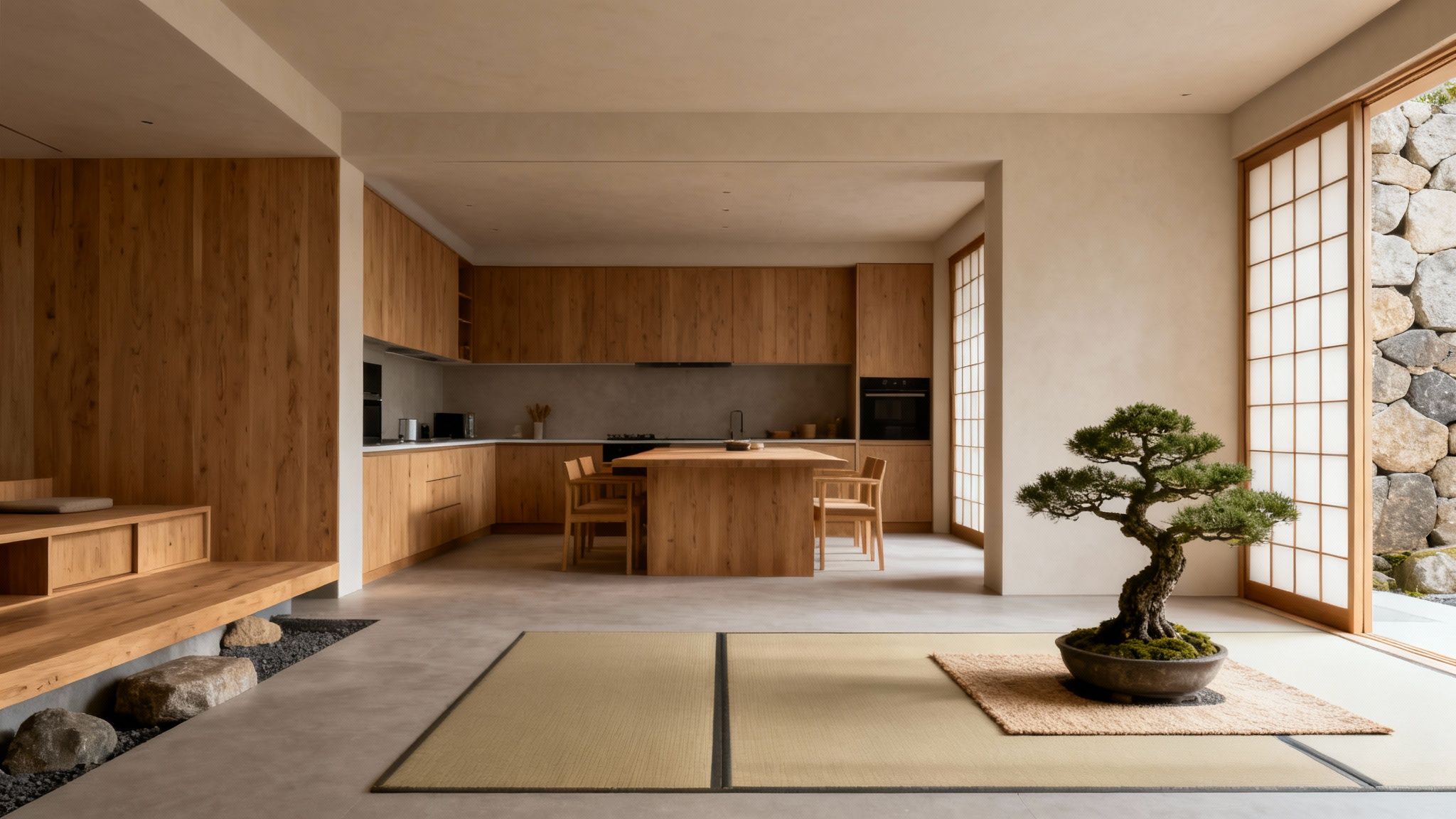
7. Japanese Minimalist Open Plan
A Japanese Minimalist open plan kitchen living room is a serene and intentional space rooted in philosophies like wabi-sabi (finding beauty in imperfection) and Ma (the importance of negative space). This design prioritises simplicity, natural materials, and spatial harmony, creating a calm, meditative environment that fosters mental clarity. It moves beyond mere aesthetics to encourage a more connected and mindful way of living.
The goal is to create a seamless flow between the kitchen and living areas, using a limited colour palette, functional beauty, and carefully considered object placement. This approach, popularised by figures like Marie Kondo and brands such as Muji, celebrates the beauty of natural light and shadow play. It is perfect for those who seek a tranquil retreat from the chaos of modern life, turning their home into a sanctuary of peace and order.
Why Choose This Style?
The Japanese Minimalist style offers an antidote to clutter and overstimulation. It creates a visually quiet and highly organised space that can genuinely reduce stress and improve well-being. By focusing on essential, well-crafted items and natural textures, the design brings a sense of the outdoors inside, promoting a strong connection to nature.
This philosophy transforms an open plan kitchen living room from just a functional area into a restorative one. The emphasis on clear surfaces and intentionality means the space feels larger, brighter, and profoundly calming, encouraging moments of quiet reflection and shared family time without distraction.
Actionable Tips for Implementation
To bring this serene aesthetic into your open plan kitchen living room, focus on discipline and natural elements:
- Select a Cohesive Wood Tone: Choose one primary wood, such as light oak, ash, or bamboo, and use it consistently for flooring, kitchen cabinetry, and key furniture pieces. This creates a powerful sense of unity and visual calm.
- Embrace Natural Materials: Go beyond wood and incorporate other organic textures. Think of a slate worktop in the kitchen, linen sofa covers, woven jute rugs, and ceramic tableware. These materials add warmth and tactile interest.
- Practise Intentional Curation: Adopt the KonMari method of keeping only items that "spark joy." This applies to everything from kitchen gadgets to living room decor. A clutter-free environment is the cornerstone of this style.
- Use Flexible Dividers: Introduce shoji screens or slatted wooden partitions to create subtle zones without closing off the space. These elements add architectural interest and allow you to adapt the layout for privacy or openness as needed.
- Prioritise Natural Light: Keep window treatments minimal with simple blinds or translucent fabrics. Allow light and shadow to move across the space throughout the day, as this interplay is a key decorative element in Japanese design.
8. Coastal Modern Open Plan
A Coastal Modern open plan kitchen living room embodies the serene, airy atmosphere of a seaside retreat, blending relaxed comfort with refined elegance. This design style uses a light-filled, breezy aesthetic, combining natural textures, organic shapes, and a palette inspired by the coast: crisp whites, sandy beiges, and soft, muted blues. It’s about creating a space that feels effortlessly sophisticated and perpetually calm, like a permanent holiday.
The objective is to blur the lines between indoors and outdoors, maximising natural light and creating a seamless flow between the kitchen and living areas. This approach is famously seen in luxury Hamptons homes and Californian coastal properties but translates beautifully to any home, bringing a sense of tranquility and space. The key is balancing casual, beach-inspired elements with clean, modern lines to avoid a cluttered or overly thematic look.
Why Choose This Style?
The Coastal Modern style offers a unique blend of relaxation and sophistication. It creates an environment that feels both welcoming and uncluttered, promoting a sense of well-being and calm. The emphasis on natural light and open space makes even smaller rooms feel larger and more inviting.
This design is perfect for those who want their home to be a sanctuary from the hustle and bustle of daily life. The cohesive colour palette and use of natural materials create a visually harmonious open plan kitchen living room that is both timeless and refreshing.
Actionable Tips for Implementation
To bring the Coastal Modern aesthetic to your open plan space, concentrate on texture, colour, and light:
- Embrace Natural Textures: Introduce materials that evoke a coastal feel. Use weathered or light-oak wood for flooring or furniture, incorporate rattan or wicker for chairs and lighting fixtures, and lay down a sisal or jute rug to anchor the living area.
- Use a Sophisticated Colour Palette: Stick to a base of white and neutral tones. Layer in soft, muted shades of blue, seafoam green, and sandy beige. For the kitchen, consider cabinetry in a gentle, calming colour; you can explore beautiful examples with these light blue kitchen cabinets for inspiration.
- Maximise Natural Light: If possible, install large windows or sliding glass doors. If not, use sheer, lightweight curtains in white or off-white to allow maximum daylight to filter through while maintaining privacy.
- Layer Your Lighting: Create a warm and inviting atmosphere for the evenings. Use a statement pendant light made from natural materials over the kitchen island, supplement with recessed ceiling lights, and add table lamps and floor lamps in the living area for a soft, ambient glow.
8-Style Open-Plan Kitchen-Living Comparison
Bringing Your Vision to Life: Your Next Steps
We've journeyed through a diverse landscape of design, exploring eight distinct and compelling visions for the modern open plan kitchen living room. From the raw, urban appeal of the Industrial Minimalist aesthetic to the tranquil simplicity of Japanese design, and the cosy charm of a Modern Farmhouse layout, it's clear that there is no single "correct" way to approach this popular home layout. The true art lies not in choosing one style, but in understanding the principles that make each one work so beautifully.
The core lesson from these varied examples is that a successful open plan space is a masterclass in balance and intention. It’s about creating harmony between different functional zones without erecting physical walls. The most impactful designs are those that feel both expansive and intimate, seamlessly connected yet clearly defined. This is where the true power of thoughtful design reveals itself.
Your Actionable Blueprint for Success
Transforming inspiration into reality requires a structured approach. Instead of feeling overwhelmed by the possibilities, focus on a methodical planning process. The perfect open plan kitchen living room for your home is within reach if you break the journey down into manageable steps.
Here is a practical checklist to guide you from concept to creation:
1. Revisit and Refine Your Vision:
Go back through the styles we've explored. Which elements truly resonated with you? Perhaps it’s the natural textures of the Scandinavian approach, the bold confidence of Contemporary Luxury, or the laid-back vibe of Coastal Modern. Create a mood board, either physical or digital, and collect images that capture the feeling you want to achieve. Don't be afraid to mix and match; the goal is to create a space that is uniquely yours.2. Conduct a 'Lifestyle Audit':
Before you move a single piece of furniture, analyse how you actually live. Do you entertain large groups frequently? Is the living area primarily for family movie nights? Do your children need a dedicated play zone within sight of the kitchen? Answering these questions honestly will inform every decision, from your layout and furniture selection to your lighting scheme. A beautiful space that doesn't support your daily life will quickly become a source of frustration.3. Map Your Zones with Precision:
Take a piece of paper and sketch out your floor plan. Use the zoning strategies we discussed, like area rugs, furniture grouping, and strategic lighting, to define the kitchen, dining, and living areas. Consider the flow of traffic between these zones. For example, ensure there is a clear, unobstructed path from the refrigerator to the dining table and from the sofa to the patio doors. This practical step is crucial for creating an open plan kitchen living room that is as functional as it is beautiful.4. Prioritise Key Investments:
Identify the foundational elements that will have the biggest impact. Consistent flooring is often the most critical investment for creating a cohesive look. Next, consider "hero" pieces like a high-quality sofa, a versatile kitchen island, or a statement lighting fixture. These items will anchor your design and set the tone for the entire space. You can then build around them with more budget-friendly or trend-led accessories.
The Lasting Value of a Well-Designed Space
Mastering the art of the open plan kitchen living room is about more than just aesthetics; it's about fundamentally enhancing your quality of life. It’s about creating a central hub where family can connect, a flexible environment that adapts to your changing needs, and a backdrop for making memories. The right design fosters togetherness, simplifies daily routines, and fills your home with a sense of light and possibility.
As you embark on this exciting project, remember that the most beautiful homes are those that tell a story. Let your personality, your passions, and your lifestyle be the narrative. Use the ideas and strategies from this guide as your toolkit, and have the confidence to build a space that not only looks incredible but feels unequivocally like home. Your perfect open-plan sanctuary awaits.