Designing a small bathroom isn't just about squeezing everything in; it's a brilliant design challenge. The real goal is to create a space that feels surprisingly open, works flawlessly, and looks fantastic, no matter how tiny the footprint. It all comes down to clever layouts, smart storage, and choosing the right materials to turn a cramped room into a practical, airy sanctuary.
From Cramped to Clever: Transforming Your Small Bathroom
Let's face it, tackling a small bathroom in a typical UK home can feel like trying to solve a tricky puzzle. It’s all too easy to get hung up on the lack of space. But what if we flipped that thinking? What if we saw it as a chance to be really creative and make every single choice count? This guide is all about shifting that perspective—from "what will fit?" to "how can I design a space that feels open, works beautifully, and is a joy to be in?".
We're going to dive into the core principles that make a compact bathroom truly successful. Forget dreaming of a grand extension; we’ll focus on practical, down-to-earth strategies you can actually use. Think of this as your starting point for turning a small footprint into one of the most stylish and functional rooms in your house.
Embracing Smart Design Trends
Over the last few years, there’s been a real shift in how we approach small bathrooms in the UK, with a huge focus on making them feel more spacious and work better for our daily lives. The 2025 UK Houzz Bathroom Trends Study revealed that 21% of households put bathroom renovations at the top of their list, and so many of these projects were for compact spaces.
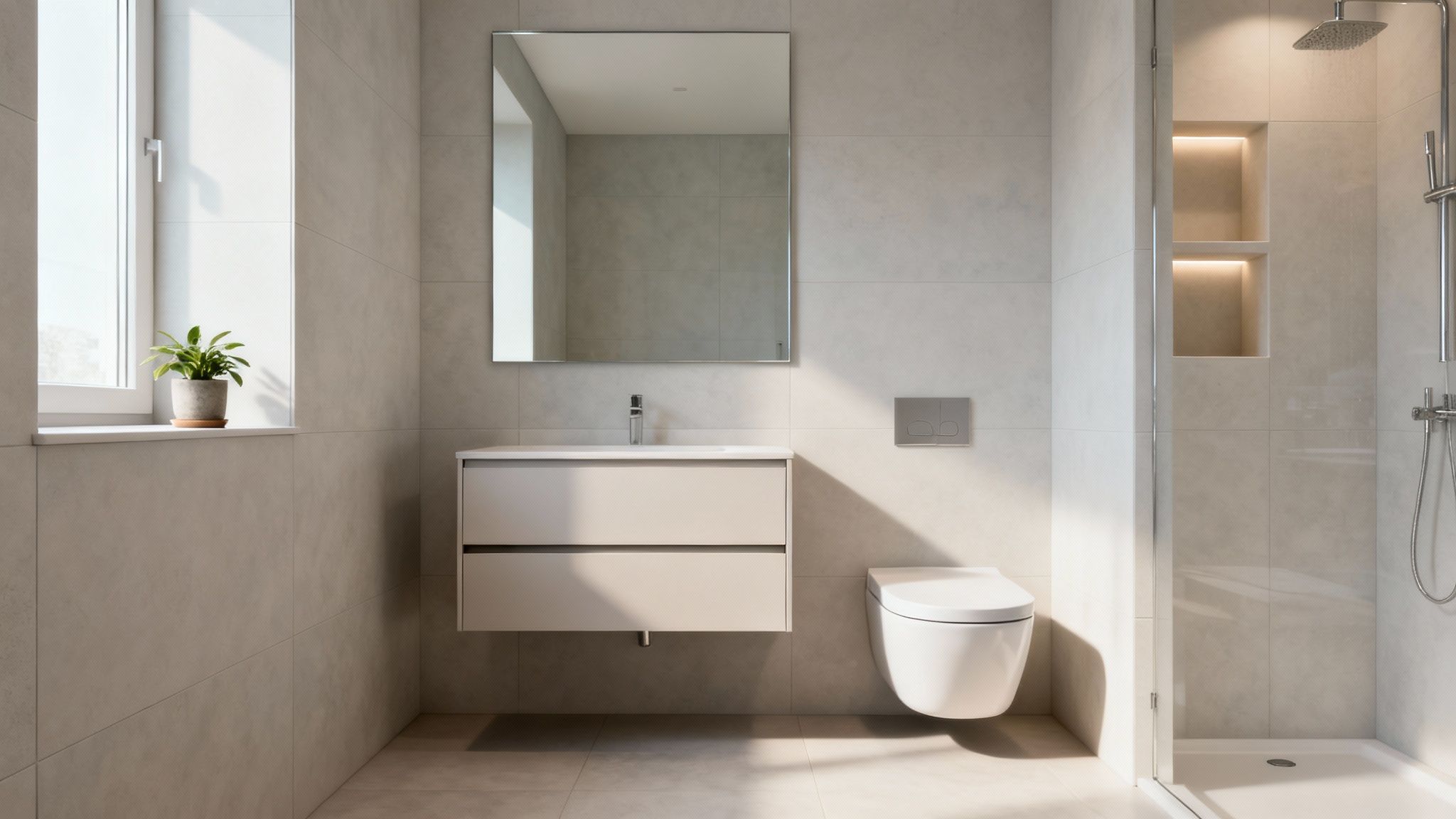
Interestingly, a whopping 53% of renovators opted for floating vanity units. It’s a simple change, but lifting the main cabinet off the floor instantly makes the room feel bigger and less cluttered.
By applying a few key design principles, you can visually expand your bathroom, making it feel significantly larger without knocking down a single wall. The goal is to work smarter, not harder.
Key Principles for Success
To get this right, we're going to focus on four crucial areas. Nail these, and you'll be amazed at how much you can achieve with every square centimetre. These aren't just high-level concepts for professional designers; they are practical tools any homeowner can use. For some great starting points, you might want to check out our guide on how to make a small room look bigger, as many of the ideas apply here too.
- Layout: First up, we'll look at how the physical arrangement of your toilet, sink, and shower can completely open up the room and unlock its hidden potential.
- Storage: Next, we’ll uncover clever solutions to keep clutter hidden away, creating that serene, spa-like feel everyone wants.
- Light & Colour: We'll explore the magic of using light and the right colour palette to trick the eye and make the space feel bright and airy.
- Materials: Finally, we'll discuss how the right tiles, finishes, and fixtures can add a touch of luxury and create the illusion of more space.
Mastering the Art of Small Bathroom Layouts
Getting the layout right is the single most important decision you'll make when designing a small bathroom. It’s a bit like a game of Tetris – every single piece needs to fit perfectly to create a space that’s both functional and feels good to be in. The real secret isn't just about cramming things in; it's about arranging everything to make the most of every square centimetre.
At the heart of any successful small bathroom is an unobstructed pathway from the door to the main fixtures. This sounds simple, but it's a game-changer. If you can walk through the room without bumping into a sharp corner or shuffling past the toilet, the space will immediately feel bigger and more thoughtfully designed.
Popular Small Bathroom Layouts
The best floor plan for your bathroom really comes down to its shape and size. A long, skinny room needs a different approach to a small, boxy one. The trick is to work with the architecture of your home, not against it.
- The Galley Layout: This is a classic for rectangular bathrooms. By placing all the fixtures along one long wall, you create a clear, straight walkway that makes the room feel longer and much less cluttered.
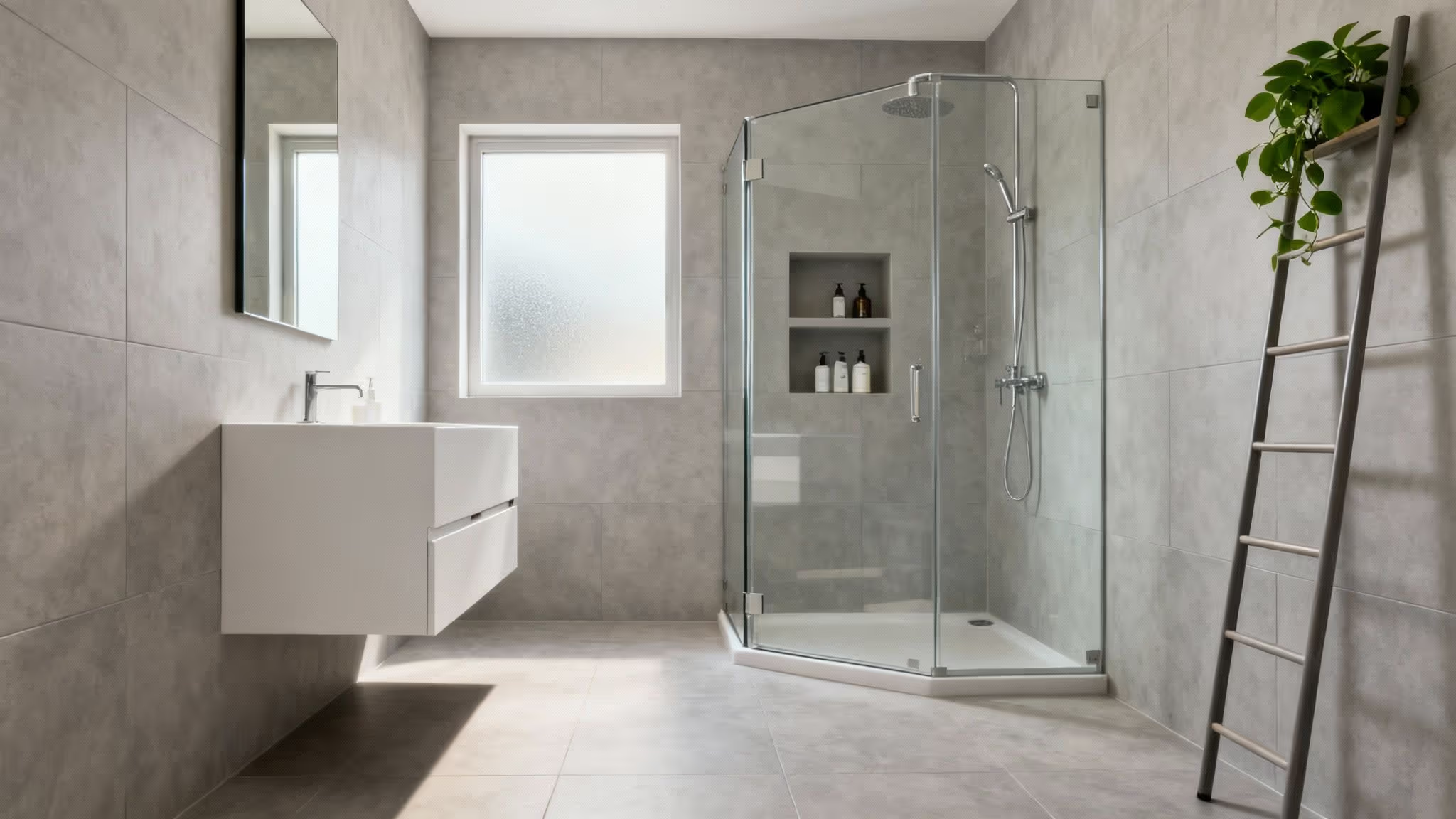
- The Corner-Fixture Approach: A smart strategy is to tuck larger items, like the shower or basin, into the corners. Moving these bulky pieces off-centre can free up the middle of the room, giving you a surprisingly spacious feel.
- The Wet Room: If you want the ultimate space-saving solution, a wet room is it. By getting rid of the shower enclosure and waterproofing the entire room, you create one seamless, open-plan space. It’s a modern, accessible look that feels incredibly liberating.
It’s clear that UK homeowners are getting creative. Recent research shows that 32% are opting for space-saving corner showers, while 29% are choosing walk-in showers with low-profile trays. These practical choices prove we’re all getting smarter about making limited space work harder. For more on what's current, you can explore the latest UK bathroom trends from House Beautiful.
Is Moving Plumbing Worth The Cost?
This is the big question. Sticking with your existing plumbing is always going to be the cheapest option, but sometimes, a reconfiguration can completely unlock a room's potential. If your current layout is just plain awkward – maybe the toilet is the first thing you see when you open the door – then moving things around could be a brilliant investment for your long-term happiness in the space.
The best small bathroom layouts prioritise movement and clear sightlines. By focusing on how you move within the space, you can design a room that feels intuitive and surprisingly open, regardless of its actual size.
The principles of creating flow in a tight spot apply all over the home. For more ideas on arranging furniture in a compact area, take a look at our guide to small living room layout ideas.
Fixture Comparison for Small Bathrooms
Choosing fixtures designed specifically for small bathrooms is also a crucial piece of the puzzle. The right basin or toilet can make a world of difference.
Ultimately, wall-hung toilets and floating vanity units are brilliant because seeing more of the floor tricks the eye into thinking the room is bigger. Likewise, compact basins and short-projection toilets are engineered to have a smaller footprint without feeling cramped, making them perfect for those really tight spots.
Finding Space You Never Knew You Had
Clutter is the number one enemy in a small bathroom. It’s the fastest way to make a compact room feel chaotic, cramped, and instantly smaller than it actually is. The real secret to winning this battle is clever storage—solutions that not only organise your essentials but blend so seamlessly into the room they feel like part of the design itself.
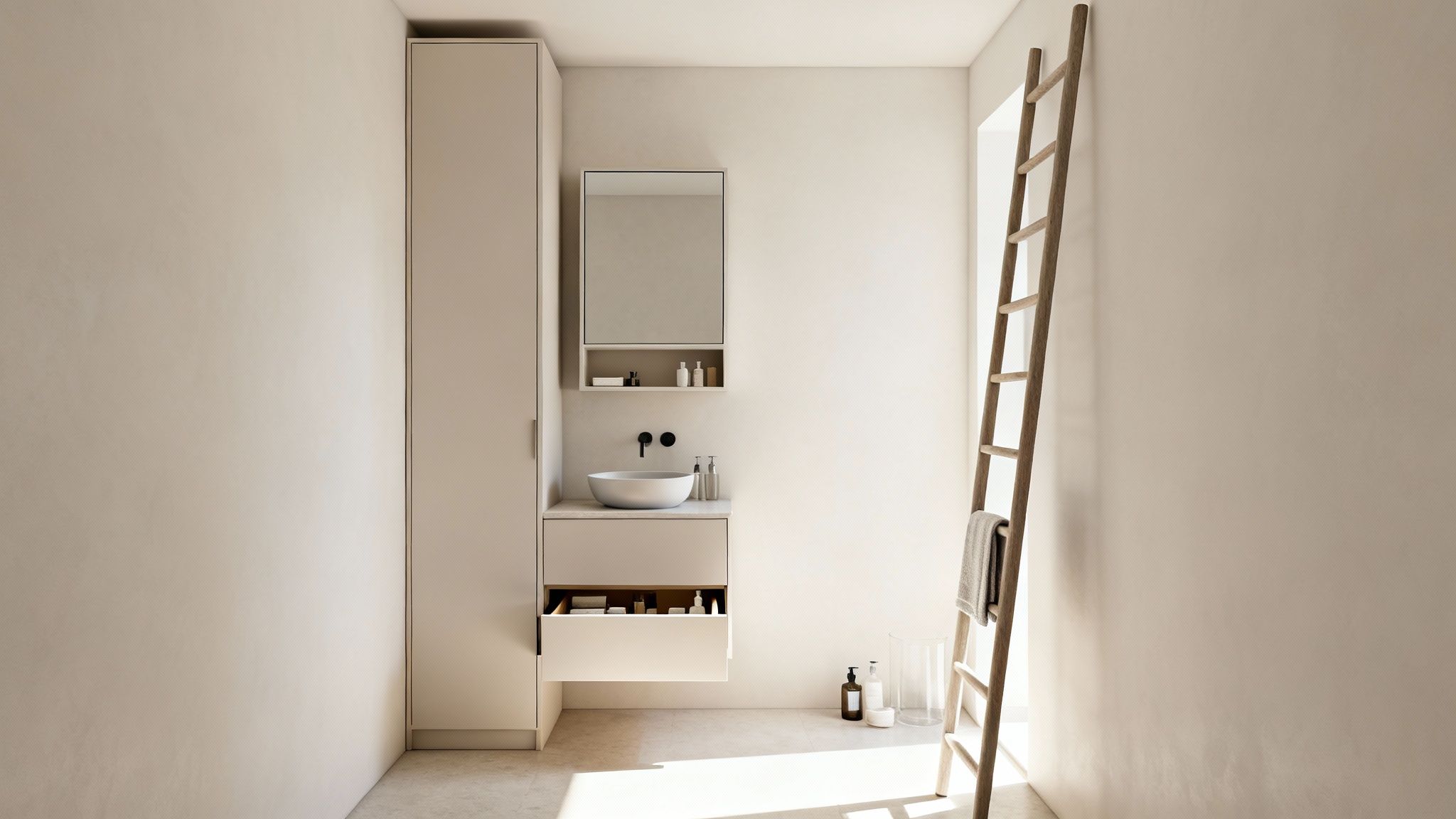
First things first: think vertically. When your floor space is precious, the only way is up. Making use of the full height of your walls draws the eye upward, creating a powerful illusion of a taller, more spacious room. It's a classic designer trick that never fails.
Maximising Vertical and Hidden Space
It's time to look beyond the standard under-sink cupboard. The aim here is to unearth storage opportunities in unexpected places, transforming dead wall space into a hardworking asset.
- Tall, Slimline Cabinets: A narrow tower unit can offer a surprising amount of storage for towels and toiletries without eating into your precious floor space.
- Ladder Shelving: For a more open and airy feel, a leaning ladder shelf is a stylish alternative to a bulky cabinet. It's perfect for displaying a few nice bits and pieces alongside neatly folded towels.
- Recessed Storage: Now, this is the gold standard for small bathrooms. By building storage into the wall cavity (that empty space between the studs), you gain valuable shelf space without it projecting into the room by a single centimetre.
A mirrored cabinet recessed into the wall above the basin is a brilliant two-for-one. You get hidden storage right where you need it, and the mirror bounces light all around the room, making it feel brighter and bigger.
A shower niche is another fantastic example. This is essentially a recessed shelf built right into the shower wall, which finally gets rid of the clutter of shampoo bottles and soap bars littering the floor or a rusty caddy. If you're planning a renovation, it's worth exploring these clever storage ideas to build in while you renovate – they can make a huge difference.
Choosing Multi-Functional Furniture
In a small bathroom, every single item needs to earn its keep. Opting for furniture that serves more than one purpose is a cornerstone of smart design, leaving no centimetre wasted.
Think about a modern vanity unit with deep, pull-out drawers rather than just a cupboard with a shelf. Drawers are a game-changer; you can see and grab everything you own so much more easily, meaning things don't get lost in the dark corners at the back.
Even something as simple as a small storage bench can offer a place to perch while also hiding away spare toilet rolls or cleaning supplies. When your furniture works this hard, you're not just storing things—you're creating an organised, calm space that feels like a proper retreat.
Creating the Illusion of Space with Light and Colour
With the layout locked in and your storage sorted, we get to the fun part—the optical illusions. This is where a few clever design tricks can make a tiny bathroom feel worlds away from its actual square footage. Your two greatest allies in this mission are light and colour. When you get them working together, the results can be genuinely transformative.
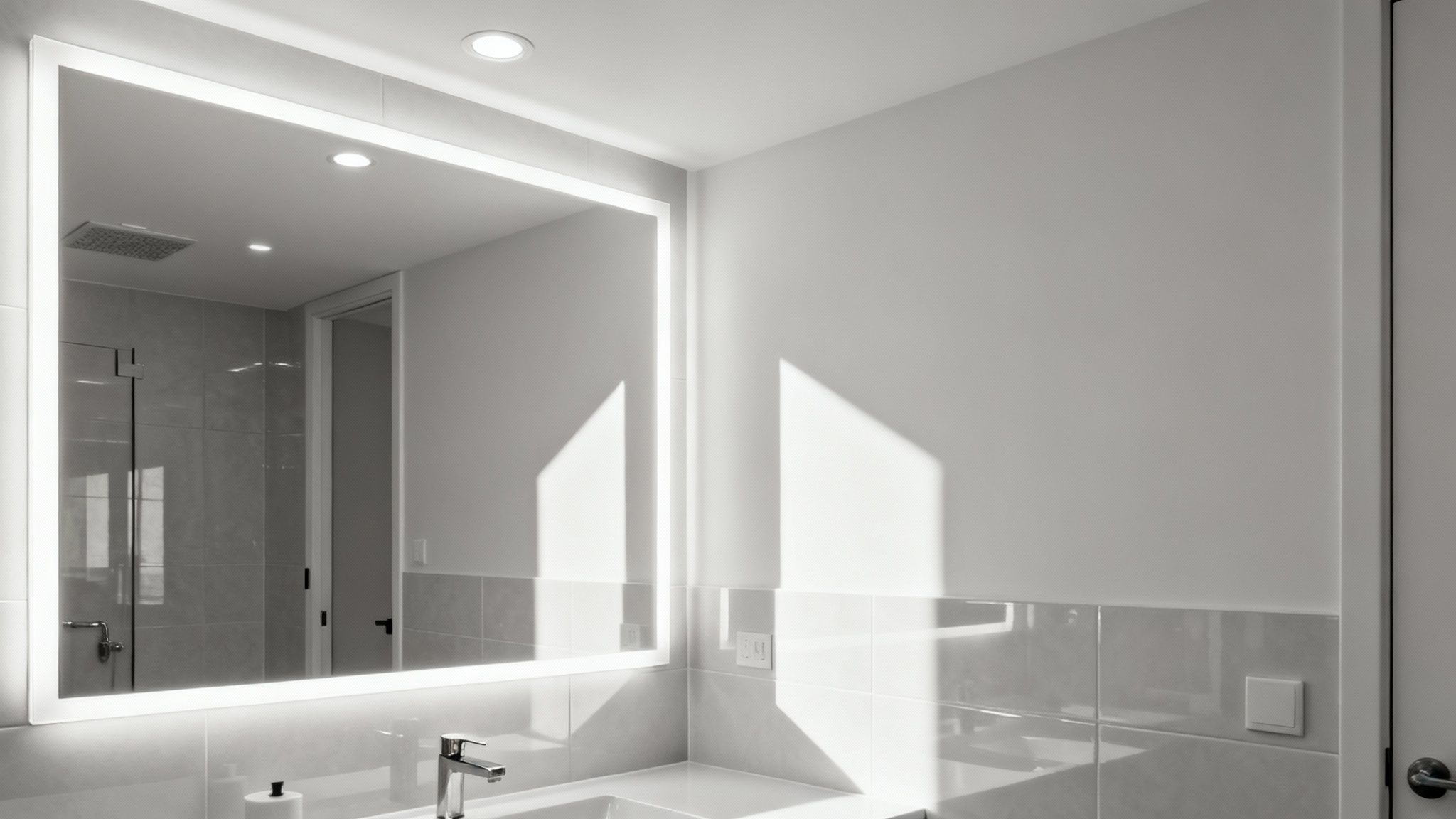
It all starts with the walls. Think of pale, cool colours as your secret weapon for pushing back boundaries. Soft whites, gentle greys, and pale blues have a natural ability to recede, making the walls feel further away than they really are. It’s a simple trick, but it instantly creates a more expansive, airy atmosphere.
Harnessing the Power of Colour
While light colours are a safe and effective starting point, you can take it a step further with a monochromatic scheme. By using different tones and textures of the same core colour for your walls, floor tiles, and even the vanity unit, you create a beautifully seamless space. Without any sharp contrasts to break things up, the eye flows smoothly around the room, blurring the edges and making it feel much larger.
The goal is to minimise visual 'noise'. A cohesive, limited colour palette creates a calm, serene environment that feels both spacious and incredibly sophisticated.
But what if you love a bit of drama? Don't worry, you don't have to give up on dark shades entirely. A bold navy or a rich forest green can look fantastic, but you have to be tactical. Use it on a single feature wall—perhaps behind the basin—to add a sense of depth without closing the space in. The key is to counterbalance it with fantastic lighting and plenty of mirrors.
The Secret Weapon of Layered Lighting
Let's be clear: good lighting is absolutely non-negotiable in a small bathroom design. A single, harsh light from the ceiling is the fastest way to cast gloomy shadows and make a room feel cramped. You need to think in layers. This approach adds depth, warmth, and makes the space far more functional. For a deep dive, check out our complete guide to the best bathroom lighting.
Your lighting plan should have three core components:
- Ambient Light: This is your general, all-over illumination. Think recessed ceiling spotlights or a smart, flush-mount fixture that provides a good, even wash of light across the whole room.
- Task Light: This is your focused, practical light for jobs like shaving or doing your makeup. The best options are wall lights on either side of the mirror or an illuminated mirror itself. They light your face evenly, eliminating those unflattering shadows.
- Accent Light: This is the finishing touch, the bit of sparkle. It could be a tiny, waterproof spotlight highlighting a beautiful tile detail, or LED strip lighting tucked under a floating vanity for a soft, hotel-like glow.
Reflecting Light and Space with Mirrors
Finally, let’s talk about the single most impactful accessory for a small bathroom: a great big mirror. A mirror is so much more than just a place to check your reflection; it’s a design workhorse that can literally double the perceived light and space in your room.
Hang a large mirror opposite a window or your main light source, and it will grab that light and bounce it all around the room, making everything feel instantly brighter. For the biggest impact, go for a mirror that fills most of the wall above the basin. It’s a chic, modern look that creates a powerful illusion of depth, turning a cramped bathroom into a bright, welcoming sanctuary.
Choosing Materials That Make a Big Impact
The materials you choose for your bathroom are more than just practical surfaces; they're your biggest opportunity to influence how the space feels. Get them right, and you can transform a cramped bathroom into one that feels open, unified, and surprisingly spacious. It's all about tricking the eye with a bit of clever visual magic.
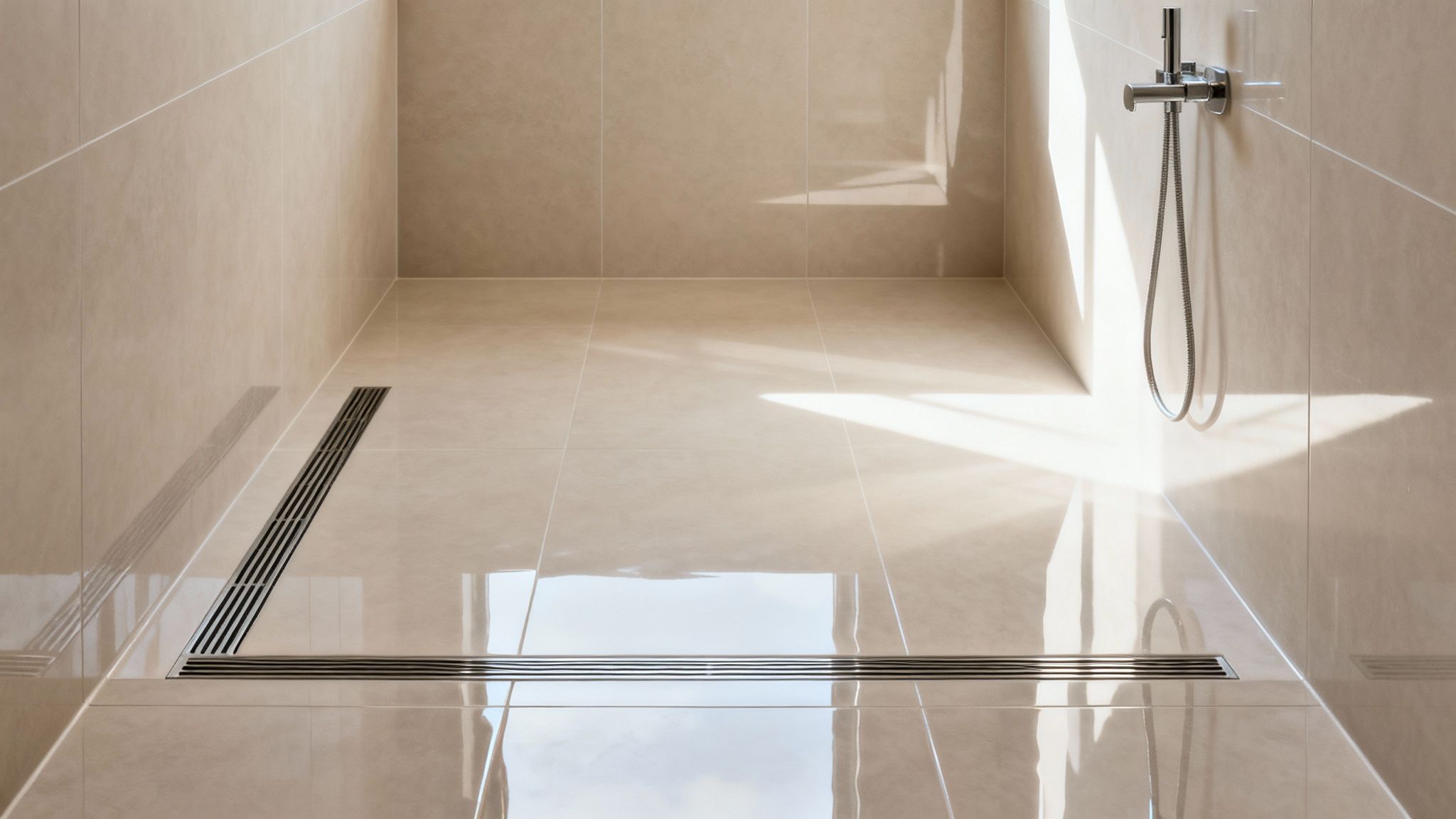
Tiles, in particular, have become the star of the show in UK homes. The 2025 UK Houzz Bathroom Trends Study found that a massive 40% of us now see tiles as the standout feature of our bathrooms. This just goes to show how powerful they can be in creating a statement and stretching the sense of space. If you're curious about the latest trends, you can discover more insights from the Houzz study and see what other homeowners are doing.
Let Tiles Do the Talking
When you're working with a small bathroom design, large-format tiles are your secret weapon. I know it sounds a bit backwards – putting big tiles in a tiny room – but trust me, it works. The reason is simple: fewer grout lines. This creates a much cleaner, less cluttered surface that makes the whole area feel bigger and more continuous.
The finish matters just as much. Glossy or reflective tiles are fantastic because they bounce light all over the place, making any room feel brighter and more open. Think of them as dozens of tiny mirrors working together to expand the space. For some great examples, have a look at our guide on tile ideas for a small bathroom.
Here's a classic designer trick: use the exact same tile on both the floor and the walls. This simple move blurs the lines between surfaces, making it almost impossible for your eye to judge the room's true dimensions. The result is a profound sense of openness.
Smart Choices for Flooring and Finishes
Your choice of flooring is another key player in this game of perception. Options like Luxury Vinyl Tile (LVT) are brilliant for small spaces. They can give you the beautiful look of natural wood or stone, but they’re completely waterproof and feel much warmer under your feet. For the ultimate seamless look, you could even go for a full wet room, where the floor just flows right into the shower.
And don't forget the little things. Taps, shower heads, and accessories might seem like minor details, but getting the finishes right is crucial for a calm, uncluttered feel. Stick to one finish – whether it's a warm brushed brass, a bold matt black, or a classic polished chrome. This consistency ties everything together, making the whole room feel considered and polished, not chaotic.
To help you visualise the impact of these choices, here’s a quick rundown of how different materials can change the feel of your bathroom.
Material Impact on Small Bathroom Perception
Ultimately, choosing materials that work together to create a cohesive and light-filled space is one of the most effective ways to make your small bathroom feel anything but.
Your Small Bathroom Design Questions Answered
Taking on a small bathroom project always throws up a few head-scratchers. From wrestling with the layout to second-guessing colour choices, it’s easy to feel a bit stuck. To get you moving again with confidence, we’ve put together answers to the most common questions we hear from UK homeowners.
What’s the Best Layout for a Very Small Rectangular Bathroom?
For a long, narrow bathroom, you really can’t beat a ‘galley’ layout. It’s a classic for a reason. You simply line up the toilet and basin along one of the long walls, with the shower or bath tucked in at the far end. This gives you a clear, straight path through the room, making it feel organised and way less cramped.
Want to take it a step further? Opt for a wall-hung toilet and a floating vanity unit. This is a fantastic trick because it lifts everything off the floor. When your eyes can see more of the floor, your brain is convinced the room is bigger than it is. If you have the budget, swapping a standard hinged door for a pocket door that slides into the wall is another game-changer, reclaiming all that otherwise wasted swing space.
Can I Use Dark Colours in a Small Bathroom?
Yes, you absolutely can! It just needs a bit of smart thinking. While everyone knows light colours make a room feel bigger, dark shades can bring a sense of drama, cosiness, and real luxury. The secret is all in the balance.
Instead of painting every wall a dark colour, which can feel a bit cave-like, try creating a single feature wall. The wall behind the basin or toilet is usually the perfect spot. It adds depth and a focal point without swallowing up the room. The real key to making this work, though, is brilliant lighting. You'll need good, layered light – bright task lighting by the mirror and warm ambient light to fill the room – to stop it from feeling gloomy.
Are Wet Rooms a Good Idea for Small UK Bathrooms?
Wet rooms are a phenomenal solution for small UK bathrooms. Getting rid of the shower tray and enclosure creates a seamless, open-plan space that feels incredibly spacious. The whole room is tanked (waterproofed), and the floor has a gentle slope towards a drain. It’s a minimalist look that’s also super accessible and a breeze to clean.
It's worth remembering that professional installation is absolutely crucial here to avoid any nightmare leaks. While it's a significant investment, a well-done wet room can totally modernise a compact bathroom and make it far more functional. Many people also add underfloor heating to help the floor dry out faster.
What’s the Single Most Impactful Change I Can Make?
Short of ripping everything out and starting again, the single biggest difference you can make is to switch out a clunky, floor-standing vanity for a sleek, floating, wall-mounted unit. This one change does so much work. It instantly frees up visual floor space, which is the golden rule for making any small room feel larger. As an added bonus, it makes cleaning the floor so much easier.
Pair that with a large, frameless mirror above it – maybe even a mirrored cabinet to hide away all the clutter – and you’ve got a winning formula. The combination of clear floor space and a big reflective surface can completely alter the perception of your bathroom’s size, making it feel brighter and more contemporary in an instant.