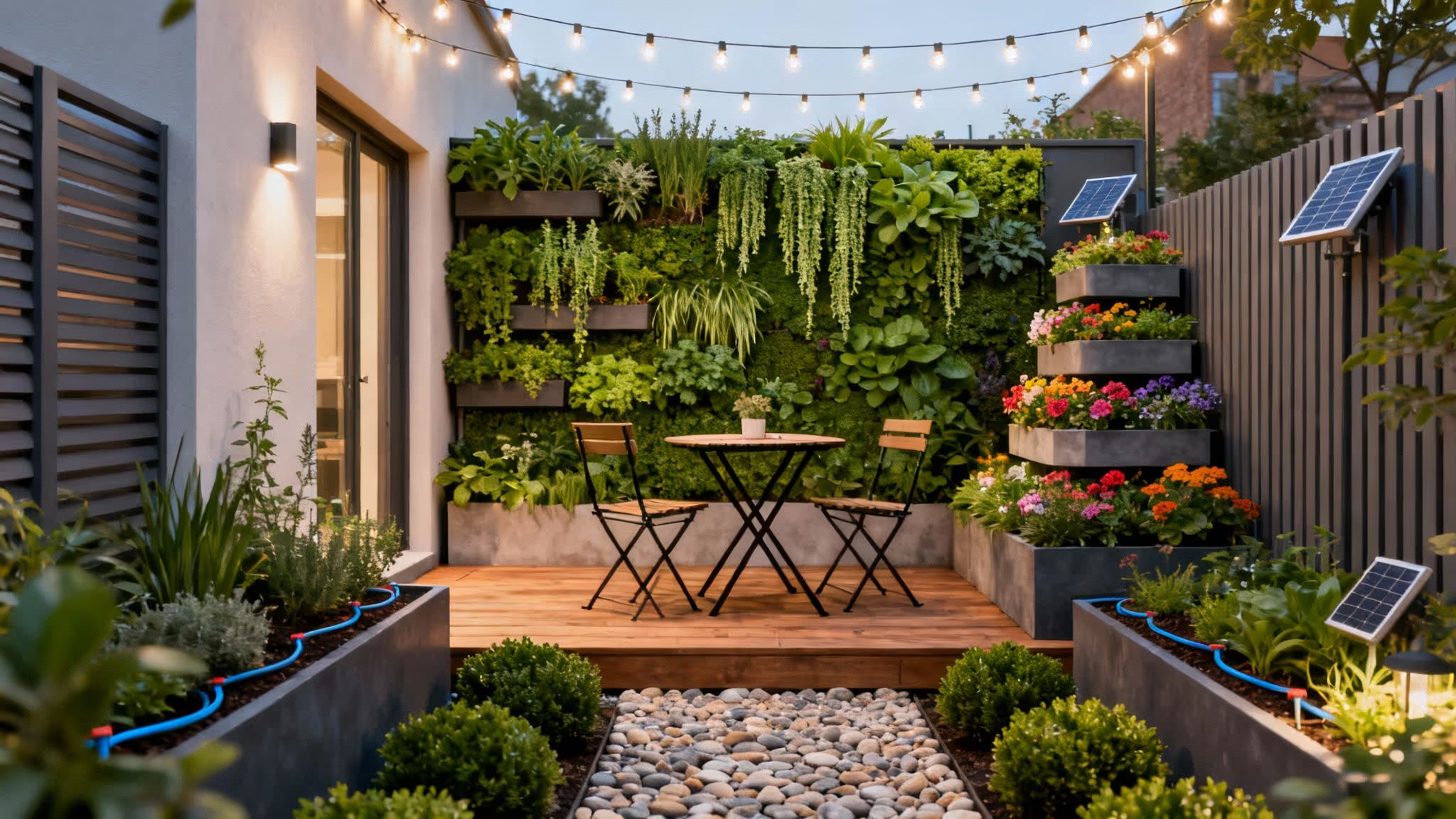
A great small garden design isn’t about compromise; it’s about clever, high-impact choices that turn a tight spot into a proper retreat. It’s about seeing the constraints of your space—be it a balcony, courtyard, or tiny lawn—as a creative challenge, using everything from vertical planting to multifunctional furniture to carve out a stylish extension of your home.
Thinking Big in a Small Space
Welcome to the world of small gardens, where a compact plot is a canvas for big ideas. All across the UK, people are proving you don’t need sprawling grounds to create a beautiful outdoor sanctuary. The secret? It's all about thinking differently.
A small garden isn’t a limitation. If anything, it’s an invitation to be more thoughtful. Every single choice, from the paving slabs to the plants and furniture, has to earn its keep. This focus on quality over quantity naturally leads to spaces that feel curated, personal, and deeply inviting.
A well-designed small garden often feels more intimate and magical than a larger, less considered one. It becomes another room of your home, perfectly tailored to the way you live.
What This Guide Covers
This guide is your roadmap from a bare patch of grass or an empty balcony to a garden you genuinely love spending time in. We’ll go beyond just pretty pictures and give you the practical, actionable steps to plan, create, and look after your little oasis.
Together, we'll walk through how to:
- Get to know your space: Really understand its quirks, from where the sun hits to the type of soil you're working with.
- Define your garden's purpose: Decide what you actually want to do out there and nail down a style that feels like you.
- Create a clever layout: We'll look at design tricks that make the space feel bigger and flow beautifully.
- Pick the right plants: Find hardworking plants that offer year-round interest without taking over.
- Choose the finishing touches: Select the right hardscaping and styling details to pull it all together.
We’ve packed this guide with creative solutions, but for an extra dose of inspiration, don’t miss our edit of very small gardens ideas. Right then, let's get started.
How to Assess Your Garden and Find Your Style
Before you even think about rushing to the garden centre, let's talk about the most important step in any small garden design: slowing down and getting to know your space. A beautiful, thriving garden begins not with plants, but with a bit of observation and a clear vision. Trust us, this initial assessment will save you a world of time, money, and heartache down the line.
Reading Your Outdoor Space
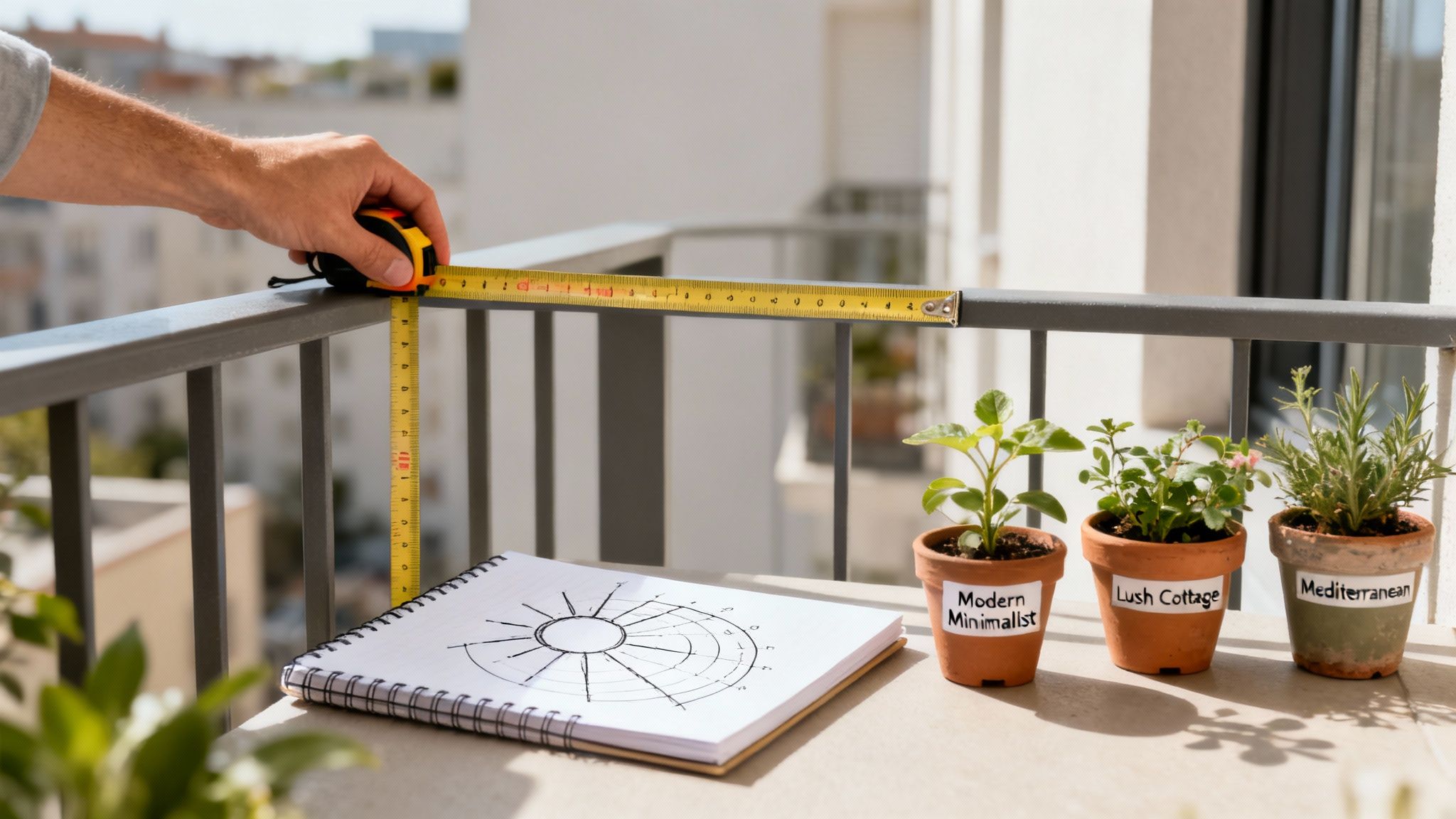
Think of yourself as a bit of a garden detective for a day. Your first task is to gather clues about the unique conditions of your plot. Grab a tape measure, a notebook, and just spend some time being in the space at different points of the day.
Start with the basics – get an accurate measurement of your garden's dimensions. Make a note of any fixed features like drains, taps, or immovable objects. This is the bedrock for creating a scaled plan, which you can read more about in our guide on how to plan a garden layout. A simple sketch with measurements will become your map.
Next, and this is the big one, track the sun. It's probably the most critical factor for happy plants. Note which areas get that lovely morning sun, which bits bake in the afternoon heat, and where stays in shade for most of the day. A south-facing wall might be crying out for sun-loving Mediterranean herbs, while a north-facing corner could become a cool, lush haven for ferns.
Don't just look for sun and shade; hunt for your garden's microclimates. That sheltered corner might be a few degrees warmer and less windy than an exposed patio, creating a little pocket where more delicate plants can really flourish.
Defining Your Garden's Purpose
With a solid feel for your space, the next question is a personal one: what do you actually want your garden to do for you? A small garden can’t be everything to everyone, so getting clear on its main purpose is key to a design that feels right.
Think about your lifestyle and what would bring you the most joy. Are you dreaming of:
- A Social Hub? Your focus will be on comfy seating, maybe a spot for a small barbecue, and durable, low-maintenance planting that can handle the odd stray footstep.
- A Quiet Retreat? This calls for a secluded seating nook, some clever screening for privacy, and calming plants with soothing colours and textures. The sound of ornamental grasses rustling in the breeze is hard to beat.
- A Productive Patch? If you fancy growing your own herbs, salads, or veg, your design will need to prioritise raised beds or containers in the sunniest spots you’ve got.
Being honest about how you'll use the garden means the final design will be both beautiful and genuinely practical. There's no point planning a huge dining area if what you'd really love is a quiet corner for your morning coffee.
Finding a Style That Fits
Once you know how you’ll use your garden, you can have fun exploring different styles. The goal isn't to replicate a look you've seen online exactly, but to borrow the elements that you love and adapt them to your compact space. A clear style helps guide every choice, from paving to plants, creating a pulled-together feel.
Here are a few popular styles that work wonders in a small garden:
Choosing a style gives you a framework for your design, making sure every element works together beautifully. It’s what transforms a simple collection of plants and furniture into a thoughtfully curated outdoor sanctuary that truly feels like you.
Smart Layouts That Create an Illusion of Space
Okay, you’ve nailed down your garden's purpose and style. Now for the fun part: the clever design tricks that can make even the tiniest plot feel generous and interesting. The secret to small garden design is all about playing with perception and smart functionality, turning what feel like limitations into your greatest assets.
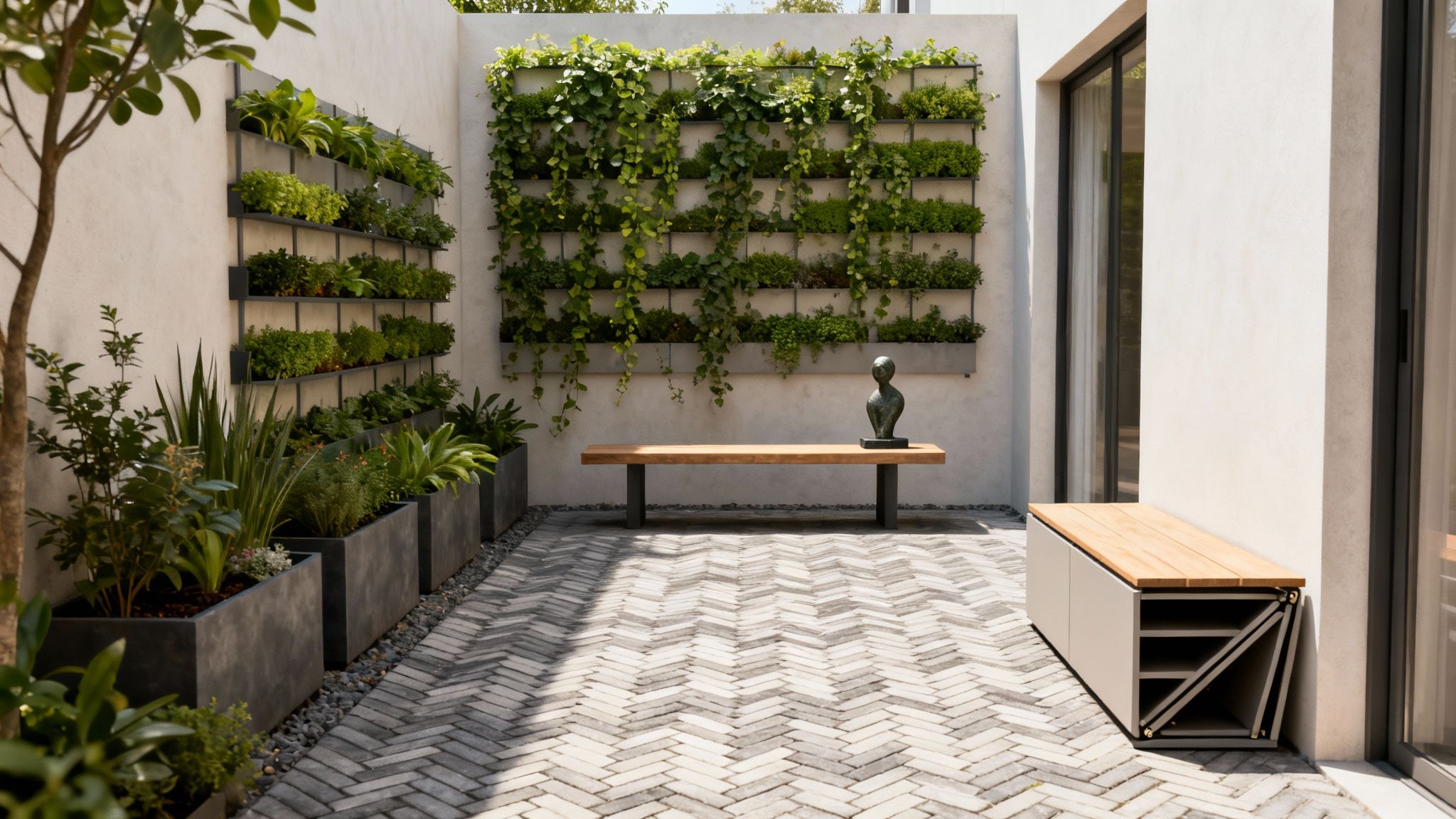
If there's one trick I always recommend, it's this: move away from straight lines. It sounds simple, but laying your paving or decking on a diagonal instantly tricks the eye. It draws your gaze along the longest possible route, making the garden feel wider and deeper than it really is. It’s a game-changer.
The same goes for gentle, sweeping curves in paths or flowerbeds. They soften the hard edges of fences and walls, making the space feel less boxed in. This encourages your eye to wander slowly through the garden rather than stopping dead at a boundary, adding a lovely sense of discovery. If you’re dealing with a particularly tricky shape, our guide on long, narrow garden ideas is packed with inspiration.
Creating Distinct Garden 'Rooms'
Even in a small footprint, creating distinct ‘zones’ or ‘rooms’ gives the space purpose and makes it feel much larger. Think of it like an open-plan living area; you need to define spots for different activities. This could be as simple as a small decked corner for a bistro set, a gravelled patch with a comfy armchair, and a dedicated planting area with raised beds.
You can signal these zones with subtle shifts in materials. Switching from stone paving to a circle of gravel, or even just placing a small outdoor rug under your seating, creates a clear visual break. This simple technique makes the garden more engaging to be in and a whole lot more practical.
A single, well-placed focal point—like a striking piece of sculpture, a vibrant pot, or an elegant water feature—can anchor your entire design. It gives the eye a place to rest and stops the space from feeling cluttered or chaotic.
Going Vertical: The Ultimate Space Saver
When you’ve run out of floor space, the only way is up. Vertical gardening is a cornerstone of modern small garden design, letting you surround yourself with lush greenery without sacrificing a single square foot of your precious patio. It’s no surprise this is so popular in cities where every inch counts.
With 42% of UK adults now gardening, the demand for clever solutions is booming, and the garden products market is tipped to hit £6.5 billion by 2025. In places like London, tiny plots and balconies are driving the need for smart, space-efficient techniques like living walls, enabling people to grow everything from herbs to strawberries.
Living walls are a brilliant way to create a dramatic green backdrop. These modular panel systems can transform a boring fence into a stunning tapestry of plants. They’re perfect for growing herbs, salad leaves, and trailing perennials that add colour and texture.
But there are other great vertical options too:
- Trellises and Wires: Fix them to a wall or fence to support climbing plants like fragrant jasmine, clematis, or even runner beans and peas. They add height, greenery, and often, a beautiful scent.
- Tiered Planters: These stepped containers are perfect for creating a mini herb garden or a display of colourful annuals, packing multiple layers of planting into one compact unit.
- Hanging Baskets: A classic for a reason. They draw the eye upwards, adding pops of colour at eye level and distracting from the garden's small dimensions.
Space-Saving Solutions at a Glance
Choosing the right space-saving technique can feel overwhelming, but it's all about matching the solution to your specific needs. This table breaks down some of the most popular options to help you decide what will work best for your patch.
Ultimately, a combination of these ideas will likely give you the best result. A living wall as a backdrop, a trellis for privacy, and a few well-placed tiered planters can completely transform a small space.
Smart Furniture and Container Choices
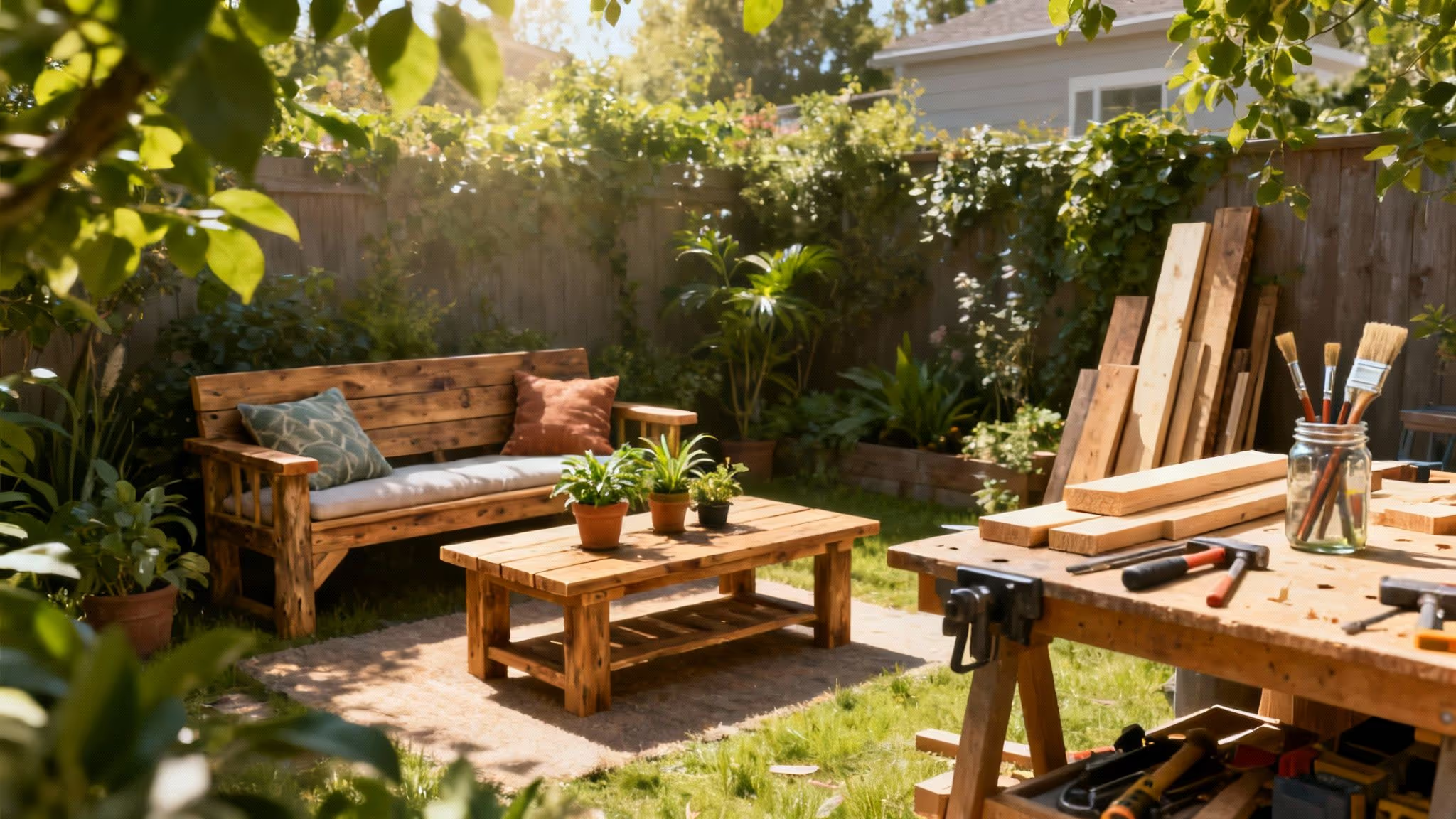
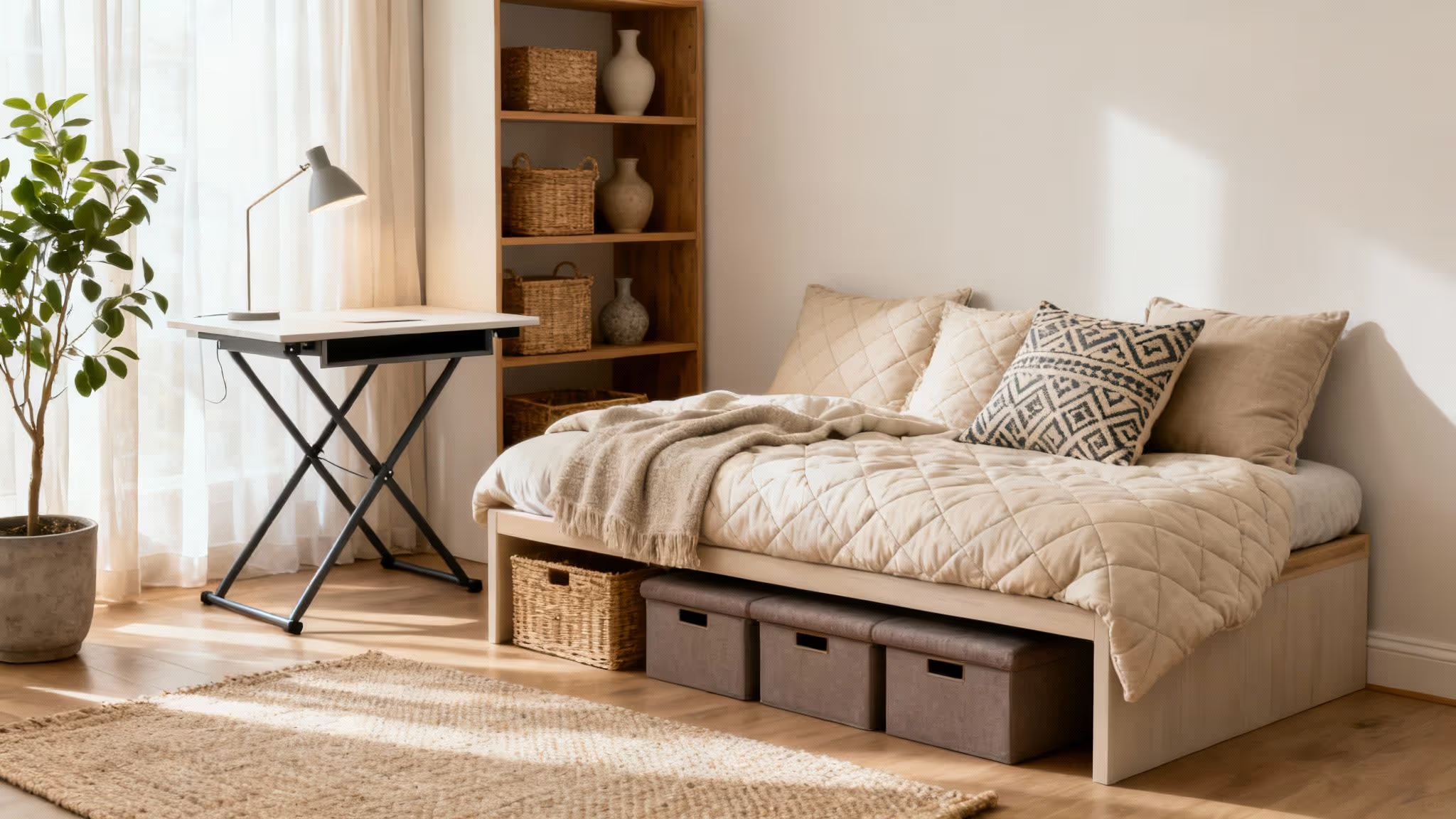
In a small garden, every single item needs to earn its keep. Look for furniture that does more than one job. A storage bench is the perfect example, offering a spot to sit while neatly hiding away cushions or gardening tools. Foldable tables and chairs are also brilliant – they can create an instant dining spot that disappears when you need the space back.
Container gardening will be your new best friend. Pots and planters give you total freedom to move things around, whether you’re chasing the sun or just fancy a change of scenery. A top tip: go for a few large, statement pots rather than lots of small, fussy ones. It creates a much bolder, less cluttered look. Grouping pots of different heights together is another great trick for adding depth and visual interest.
Choosing the Right Plants for a Small Garden
When you’re working with a small garden, every single plant needs to earn its keep. There’s simply no room for underperformers. This is the fun part, where your sketched-out design starts to become a living, breathing space full of colour and texture.
The secret is to choose plants that deliver the biggest impact for their footprint. You want your garden to feel lush and full, not like a cramped jungle.
This means hunting down plants with good manners—varieties with a naturally compact or upright shape that won’t try to take over. Think elegant, slender forms that draw the eye upwards, rather than sprawling shrubs that eat up valuable floor space. A pro tip is to pick plants that offer something interesting in more than one season, whether that’s spring flowers, gorgeous summer leaves, striking autumn colour, or a strong shape in winter.
The Art of the Container: The 'Thriller, Filler, Spiller' Method
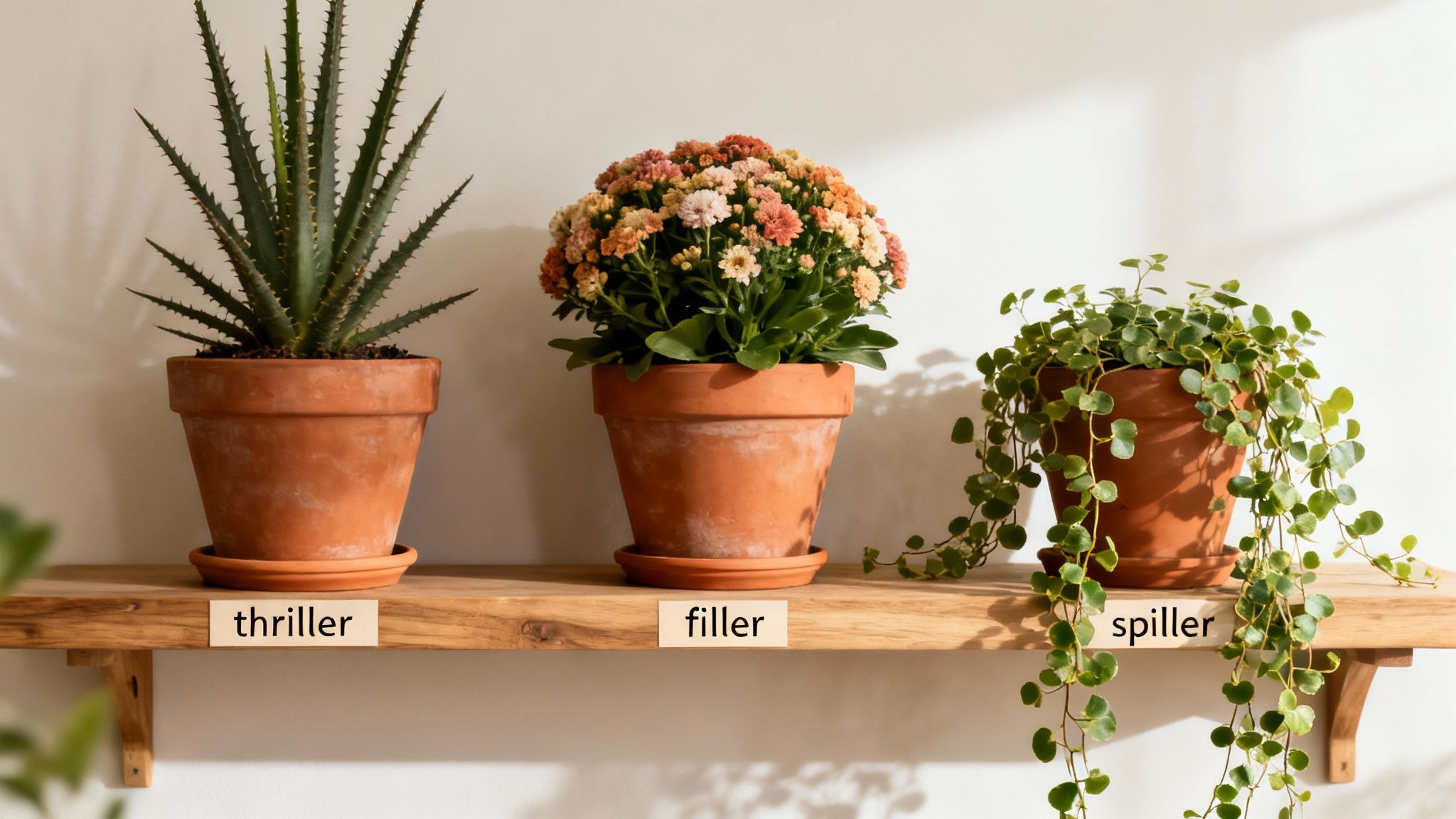
Container gardening is the lifeblood of most small outdoor spaces. Nailing a few simple design principles can take your pots from looking a bit random to looking professionally styled. The most reliable trick in the book? The classic ‘thriller, filler, spiller’ formula. It’s a completely foolproof way to create pots that look balanced, dynamic, and full of life.
Here’s the breakdown:
- Thriller: This is your showstopper. It’s a tall, striking plant that provides height and a strong vertical focal point. Good examples include a spiky Cordyline australis, the airy ornamental grass Stipa tenuissima, or a flowering superstar like Salvia 'Amistad'.
- Filler: These are bushier, mounding plants that nestle around your thriller. They fill out the middle ground, adding bulk and texture to make the container look generous and lush. Think leafy Heuchera, classic Geraniums, or even herbs like parsley.
- Spiller: These are the plants that tumble gracefully over the sides of the pot. They soften the hard edges of the container and link it to the ground below. You can’t go wrong with trailing ivy, pretty Bacopa, or the silvery foliage of Dichondra 'Silver Falls'.
This simple recipe gives your pots height, volume, and a soft, cascading element for a polished, complete look. For a deeper dive, check out our journal on how to garden with potted plants.
Using Colour and Texture to Create Depth
In a tight space, colour and texture have to work extra hard to create a mood and the illusion of a bigger garden. A smart colour palette can make your space feel calmer, more exciting, or even larger than it really is.
For example, cool colours like blues, purples, and soft whites tend to visually recede, which is a clever trick for making a back fence feel further away. Planting pale flowers like white Cosmos or pale blue Agapanthus at the far end of your garden is a classic design cheat to add depth.
On the flip side, hot, fiery colours like reds, oranges, and bright yellows leap forward and grab your attention. Use these energetic shades closer to your seating area or front door to create a warm, welcoming focal point. Even a single pot of bright red geraniums can make a huge impact.
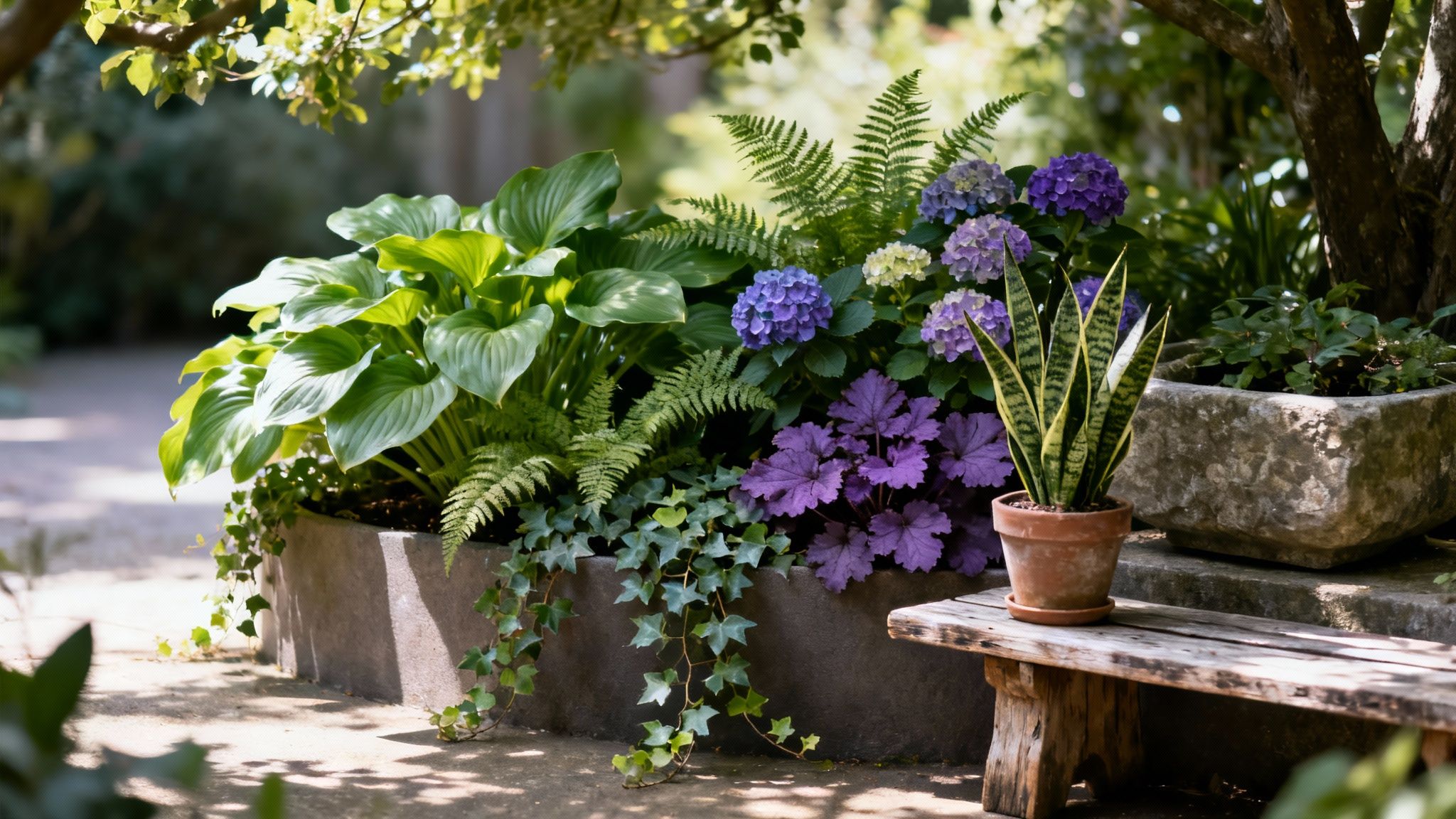
Don't underestimate the power of foliage. The texture and colour of leaves are often more important than flowers for creating year-round interest. Contrasting fine, feathery ferns with bold, glossy hosta leaves creates a sophisticated look that lasts long after the blooms have faded.
Top Plant Picks for UK Small Gardens
To get you started, we’ve pulled together a list of hardworking plants that are perfectly suited to the scale of a small garden and will happily thrive in the UK climate. We’ve broken them down by type to help you build a varied and resilient scheme.
Dwarf Shrubs & Evergreens (For Structure)
These are the backbone of your garden, giving it shape and greenery all year round.
- Skimmia japonica 'Rubella': A brilliant compact evergreen with deep red flower buds all winter, opening to fragrant white flowers in spring.
- Hebe 'Red Edge': A neat, dome-shaped evergreen with grey-green leaves tinged with red, plus pretty purple flowers in summer.
- Daphne odora 'Aureomarginata': Worth growing for its incredible winter fragrance alone, this evergreen has lovely yellow-edged leaves and pink flowers.
Long-Blooming Perennials (For Lasting Colour)
These are the workhorses that deliver colour and interest from late spring right through to the first frosts.
- Geranium 'Rozanne': Famous for its non-stop violet-blue flowers from June to October. It gently weaves through other plants without being a bully.
- Salvia nemorosa 'Caradonna': Has striking, deep violet-blue flower spikes on near-black stems. It’s upright, compact, and a magnet for bees.
- Astrantia major 'Claret': Offers intricate, deep red pincushion flowers on wiry stems all summer, adding a delicate, airy feel.
Climbers & Vertical Plants (For Height)
Absolutely essential for drawing the eye upwards and clothing walls or fences in green.
- Trachelospermum jasminoides (Star Jasmine): An evergreen climber with glossy leaves and masses of intoxicatingly fragrant white flowers in summer.
- Clematis 'Etoile Violette': A vigorous but manageable climber that produces a huge display of deep purple, velvety flowers in late summer. You can prune it hard to keep it in check.
By choosing plants that are the right size and offer interest across multiple seasons, you can create a small garden that feels rich, layered, and beautiful all year long.
Hardscaping Materials and Styling Your Outdoor Room
Right, your plants are picked out. Now for the bits that give your garden its bones and turn it from a patch of green into a proper outdoor room. We're talking about hardscaping—the non-living stuff like paths, fences, and patios. This is the backbone of any great small garden design, and the right materials do more than just look good; they change the whole feel of the space.
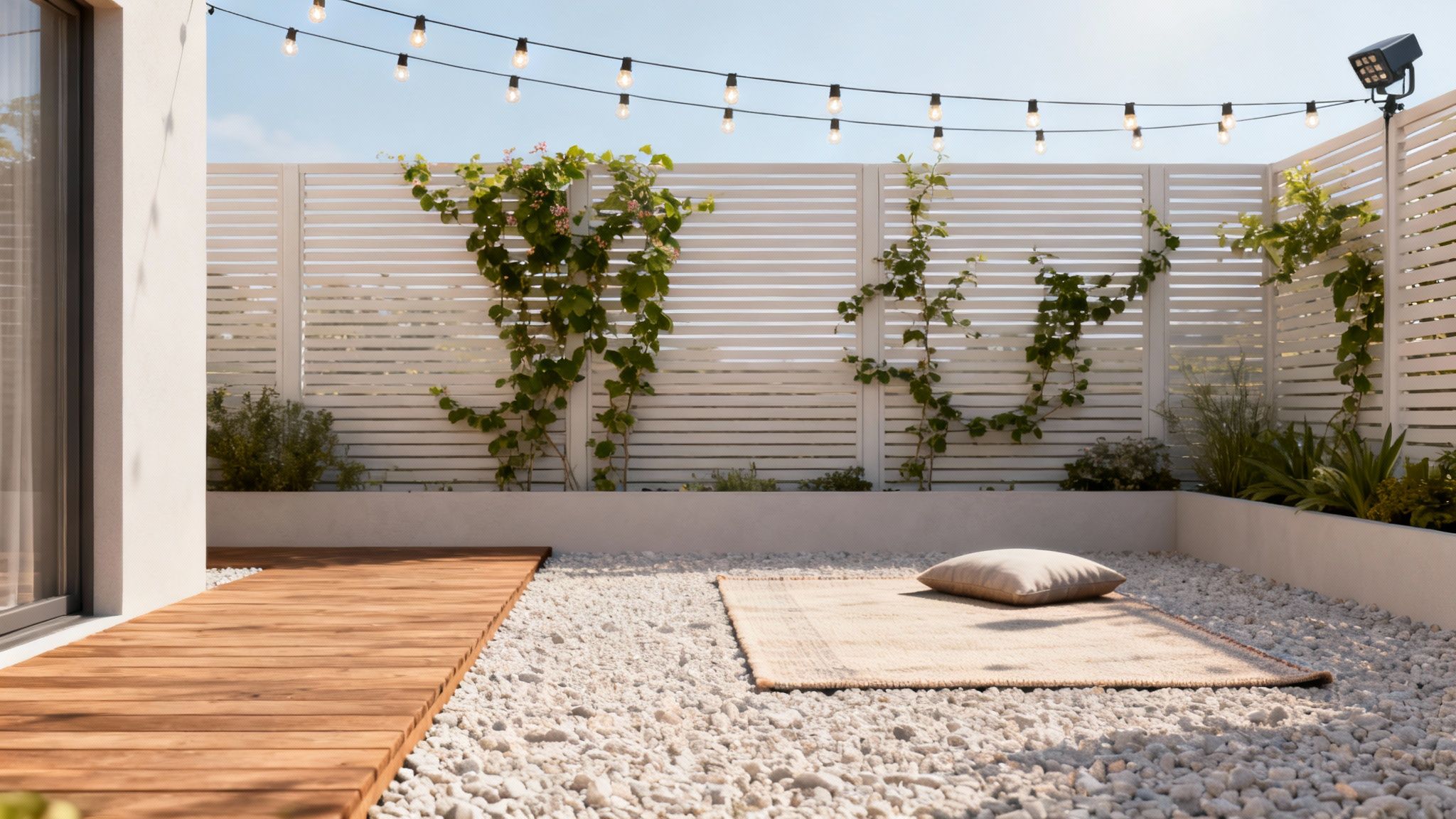
The floor of your garden is the perfect place to start. Your choice of material—and even the pattern it’s laid in—can work some serious magic on the perception of space. Think large-format, light-coloured paving slabs with thin grout lines. They create a clean, seamless surface that instantly makes a small patio feel bigger and brighter.
If you’re after something softer (and often kinder on the wallet), gravel offers that satisfying crunch underfoot and brilliant drainage. It’s a natural fit for Mediterranean or coastal-inspired schemes. Then there’s timber decking, which brings a warmth and texture that bridges the gap between your home and garden beautifully.
Here’s a simple but incredibly effective trick: lay your paving slabs or decking boards on a diagonal. It forces the eye to follow the longest line, cleverly making the garden feel wider and more dynamic than it really is.
Creating Boundaries and Privacy
In city gardens, privacy is usually top of the list. But solid, looming fences can feel a bit oppressive in a small space. Luckily, there are far more stylish ways to go about it. Contemporary slatted fence panels are a game-changer, giving you screening without completely blocking light and air.
They also cast beautiful shadow patterns that shift through the day, adding another layer of visual interest. Better yet, they act as a ready-made trellis for climbing plants like star jasmine or a delicate clematis, softening the hard lines with a cascade of green.
Another clever strategy is to create 'living screens'. Think a row of tall, slender planters filled with clumping bamboo or elegant Italian cypress. You can position them exactly where you need to block a view, offering a flexible and much prettier privacy solution.
Finishing Touches That Bring Your Design to Life
With the structural bits sorted, it's time for the fun part: styling. This is where you inject your personality and turn the garden into a cosy, inviting retreat you’ll actually want to spend time in, day and night.
Lighting is absolutely essential for getting any use out of your garden after sunset. And you don’t need a complex electrical setup to create a magical atmosphere. Solar-powered tech has come on leaps and bounds, giving you some really effective, easy options:
- Festoon and String Lights: Drape them along a fence or zigzag them over a seating area for an instant party vibe. Their warm glow is just so welcoming.
- Uplighters: Pop one or two at the base of a plant with a great shape, like a Japanese acer or a spiky cordyline. It highlights its form and throws dramatic shadows.
- Spike Lights: Use these to gently light a path or dot them along the edge of a flowerbed for practical, low-level light that helps guide the way.
The final layer is to treat your garden just like any other room in your house. An outdoor rug can anchor a seating area, defining the zone and adding a splash of colour. Chuck some weather-resistant cushions and throws on your furniture for extra comfort—it instantly makes the space feel more luxurious.
These finishing touches are what really matter, especially as our gardens become social hubs. In the UK, 87% of households have a garden, but it’s often city dwellers with the smallest plots who are getting most creative. This has led to a boom in compact design, with searches for things like garden sofas and patio chairs soaring by over 50% since 2019. It just proves that even the tiniest spaces are being transformed into stylish extensions of our homes.
Of course, you’ll want furniture that’s comfortable and built to last. Our guide on the best wood for outdoor furniture can help you make a choice that will see you through many seasons of alfresco living.
Common Questions About Small Garden Design
Taking on a small garden project for the first time can bring up a lot of questions. It's only natural to second-guess your choices when every square inch counts. To help you get going with a bit more confidence, we’ve pulled together some of the queries we hear most often and answered them with clear, practical advice.
Think of this as your go-to troubleshooting guide for the common hurdles that can pop up – from faking a sense of space to picking plants that can actually handle the famously unpredictable UK weather.
How Can I Make My Tiny Garden Look Bigger?
Making a small space feel bigger is all about clever tricks of the eye, and it’s one of the cornerstones of good garden design. One of the easiest wins is to stick with a light, cohesive colour palette for your hardscaping and boundaries. Pale paving slabs and fences painted in a soft, neutral shade will bounce light around, making the whole area feel brighter and more open.
Another great designer trick is to lay any decking or paving on a diagonal. It’s a simple shift, but it draws the eye along the longest possible line, cleverly making the brain think the space has more width and depth. It works wonders in a compact plot.
Don’t underestimate the power of reflection. A well-placed outdoor mirror can be transformative, bouncing light into shady corners and creating a sense of depth that just wasn’t there before. The key is to position it where it reflects greenery, not a boring brick wall.
Finally, the quickest way to make a space feel bigger is to clear the floor. Look up! Vertical planting solutions like living walls and trellises draw the eye upwards, while multifunctional furniture – think a bench with built-in storage – keeps the ground level as clear as possible.
What Are the Best Low-Maintenance Plants for a UK Garden?
Let's be honest, in a small garden, you need plants that look good without needing constant attention. The best approach is to create a solid backbone of hardy evergreens and reliable perennials that can handle a bit of neglect and whatever the British weather decides to do next.
Focus on plants that give you year-round structure with minimal fuss. A few of our favourites include:
- Hebe: These compact evergreen shrubs are brilliant. They come in all sorts of sizes, offer neat foliage all year, and then give you a bonus of pretty flowers in the summer.
- Skimmia japonica: A true winter hero. It provides glossy green leaves and lovely red buds or berries when not much else is going on in the garden.
- Dwarf Conifers: Perfect for adding architectural shape and texture without ever outgrowing their welcome.
For easy-care colour that lasts, you can’t go wrong with perennials like Geranium 'Rozanne', which flowers for months on end, or the silvery foliage and purple spikes of English lavender. Ornamental grasses like Hakonechloa macra are another superb choice, adding elegant movement without demanding much from you in return.
How Do I Add Privacy to My Overlooked Garden?
Being overlooked is a classic problem in urban and suburban gardens, but there are plenty of stylish solutions that go way beyond chunky fence panels. Contemporary slatted trellis panels are a fantastic option; they give you effective screening but don't create a solid, light-blocking wall, so air can still circulate.
To soften the look, train fast-growing climbers like a fragrant star jasmine (Trachelospermum jasminoides) or a beautiful clematis up the panels. This creates a lush, green screen that feels much more natural. Another great idea is using a row of tall, slender planters to create a 'living screen'. Fill them with upright plants like clumping bamboo or Italian cypress to place privacy exactly where you need it most. And if you're overlooked from above, a well-placed pergola over your main seating area can work wonders.