Think you need a sprawling lawn to create a beautiful garden? Think again. The most innovative and captivating green spaces often flourish in the most compact of places, from city balconies and tiny patios to neglected side returns. Limited square footage isn't a barrier to a lush outdoor retreat; it's an invitation to cultivate creativity and design a space that is both personal and impactful. This guide is packed with actionable small garden ideas specifically designed to help you maximise every inch of your available area, proving that a grand vision doesn't require grand dimensions.
We’ve organised this roundup into eight distinct and achievable concepts, moving beyond generic advice to give you a clear blueprint for success. You will discover practical steps for creating vertical gardens, mastering container arrangements, and even designing a micro-orchard. For each idea, we provide specific plant suggestions suitable for the UK climate, straightforward implementation tips, and realistic time and cost estimates. Whether you're a seasoned gardener aiming to refine a compact courtyard or a complete novice looking to add a touch of green to a balcony, these curated concepts will help you transform your modest plot into a thriving, beautiful, and functional oasis.
1. Vertical Gardens & Living Walls
When ground space is at a premium, the only way to go is up. Vertical gardens, also known as living walls, are one of the most impactful small garden ideas, transforming barren walls and fences into lush, vibrant tapestries of foliage. This technique involves growing plants in vertically suspended panels or stacked containers, creating a stunning visual effect while occupying a minimal footprint. It’s a perfect solution for urban balconies, small patios, and courtyards where traditional garden beds are not feasible.
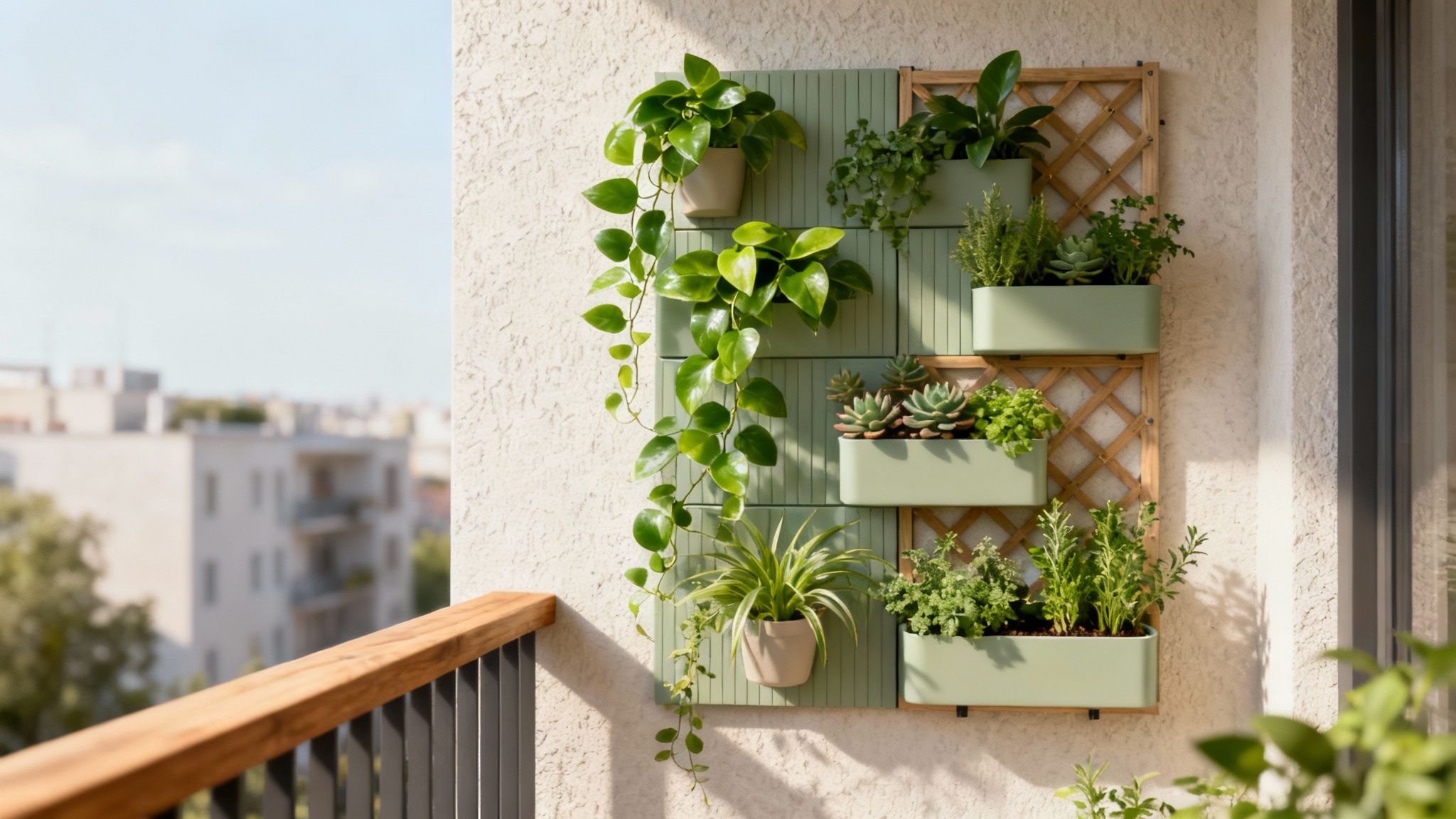
Popularised by botanist Patrick Blanc, this method is now used globally, from the grand hotel facades in Singapore to compact residential balconies in Tokyo. The beauty of a living wall is its versatility; you can grow everything from ornamental ferns and succulents to edible herbs and lettuces.
How to Implement a Vertical Garden
Creating your own living wall requires careful planning, particularly regarding structure and irrigation.
- Choose Your System: Options range from simple DIY pocket planters made from felt to sophisticated modular panel systems like those from Florafelt. Your choice will depend on your budget, space, and the types of plants you wish to grow.
- Structural Support: Before installation, ensure your wall can handle the weight. A fully planted and watered vertical garden can be very heavy. Securely fasten the structure to the wall using appropriate fixings.
- Plant Selection & Soil: Opt for a lightweight, well-draining potting mix specifically designed for vertical gardens. Choose plants that suit your light conditions and group them by watering needs. Hardy, low-maintenance species like sedums, pothos, and certain ferns are excellent for beginners.
- Irrigation: Consistent watering is crucial. While manual watering is possible for small setups, installing a drip irrigation system is highly recommended. This ensures every plant, from top to bottom, receives adequate moisture.
Vertical gardens not only add immense aesthetic value but can also improve air quality and provide insulation. For more inspiration on creating stunning green backdrops, you can explore various garden wall features to elevate your space.
2. Container Gardening
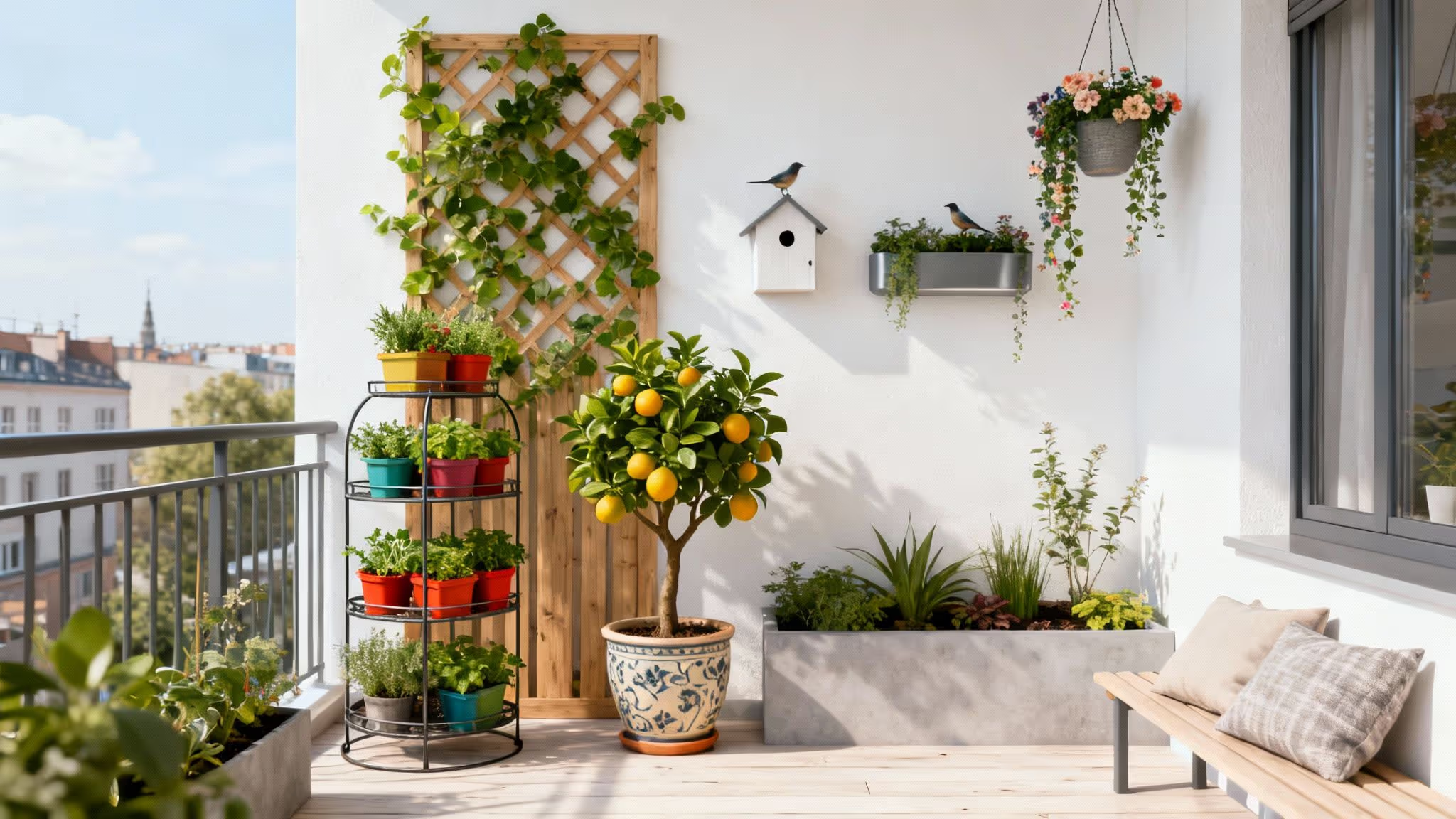
Container gardening is perhaps the most flexible and accessible of all small garden ideas. It involves growing plants exclusively in pots, troughs, and other containers rather than directly in the ground. This method grants you complete control over your growing environment, from soil composition to water drainage, making it ideal for patios, balconies, rooftops, and even indoor spaces where traditional gardening is impossible. It allows you to create a lush, movable garden that can be rearranged to suit the seasons or your aesthetic preferences.
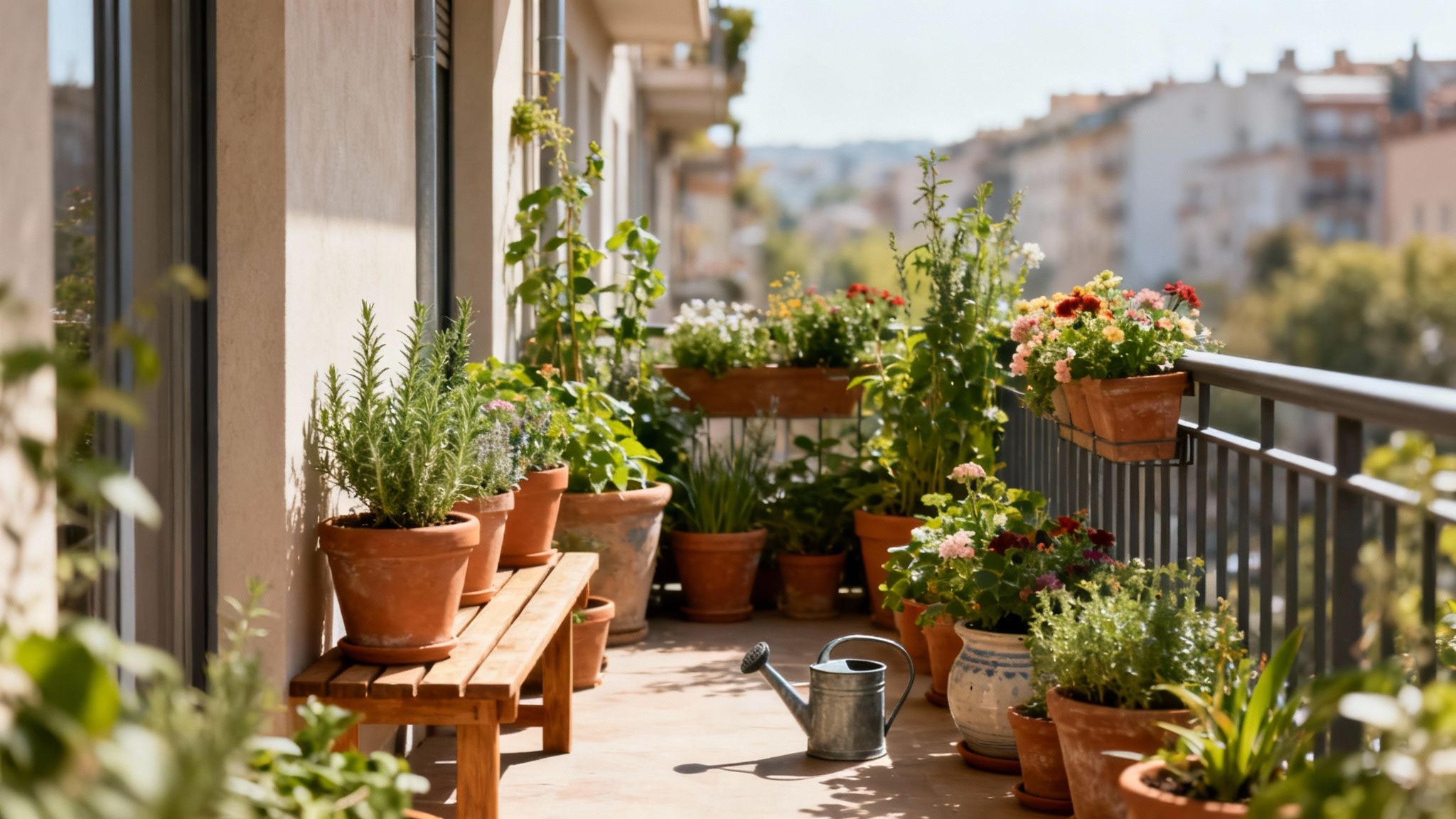
Popularised by TV gardeners like Monty Don and championed by the RHS, container gardening transforms limited areas into productive and beautiful oases. From the intricate container displays at the Chelsea Flower Show to the charming potted arrangements on Parisian balconies, this technique proves that you don't need a large plot of land to cultivate a stunning garden. You can grow a huge variety of plants, including vibrant flowers, aromatic herbs, and even vegetables like tomatoes and salad leaves.
How to Implement Container Gardening
Success with container gardening comes down to getting the basics right, ensuring your plants have everything they need to thrive.
- Choose the Right Container: Select a pot that is appropriately sized for the plant's mature root system. Crucially, ensure it has drainage holes to prevent waterlogging and root rot. Materials range from terracotta and ceramic to lightweight modern composites.
- Use Quality Potting Mix: Never use soil from your garden, which is too dense and can harbour pests. Instead, use a high-quality, peat-free potting compost mixed with perlite for aeration and compost for nutrients.
- Watering Wisely: Containers dry out much faster than garden beds. Check the soil moisture regularly, especially during warm weather. Grouping plants with similar water needs together simplifies this task.
- Feeding and Maintenance: Nutrients in pots are finite. Feed your plants with a suitable liquid fertiliser during the growing season according to the plant's specific requirements. Regularly deadhead flowers to encourage new blooms.
Container gardening is an excellent starting point for new gardeners and a versatile solution for experienced ones. For a comprehensive guide, explore our expert tips on container gardening for beginners.
3. Japanese Zen Gardens
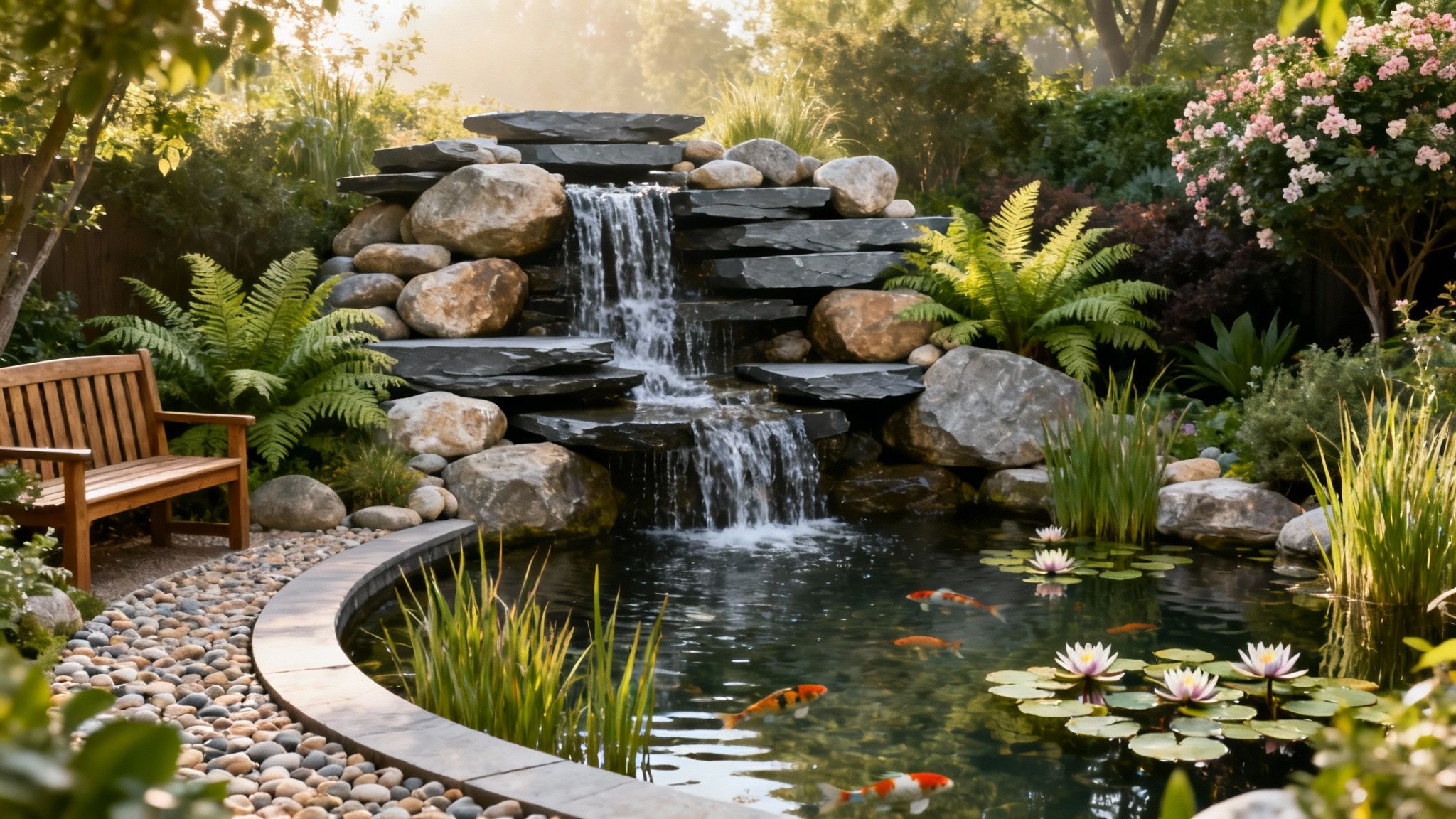
For those who crave tranquillity and a minimalist aesthetic, a Japanese Zen garden is one of the most profound small garden ideas. Known as karesansui (dry landscape gardens), these contemplative spaces use carefully arranged rocks, raked sand or gravel, moss, and a few select plants to create a serene, stylised landscape. This approach focuses on simplicity and harmony, offering a powerful visual and psychological impact without the need for extensive planting or high maintenance. It's an ideal choice for courtyards, small urban backyards, or even a designated corner of a patio where peace and reflection are desired.
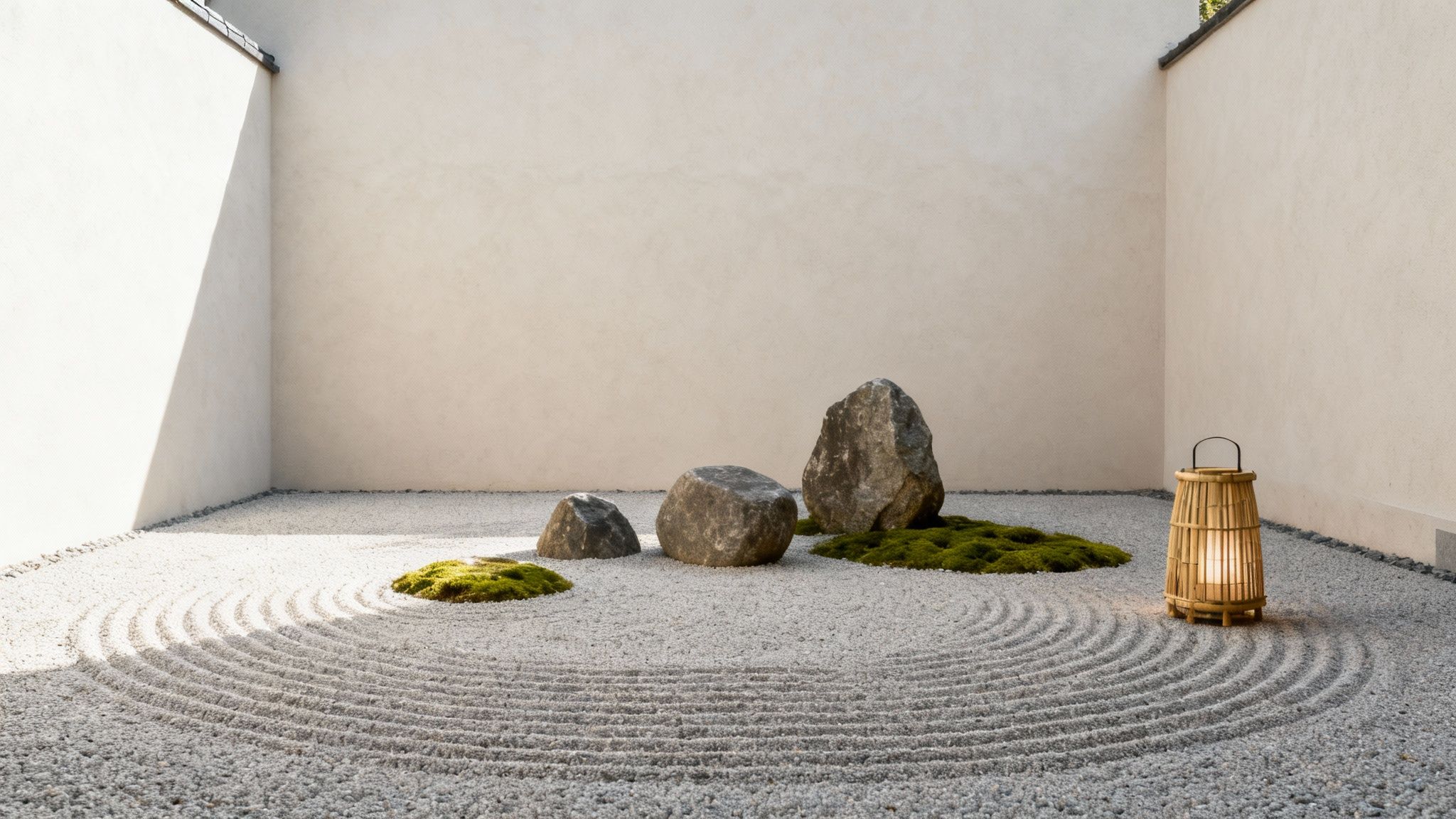
Inspired by the famous gardens of temples like Ryoan-ji in Kyoto, this ancient art form has been adapted worldwide, from London to Sydney. The essence of a Zen garden is not about colourful blooms but about creating a peaceful sanctuary that encourages meditation and an appreciation for nature's subtle beauty.
How to Implement a Japanese Zen Garden
Crafting a Zen garden is an exercise in thoughtful placement and restraint. Every element should have a purpose and contribute to the overall sense of balance.
- Focus on Key Elements: Start your design by focusing on three core components: rock (ishi), water (represented by sand or gravel), and plants. Use rocks to represent islands or mountains and raked gravel to symbolise the ripples of water.
- Rock Arrangement: A crucial principle is to use an odd number of stones, typically in clusters of three, five, or seven. Place rocks thoughtfully, partially burying them to give the impression they have been there for centuries.
- Plant Selection: Choose plants that offer year-round structure and texture rather than fleeting colour. Evergreen species like Japanese maples (Acer palmatum), dwarf pines, bamboo, and mosses are excellent choices. They provide a sense of permanence and soften the hardscape.
- Create a Focal Point: Incorporate a single, strong focal point to anchor the design. A traditional stone lantern (tōrō), a water basin (tsukubai), or a simple bamboo feature can add a sense of authenticity and draw the eye.
A Japanese Zen garden provides a low-maintenance, high-impact solution that turns even the smallest area into a peaceful retreat. You can discover more ways to create your own quiet corner by exploring these secret garden ideas.
4. Raised Beds & Micro Gardens
Raised beds offer a structured and highly productive way to garden, even when dealing with poor native soil or limited space. This approach involves creating elevated garden boxes filled with high-quality soil and compost, allowing you to grow a concentrated mix of vegetables, herbs, and flowers in a neatly organised manner. It's one of the most effective small garden ideas for maximising yield and controlling the growing environment, making it perfect for patios, courtyards, and small urban plots.
Popularised by innovators like Mel Bartholomew, the creator of the 'Square Foot Gardening' method, raised beds have become a staple in community gardens from London to Toronto. The primary benefit is complete control over the soil, which leads to better drainage, fewer weeds, and a warmer soil temperature earlier in the spring. This technique also provides ergonomic advantages, as it reduces the need for bending and kneeling.
How to Implement Raised Beds
Building a productive raised bed garden involves choosing the right materials and optimising your planting strategy from the start.
- Choose Your Materials: Construct your bed using untreated wood like cedar or larch, or opt for durable composite materials or galvanised steel. Avoid treated timber that could leach chemicals into your soil.
- Create the Perfect Soil Mix: A common recipe for success is a blend of one-third high-quality compost, one-third vermiculite or perlite for aeration, and one-third peat moss or coco coir. This mix provides excellent drainage and rich nutrients.
- Maximise Your Space: Adopt the Square Foot Gardening method by dividing your bed into a grid of 1x1 foot squares. Plant a specific number of plants in each square based on their mature size. This intensive planting method suppresses weeds and increases your harvest.
- Plan for Watering: Raised beds tend to dry out faster than in-ground gardens. A soaker hose or drip irrigation system laid out before planting is an efficient way to deliver water directly to the plant roots, conserving moisture.
Raised beds are an excellent solution for overcoming challenging soil conditions and creating a productive, accessible garden. To discover more innovative ways to make the most of limited outdoor areas, you can explore these very small gardens ideas.
5. Herb & Culinary Gardens
There's nothing quite like stepping outside to snip fresh herbs for your evening meal. A dedicated culinary or kitchen garden is one of the most rewarding small garden ideas, designed specifically for growing herbs and edible plants with a focus on practical accessibility and organisation. Typically located near a kitchen door, on a patio, or along a pathway, these gardens provide a constant supply of fresh flavours while requiring surprisingly minimal space and maintenance.
This age-old concept has been championed by culinary pioneers like Alice Waters and modern celebrity chefs such as Jamie Oliver, who celebrate the connection between garden and plate. From the fragrant Mediterranean herb plots in Provence to the compact kitchen gardens of British cottages, the principle is the same: grow what you love to eat, and keep it close at hand.
How to Implement a Herb & Culinary Garden
Creating a functional and beautiful herb garden is straightforward if you focus on convenience and the plants' specific needs.
- Location is Key: The most crucial factor is proximity to your kitchen. Planting herbs in pots by the back door or in a raised bed just off the patio makes them easy to access while you're cooking. Ensure the spot receives at least six hours of sunlight per day.
- Grouping & Plant Selection: Group herbs according to their watering needs to simplify care. Place drought-tolerant Mediterranean herbs like rosemary, thyme, and oregano together. Moisture-loving varieties like basil, mint, and parsley can share another container or area. Start with versatile, foundational herbs you use often.
- Containers & Soil: Use a well-draining potting mix, ideally one formulated for herbs or vegetables. Terracotta pots are excellent for Mediterranean herbs as they allow the soil to dry out between waterings. Raised beds or window boxes are also fantastic options.
- Harvesting & Maintenance: Regular harvesting is essential. Pinching off leaves and stems encourages the plants to become bushier and more productive. Pinch off any flowers that appear on herbs like basil to direct the plant's energy into leaf growth, which maintains a stronger flavour.
A small culinary garden not only enhances your cooking but also adds wonderful fragrance and texture to your outdoor space. It’s a simple, sustainable way to bring fresh, homegrown ingredients right to your fingertips.
6. Succulent & Drought-Tolerant Gardens
For those seeking beauty without the burden of constant maintenance, a succulent and drought-tolerant garden is one of the most rewarding small garden ideas. These gardens feature plants like cacti, echeverias, and sedums, which have evolved to store water in their leaves and stems, requiring minimal watering and care. They are perfect for small spaces, thriving in containers on sunny patios, windowsills, or balconies, and offer fascinating shapes, textures, and colours year-round with very little intervention.
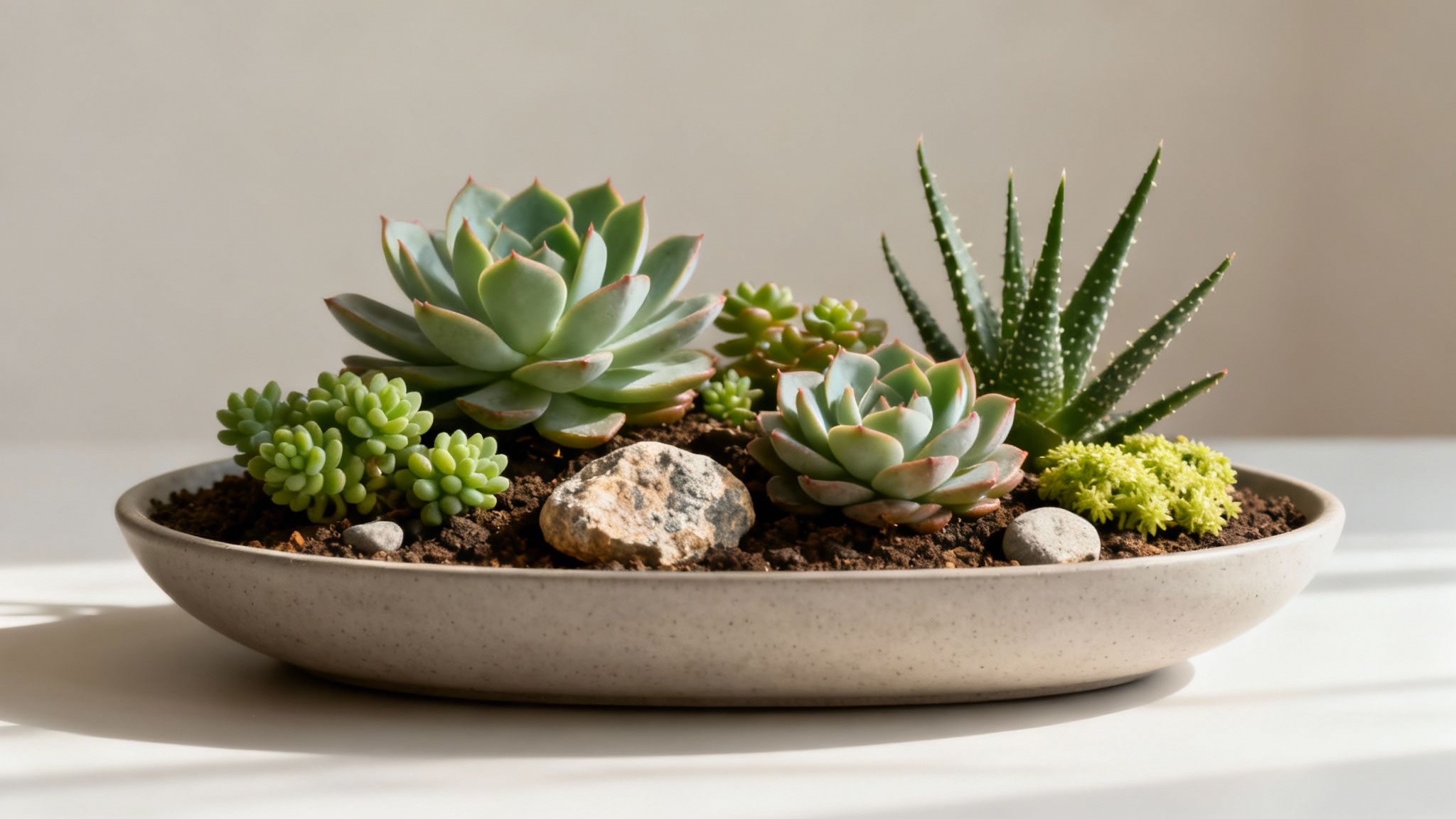
This trend, popularised by desert garden designs in places like Arizona and amplified by Instagram plant influencers, brings a chic, architectural aesthetic to any space. The appeal lies in their resilience and sculptural forms, allowing you to create miniature landscapes that are both low-effort and visually striking.
How to Implement a Succulent & Drought-Tolerant Garden
Creating a thriving succulent display is about mimicking their natural, arid environment. The key is excellent drainage and infrequent, deep watering.
- Choose the Right Soil & Pot: Use a specialised, gritty cactus or succulent soil mix to prevent root rot. Always plant in containers with drainage holes. Terracotta pots are a great choice as they allow soil to dry out faster.
- Watering Wisely: The most common mistake is overwatering. Water deeply but infrequently, allowing the soil to dry out completely between sessions. In the growing season (spring and summer), this might be every 2-3 weeks, reducing significantly in winter.
- Provide Ample Light: Most succulents and cacti crave bright light, with many needing at least six hours of direct sun per day to maintain their vibrant colours and compact shape. A south-facing window or balcony is ideal.
- Design for Impact: Group plants with similar light and water needs. Play with contrasting heights, colours, and textures to create visual interest. Tall, spiky aloes can be paired with low-growing, rosette-shaped echeverias for a dynamic arrangement.
Succulents are not only forgiving but also easy to propagate, meaning you can expand your collection for free. For more ideas on hardy, low-water plants, you can find a curated selection of drought tolerant plants for the UK that will thrive in various conditions.
7. Pollinator & Wildlife Gardens
Even the smallest garden can play a vital role in supporting local ecosystems. A pollinator and wildlife garden is intentionally designed to attract and sustain beneficial creatures like bees, butterflies, birds, and insects. By prioritising native plants and providing essential resources like food, water, and shelter, you can transform a tiny patch into a bustling sanctuary. This is one of the most rewarding small garden ideas, as it brings life and movement to your space while helping to reverse biodiversity loss.
Popularised by conservation charities like The Wildlife Trusts and campaigns by the RHS, these gardens are critical for supporting species whose habitats are under threat. The beauty of this approach is its scalability; a single pot of lavender on a balcony or a small border filled with native wildflowers can make a significant difference.
How to Create a Pollinator & Wildlife Garden
Creating a haven for wildlife is less about perfect tidiness and more about providing the right resources.
- Choose the Right Plants: Research native plants suited to your specific region and soil conditions. Species like foxgloves, verbena, and buddleia are brilliant for attracting butterflies. Avoid heavily hybridised, double-flowered varieties, as their nectar is often inaccessible to pollinators.
- Plant in Drifts: Instead of dotting single plants around, group them in clusters of the same species. This creates a larger, more visible target for foraging bees and butterflies, making their work more efficient.
- Provide Water: A simple shallow dish filled with pebbles and water can serve as a safe drinking spot for bees and a bath for birds. Ensure the pebbles break the surface so insects have a place to land without drowning.
- Offer Shelter & Ditch Pesticides: A small log pile, a patch of long grass, or a purpose-built bee hotel offers crucial nesting and hibernation spots. Most importantly, never use pesticides or insecticides, as these chemicals are indiscriminate and harm the very creatures you are trying to attract.
Creating a wildlife-friendly space not only benefits nature but also provides endless opportunities for observation and connection. For guidance on selecting the best plants for pollinators, the RHS Plants for Pollinators list is an invaluable resource.
8. Shade Gardens & Woodland Designs
Many small gardens suffer from a lack of direct sunlight, overshadowed by neighbouring buildings, fences, or mature trees. Rather than seeing this as a limitation, a shade garden embraces these conditions, transforming a dim corner into a tranquil, lush, woodland-inspired retreat. This approach focuses on plants that thrive in low-light environments, creating a layered tapestry of textures and subtle colours that offer year-round interest. It's an ideal solution for north-facing plots, urban courtyards, and areas beneath tree canopies where other plants struggle.
Pioneered by horticulturists like Beth Chatto, this style celebrates the quiet beauty of shade-loving species. The goal is to create a peaceful, naturalistic space reminiscent of a forest floor, filled with interesting foliage shapes and forms. From the elegant fronds of ferns to the bold leaves of hostas, a shade garden proves that vibrant life can flourish without brilliant sunshine.
How to Implement a Shade Garden
Creating a successful shade garden is all about soil preparation and selecting the right plants for your specific light levels.
- Improve Your Soil: Shady areas, especially under trees, often have poor, dry soil. Before planting, amend the soil generously with organic matter such as well-rotted manure or garden compost. This will improve its structure, fertility, and ability to retain moisture.
- Plant Selection: Choose plants specifically adapted to dappled, partial, or full shade. Use plants with variegated or light-coloured foliage, like Brunnera macrophylla 'Jack Frost' or certain hosta varieties, to brighten up dark corners. Group plants with similar moisture needs together.
- Create Layers: Mimic a natural woodland by layering your planting. Use small trees or shrubs like Japanese maples (Acer palmatum) for height, underplant with perennials like ferns, hostas, and hellebores, and add ground cover such as Vinca minor or spring-flowering bulbs for seasonal interest.
- Moisture and Airflow: Shaded areas can be prone to dampness. Mulch with bark chippings or leaf mould to help retain soil moisture and suppress weeds. Ensure good air circulation around plants to discourage fungal diseases like powdery mildew.
Shade gardens offer a unique opportunity among small garden ideas to create a cool, serene, and low-maintenance haven. For further guidance on selecting the perfect plants, the RHS Find a Plant tool is an invaluable resource for gardeners across the UK.
8-Way Comparison of Small Garden Ideas
Start Cultivating Your Perfect Small Garden Today
A small garden is not a restriction; it's an invitation to be creative, resourceful, and intentional with your outdoor space. Throughout this guide, we've journeyed through a diverse landscape of possibilities, demonstrating that even the most compact areas can be transformed into lush, productive, and beautiful sanctuaries. The potential packed into a tiny plot, a narrow balcony, or a forgotten courtyard is immense.
We’ve seen how vertical gardens and living walls can draw the eye upward, turning bland surfaces into vibrant green tapestries. We explored the boundless versatility of container gardening, a perfect solution for renters and those who love to rearrange their green space with the seasons. From the profound tranquillity of a Japanese Zen garden to the practical efficiency of raised beds and micro-gardens, the core lesson is clear: successful small-space gardening is about smart design, not sheer size.
Your Path to a Greener Space
The journey from inspiration to implementation is shorter than you think. The most crucial step is simply to begin. Reflect on the small garden ideas we’ve shared and identify which one resonates most with your personal style, the time you can commit, and the unique characteristics of your space.
- Assess Your Canvas: Is your area sun-drenched or shaded? Is it a windy balcony or a sheltered patio? Understanding your microclimate is the foundation for choosing the right plants.
- Define Your Purpose: Do you dream of a culinary corner with fresh herbs, a colourful haven for pollinators, or a low-maintenance succulent display? A clear goal will guide every decision.
- Start Small, Think Big: You don’t need to do everything at once. Begin with a single container, a small raised bed, or one section of a vertical planter. Success in one small project will build the confidence to expand your vision.
Embracing the Small Garden Mindset
Mastering these concepts is about more than just growing plants; it's about enhancing your daily life. A well-designed small garden becomes an extension of your home, a private retreat for morning coffee, a source of fresh ingredients for your meals, and a vital connection to the natural world. It proves that you don't need a sprawling estate to experience the joy and satisfaction that gardening brings.
The beauty of these small garden ideas lies in their accessibility. Whether you’re a seasoned horticulturist or a complete novice, these projects offer a tangible way to infuse more green into your life. The act of nurturing a plant, watching it grow, and creating a living ecosystem, however small, is profoundly rewarding. So, choose your favourite concept, gather your materials, and take that first step. Your perfect small garden is waiting to be cultivated.