
Let's get one thing straight: the best time to plant bulbs in the UK all comes down to when you want to see them pop up. It’s that simple. If you’re dreaming of a classic spring show filled with daffodils and tulips, you need to get them in the ground during the autumn. But for those big, blowsy summer blooms like dahlias and lilies, you’ll be planting in the spring.
Your Essential UK Bulb Planting Calendar
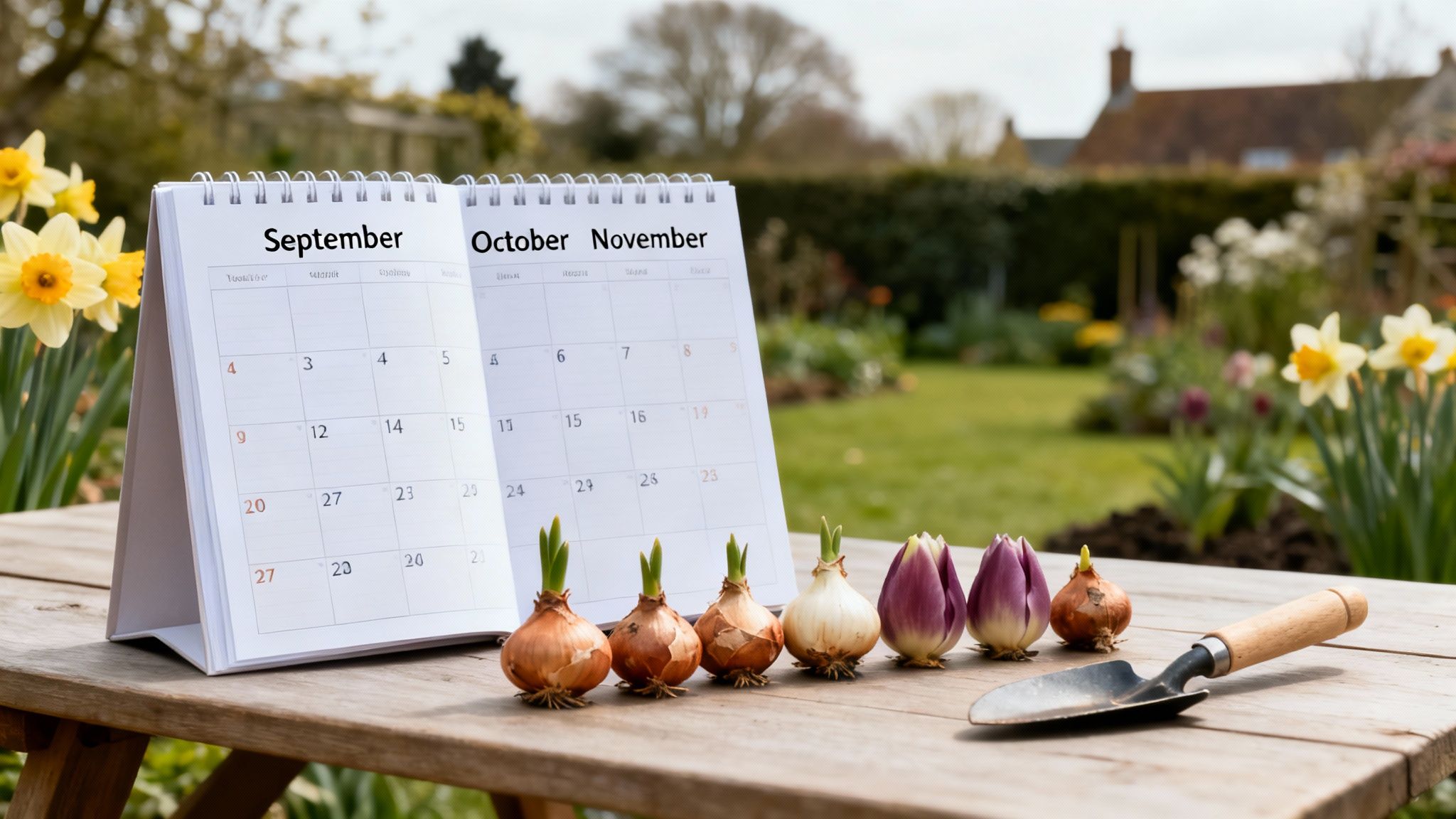
Getting your head around the two main planting seasons is the first step to a garden that’s bursting with colour, year after year. Think of bulbs as tiny, self-contained packages of potential, each with its own internal clock set for a specific season. Planting them at the right time is just working with their natural cycle, not against it.
For anyone craving that first hit of spring colour, your golden window is from late September to mid-November. This isn’t just a random suggestion; the cooler autumn soil is exactly what bulbs need to put down strong roots before winter truly bites. It's a method that has clearly worked, with UK outdoor flower and bulb production jumping by a huge 46% between 2004 and 2015.
On the flip side, summer-flowering bulbs are planted in spring, usually after the last frost has well and truly passed. These sun-worshippers need the warmth of the soil to wake them up and kickstart their growth.
The Two Golden Rules of Bulb Planting
To keep it simple, just remember these two rules:
- Plant in Autumn for Spring Flowers: This is your crew of classics – Tulips, Daffodils, Crocuses, and Alliums. They need that long winter chill to trigger the flowering process.
- Plant in Spring for Summer Flowers: This group is all about the showstoppers like Dahlias, Lilies, Gladioli, and Begonias. They’re a bit more tender and hate the frost, so wait until the weather warms up.
Getting your planting schedule lined up with these two seasons is the secret to a successful and continuous flower show. It’s less of a guideline and more of a fundamental truth for a thriving bulb garden.
Think of this guide as your roadmap, making sure you know exactly what to do and when. And if you want to get the bigger picture on all your garden jobs, our complete UK planting calendar will help keep you on track all year.
Why Autumn and Spring Are the Golden Seasons for Planting
Ever wondered why some bulbs need a winter chill while others wait for the warmth of spring? The secret isn’t tucked away in some complicated gardening manual; it’s written right into their DNA. Once you understand this simple rhythm, you’ve cracked the code to spectacular, year-on-year displays.
It all comes down to working with nature’s programming, not against it. Think of a bulb as a tiny, perfectly pre-packaged flower, holding all the energy it needs for one glorious season. Your job is simply to give it the right wake-up call at the right time.
Autumn Planting for a Cold Start
Planting in autumn is like tucking your spring-flowering bulbs into bed for the winter. Varieties like tulips, daffodils, and crocuses originally come from places with properly cold winters and hot, dry summers. They don't just tolerate a cold spell—they absolutely depend on it to flower.
This crucial chilling phase is a biological alarm clock known as vernalisation. The cold tells the bulb it’s time to grow a strong root system and get its flower shoot ready. When the soil finally warms up in spring, it’s the signal that winter’s over, triggering that burst of life we all crave after the grey months.
Skip this cold treatment, and you’ll be disappointed. Many spring bulbs simply won’t perform, producing leaves but no flowers (a frustrating problem called 'blindness') or emerging weak and stunted. You’re essentially mimicking the natural cycle they’ve evolved to expect.
Planting in autumn gives spring bulbs the essential cold therapy they need to complete their lifecycle. It’s not just a good idea; it’s a non-negotiable for a vibrant spring garden.
Spring Planting for the Sun-Seekers
On the flip side, summer-flowering bulbs like dahlias, gladioli, and begonias are total sun-worshippers. Hailing from warmer, more temperate climates, they have zero tolerance for cold, soggy soil and will simply rot if you plant them in autumn.
Getting these tender bulbs into the ground in spring, well after the last frost, gives them the warm welcome they need. The rising soil temperature is the trigger that encourages them to sprout and grow like mad all summer long, leading to a spectacular, often long-lasting, show of colour. It’s also why learning how to start protecting plants in winter is such a valuable skill for any gardener.
Nailing this fundamental difference—cold for spring bloomers, warmth for summer stars—is what turns you from a novice into a gardener who works in harmony with nature. And the reward is a garden that’s absolutely brimming with life.
Your Month-by-Month UK Bulb Planting Timeline
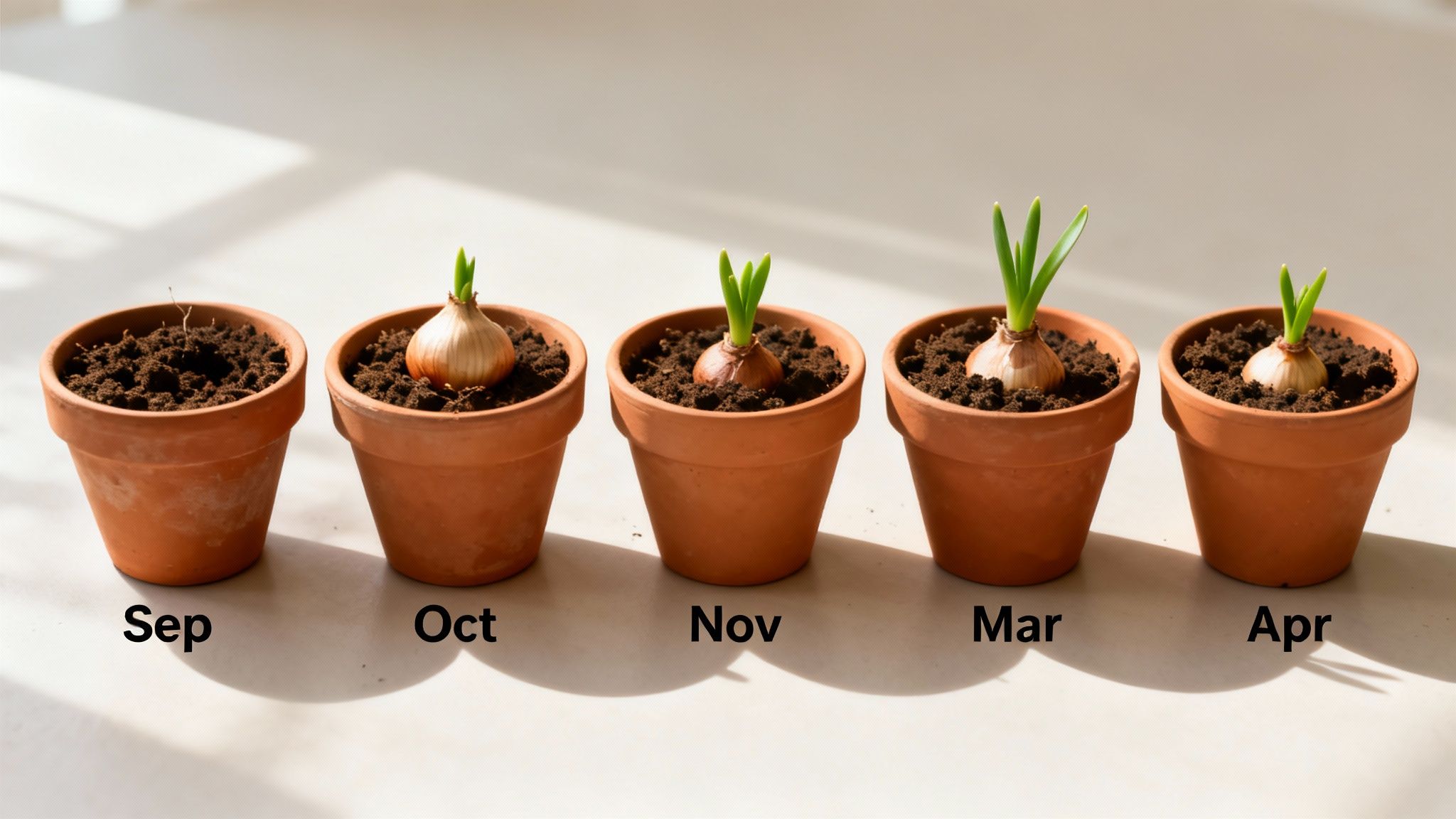
If you want a garden that’s a constant parade of colour, a little forward planning is everything. The real secret is knowing which bulbs to get into the ground each month to perfectly stagger your blooms, from the first snowdrops of late winter to the last dahlias of autumn.
Think of it this way: autumn planting is all about prepping for the spring show, while spring planting sets the stage for a spectacular summer. Let’s break down exactly what you should be doing, and when.
Autumn Planting: The Spring Showstoppers
September to October
This is prime time for getting most of your spring-flowering bulbs into the ground. The soil is still warm enough to get the roots growing, but cool enough to stop any confusing, premature shoots from appearing.
Here’s what to focus on now:
- Daffodils and Narcissi: Pop these in early autumn. It gives them the longest possible time to settle in and establish strong root systems before winter.
- Crocuses: Perfect for dotting through lawns and borders for that first welcome burst of colour. Planting them in September gets them ready for their very early spring debut.
- Hyacinths and Muscari: These fragrant favourites also love an early autumn planting to lock in their flowering potential for next year.
November
While you can still plant most other spring bulbs, November has a special job—it's tulip time. Holding off until late October or November is a clever move to help you dodge a nasty fungal disease called tulip fire, which just loves warm, damp autumn soil.
By planting tulips later, once the soil temperature has properly dropped, you dramatically reduce the risk of this disease taking hold. It's a simple timing trick, but honestly one of the most effective ways to guarantee a healthy, vibrant tulip display.
This autumn window is the cornerstone of a brilliant spring garden, and it's something UK growers have perfected. Our temperate climate is just ideal for it, a fact that's reflected in the industry's growth—the value of UK flowers and bulbs shot up from £123 million in 2018 to £165 million in 2022, according to DEFRA.
Spring Planting: The Summer Stars
March to April
Once the danger of a hard frost has retreated and the soil is starting to warm up, it’s time to switch your thinking to summer flowers. These are the tender bulbs that just wouldn't survive a cold, wet winter in the ground.
- Lilies: Plant these in early spring for those incredibly dramatic and fragrant summer flowers. They’ll be worth the wait.
- Gladioli: For a continuous supply of their towering flower spikes, stagger your planting. Pop a few in every couple of weeks from March to May.
May
May is the moment for the most tender bulbs, the ones that need genuinely warm soil to get going. This is when you plant the real show-offs of the summer garden.
- Dahlias: Whether you’ve started them off in pots indoors or you’re planting tubers straight out, get them in the ground now. You’ll be rewarded with a stunning display from mid-summer right up until the first frosts.
- Begonias: Fantastic for containers and hanging baskets, these thrive when planted out in late spring.
Getting into the habit of noting down your planting dates is a game-changer. For more tips on staying organised, check out our guide to creating a year-round gardening calendar to keep your garden on track.
How to Plant Your Bulbs for Guaranteed Success
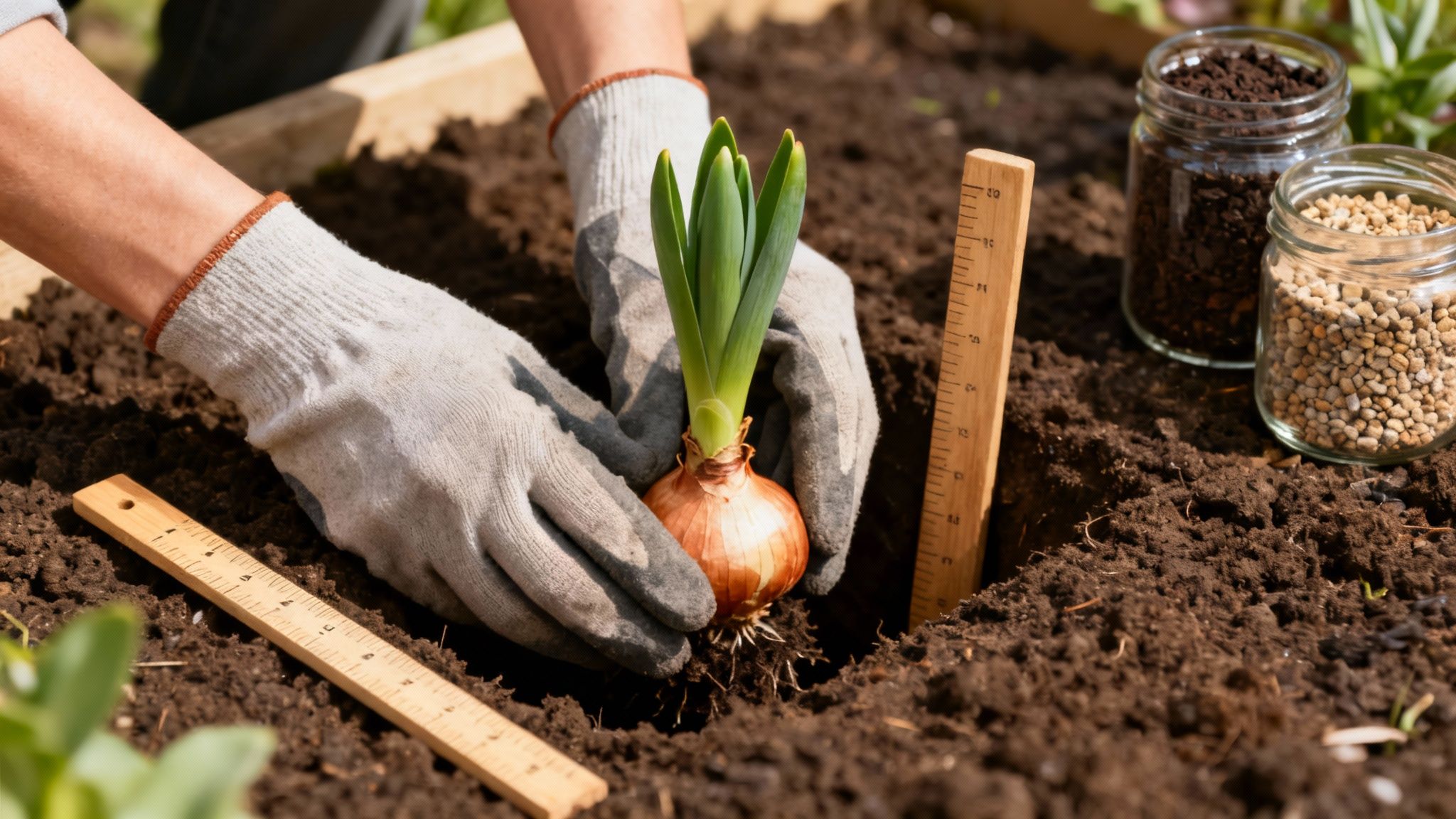
Knowing when to plant your bulbs is half the battle, but knowing how is where the real garden magic happens. Get this bit right, and you’re basically guaranteeing a spectacular show come spring or summer.
First things first, choose the best bulbs you can get your hands on. A healthy bulb should feel firm and weighty for its size, a bit like a good onion from the greengrocer. Steer clear of anything soft, sprouting mould, or feeling suspiciously light – those are all red flags for rot or dehydration.
Getting the Soil Just Right
If there's one thing most bulbs can't stand, it's sitting in cold, boggy ground. It’s the quickest way to turn your precious bulbs to mush. So, the number one rule of bulb planting is good drainage.
Before digging, get a feel for your soil. If you're dealing with heavy clay that holds onto water, you’ll need to improve it. Dig in plenty of organic matter like well-rotted compost, leaf mould, or even some horticultural grit. This opens up the soil’s structure, allowing excess winter rain to drain away freely. We’ve got more tips on this in our guide on how to prepare soil for planting.
The Golden Rules of Depth and Spacing
With your soil sorted, it’s time to get planting. Getting the depth and spacing right is crucial, and it changes slightly depending on the bulb and the look you're going for.
A simple, foolproof rule of thumb is to plant your bulb at a depth that’s two to three times its own height. So, a 5cm daffodil bulb needs a hole about 10-15cm deep. This keeps it snug and protected from frost and pesky squirrels.
Spacing, on the other hand, is all about the desired effect:
- For a natural, scattered look: If you’re planting crocuses or snowdrops in a lawn, the best trick is to gently toss them and plant them exactly where they land. This creates those beautiful, random drifts you see in woodland gardens.
- For bold blocks of colour: For a powerful statement with tulips or alliums in a border, plant them about two bulb-widths apart. This gives them just enough space to thrive without the display looking gappy.
To give you a head start, here’s a quick-reference table for some of the most popular bulbs.
Just remember this is a guide – a little deeper is usually better than too shallow, especially with squirrels around!
Borders Versus Containers
The basic planting principles are the same whether you’re working with a garden border or a pot, but containers need a little extra attention.
In garden beds, your main focus is improving the existing soil. In pots, you’re creating the perfect environment from scratch. Always use a pot with plenty of drainage holes and add a layer of broken crocks or gravel at the bottom to stop them getting clogged. A good quality, peat-free potting compost mixed with a handful of grit is perfect.
The other big difference is exposure. Bulbs in the ground are nicely insulated by the surrounding soil, but pots are exposed to the cold from all sides. During a really harsh frost, it's a good idea to wrap your pots in bubble wrap or horticultural fleece, or simply tuck them into a more sheltered spot against the house.
Troubleshooting Common UK Bulb Problems
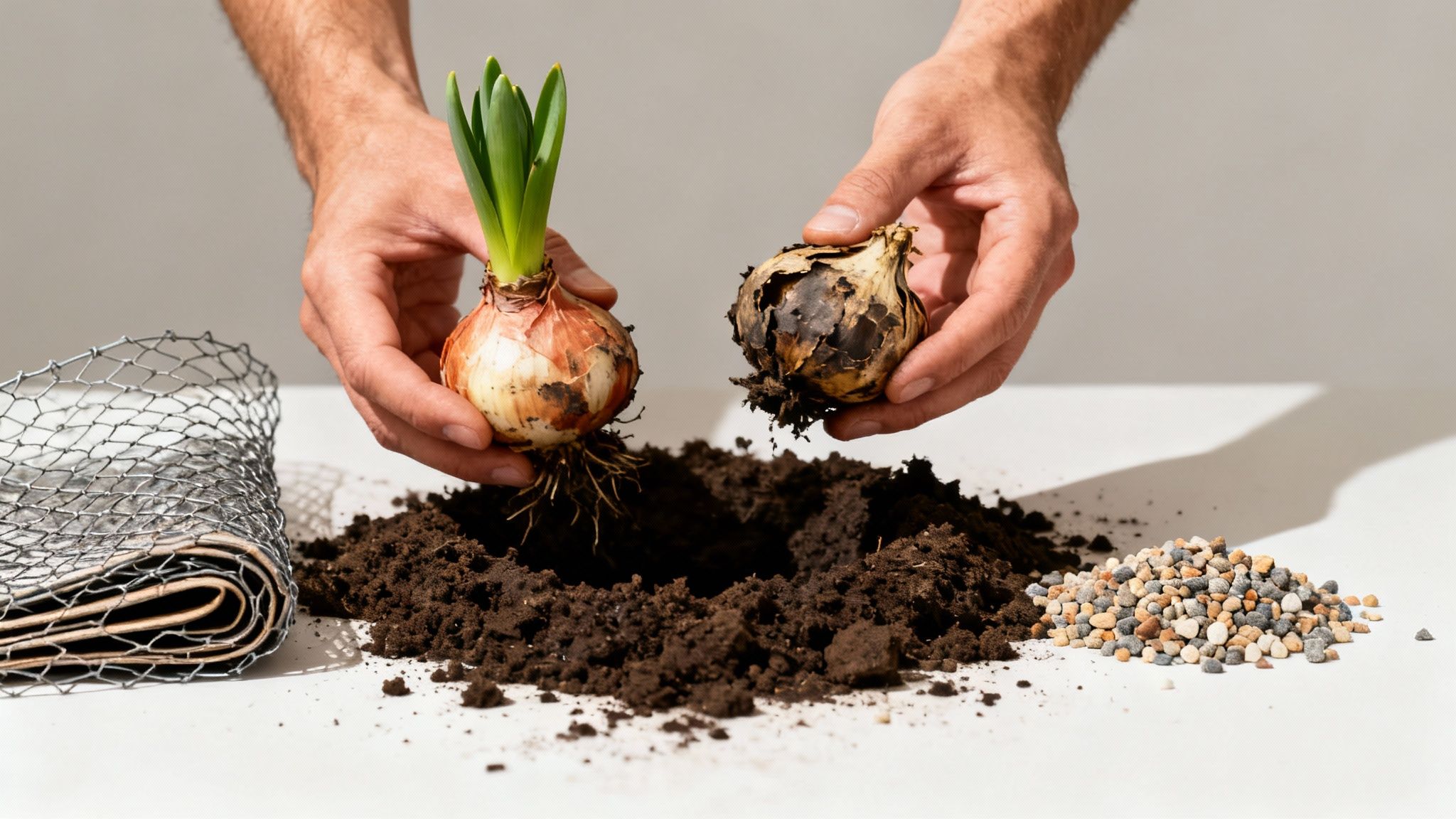
Getting your bulbs in the ground at the right time is half the battle won, but a little know-how for tackling common problems is what really sets you up for success. Even the best-laid plans can go awry, but thankfully, most issues are surprisingly easy to sort out.
Let’s be honest, one of the biggest frustrations is wildlife. Squirrels, in particular, seem to think a freshly planted bed of tulips is a personal invitation to an all-you-can-eat buffet. It’s maddening to see your hard work dug up just days later.
A brilliantly simple fix is to lay a piece of chicken wire or plastic mesh over the soil right after planting. Just peg it down, chuck a thin layer of mulch over the top to hide it, and you're done. The shoots will find their way through the gaps, but those pesky squirrels won't be able to get a paw in.
Solving Rot and Blindness
The other arch-nemesis of a happy bulb is rot. Planted in heavy, boggy soil, your bulbs can quickly turn to mush – a real risk during a typically wet British winter. As we’ve mentioned, good drainage is your best friend here. Always, always work some grit and organic matter through heavy clay soil before you even think about planting.
Ever had a big, healthy-looking clump of daffodil leaves show up, but not a single flower? It’s a classic case of bulb blindness, and it’s incredibly disappointing. There are usually a few culprits:
- Planting too shallowly: If bulbs are too close to the surface, they’re at the mercy of temperature swings, which can mess with flower development.
- Running out of steam: Over time, the soil’s nutrients get used up. Your bulbs need a good meal to have the energy to produce next year’s flowers.
- Cutting the leaves too soon: This is the big one. Those leaves need to die back on their own schedule so they can soak up sunlight and feed the bulb for next season.
Whatever you do, resist the urge to tidy up by cutting or tying the foliage after the flowers fade. Letting those leaves wither and yellow naturally is the single most important thing you can do for repeat flowering. Think of it as the bulb recharging its batteries for next year.
Essential Aftercare and Feeding
Once the flowers are over, always deadhead them by snipping off the spent bloom. This simple trick stops the plant from putting all its energy into making seeds and sends it back down into the bulb where it’s needed most.
A little feed also goes a long way in preventing blindness and encouraging a fantastic show. A liquid feed just as the shoots are coming up in early spring can make all the difference. If you fancy giving your garden a sustainable boost, looking into homemade plant food is a brilliant way to nourish your returning bulbs. Nailing these simple steps will give you the confidence for a stunning display, year after year.
A Few Lingering Questions Answered
Even with a solid plan, a few questions always pop up when you're kneeling in the garden with a trowel in one hand and a bag of bulbs in the other. Here are some quick-fire answers to the queries we hear most often.
What Happens If I Plant My Bulbs Too Late in the UK?
We’ve all been there – you find a forgotten bag of tulips in the shed come December. Don't despair! Planting spring-flowering bulbs late isn't a total write-off, but you might notice the difference in spring. They often give a less impressive show, with smaller, weaker flowers or sometimes just leaves. They simply haven’t had that long, cold period they need to establish strong roots and get ready to bloom.
For summer-flowering bulbs, planting late just means a later display, which can push their flowering time out of sync with the rest of your garden. The real enemy of late planting, though, is the ground itself. You might find it’s either frozen solid or a waterlogged mess, making digging a nightmare and increasing the risk of your bulbs rotting before they even have a chance to grow.
Can I Plant Different Types of Bulbs in the Same Pot?
Absolutely, and you definitely should! It’s a brilliant technique called a 'bulb lasagne', and it's the secret to getting waves of colour from a single pot. Think of it as layering a cake, but with bulbs, arranged by flowering time and planting depth.
It’s the perfect way to get a non-stop flower show on a patio or balcony. Here’s how it works:
- Bottom Layer (Deepest): Start with the last ones to flower, like tulips.
- Middle Layer: Add your mid-spring bloomers next, such as daffodils or hyacinths.
- Top Layer (Shallowest): Finish with the earliest arrivals, like crocuses or irises.
The only rules are to make sure your pot has plenty of drainage holes and to use a good, gritty compost so no one gets soggy feet.
A bulb lasagne is the ultimate space-saver. It packs months of continuous colour into one container, ensuring there's always something new popping up just as the last flowers are starting to fade.
How Do I Know Which Way Up to Plant a Bulb?
This is a classic gardener’s worry, but thankfully, most bulbs give you a pretty big clue. Just look for a pointed tip where the stem will sprout from, and a flatter, often rougher-looking base where the roots will appear. Simple as that: pointed end faces upwards.
Some tubers, like begonias, are a bit trickier because they look more like a lumpy disc. If you look closely, you can usually spot a slight dip or hollow on one side – that’s the top. But if you genuinely can’t tell which way is up, don’t panic. Just plant the bulb on its side. The shoot is cleverly programmed to grow towards the light, and it'll figure things out on its own.
Do I Need to Feed My Bulbs After Planting?
Not necessarily for the first year. Bulbs are amazing little packages of energy, containing everything they need to produce a flower in their first season.
However, if you want them to come back stronger every year (a process known as ‘perennialising’), then a little feed goes a long way. When you first plant them, mixing a slow-release bulb fertiliser or some bone meal into the soil beneath the bulb is a great idea. In the following years, giving them a top-dressing of a general-purpose, high-potassium feed just as the new shoots poke through in early spring will help them refuel for an even better show the next year.