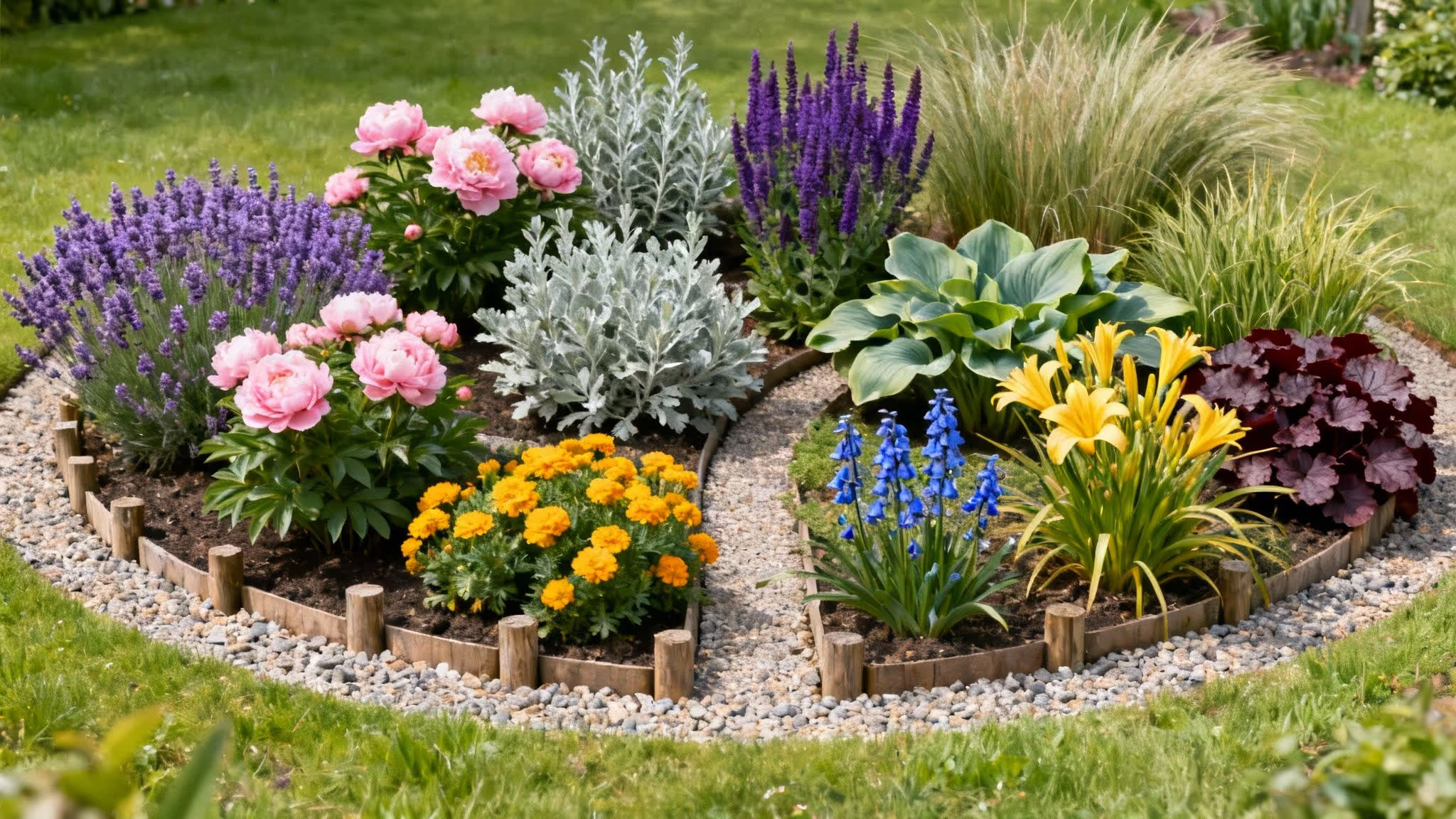
Garden borders are more than just tidy edges; they are the living frames that define your outdoor space, setting the tone for the entire garden. A well-designed border can transform a simple lawn into a dynamic, multi-sensory experience, offering waves of colour, texture, and fragrance throughout the seasons. Yet, knowing where to start can feel overwhelming. The right border plants ideas can turn a neglected strip of land into a vibrant tapestry that reflects your personal style, whether you dream of a romantic, overflowing cottage garden or a sleek, contemporary retreat.
This comprehensive guide moves beyond generic advice to present ten distinct and achievable border planting concepts. Each one is a complete blueprint, packed with curated plant lists suited for UK gardens, practical design strategies, and essential maintenance tips. We've organised everything to help you plant with confidence and creativity, ensuring your vision comes to life.
You will find actionable schemes for every type of garden and gardener. We cover everything from sun-drenched Mediterranean borders that thrive in dry conditions and pollinator-friendly havens buzzing with life, to lush, foliage-focused designs perfect for shady corners. Prepare to be inspired by concepts like seasonal colour progression, fragrant herb plantings, and bold, hot-colour palettes that make a powerful statement. These border plants ideas will provide the specific tools you need to create a truly stunning and sustainable garden edge.
1. Herbaceous Perennial Borders
The herbaceous perennial border is a classic and beloved garden feature, popularised by influential designers like Gertrude Jekyll and Christopher Lloyd. This approach involves planting non-woody perennials that die back in winter and burst into life again each spring. The result is a dynamic, multi-layered display that evolves throughout the seasons, offering an incredible return on your initial planting investment.
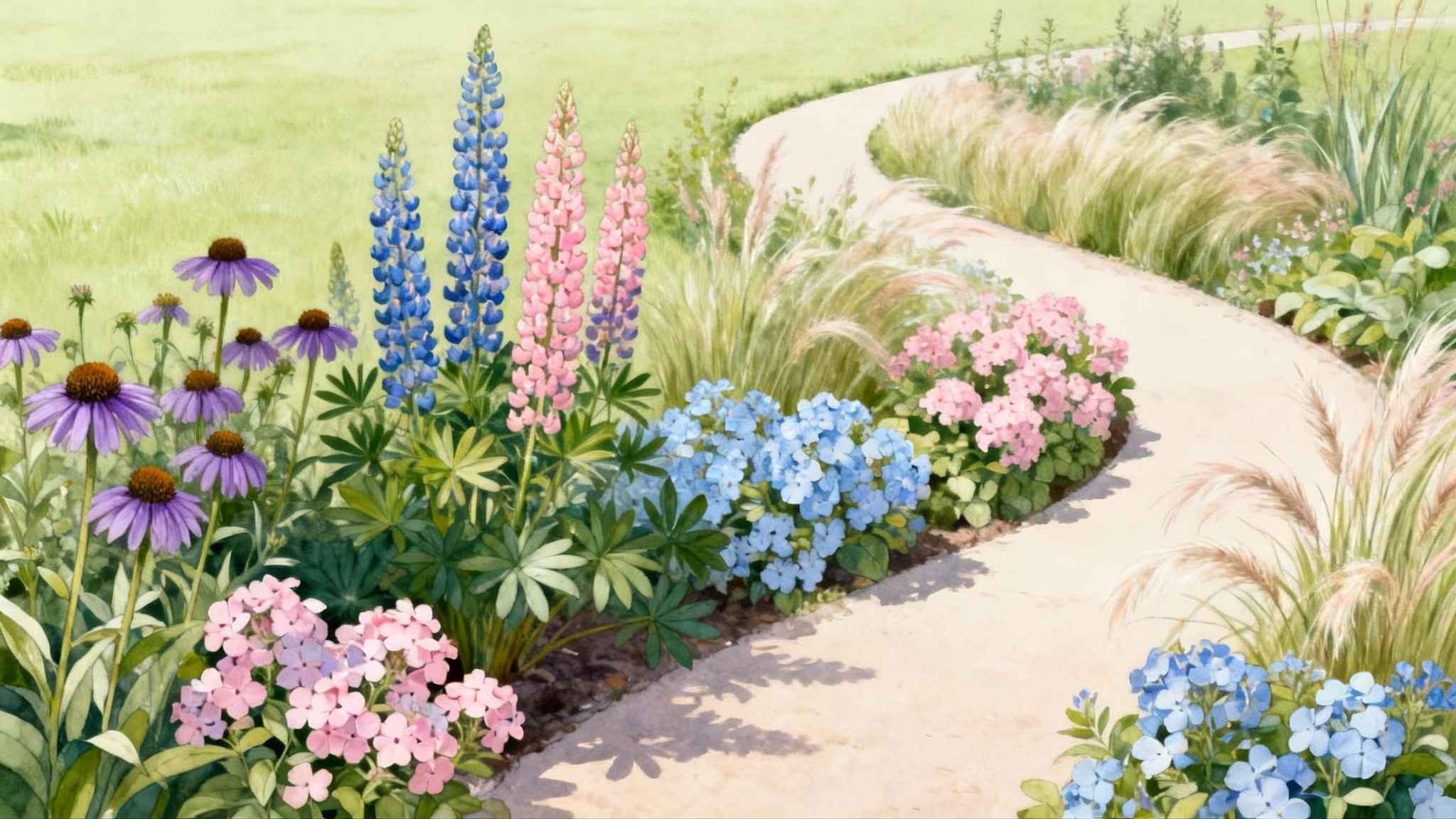
This style is perfect for gardeners seeking long-term beauty with reduced annual labour. Unlike bedding plants that need replacing every year, perennials establish deep roots and return with more vigour each season. This makes them a sustainable and cost-effective choice for creating a lush, cottage-garden aesthetic or a more formal, structured look. The famous long borders at Sissinghurst Castle Garden are a testament to the breathtaking scale and beauty this method can achieve.
How to Create Your Own
To design successful herbaceous perennial borders, focus on succession planting to ensure there is always something in bloom. Combine plants with different heights, textures, and forms to create a visually engaging tapestry.
- Plan Ahead: Sketch your design on paper before buying anything. Mark out where taller plants like delphiniums or foxgloves will go at the back, mid-height plants like salvias and phlox in the middle, and low-growing ground cover such as geraniums or campanula at the front.
- Group for Impact: Plant in drifts or groups of three, five, or seven. This creates a more natural and impactful display than dotting single plants around.
- Winter Structure: Don't forget winter interest. Incorporate ornamental grasses like Calamagrostis 'Karl Foerster' or perennials with strong seedheads such as echinacea and sedum to provide structure and texture after the flowers have faded.
By choosing the right combination of plants, you can create a stunning and low-maintenance border that provides year-round delight. This approach is one of the most rewarding border plants ideas for achieving a garden that feels both timeless and alive.
2. Low-Growing Edging and Hedging Borders
Low-growing edging and hedging create a sense of order and sophistication, acting as a living frame for your flowerbeds or pathways. This technique uses compact, often clipped, plants to form crisp, structural lines that define garden spaces. Popularised in traditional English parterre gardens and championed by modern designers like Sarah Raven, this approach adds a polished, intentional look to any garden style.
This method is ideal for gardeners who appreciate clean lines and a well-maintained aesthetic. From classical potagers with box-edged vegetable beds to contemporary gardens using steel-grey santolina, edging plants elevate the entire garden's visual structure. They are one of the most effective border plants ideas for adding year-round definition, guiding the eye and creating a neat transition between different garden areas, such as from lawn to border.
How to Create Your Own
Success with low-growing borders relies on choosing the right plants and maintaining their compact shape. This approach provides a strong backbone that allows the looser plantings behind it to shine.
- Select the Right Plant: For a formal, sharp edge, choose disease-resistant box cultivars like 'Green Velvet'. For a softer, more relaxed feel with added scent and pollinator appeal, consider lavender or catmint (Nepeta).
- Plant for Density: To create a dense hedge quickly, space your plants approximately 20-30cm apart. This encourages them to knit together into a continuous line without significant gaps.
- Maintain with Trimming: Prune your edging plants to maintain their shape and density. A light trim in late spring after the first flush of growth and another in early autumn will keep them looking sharp and tidy throughout the year.
By establishing a well-defined edge, you provide your garden with a professional finish that enhances the overall design. For more inspiration on creating clean boundaries, you can explore various garden edging ideas to find the perfect style for your space.
3. Shade-Tolerant & Foliage-Focused Border Plantings
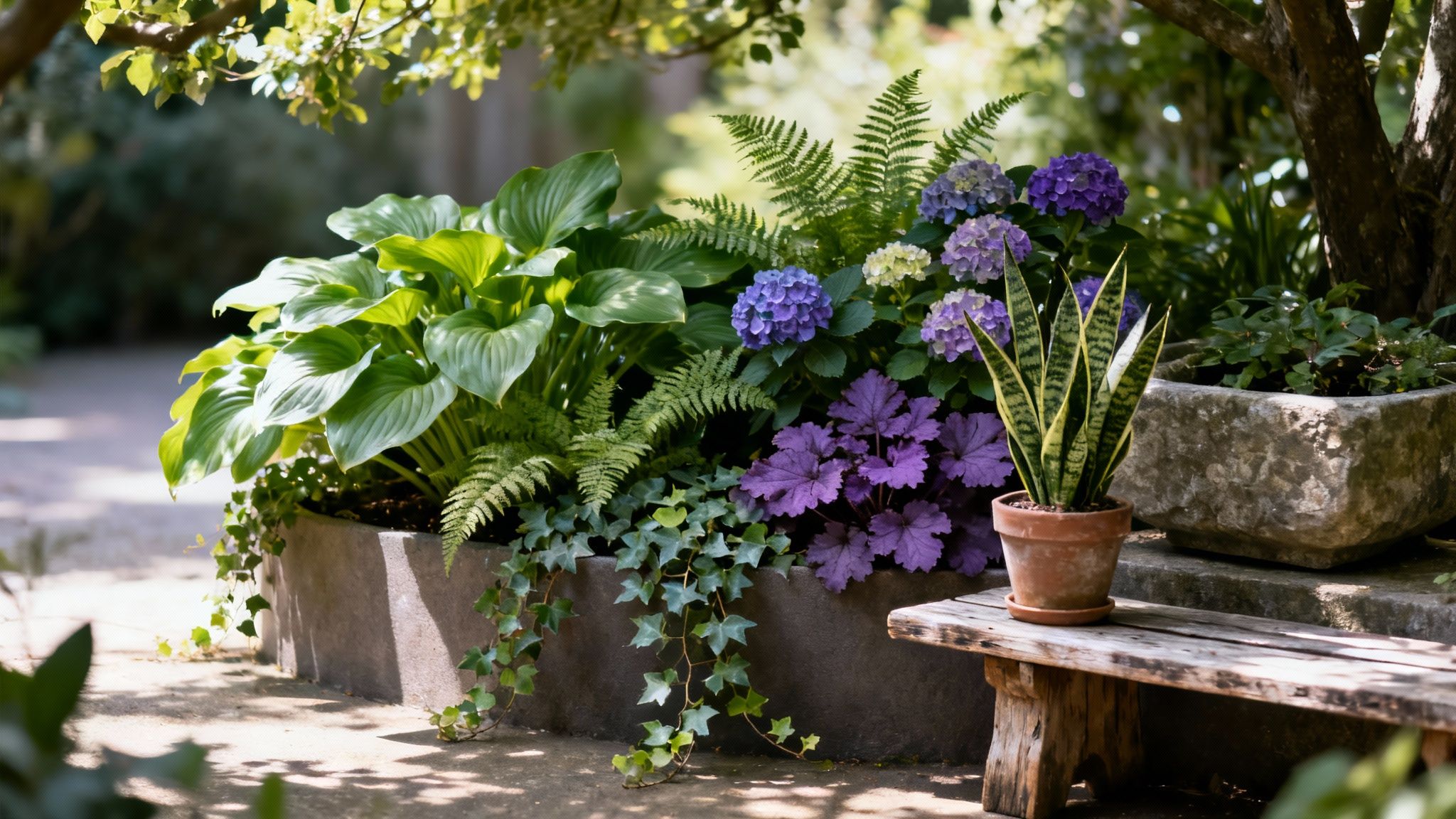
Not all borders are blessed with full sun. A foliage-focused approach transforms shady spots from problem areas into sophisticated, textured showcases. This design style prioritises leaf shape, colour, and texture over flowers, creating a serene and enduring display. It relies on plants adapted to lower light levels, weaving them into a rich tapestry that offers year-round interest.
This method is perfect for woodland gardens, urban courtyards, or any north-facing border where flowering perennials might struggle. Inspired by Japanese garden traditions and the work of plantsmen like Christopher Lloyd, this style proves that a lack of blooms doesn't mean a lack of beauty. The emphasis on form and structure, seen in the fern-focused borders at RHS Garden Harlow Carr, results in a low-maintenance yet highly architectural look.
How to Create Your Own
Success in a shady border comes from celebrating foliage and layering textures. The key is to select plants that not only survive but thrive in lower light, combining their diverse forms to create a dynamic composition.
- Layer for Depth: Position bold-leaved plants like hostas and bergenias as focal points. Contrast them with the fine, delicate textures of ferns (e.g., Dryopteris) and the airy forms of ornamental grasses like Hakonechloa macra.
- Brighten with Colour: Use variegated or golden-leaved plants to illuminate dark corners. Hostas such as 'Fire and Ice' or the lime-green leaves of Alchemilla mollis (lady's mantle) can dramatically lift the light levels. Heucheras (coral bells) offer a spectacular colour palette, from deep purples to vibrant ambers. For more advice, discover more about the best plants for dry shade.
- Embrace Subtle Flowers: Incorporate shade-tolerant flowering plants for quiet impact. The elegant winter blooms of hellebores, the delicate sprays of astilbe in summer, or the charming forget-me-not-like flowers of brunnera add seasonal highlights without dominating the foliage.
These border plants ideas for shade create a calm, elegant, and surprisingly vibrant garden that looks magnificent throughout the entire year.
4. Cottage Garden Borders
The cottage garden border is a celebration of romantic, informal planting, where a joyful profusion of plants jostles for attention. This style rejects rigid design rules in favour of abundant, overlapping layers of flowers, herbs, and roses. Popularised by gardeners like Vita Sackville-West and Graham Stuart Thomas, this approach creates a welcoming, lived-in atmosphere that is full of charm and personality.
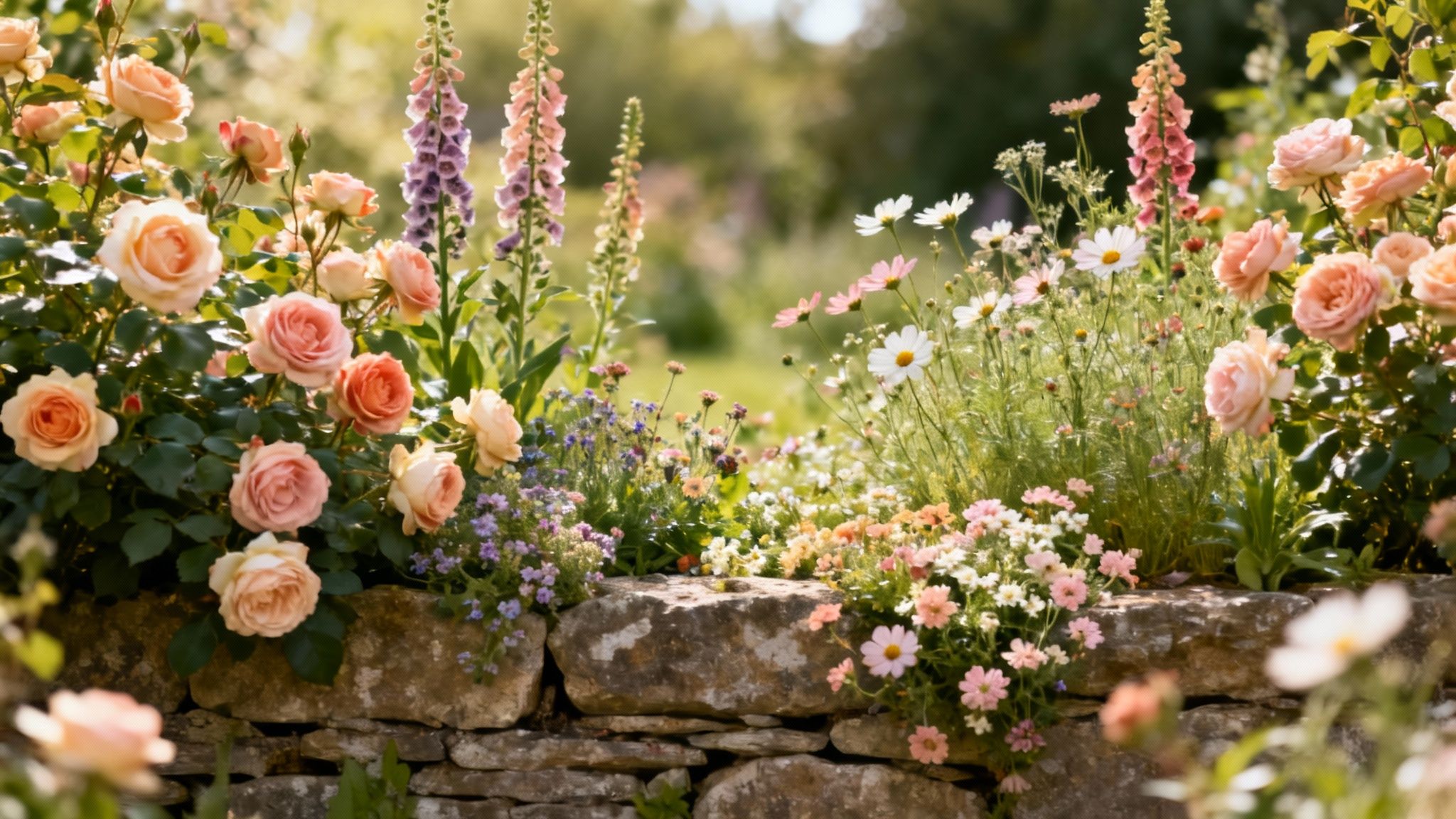
This style is perfect for gardeners seeking a nostalgic and highly personal garden space. It combines ornamental perennials, traditional roses, and self-seeding annuals to create a tapestry of colour, texture, and scent that evolves throughout the year. The famous borders at Hidcote Manor and the Cotswolds are prime examples of this timeless aesthetic. This is one of the most beloved border plants ideas for achieving a space that feels both generous and deeply connected to nature.
How to Create Your Own
To achieve the lush, abundant look of a cottage garden border, focus on layering and combining different plant types to create a sense of organised chaos. The goal is a rich and multisensory experience. For more in-depth inspiration, explore our guide to Cottage Garden Borders for detailed layouts and plant lists.
- Create 'Bones': Anchor your composition with structural shrubs like old-fashioned roses or deutzia. These provide a framework for the softer plantings to weave through.
- Plant in Drifts: Group perennials like foxgloves, delphiniums, and hardy geraniums in drifts of three or five. This creates a more natural rhythm and avoids a spotty appearance.
- Embrace Self-Seeders: Allow ethereal self-seeders like love-in-a-mist (Nigella), cosmos, and poppies to fill gaps. They add a spontaneous, airy quality to the border.
- Add Fragrance: Incorporate fragrant plants such as lavender, sweet peas, and stocks near paths and seating areas to create a truly immersive garden experience.
- Don't Be Too Tidy: While you should deadhead regularly to encourage more flowers, leave some interesting seedheads from plants like echinacea or eryngium to provide winter structure and food for birds.
5. Contemporary Minimalist Borders
Contemporary minimalist borders represent a shift from abundant, overflowing plantings to a more controlled, architectural aesthetic. This modern design philosophy champions clean lines, limited plant palettes, and the striking forms of individual plants to create sophisticated, gallery-like garden spaces. The approach reduces visual clutter by using restrained colour schemes, bold textural contrasts, and the rhythmic repetition of key plants.
This style is perfect for those who appreciate a calm, curated outdoor environment that feels like an extension of a modern interior. Popularised by influential designers like Dan Pearson and Tom Stuart-Smith, this approach merges horticultural skill with contemporary design principles. It's one of the most impactful border plants ideas for creating a high-impact, low-clutter garden that feels both serene and deliberately designed, as seen in the modern gardens at the RHS Chelsea Flower Show.
How to Create Your Own
To achieve a successful minimalist border, the focus is on "less is more". The goal is to let the form, texture, and structure of each plant shine, rather than massing them together in a colourful jumble. Strategic use of space and hardscaping is just as important as the plants themselves.
- Restrict Your Palette: Choose just three to five different plant species and repeat them in a rhythmic pattern throughout the border. This creates a powerful sense of cohesion and calm.
- Focus on Form and Texture: Select plants for their architectural qualities. Contrast the fine, airy texture of ornamental grasses like Miscanthus with the bold, solid leaves of plants like Hostas or Bergenias.
- Incorporate Evergreen Structure: Use evergreen plants such as box balls, yew hedging, or Phormiums to provide a permanent, year-round framework for your design. This ensures the border has interest even in the depths of winter.
- Frame the Display: Use neutral hardscaping materials like gravel, slate chippings, or smooth concrete edging. This acts as a clean backdrop that makes the plant forms stand out more dramatically.
- Give Plants Space: Unlike a cottage garden, a minimalist design requires generous spacing. Allow each plant room to grow to its mature size so its individual shape can be fully appreciated.
6. Pollinator-Friendly Flowering Borders
A pollinator-friendly border is a garden designed with a purpose beyond just aesthetics; it's a vital ecosystem created to support bees, butterflies, moths, and other beneficial insects. This approach involves planting a succession of nectar-rich flowers and native plants, providing a continuous food source and habitat for wildlife. The result is a buzzing, vibrant display that is both beautiful and ecologically responsible.
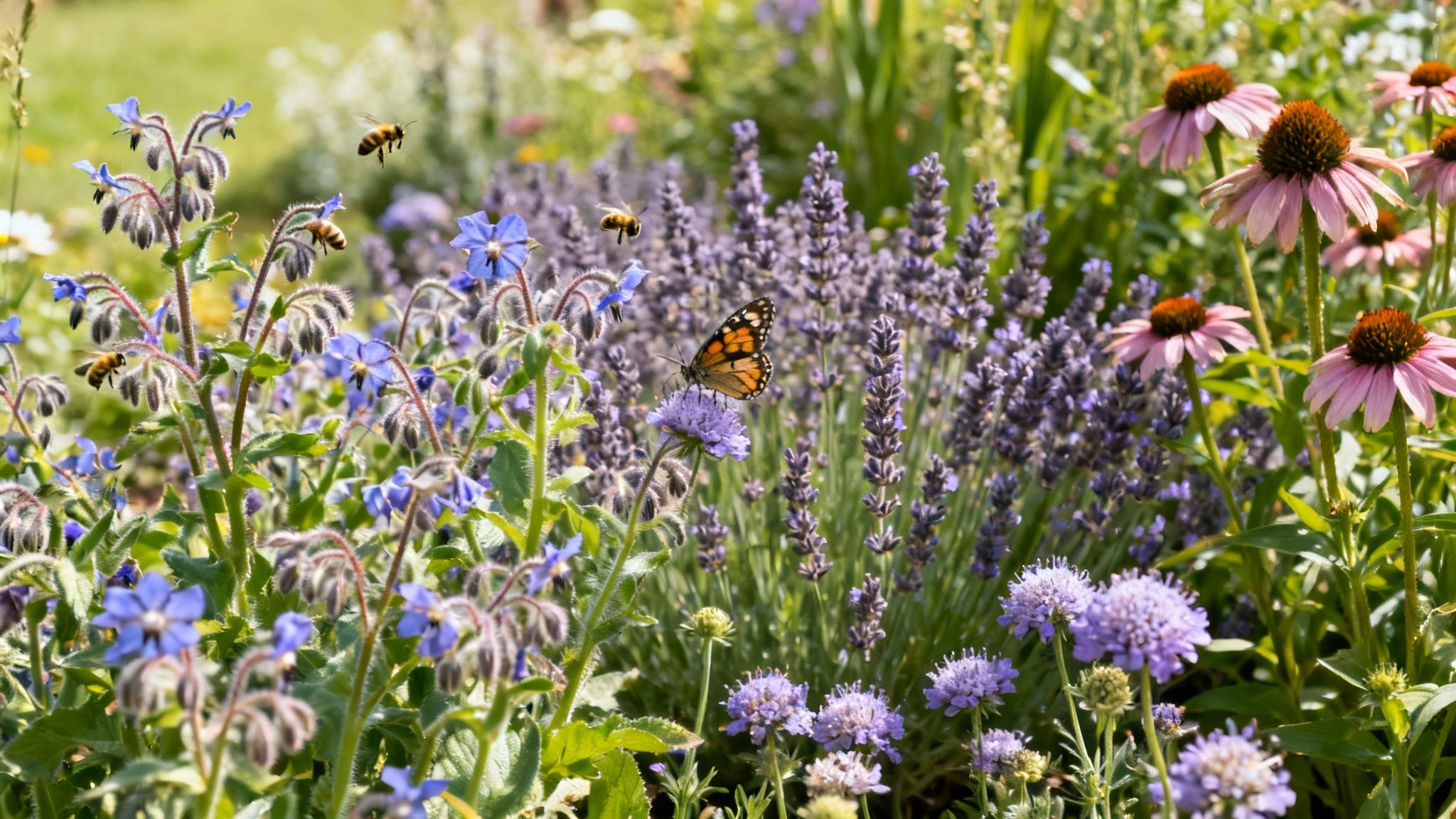
This style is perfect for gardeners committed to environmental stewardship who want to see their gardens teeming with life. As championed by organisations like the RHS and conservationists such as David Attenborough, creating these borders is a direct response to declining pollinator populations. By turning your garden into a haven, you contribute to a larger network of green spaces that support biodiversity. The pollinator-friendly borders at RHS Garden Wisley demonstrate how stunning and impactful these ecological designs can be.
How to Create Your Own
Designing a successful pollinator border means thinking like an insect. You need to provide food, water, and shelter throughout the year, focusing on simple, open-flowered plants that offer easy access to pollen and nectar.
- Provide a Year-Round Buffet: Ensure a continuous bloom from early spring to late autumn. Start with crocuses and hellebores, move into summer with alliums, lavender, and salvias, and finish the season with asters and sedums.
- Plant in Drifts: Grouping single species in large blocks or drifts makes them more visible to pollinators and allows them to forage more efficiently. This also creates a strong visual impact in your border design.
- Go Native and Avoid Pesticides: Research native wildflowers specific to your UK region, as these are perfectly adapted to local wildlife. It is crucial to avoid all pesticides, which can harm the very creatures you are trying to attract.
- Offer Water and Shelter: A shallow dish of water with pebbles for insects to land on can be a lifesaver. Also, leave some seedheads and hollow stems standing over winter to provide shelter for overwintering insects.
By incorporating these elements, you can create one of the most rewarding border plants ideas: a beautiful garden that actively supports the health of your local ecosystem.
7. Mediterranean and Coastal Borders
Evoking sun-drenched holidays and rugged coastlines, Mediterranean and coastal borders offer a sustainable and stylish solution for sunny, free-draining spots. This approach celebrates plants that thrive in conditions many others would struggle with, featuring a palette of silvery foliage, aromatic herbs, and splashes of warm, vibrant colour. It’s a style championed by gardening pioneers like Beth Chatto, who demonstrated the beauty of drought-tolerant planting.
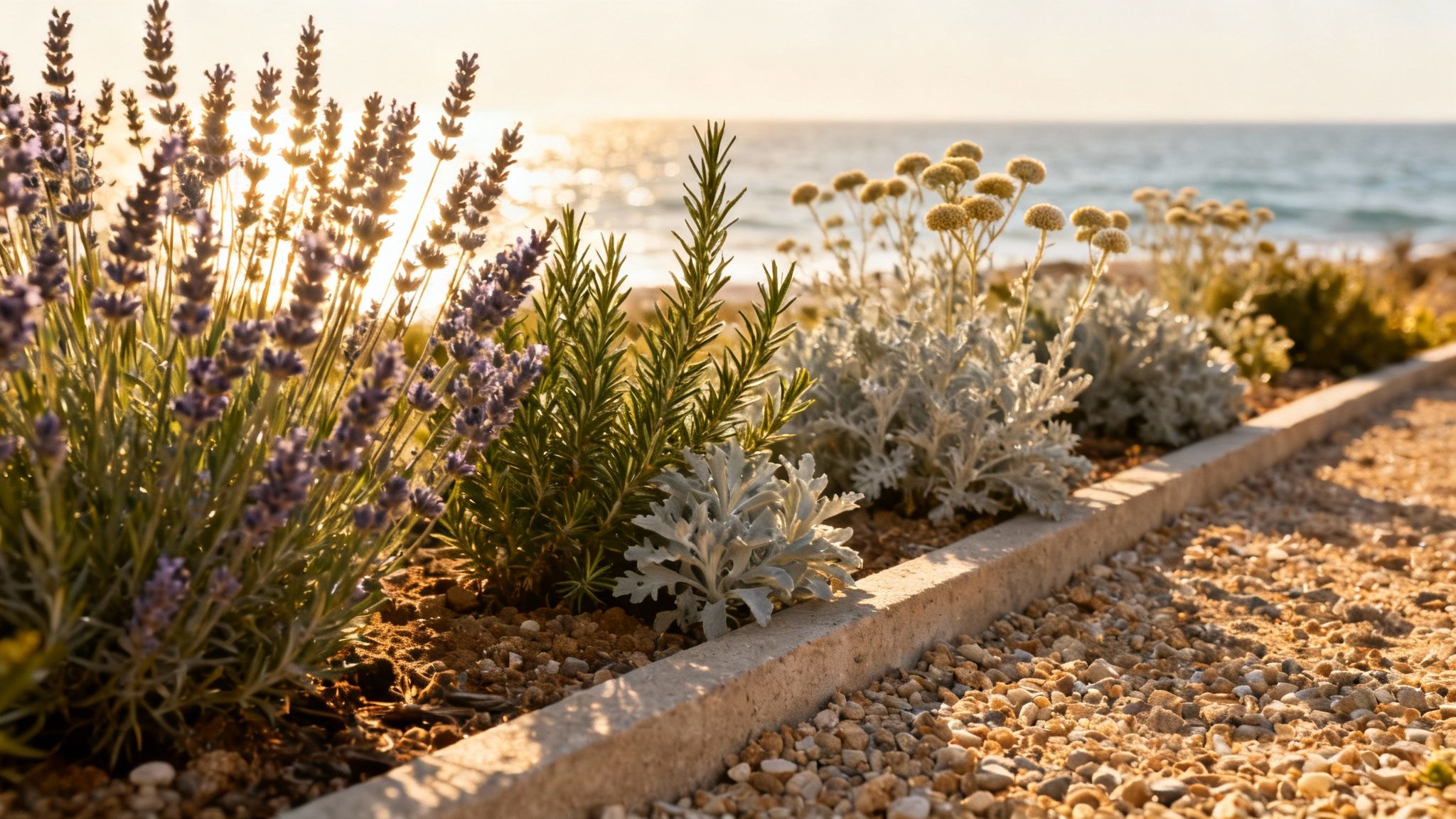
This method is ideal for climate-conscious gardeners, as it dramatically reduces the need for watering once established. The aesthetic, seen in gardens from the RHS Garden Hyde Hall to the coasts of Cornwall, relies on plants adapted to low-nutrient soils and high light levels. It creates a resilient, low-maintenance, and sensory-rich garden border, perfect for the UK's increasingly warm and dry summers. The use of gravel or stone mulches completes the look, suppressing weeds and conserving soil moisture.
How to Create Your Own
Success with Mediterranean borders hinges on providing sharp drainage and maximum sun exposure. The key is to replicate the natural conditions these plants are accustomed to, focusing on texture and form as much as on flowers.
- Improve Drainage: Before planting, amend heavy clay soils with a significant amount of grit or coarse gravel. Aim for at least a 50% grit-to-soil ratio in the planting hole to prevent waterlogging, which is fatal to these plants.
- Plant for Establishment: The best time to plant is in the autumn (September-November). This allows the root systems to establish over the damp winter, preparing them to face the heat and potential drought of their first summer.
- Prune for Form: Lightly prune aromatic shrubs like lavender, rosemary, and santolina immediately after they finish flowering. This encourages a compact, bushy habit and prevents them from becoming woody and sparse at the base.
- Incorporate Edibles: Weave in practical, edible herbs such as thyme, oregano, and marjoram. They act as excellent ground cover, release beautiful scents when brushed against, and add value to your kitchen garden.
By choosing the right plants and preparing your soil correctly, you can create a beautiful, water-wise border that provides year-round interest. This is one of the most effective border plants ideas for a changing climate. For more ideas, explore our guide to drought-tolerant plants for UK gardens.
8. Seasonal Colour Progression Borders
A seasonal colour progression border is a masterclass in garden design, creating a space that offers a continuous and evolving display from the first crocuses of spring to the stark beauty of autumn seedheads. Popularised by visionaries like Gertrude Jekyll and Christopher Lloyd, this sophisticated approach requires thoughtful planning and an understanding of plant phenology, or how plants behave through the seasons. The goal is to avoid the common pitfall of a garden that peaks in June and then fades into unremarkable foliage for the rest of the year.
This style is perfect for dedicated gardeners who want their outdoor space to be a dynamic, living spectacle twelve months a year. By choreographing a sequence of blooms, textures, and colours, you ensure there is always something catching the eye. Renowned gardens like Sissinghurst Castle, with its distinct seasonal rooms, and the expertly managed borders at Bressingham Gardens demonstrate the breathtaking effect of successful succession planting. It transforms a static flowerbed into a vibrant, year-round narrative.
How to Create Your Own
Designing for seasonal progression is about overlapping the interest from one plant to the next, creating a seamless transition. This requires careful selection and placement to build a border with constant appeal.
- Map the Year: Sketch your border and map out bloom times, heights, and colours for each season. A simple chart can help you identify gaps in your display.
- Overlap Your Planting: Don't rely on single-season bloomers. Instead, choose plants whose life cycles overlap. For instance, plant late-flowering alliums to emerge through the fading foliage of early tulips.
- Plan Ahead for Bulbs: Remember that spring-flowering bulbs like daffodils and tulips must be planted in the autumn (September to November) to establish their roots before the growing season begins.
- Include Year-Round Structure: Incorporate evergreen shrubs, ornamental grasses, and perennials with persistent seedheads (like echinacea or sedum). These elements provide crucial structure and interest, especially during the winter months.
- Record and Refine: Keep a garden journal to note what bloomed when and for how long. This personal record is invaluable for making adjustments and perfecting your sequence in subsequent years.
By embracing this method, you are creating one of the most rewarding border plants ideas, ensuring your garden offers a captivating performance throughout the year.
9. Hot Colour Borders (Warm Tones)
For gardeners who crave energy and drama, the hot colour border is a spectacular choice. Pioneered by bold designers like Christopher Lloyd at Great Dixter, this approach uses a palette of fiery reds, vibrant oranges, and sunny yellows to create a display that sizzles with passion. These borders are dynamic and exciting, evoking the feel of an exotic or tropical paradise even in a temperate British garden.
This style is perfect for making a confident statement and injecting a sense of fun and vitality into your outdoor space. Hot colour borders are particularly effective in full sun, where the warm tones are illuminated, creating an intense, glowing effect. By combining flowers and foliage in shades of crimson, gold, and tangerine, you can craft a border that feels both sophisticated and unapologetically joyful, proving that colourful planting can be high-impact art.
How to Create Your Own
Designing with hot colours requires a bold vision and careful plant selection to avoid a chaotic result. The key is to layer tones and textures to build a cohesive and harmonious scheme that smoulders rather than shouts.
- Anchor with Cool Tones: Plant hot-coloured flowers alongside plants with silver or grey foliage, such as Artemisia 'Powis Castle' or Senecio cineraria. These cool tones act as a sophisticated anchor, making the warm colours appear even more vibrant.
- Use Warm Foliage: Enhance the theme by incorporating plants with purple-burgundy or golden leaves. The dark foliage of a plant like Dahlia 'Bishop of Llandaff' or the golden leaves of Hakonechloa macra 'Aurea' will enrich the overall palette.
- Plant for a Long Season: Incorporate tender perennials that flower late into the season. Dahlias, cannas, and crocosmias are essential for carrying the high-energy display through summer and well into autumn.
- Think About Placement: Position your hot border where it will catch the morning or late afternoon sun. An east-facing spot is ideal, as the low-angle light will make the colours positively glow.
By embracing this audacious approach, you can create a truly memorable garden feature. This is one of the most exciting border plants ideas for those looking to express their personality and create a garden that feels alive with energy.
10. Fragrant Flower and Herb Borders
A fragrant border engages all the senses, transforming a simple garden walk into a memorable, multi-sensory experience. This approach focuses on selecting plants celebrated for their aromatic flowers and foliage, blending ornamental beauty with delightful scents. From the sweet perfume of roses to the earthy fragrance of herbs, these borders create an immersive atmosphere that changes with the time of day and season.
This style is perfect for gardeners who want their outdoor space to be more than just visually appealing. It’s about creating a living perfume that greets you at the door or wafts through an open window. Influential designers like Vita Sackville-West mastered this at Sissinghurst Castle, while modern breeders such as David Austin have championed fragrance in roses. This is one of the most rewarding border plants ideas for creating a truly evocative garden.
How to Create Your Own
Designing a fragrant border involves strategic placement and thoughtful plant selection to ensure a continuous succession of scents throughout the year.
- Strategic Placement: Position highly scented plants along pathways, near seating areas, or by windows and doors where their fragrance can be fully appreciated. Plant taller scented shrubs like Philadelphus (mock orange) at the back and lower-growing herbs at the front.
- Layer the Scents: Combine plants with different fragrant elements. Use flowers like peonies, phlox, and dianthus for seasonal perfume, and incorporate herbs with aromatic foliage for year-round scent. For example, rosemary provides a wonderful aroma when brushed against. You can find excellent tips on how to grow rosemary to get started.
- Consider Evening Fragrance: Include night-scented plants such as evening primrose or nicotiana to bring the garden to life after dusk. Their perfume is often strongest in the evening, perfect for enjoying during twilight hours.
By carefully selecting a mix of flowers, shrubs, and herbs, you can create a garden border that offers a rich tapestry of scents from early spring to late autumn.
Top 10 Border Planting Ideas Comparison
Bringing Your Border Vision to Life
Choosing the right border plants ideas is the first, most exciting step towards creating a garden that truly reflects your personal style and enhances your home's kerb appeal. We have journeyed through a diverse landscape of possibilities, from the romantic, overflowing charm of cottage garden borders to the sleek, architectural lines of contemporary minimalist designs. Each concept offers a unique blueprint for transforming the edges of your garden into deliberate, beautiful, and functional spaces.
We've explored how a successful border is far more than just a random assortment of plants. It is a carefully orchestrated composition where colour, texture, form, and seasonality come together in harmony. Whether you are aiming to attract a buzzing community of bees and butterflies with a pollinator-friendly haven, create a sensory delight with a fragrant herb border, or design a low-maintenance, foliage-focused masterpiece for a shady corner, the foundational principles remain the same: planning with purpose and planting with passion.
Your Actionable Path to a Perfect Border
The inspiration gathered from these border plants ideas is your catalyst for action. It's time to move from screen to soil and begin the tangible process of creating your dream garden edge. Don't let the scope of the project overwhelm you; the most stunning gardens are often built one thoughtful step at a time.
Here is a simple, actionable checklist to guide your next moves:
- Assess and Analyse: Revisit your garden with a critical eye. Note the sun's path throughout the day to accurately map areas of full sun, partial shade, and deep shade. Test your soil's pH and determine its type (clay, loam, sandy) to ensure you select plants that will thrive, not just survive.
- Define Your Style: Which of the border styles resonated most with you? The sun-drenched resilience of a Mediterranean border? The structured elegance of low-growing hedges? Or the dynamic, ever-changing display of a seasonal progression border? Settle on a clear vision to guide your plant choices.
- Sketch and Scheme: Grab a pencil and paper. You don't need to be an artist to create a simple layout. Draw the shape of your border and start placing your plants, paying close attention to their mature height and spread. Position taller plants at the back, mid-height ones in the centre, and low-growing specimens at the front to create a layered, professional look.
- Curate Your Plant List: Using your sketch and site analysis, build your shopping list. Cross-reference the specific plant suggestions from our article, focusing on varieties suited to your garden's conditions. Remember to incorporate a mix of structures: perennials for recurring colour, shrubs for year-round backbone, and annuals for filling gaps and adding seasonal flair.
- Prepare and Plant: The final, most rewarding step. Proper soil preparation is non-negotiable. Amend your soil with well-rotted compost or manure to give your new plants the best possible start. Follow correct planting depths and spacing, water thoroughly, and finish with a layer of mulch to retain moisture and suppress weeds.
The Evolving Beauty of Your Garden Border
Remember that a garden is a living, breathing entity, not a static piece of art. It will evolve, change, and grow with you. Some plants may flourish beyond your wildest dreams, while others might not perform as expected. This is the natural, beautiful rhythm of gardening. Embrace the process of tweaking, editing, and refining your design over the seasons. This ongoing interaction is where the deepest connection with your garden is forged.
By applying these thoughtful border plants ideas, you are not merely decorating an outdoor space; you are creating an ecosystem, a sanctuary, and a source of immense personal satisfaction. You are investing in your home’s value and your own well-being. So, roll up your sleeves, get your hands dirty, and begin the joyful work of transforming your garden's edges into a breathtaking masterpiece that will delight you for years to come.