
Choosing the right cushions for your sofa is about more than just a splash of colour. It’s the finishing touch that pulls a room together, a clever blend of comfort, proportion, and durability that can completely revitalise your living space. The secret is finding a scale that fits your sofa, a fill that suits how you live, and a fabric that’s built to last.
Laying the Foundation for Perfect Sofa Cushions
Before you even think about hitting ‘add to basket’, it’s worth taking a moment to create a little pre-shopping brief for yourself. This simple step cuts through the endless choices and helps you focus on what really works for your home, preventing those common mistakes—like cushions that dwarf a delicate sofa or a high-maintenance fabric in a busy family room.
Think of it as setting the groundwork. By figuring out what you actually need first, you can shop with confidence, knowing your final choices will be both beautiful and practical.
First Things First: Your Sofa and Room
Before getting lost in patterns and textures, let’s nail down the three fundamentals:
- Scale and Proportion: How big is your sofa? A sprawling, deep-seated sectional can handle much more substantial cushions than a neat little two-seater. Getting the scale right is everything.
- Lifestyle and Function: Be honest about how you live. A house with kids and pets needs durable, easy-to-clean fabrics. If it's a more formal, less-used space, you can get away with luxurious silks or velvets.
- Existing Decor: Look around the room. Your cushions are the perfect opportunity to tie everything together—the rug, the curtains, the art on the walls. They should feel like they belong and help create a cohesive living room layout.
When these three elements are in harmony, your cushion arrangement will look intentional and thoughtfully styled, rather than a random afterthought. It’s this bit of planning that ensures every cushion adds something special to your space.
To make things even easier, here’s a quick-glance guide that matches popular UK sofa styles with their perfect cushion partners.
A Quick Cushion Matching Guide for Common Sofa Styles
Not sure where to start? Use this table to find recommended cushion shapes, sizes, and arrangements that complement the most popular sofa designs found in UK homes.
Think of these as starting points. The best arrangements always have a touch of personal flair, so feel free to mix and match until it feels just right.
Getting Cushion Size and Shape Right
The secret to a sofa that looks professionally styled? Getting the scale just right. When it comes to cushions, proportion is everything. Go too large, and they’ll completely overwhelm your sofa; too small, and they’ll look a bit lost and accidental.
The aim is always to create a balanced, inviting look. And it all starts with a tape measure and a good look at the sofa you’re working with.
Finding the Perfect Dimensions
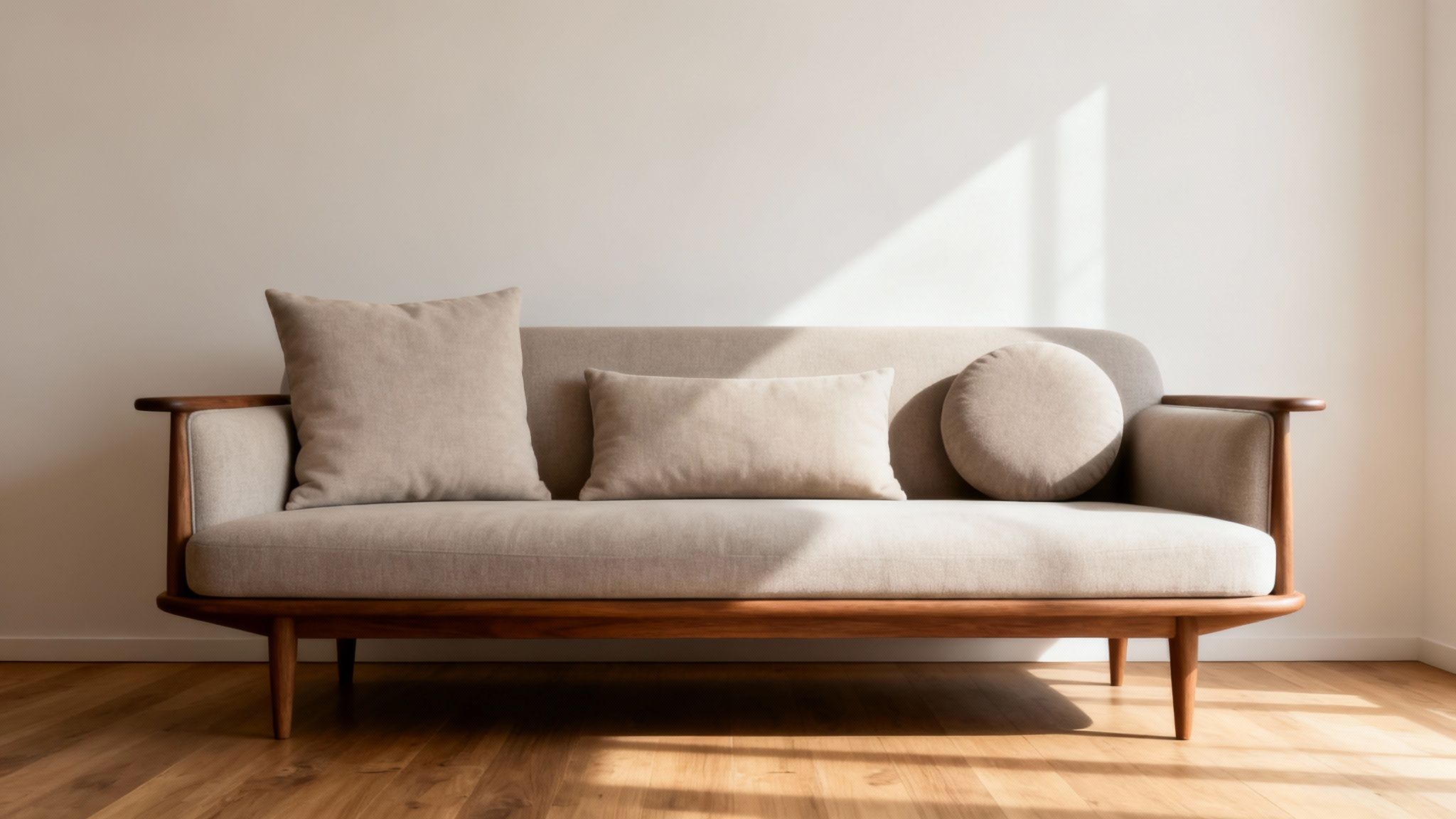
Before you even think about adding cushions to your basket, grab a tape measure. You need two key measurements: the usable seat depth (from the back of the sofa to the front edge of the seat) and the height from the seat to the top of the backrest. A solid rule of thumb is that your largest cushions should never peek over the top of your sofa's back.
For standard UK sofas, which tend to be a little more compact, these guidelines are a great starting point:
- Large Sofas (3-seater or sectional): Begin with larger 55x55cm or even 60x60cm cushions at the back to create an anchor.
- Medium Sofas (2-seater): A 50x50cm square is usually the perfect foundation.
- Smaller Sofas or Armchairs: Stick to 45x45cm so you don’t overpower the smaller frame.
Here’s a little trick designers swear by: use cushion inserts that are 5cm larger than the cover. Pop a 55cm insert inside a 50cm cover and you’ll get that irresistibly plump, full look that feels instantly more luxurious. It’s a tiny detail that makes a huge impact.
The Power of Different Shapes
Once you’ve got your main size sorted, it’s time to play. Mixing in different shapes is what takes a cushion arrangement from looking simply fine to feeling properly styled.
Think about how different shapes can solve a problem or just add a bit of personality. Got a really deep-seated sofa? A rectangular lumbar cushion offers much-needed back support while breaking up all the square angles. A single round cushion, on the other hand, can be the perfect antidote to the sharp, geometric lines of a modern sofa, adding a touch of softness.
Let’s put this into practice with a couple of common scenarios:
Scenario 1: The Traditional Chesterfield
With its low back and deep buttoning, a classic Chesterfield demands a bit of structure. A symmetrical layout works beautifully here. Try two large 50x50cm cushions in a rich velvet at either end, then add a smaller bolster or rectangular cushion in the centre to complement its formal, linear shape.
Scenario 2: The Sleek Contemporary Sofa
A minimalist sofa with clean lines is the perfect canvas for a more relaxed, asymmetrical look. You could pair one large 55x55cm cushion with a smaller 45x45cm one, then finish it off with a rectangular lumbar. The mix feels more dynamic and is a brilliant way to introduce different textures. Understanding how these elements play together is a huge part of figuring out how to arrange furniture in your living room for that effortless, pulled-together feel.
Selecting the Best Fill and Fabric for Your Lifestyle
A great cushion is more than just a pretty face. While the perfect colour or pattern catches your eye, it's the satisfying sink-in feeling and the confidence that it can handle a bit of real life that truly matter. The real markers of quality are what's inside the cover and the material you choose. This is where we get into what defines comfort and durability, making sure your cushions feel fantastic for years to come.
Unpacking Cushion Fills
The filling is the heart of your cushion. It dictates how it supports you, holds its shape, and, crucially, how much daily plumping it’s going to need. The best guide here? Your own lifestyle.
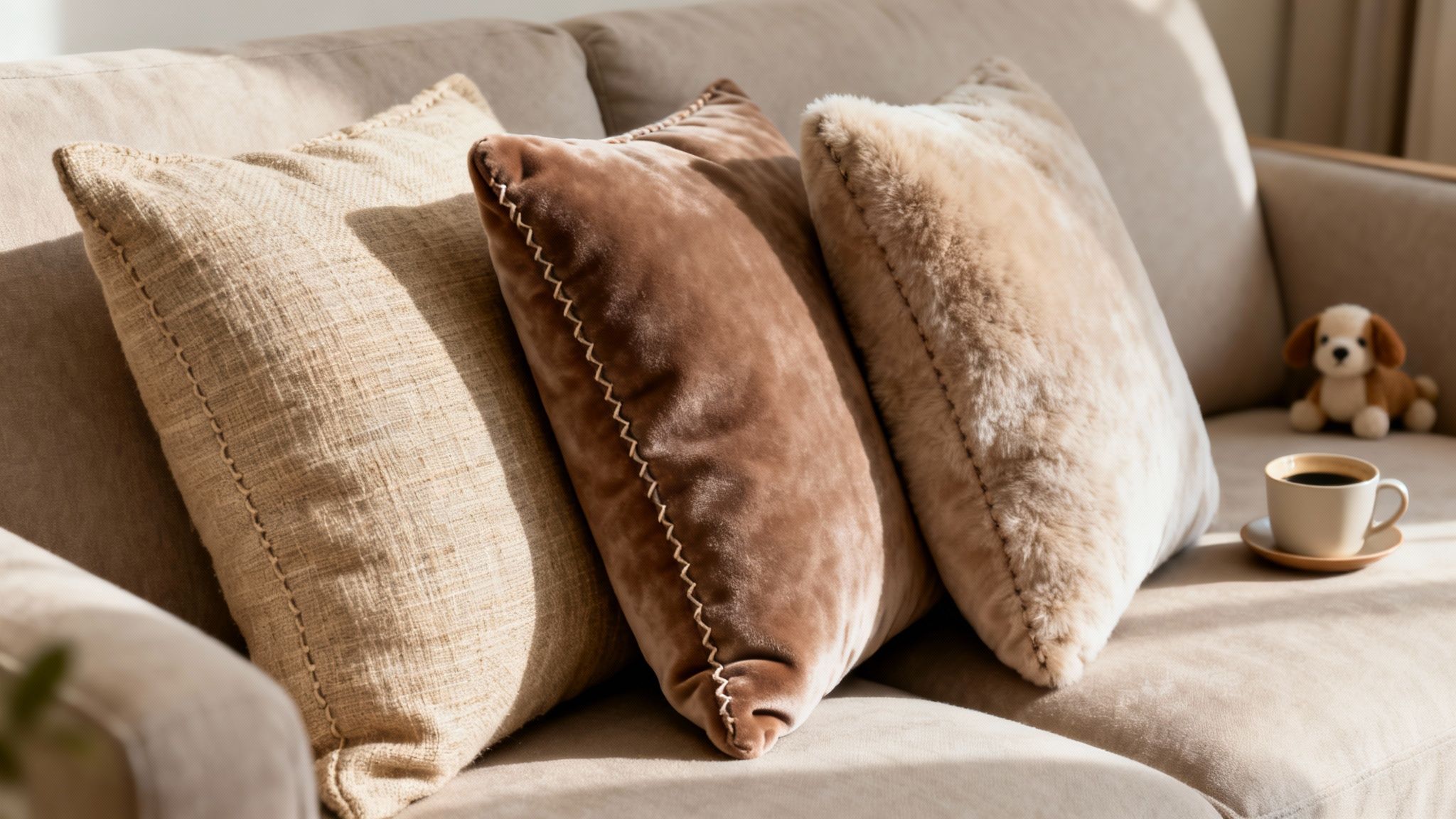
Feather and Down: Pure, sink-in luxury. These fillings give you that soft, cloud-like comfort that’s impossible to resist. They're the top choice for a plush, relaxed feel but be prepared for regular fluffing to keep them looking lofty and full.
High-Density Foam: This is the resilient workhorse of the cushion world. Foam provides firm, consistent support and bounces back beautifully, which makes it ideal for a busy family sofa that sees a lot of action. A great low-maintenance option that won’t lose its shape.
Polyester (Fibre-fill): A brilliant budget-friendly and hypoallergenic choice. Polyester is lightweight and soft to the touch, though it can compress over time and might need replacing sooner than its foam or feather counterparts.
Foam and Feather Hybrid: The best of both worlds. These clever cushions usually have a supportive foam core wrapped in a soft, generous layer of feathers. You get the structure and resilience of foam with the undeniable softness of down.
For many of us, especially those in the 35-45 age group, feather-wrapped foam hybrids are a total game-changer. Industry insights show a 40% higher satisfaction rate with these blends because they strike that perfect balance between sink-in softness and stay-in-place support.
Finding the Right Fabric for Real Life
The fabric is your cushion's first line of defence against spills, pets, and just general everyday wear and tear. A great choice is one that marries a beautiful look with practical performance. Let’s be honest, a fabric that can’t handle a stray coffee splash or a muddy paw print will quickly become a source of stress.
Think about your home. A quiet, formal living room might be the perfect spot for delicate silks or velvets, but a high-traffic family room needs something much, much tougher.
A Quick Comparison: Natural vs. Synthetic Fabrics
Deciding between natural fibres and hard-wearing synthetics often comes down to balancing that lovely tactile feel against day-to-day function.
Investing in a quality fill and fabric can even add tangible value to your furniture. In the UK, upgrading to high-density foam or feather-blend cushions can increase a sofa's resale value by £100-£250 compared to standard polyester. It all comes down to their superior durability and longevity—a crucial factor in British homes where we expect our furniture to last.
Ultimately, choosing the right fabric means you can actually relax and enjoy your beautiful cushions without worrying about life’s little accidents. And should the inevitable happen, a durable fabric is much easier to bring back from the brink. Our guide on how to clean upholstered furniture has all the tips you'll need.
Crafting Your Perfect Colour and Pattern Mix
Now for the fun part. This is where you get to inject some real personality into your living room. Choosing the right colours and patterns for your sofa cushions is how a space truly comes to life, moving beyond a collection of furniture to a room that feels like you.
Think of it less as a set of rules and more as creating a combination that makes your sofa the most inviting spot in the house. It's one of the easiest, lowest-commitment ways to make a huge impact.
Building Your Colour Palette
Before you even think about shopping, take a good look around the room. Chances are, the perfect colour palette is already there, just waiting for you to notice.
Your best inspiration comes from the things you already own and love.
- A piece of art: Pull out a secondary or even a tiny accent colour from a favourite painting.
- Your rug: Is there a subtle shade in the pattern that you could bring out?
- Your curtains: Coordinating with your window treatments is a classic trick for a layered, cohesive look.
- The view outside: If you look out onto a gorgeous garden, echoing those greens or soft floral tones creates a lovely link between inside and out.
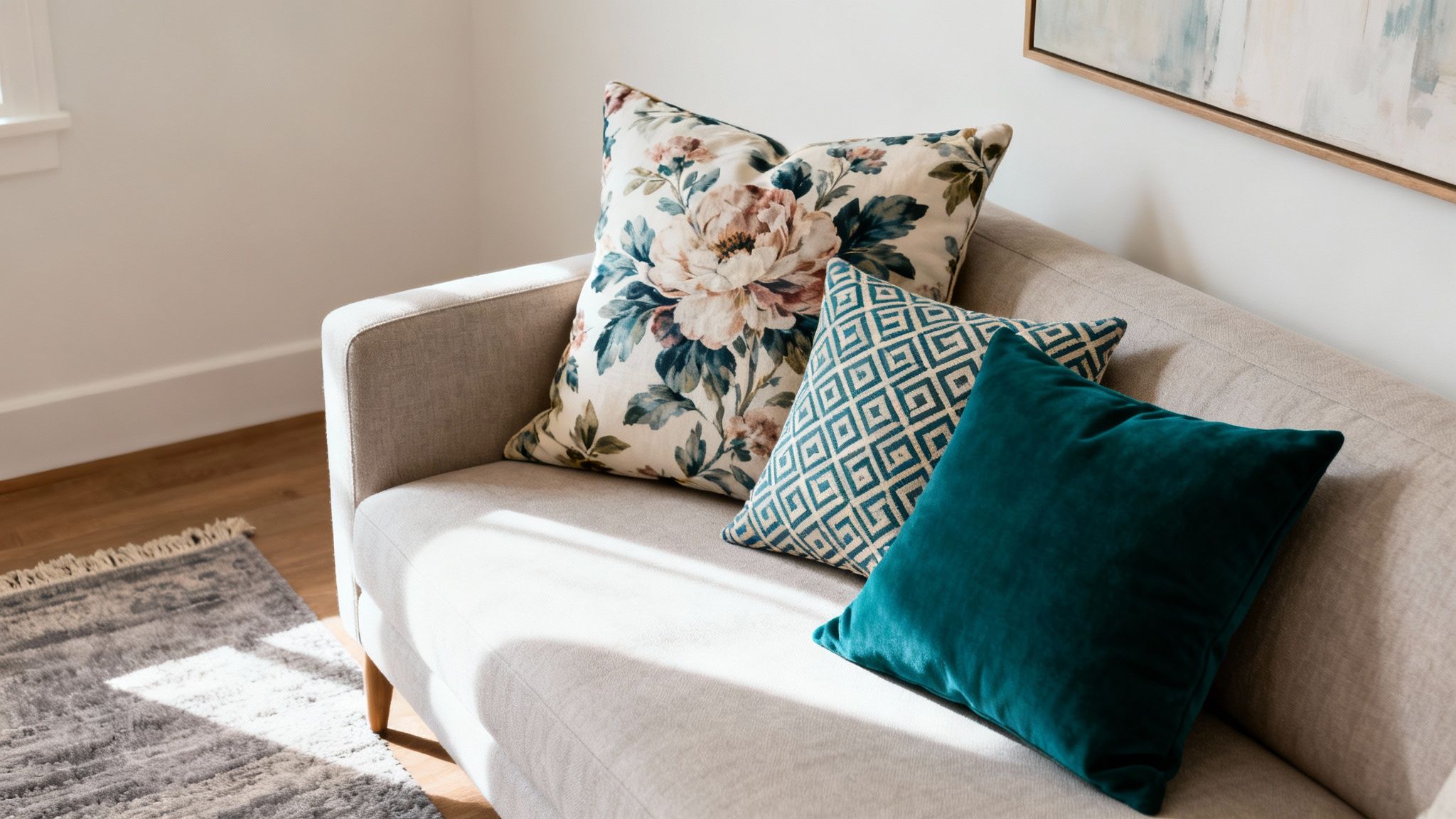
Once you have a few shades in mind, lean on the 60-30-10 rule. It’s an old interior design secret for a reason—it just works. Your sofa is the dominant 60%, your main cushions are the secondary 30%, and a single, bold accent cushion provides the final 10% pop.
This simple framework keeps your sofa looking curated, not chaotic. For instance, on a grey sofa (60%), you could layer cushions in shades of navy (30%) and then add one vibrant ochre cushion (10%) to really lift the whole scheme.
If you're feeling stuck, browsing through a few living room colour ideas is a great way to find a palette that clicks.
The Simple Formula for Mixing Patterns
Mixing patterns can feel a bit daunting, but there’s a simple formula that takes all the guesswork out of it. The secret is to vary the scale of your prints. This creates visual interest without looking messy or overwhelming.
A fool-proof trio for any sofa involves just three cushions:
- One large-scale pattern: This is your hero cushion. Think bold florals, an oversized geometric, or a chunky stripe.
- One small-scale pattern: This one should complement your hero. A delicate botanical, tiny polka dots, or a subtle ticking stripe works beautifully.
- One solid colour: This acts as a visual break, grounding the two patterns. For extra depth, choose a solid with a great texture, like velvet, slubby linen, or a cosy boucle.
This simple combination ensures your arrangement looks intentional and chic. A big floral print paired with a tiny pinstripe and a rich velvet solid? That’s a classic for a reason. Mastering this little trick is fundamental to learning how to choose cushions for your sofa with confidence, giving you the freedom to play around and create a look you genuinely love.
Arranging Cushions for Effortless Style
Right, you’ve picked the perfect sizes, shapes, and patterns—now for the finishing touch. A thoughtful arrangement is what elevates a sofa from just ‘fine’ to a properly inviting centrepiece. It’s time to graduate from the classic ‘one-cushion-at-each-end’ look and start styling like a pro.
The secret? It’s all about creating visual interest. You're not just adding comfort; you're adding depth and guiding the eye.
Embrace the Rule of Odds
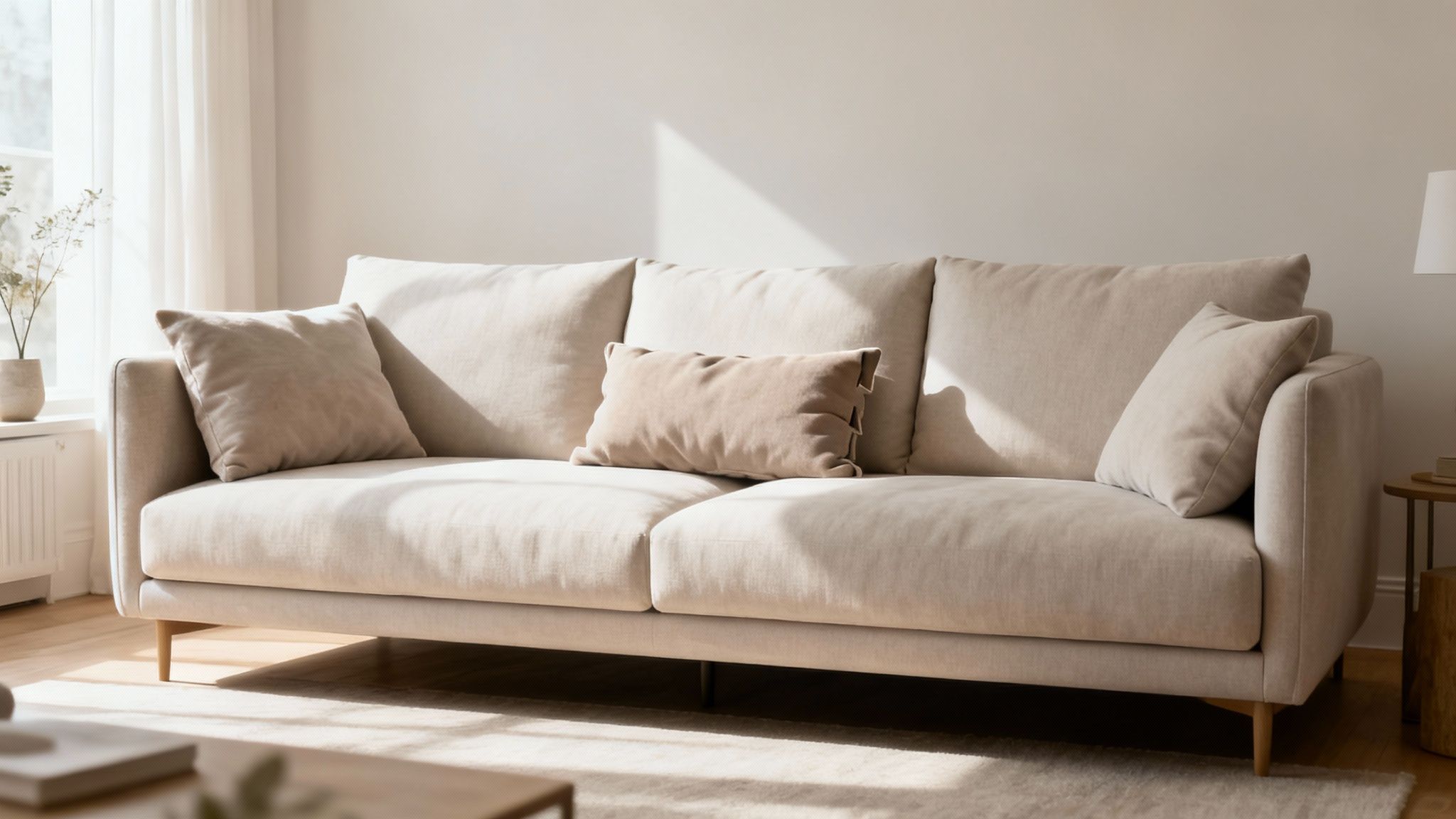
One of the oldest tricks in the interior styling book is the rule of odds. For some reason, our brains just find odd-numbered groups more natural and appealing than even ones. An arrangement of three, five, or even seven cushions almost always looks more dynamic and less rigid than a stiff pair or a set of four.
For a standard three-seater sofa, an arrangement of five cushions is often the sweet spot. It feels generous without looking cluttered.
Styling Formulas for Different Sofas
Of course, the right layout depends entirely on your sofa’s shape and the vibe of your room. You might be after a classic, structured look or something a bit more relaxed and eclectic.
Here are a few go-to formulas I use all the time:
- The Two-Seater Sofa: Stick to a trio. Pop a larger cushion in each corner, then add a smaller, contrasting shape (like a lumbar or a little round cushion) just off-centre. This creates a really pleasing, slightly asymmetrical balance.
- The Three-Seater Sofa: A group of five is perfect here. Start with two matching large cushions in the corners. Layer two smaller, coordinating cushions in front of them, and then finish with a single, standout accent cushion right in the middle.
- The L-Shaped Sectional: These bigger sofas can handle more. I like to treat the main section like a three-seater (using five cushions) and then add another group of three in the corner of the 'L'. It creates a really lush, layered effect that begs you to curl up.
Pro Tip: The Karate Chop. Want that plush, lived-in designer feel? Use the side of your hand to give the top of each cushion a gentle indent. This little 'karate chop' works best on feather or down-filled cushions and makes them look instantly fuller and more inviting.
Creating Symmetrical vs Asymmetrical Looks
Your choice between a symmetrical or asymmetrical layout really sets the tone for the entire room. Neither is right or wrong; it’s all about the atmosphere you want to create.
A symmetrical arrangement, with matching cushions placed evenly on both sides, feels formal, classic, and orderly. It’s a perfect match for traditional styles like a Chesterfield or in rooms with a more structured design.
On the other hand, an asymmetrical layout—with a mix of different sizes, shapes, and numbers on each side—creates a more modern, relaxed, and casual vibe. This approach feels more lived-in and is ideal for contemporary sofas or family rooms where comfort is king. Getting this right is a key part of learning how to choose cushions for a sofa that truly reflects your personal style.
Your Go-To Sofa Cushion Checklist
Right, let's pull all of that together. Before you head out (or open that browser tab), run through this quick checklist. Think of it as your final sanity check to make sure you’ve considered everything from the practical bits to the fun finishing touches.
Your Essential Shopping Checklist
Measurements First: Got your sofa’s seat depth and back height jotted down? Remember, you want cushions that sit neatly and don't peek over the top.
Fill for Function: Have you decided if you need something that bounces back or something you can sink into? Resilient foam is a godsend for busy family life, while plush feathers are pure luxury for a more relaxed vibe.
Fabric Durability: Let's be honest, is the fabric going to survive in your home? Performance fabrics are your best friend if you’ve got pets or kids. For other materials, a little upkeep goes a long way – our guide on how to care for leather furniture has some great tips.
Colour & Pattern: Do the colours and patterns you’ve picked actually work with the room? Stick to the 60-30-10 rule for a balanced look, and try pairing one large pattern, one small pattern, and one solid colour. It’s a classic for a reason.
Quantity and Shape: How many are you going for? The rule of odds (three or five) nearly always creates a more dynamic, less formal look. Don't be afraid to mix squares with rectangles for a bit of extra interest, either.
Choosing cushions is one of the most fun, low-commitment ways to inject your personality into a room. At the end of the day, trust your instincts. Blend the expert advice with what you genuinely love, and you’ll create a look that feels completely, perfectly you.
Still Wondering? Your Sofa Cushion Questions, Answered
Even after you think you've cracked it, a few last-minute questions always seem to pop up. It happens to everyone. Here are the quick answers to the most common dilemmas we hear about, designed to clear up any lingering doubts before you commit.
How Many Cushions Should I Put on a 3-Seater Sofa?
For a standard 3-seater, the magic number is often five. Trust us on this. It's the perfect amount to look plush and inviting without feeling like you're being pushed off the sofa. This follows the classic ‘rule of odds’ that designers use to create arrangements that are pleasing to the eye.
A go-to formula that always looks polished is:
- Start with two matching 50x50cm cushions, one at each end.
- Layer two slightly smaller, coordinating cushions in front of those.
- Finish with a single rectangular or lumbar cushion right in the centre.
This simple layering technique is what gives a sofa that professionally styled depth and texture.
Should Sofa Cushions Match My Curtains or Rug?
They should coordinate, but please, don't make them match perfectly. A far more sophisticated trick is to pick out a secondary or accent colour from your rug or curtains and make that the hero colour in your cushions. This creates a subtle, intentional thread that pulls the whole room together without it looking too ‘done’.
For instance, if your rug is mostly neutral but has a few flecks of rust in the pattern, a rich, solid rust velvet cushion will instantly connect the two pieces beautifully.
This is the secret that elevates a room from just decorated to thoughtfully designed. It’s a quiet nod to your colour scheme that feels harmonious and personal, making your space feel truly complete.
What Is the Best Cushion Filling for a Busy Home?
If your living room sees a lot of action – think kids, pets, and Friday night movie marathons – then you need fillings that can bounce back. Your best bet is either high-density foam or a foam-and-feather hybrid.
Pure foam is incredibly resilient and holds its shape brilliantly, no matter how many forts are built with it. A hybrid, on the other hand, gives you the best of both worlds: a sturdy foam core wrapped in a soft layer of feathers for that luxe, sink-in feeling, but without the constant need for plumping. Pair either with a tough, washable fabric, and you’ve got cushions that are both stylish and ready for real life.