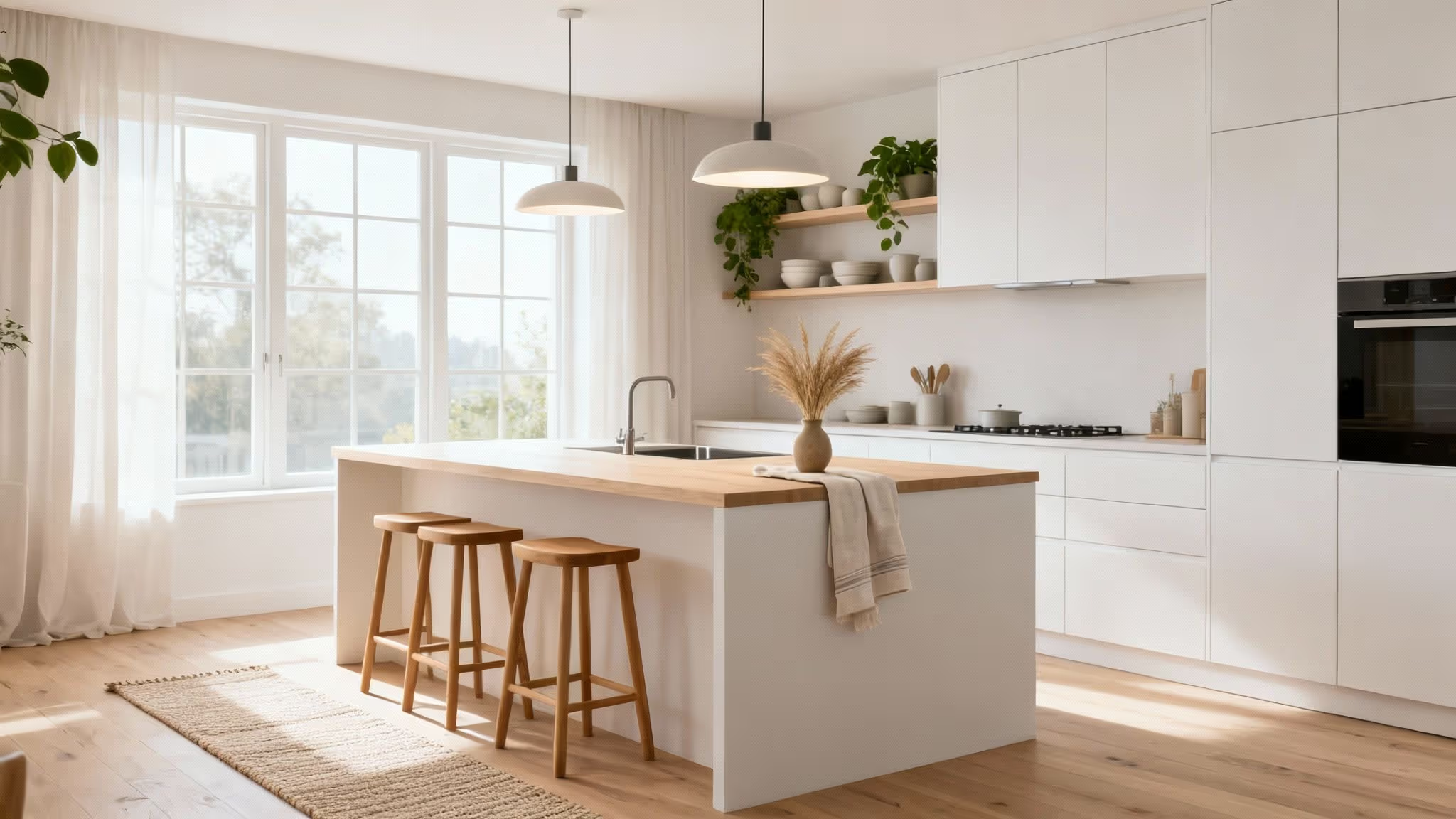
A Scandinavian kitchen is so much more than a look; it's a way of living. At its heart, the style is all about simplicity, functionality, and a deep love for natural light. The goal is to create a space that feels bright, uncluttered, and genuinely usable – perfectly blending minimalism with a warm, inviting atmosphere that just works for modern life.
The Heart of Scandinavian Kitchen Design
To really get Scandinavian design, you need to understand two key concepts: hygge and lagom. These aren't just trendy words; they're cultural ideas that influence every single choice, from the layout of the room to the handles on your cabinets. Nailing this feeling is the secret to creating a kitchen that feels both calm and welcoming.
This isn't a flash-in-the-pan trend. The style's popularity just keeps growing here in the UK, mainly because its clean lines and natural materials resonate so well with how we want to live now. In fact, industry surveys show Nordic-inspired designs are consistently in the top three choices for homeowners heading into 2024–2025. Some specialist kitchen retailers have seen interest jump by 15–30% year-on-year as we all hunt for lighter palettes and simpler cabinetry.

Embracing Hygge for a Cosy Atmosphere
Hygge (pronounced 'hoo-gah') is the Danish art of creating cosiness and contentment. In the kitchen, this means turning the space into a warm, sociable hub. It’s less about how the room looks on Instagram and more about how it makes you feel.
- Warm Textures: Think chunky wooden chopping boards left out on the counter, soft linen tea towels, or even a simple wool runner on the floor to soften things up.
- Soft Lighting: Forget harsh overhead spotlights. You want layered, warm lighting from pendants over an island and soft under-cabinet lamps to create an inviting glow.
- Personal Touches: A few handmade ceramic mugs on an open shelf or a well-loved cookbook propped up make the space feel lived-in, not like a showroom.
Hygge isn't about perfection. It’s about creating a space where you and your family genuinely want to be, whether you’re sharing a quick morning coffee or cooking a big Sunday roast together.
The Principle of Lagom: Just Enough
While hygge brings the warmth, lagom—a Swedish concept meaning 'just the right amount'—brings the balance. It’s all about moderation and making sure the kitchen is practical and free from clutter.
This means every item should earn its place. Storage is smart and integrated to keep worktops clear, and the layout is designed to make cooking feel effortless. This connection to nature and function is also a key part of another important idea, which you can read about in our guide on what is biophilic design. Ultimately, lagom is what makes your kitchen a serene, organised space that just works.
Choosing Your Scandi Colour Palette and Materials
This is where the soul of your Scandinavian kitchen really comes to life. Getting the combination of colour and texture just right is a delicate dance between creating brightness and adding natural warmth. It’s what makes the space feel both clean and deeply inviting.
The foundation of any Scandi palette is nearly always white, but let's be clear: not all whites are created equal. Especially in UK homes, where natural light can be soft and ever-changing, a brilliant, stark white can sometimes feel a bit clinical. Instead, think about off-whites with subtle warm undertones – chalky whites or the softest of greys. These shades play beautifully with daylight, creating a gentle glow rather than a harsh glare.
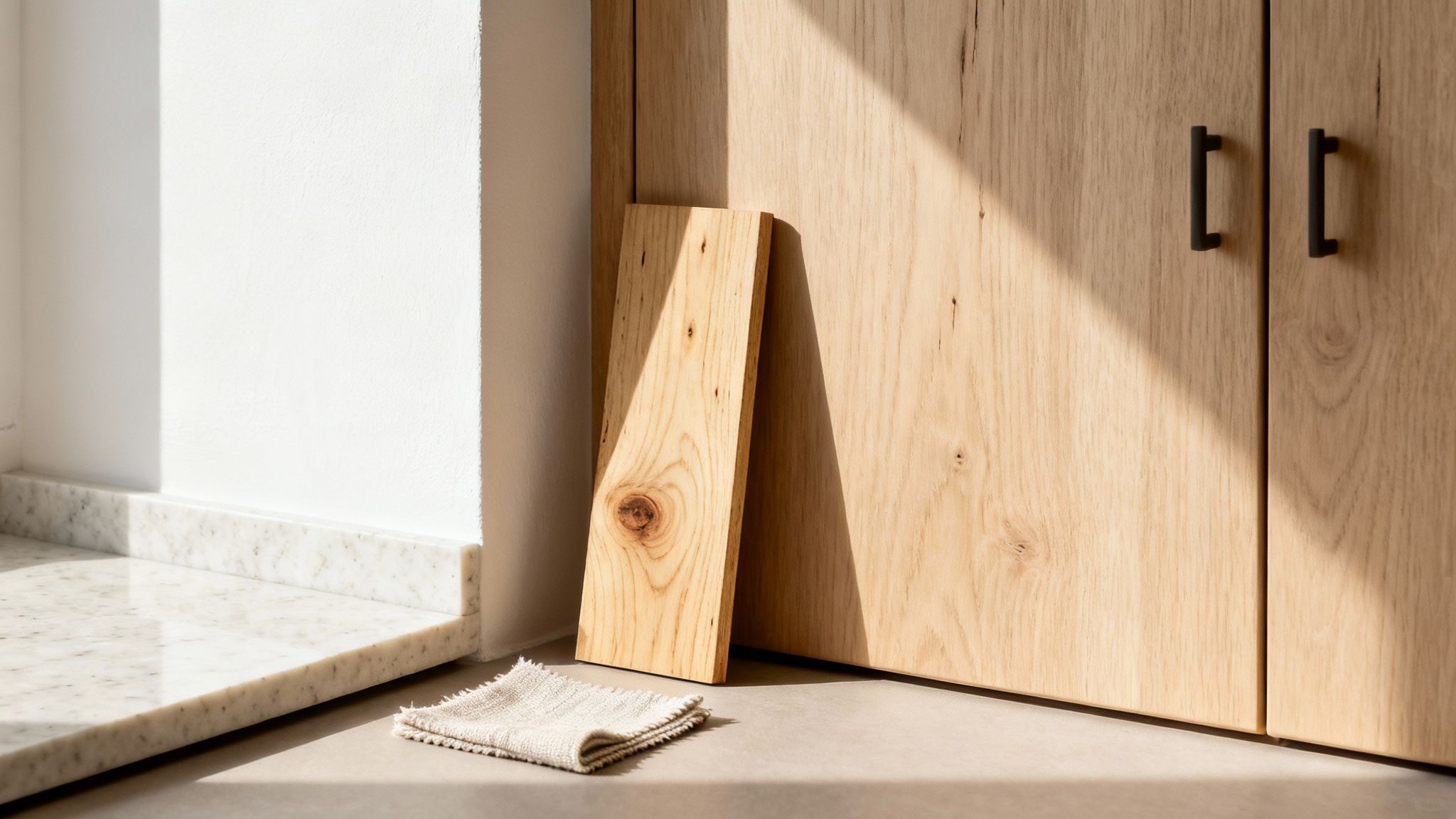
Getting this nuance right is key to an authentic feel. If you’re struggling to pick the perfect shade, our guide on how to choose paint colours has plenty of practical advice.
Bring in the Warmth with Natural Woods
Wood is the essential counterbalance to that light, neutral palette. It’s what stops the design from feeling sterile, bringing in organic texture and warmth. Pale woods are the signature choice here.
- Ash: Known for its light, creamy tone and straight grain, ash gives a clean, contemporary look and is incredibly durable for cabinetry.
- Birch: With its fine, uniform texture and pale colour, birch is a classic Scandi choice that helps a room feel bright and airy.
- Light Oak: A touch warmer in tone with a more noticeable grain, light oak adds a hint of rustic character while still feeling modern.
These woods are perfect for cabinets, flooring, or even as accent pieces like open shelving or a simple wooden stool. Their natural imperfections aren't just tolerated; they're celebrated, adding a layer of honesty to your kitchen.
The real goal here is to let the natural beauty of the material shine through. Step away from dark stains or heavy, glossy varnishes. Instead, go for a matte or satin finish that protects the wood without masking its true character.
Pick Your Worktops: Durability Meets Elegance
Your worktop is a huge part of your kitchen’s look and feel, and it needs to stand up to daily life. The right choice will tie everything together, complementing the wood and cabinetry beautifully.
We're seeing a clear trend among UK homeowners for materials that blend longevity with a natural look. A quick browse of design editorials for 2024–2025 shows a big move towards pale oak veneers, cabinets painted in soft neutrals, and natural or engineered stone surfaces. It’s all about authentic, long-lasting materials that might cost a little more upfront but add serious long-term value and timeless appeal.
When you're weighing up your options, these are the top contenders:
- Quartz: A seriously durable, non-porous engineered stone. It comes in subtle patterns that mimic natural marble but without the high maintenance, making it a super practical and popular choice.
- Natural Stone: Materials like quartzite or certain granites offer unique, organic patterns that you just can't replicate. They need sealing to prevent stains but provide an unmatched natural beauty.
- Solid Wood: A solid oak or birch worktop brings incredible warmth into the room. Yes, it needs a bit more TLC (regular oiling is a must), but it develops a beautiful patina over time that really adds to the hygge feeling of the kitchen.
To help you decide, we've broken down the key materials in a simple comparison table.
Key Scandi Materials Compared
Choosing between these beautiful, durable materials often comes down to budget, lifestyle, and how much maintenance you're prepared to do. This table should help you weigh up the pros and cons at a glance.
Ultimately, the best choice is the one that fits seamlessly into your daily life. A busy family kitchen might benefit from bulletproof quartz, while a home that celebrates natural ageing might be the perfect place for a solid wood worktop to tell its story over time.
Mastering Your Layout with Smart Storage Solutions
Beyond colours and materials, the layout is what makes a Scandinavian kitchen truly work. This is where the Swedish idea of lagom—not too little, not too much—really shines. It’s all about creating a space that just flows, one that feels intuitive and completely free from the visual stress of clutter.
The old-school kitchen work triangle (the path between your hob, sink, and fridge) is a decent starting point, but modern Scandi design thinks bigger. Instead, imagine creating distinct ‘zones’ for different tasks: a prep area with acres of clear worktop, a cooking zone, and a clean-up station. This approach makes everything feel effortless, whether you’re throwing together a quick breakfast or tackling a Sunday roast.
Embrace Concealed Storage for a Calm Space
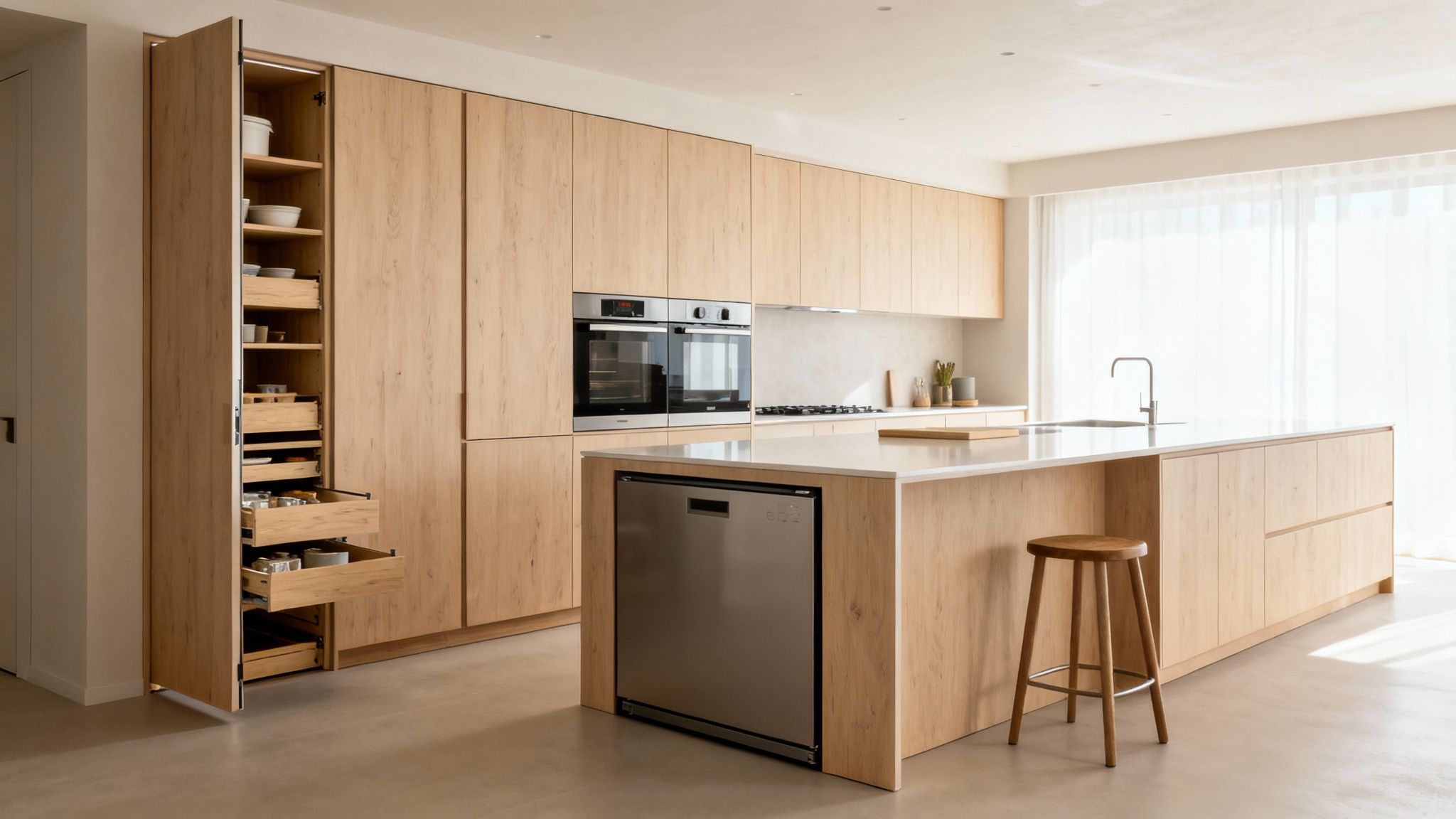
The secret to that signature, calming Scandi aesthetic? It’s all down to clever, hidden storage. The goal is simple: a home for everything, so your surfaces stay clear and serene. This isn't just about looking good; it makes the kitchen a dream to use and clean.
This focus on seamless integration is catching on in UK homes, too. In 2024, kitchen retailers saw a 20–25% increase in furniture sales as homeowners moved beyond simple like-for-like replacements, instead opting for comprehensive, storage-led installations. It shows a real shift towards the kind of thoughtfully designed spaces that are the bedrock of Scandi style. You can read more about this in this deep dive into kitchen and bathroom trends for 2025.
A few game-changing solutions to consider:
- Handleless Cabinets: Flat-panel, seamless doors are a must. They create long, uninterrupted lines that trick the eye into seeing a bigger, more open space.
- Full-Height Pantry Cupboards: A floor-to-ceiling larder is your best friend. It lets you stash all your dry goods in one hyper-organised spot, hidden from view.
- Appliance Garages: Think of this as a dedicated cupboard for your toaster, kettle, and coffee machine. They’re still easy to grab, but they’re not cluttering up your valuable worktop.
By prioritising clever, concealed storage, you create a backdrop of simplicity. This allows the few beautiful, functional items you do choose to display to really stand out.
Using Open Shelving Purposefully
While most storage in a Scandi kitchen is tucked away, open shelving definitely has its place—as long as it’s used with intention. It's the perfect way to break up a run of cabinetry and inject a bit of personality, but the key here is curation.
Let’s be clear: this isn't a dumping ground. Open shelves are for displaying items that are as beautiful as they are useful. For a closer look at getting your organisation just right, have a read of our guide to inspiring kitchen storage ideas.
Styling Your Shelves the Scandi Way
- Stick to a Cohesive Palette: Group items that share a similar colour family—think white ceramics, clear glassware, and pale wooden bowls.
- Mix Textures, Not Colours: Create visual interest by pairing different materials, like a smooth ceramic jug next to a rustic wooden chopping board.
- Leave Breathing Room: Whatever you do, don't cram the shelves. Negative space is just as important as the objects themselves; it’s what keeps things feeling calm and uncluttered.
Think of your open shelves as a small, curated gallery. A stack of your favourite mugs, a beautiful teapot, a few simple white plates. It’s these thoughtful little details that turn a functional kitchen into a space with real warmth and soul.
How to Illuminate Your Kitchen the Scandi Way
In a true Scandinavian kitchen, lighting is never just an afterthought. It's woven into the very fabric of the design. This philosophy was born out of pure necessity—a way to make homes feel bright and welcoming during those long, dark Nordic winters. It’s all about layering different light sources to create a space that feels warm, functional, and full of life, no matter what time of day it is.
This isn’t about just sticking a bright light in the middle of the ceiling. It’s a thoughtful approach that combines three distinct types of lighting. Get this mix right, and your kitchen will transform from a purely practical room into the cosy, inviting heart of your home.
The Three Layers of Scandi Lighting
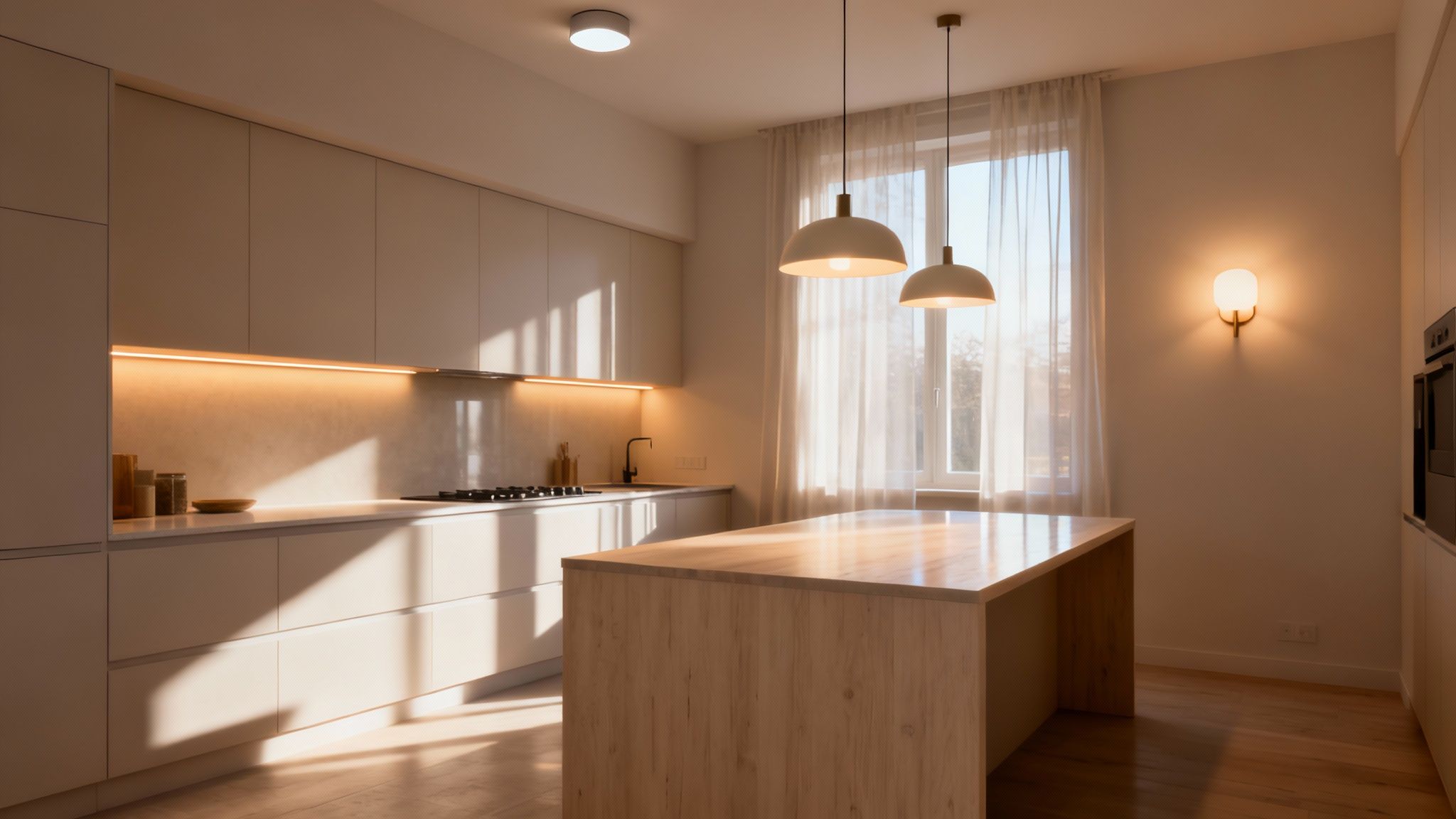
To get that signature glow, you need to think about your lighting in three distinct layers. Each one has a specific job, and when they work together, they create a beautifully balanced and adaptable atmosphere.
Ambient Lighting: This is your foundation—the general, all-over light for the room. In Scandi design, this often comes from simple, unobtrusive ceiling fittings that give a soft, even light without creating harsh shadows. For more on this, our guide to modern kitchen ceiling lighting ideas has plenty of inspiration.
Task Lighting: This is the practical, focused light you direct exactly where it’s needed most. Think sleek under-cabinet LED strips lighting up your worktops for food prep, or a stunning pendant light hanging directly over your kitchen island or dining table. This layer ensures your kitchen is a safe and easy place to work.
Accent Lighting: This is where you bring in the hygge. Accent lighting creates pockets of soft, warm light that add depth and a seriously cosy feeling. It could be a small, stylish wall sconce tucked into a corner or a single elegant table lamp placed on an open shelf.
"In Scandinavian decor style, lamps are treated as furniture. Choose pieces that match the material language of the room and stay within the same tonal range as nearby objects."
Don't Forget Natural Light
Beyond the bulbs and fixtures, maximising natural daylight is completely non-negotiable. It’s arguably the most crucial element in creating an authentic Scandinavian-style kitchen.
The key is to keep window treatments minimal. Opt for sheer, lightweight blinds in linen or cotton that diffuse the light beautifully without blocking it out.
Another smart trick is to use reflective surfaces to your advantage. A mirror hung on the wall opposite a window can bounce light all around the room, making it feel instantly brighter and more spacious. Even glossy tiles or a polished chrome tap can help reflect daylight, adding to that bright, airy vibe that defines this timeless style. It’s these small, thoughtful details that really make all the difference.
Adding Warmth with Purposeful Finishing Touches
This is where the soul of your kitchen comes in. The final layers are what transform a beautifully minimalist space into a warm, lived-in home. It’s all about accessorising with intention, making sure every object is either beautiful, useful, or—ideally—both. That’s the very essence of hygge.
This isn't an excuse for clutter; it's about introducing softness and character. Start with textiles. A simple stack of linen tea towels, a woollen runner on a wooden floor, or soft cushions on a breakfast nook bench will instantly soften the clean lines of your cabinetry. These natural fabrics add a tactile quality that just makes the room feel more inviting.
Curating Functional Beauty
The things you use every day should bring you a little bit of joy. Instead of hiding everything away, choose pieces that are worthy of being on display. It’s the key to keeping your surfaces feeling organised, yet personal. Think about creating small, styled vignettes on your worktop.
- Ceramics and Glassware: A few handmade mugs or a simple glass pitcher is all you need. Grouping three items of varying heights—say, a small vase, a ceramic pot of herbs, and a salt cellar—creates a balanced, visually pleasing arrangement.
- Wooden Elements: A beautiful, chunky wooden chopping board leaning against the splashback is a classic Scandi touch. It’s practical, but it also adds immense warmth and organic texture.
These thoughtful groupings ensure your kitchen feels curated, not chaotic. For more inspiration on bringing this feeling into the rest of your home, explore our journal for some lovely cosy home ideas that nail that perfect blend of comfort and style.
Remember, the aim is to find beauty in everyday rituals. A well-designed teapot or a simple stoneware bowl can elevate the simple act of making your morning cuppa into a mindful moment.
Selecting Hardware and Taps
Even the smallest details, like handles and taps, play a huge part in the final look. Your choice here can either reinforce the minimalist aesthetic or add a subtle, contrasting focal point. For the ultimate clean, seamless appearance, you can't beat handleless cabinets. They create that unbroken visual flow that is quintessentially Scandinavian.
If you do prefer handles, opt for simple, elegant designs. Sleek matte black or brushed brass bar handles can add a touch of modern sophistication, while small wooden knobs can echo the natural materials used elsewhere in the room.
Finally, think about your tapware. An elegant gooseneck tap in matte black, chrome, or brushed brass can act as a piece of functional sculpture, drawing the eye and tying the whole design together. It’s these final, carefully considered touches that complete your kitchen, making it a space that feels both brand new and deeply personal from day one.
Common Questions About Scandinavian Kitchens
Even with a crystal-clear Pinterest board, a few questions always pop up once you start planning. Scandi style might look beautifully simple, but getting those details just right is what makes it sing.
So, let's tackle the common queries we hear all the time. Getting these sorted will help you design a space that’s not just stylish, but perfectly suited to how you actually live.
How Can I Make My Scandinavian Kitchen Feel Warm and Not Too Sterile?
This is probably the number one concern we hear. The good news? It’s easily avoided. The secret is to layer in plenty of texture and natural materials to stop the neutral palette from feeling flat or clinical.
Think about creating contrast. A rustic wooden dining table against sleek white cabinets, or chunky wool cushions on a simple bench. Even just the visible grain of an oak floor next to a smooth quartz worktop adds so much character and warmth.
This is where the Danish concept of Hygge comes in. It’s all about creating a cosy, contented atmosphere. Layered, warm lighting is non-negotiable here. Ditch the single, harsh overhead light and use a mix of soft pendants, under-cabinet task lights, and maybe a small table lamp in a corner to create an inviting glow.
Is a Scandinavian Style Kitchen a Good Choice for a Small UK Home?
Absolutely. In fact, it’s one of the best choices you can make for a smaller space. The whole philosophy of Scandinavian design—light colours, smart functionality, and minimalism—is basically a cheat sheet for making a compact room feel bigger and brighter.
A pale, neutral colour scheme is your best friend, bouncing natural light around and creating an illusion of space. And because the style champions clever, integrated storage, you can hide all the clutter that makes small rooms feel chaotic.
A few tricks that work wonders:
- Handleless Cabinets: Unbroken lines are key. They trick the eye into seeing a larger, more seamless space.
- Vertical Storage: Think full-height pantry units. They draw your gaze upwards, making the ceiling feel higher than it is.
- Reflective Surfaces: You don’t need high-gloss everything. A simple tiled splashback or a polished chrome tap can catch the light and add a subtle sparkle.
These little design moves prove you don’t need a massive footprint to pull off a beautiful and functional scandinavian style kitchen.
What Are the Most Budget-Friendly Ways to Get a Scandi Look?
You really don’t need a huge budget for this. The trick is to focus on the things that give you the biggest bang for your buck. First up: paint. A fresh coat of a high-quality off-white or soft grey paint is the single most powerful tool you have.
When it comes to cabinetry, you don’t always need to rip everything out. If the carcasses are sound, just replacing the doors with a simple, flat-panel style can be a game-changer. Suppliers like IKEA are brilliant for this. Even just swapping out your existing handles for some minimalist matte black or wooden knobs can make a surprising difference.
And the best bit? One of the most important steps is completely free: decluttering. Clear your worktops, leaving only a few beautiful, functional items on show. A wooden chopping board, some simple ceramic mugs, a single green plant – that’s all you need.
How Do I Keep a White Scandinavian Kitchen Clean?
A white kitchen doesn’t have to mean a life of constant scrubbing. It's all about choosing your materials wisely from the get-go. For your cabinets, opt for a durable, wipe-clean finish like a quality satin or eggshell paint – they’re far more resilient to scuffs and stains than a chalky matte.
For worktops, non-porous materials like quartz are a lifesaver. They won’t absorb spills from things like coffee, tea, or red wine. A simple tiled or glass splashback behind your hob and sink is another smart move, protecting your walls and being incredibly easy to wipe down.
Honestly, the real key is just a little bit of daily maintenance. A quick wipe-down of surfaces at the end of the day stops grime from building up, keeping your kitchen looking fresh and bright with hardly any effort.